Levy-Gigi Einat, Richter-Levin Gal, Kéri Szabolcs
The institute for the Study of Affective Neuroscience, University of Haifa Haifa, Israel ; Nyírö Gyula Hospital, National Psychiatry and Addiction Center Budapest, Hungary.
The institute for the Study of Affective Neuroscience, University of Haifa Haifa, Israel ; Department of Psychology, University of Haifa Haifa, Israel ; Sagol Department of Neurobiology, University of Haifa Haifa, Israel.
Front Behav Neurosci. 2014 Aug 20;8:281. doi: 10.3389/fnbeh.2014.00281. eCollection 2014.
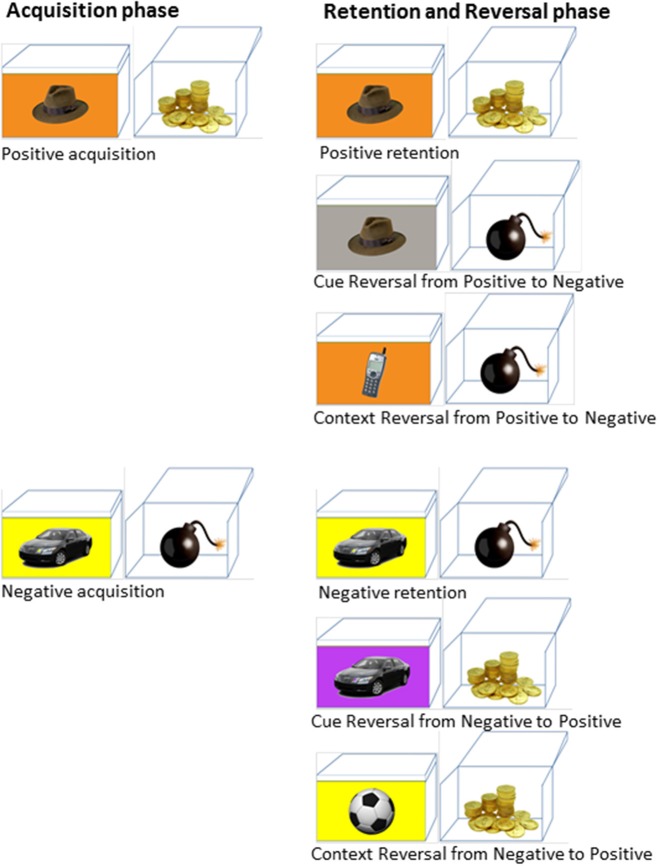
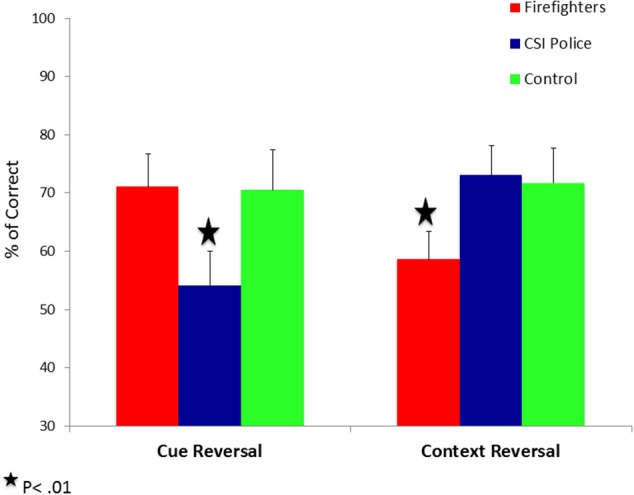
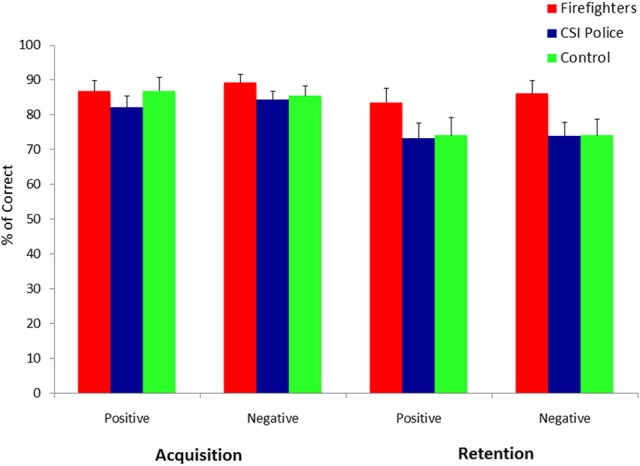
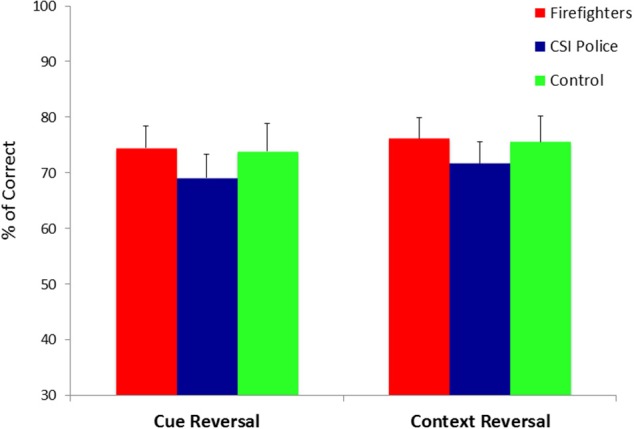
Studies on first responders who are repeatedly exposed to traumatic events report low levels of PTSD symptoms and diagnosis. However, neuroimaging and behavioral studies show that traumatic exposure is associated with brain and cognitive dysfunctions. Taking together it may suggest that traumatic exposure have a price, which is not sufficiently defined by the standard PTSD measures. In a recent study we revealed that similar to individuals with PTSD, non-PTSD highly exposed firefighters display a selective impairment in hippocampal related functions. In the current study we aimed to test whether different first responders display a similar impairment. We concentrated on unique populations of active duty firefighters and criminal scene-investigators (CSI) police, who are frequently exposed to similar levels and types of traumatic events, and compared them to civilian matched-controls with no history of trauma-exposure. We used a hippocampal dependent cue-context reversal paradigm, which separately evaluates reversal of negative and positive outcomes of cue and context related information. We predicted and found that all participants were equally able to acquire and retain stimulus-outcome associations. However, there were significant differences in reversal learning between the groups. Performance among firefighters replicated our prior findings; they struggled to learn that a previously negative context is later associated with a positive outcome. CSI police on the other hand showed a selective impairment in reversing the outcome of a negative cue. Hence after learning that a specific cue is associated with a negative outcome, they could not learn that later it is associated with a positive outcome. Performance in both groups did not correlate with levels of PTSD, anxiety, depression or behavioral inhibition symptoms. The results provide further evidence of the hidden price of traumatic exposure, suggesting that this price may differ as a function of occupation.
对反复接触创伤性事件的一线救援人员的研究报告显示,创伤后应激障碍(PTSD)症状和诊断水平较低。然而,神经影像学和行为学研究表明,创伤性暴露与大脑和认知功能障碍有关。综合来看,这可能表明创伤性暴露是有代价的,而这一代价在标准的PTSD测量中并未得到充分界定。在最近的一项研究中,我们发现,与患有PTSD的个体类似,未患PTSD但高度暴露的消防员在海马体相关功能方面存在选择性损伤。在本研究中,我们旨在测试不同的一线救援人员是否表现出类似的损伤。我们聚焦于现役消防员和犯罪现场调查员(CSI)警察这两个独特群体,他们经常接触类似程度和类型的创伤性事件,并将他们与没有创伤暴露史的平民匹配对照组进行比较。我们使用了一种依赖海马体的线索 - 情境反转范式,该范式分别评估线索和情境相关信息的负面和正面结果的反转。我们预测并发现,所有参与者在获取和保留刺激 - 结果关联方面能力相当。然而,各组之间在反转学习方面存在显著差异。消防员的表现重复了我们之前的发现;他们难以学会一个先前负面的情境后来与正面结果相关。另一方面,CSI警察在反转负面线索的结果方面表现出选择性损伤。因此,在得知特定线索与负面结果相关后,他们无法学会该线索后来与正面结果相关。两组的表现与PTSD、焦虑、抑郁或行为抑制症状的水平均无关联。这些结果进一步证明了创伤性暴露的潜在代价,表明这一代价可能因职业而异。