International Rice Research Institute, DAPO Box 7777, Metro Manila, Philippines.
Indonesian Center for Rice Research, Sukamandi, West Java, Indonesia.
AoB Plants. 2014 Sep 8;6:plu055. doi: 10.1093/aobpla/plu055.
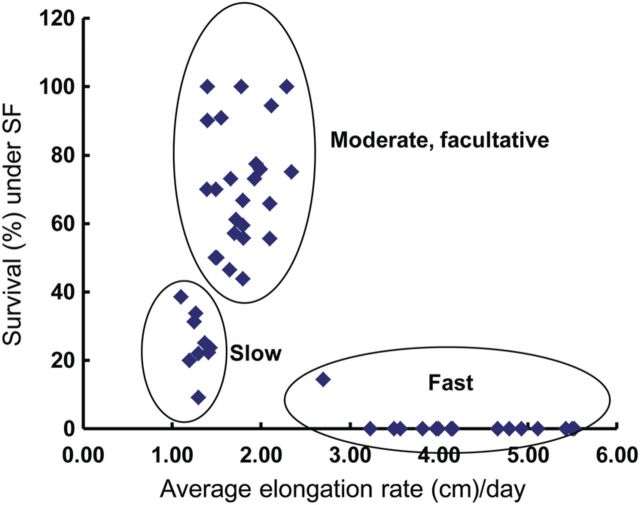
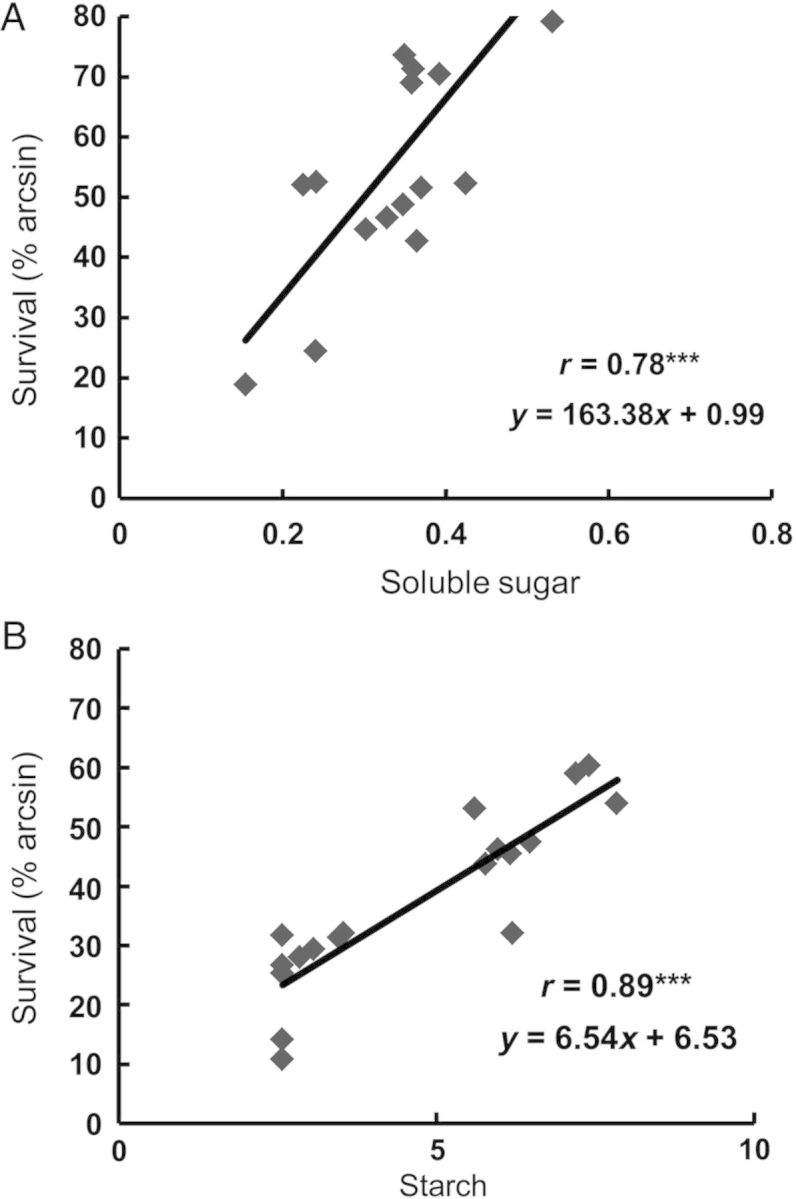
Stagnant flooding (SF) is a major problem in rainfed lowlands where floodwater of 25-50 cm stagnates in the field for most of the season. We aimed to establish a system for phenotyping SF tolerance and identifying tolerant germplasm through screening of landraces. A total of 626 rice accessions were evaluated over 3 years under control conditions and two levels of SF. Floodwater was raised to 20 cm at 25 or 30 days after transplanting (DAT). In one trial, the depth was increased subsequently by 5 cm a week and in another (severe stress), it was increased to 40 cm at 37 DAT and to 50 cm at 42 DAT. In both trials, water depth was maintained at 50-60 cm until maturity. In all cases, no plant was completely submerged. Plant height, elongation rate and yield were measured at maturity. Genotypes best suited to SF showed moderate elongation of 1.3-2.3 cm day(-1) under SF. In contrast, semi-dwarf and fast-elongating types performed poorly. Subsequent trials using 18 genotypes, including six pairs of near isogenic lines (NILs) with or without SUB1 showed that all SUB1 NILs were sensitive to SF. Five of the other six genotypes contained SUB1 and were SF tolerant, suggesting the possibility of combining tolerances to complete submergence (SUB1) and SF. Stem starch and soluble sugar concentrations were similar under control conditions among the 18 genotypes, but starch was depleted by 37 % under SF, with less depletion in tolerant genotypes. SUB1 NILs contained similar concentrations of starch and sugars under SF. We conclude that survival and yield under SF are dependent on moderate elongation, high tillering, lesser carbohydrate depletion and higher fertility. The tolerant genotypes identified here performed strongly in both wet and dry seasons and will be used to identify tolerance mechanisms and alleles for use in marker-assisted breeding.
停滞洪水(SF)是雨养低地的一个主要问题,在那里,洪水在田间停滞 25-50 厘米,大部分季节都停滞不前。我们旨在通过筛选地方品种建立一个表型 SF 耐受性的系统,并鉴定耐受种质。在 3 年的对照条件和 2 个 SF 水平下,共评价了 626 个水稻品种。在移栽后 25 或 30 天(DAT)时,将洪水提高到 20 厘米。在一项试验中,深度随后每周增加 5 厘米,在另一项试验(严重胁迫)中,在 37 DAT 时增加到 40 厘米,在 42 DAT 时增加到 50 厘米。在这两种情况下,直到成熟时,水深都保持在 50-60 厘米。在所有情况下,没有植物完全被淹没。在成熟时测量株高、伸长率和产量。最适合 SF 的基因型在 SF 下表现出适度的伸长率为 1.3-2.3 cm·d(-1)。相比之下,半矮化和快速伸长的类型表现不佳。随后使用 18 个基因型进行的试验,包括 6 对带有或不带有 SUB1 的近等基因系(NIL),表明所有 SUB1 NIL 对 SF 都敏感。其他 6 个基因型中的 5 个含有 SUB1,对 SF 有耐受性,这表明有可能将对完全淹没(SUB1)和 SF 的耐受性结合起来。在 18 个基因型中,对照条件下茎淀粉和可溶性糖的浓度相似,但在 SF 下淀粉减少了 37%,在耐受基因型中淀粉减少较少。SF 下 SUB1 NIL 的淀粉和糖浓度相似。我们得出结论,SF 下的存活和产量取决于适度的伸长、高分蘖、较少的碳水化合物消耗和更高的生育力。这里鉴定的耐受基因型在湿季和干季表现都很强,将用于鉴定耐受机制和等位基因,以用于标记辅助育种。