Maarouf Chera L, Kokjohn Tyler A, Whiteside Charisse M, Macias MiMi P, Kalback Walter M, Sabbagh Marwan N, Beach Thomas G, Vassar Robert, Roher Alex E
The Longtine Center for Neurodegenerative Biochemistry, Banner Sun Health Research Institute Sun City, AZ, USA.
The Longtine Center for Neurodegenerative Biochemistry, Banner Sun Health Research Institute Sun City, AZ, USA. ; Department of Microbiology, Midwestern University School of Medicine, Glendale, AZ, USA.
Biochem Insights. 2013 Nov 21;6:1-10. doi: 10.4137/BCI.S13025. eCollection 2013.
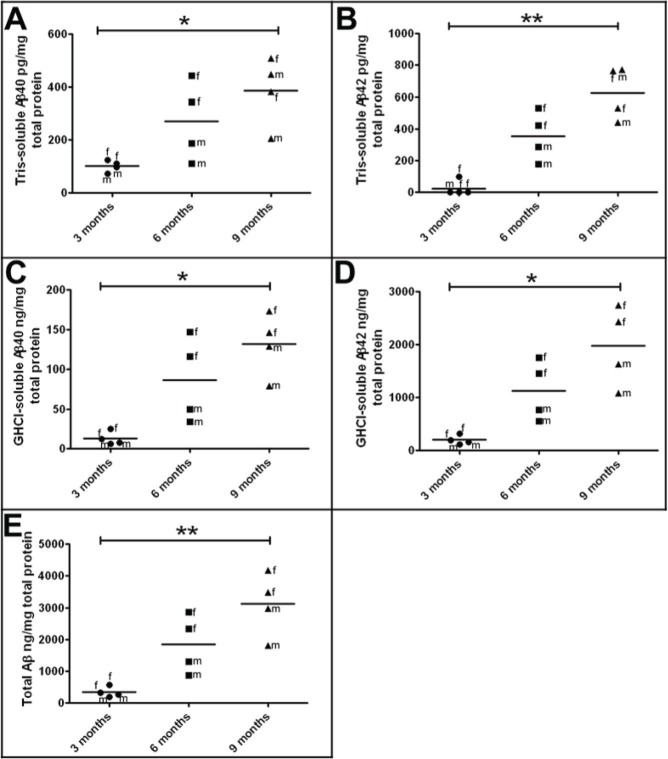
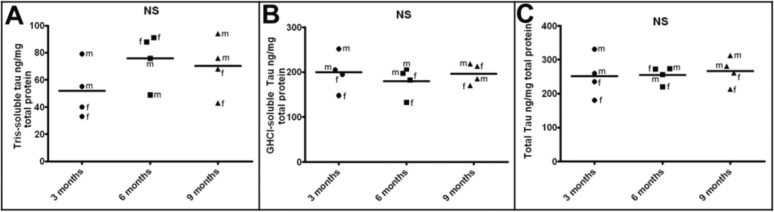
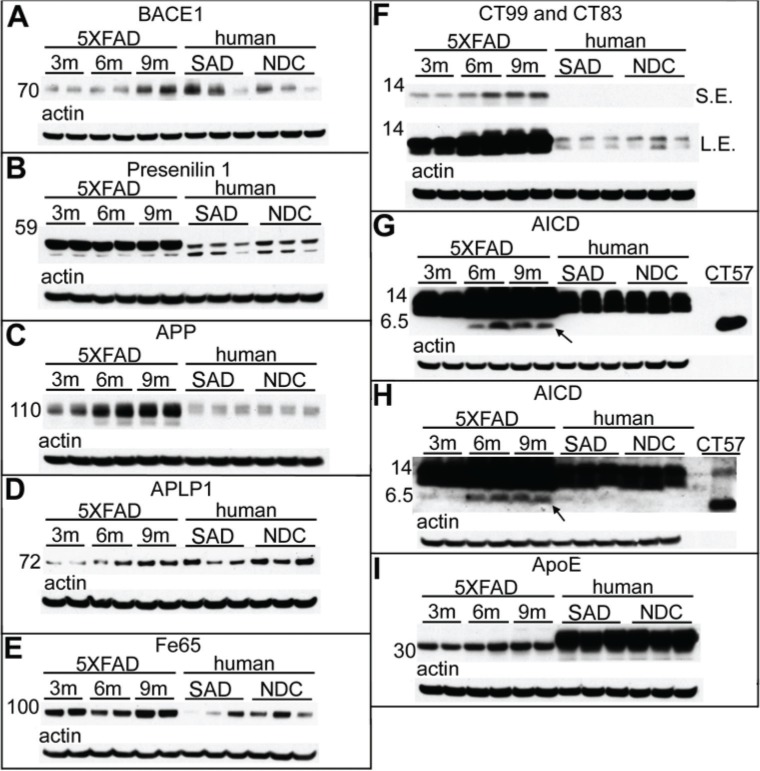
Transgenic (Tg) mouse models of Alzheimer's disease (AD) have been extensively used to study the pathophysiology of this dementia and to test the efficacy of drugs to treat AD. The 5XFAD Tg mouse, which contains two presenilin-1 and three amyloid precursor protein (APP) mutations, was designed to rapidly recapitulate a portion of the pathologic alterations present in human AD. APP and its proteolytic peptides, as well as apolipoprotein E and endogenous mouse tau, were investigated in the 5XFAD mice at 3 months, 6 months, and 9 months. AD and nondemented subjects were used as a frame of reference. APP, amyloid-beta (Aβ) peptides, APP C-terminal fragments (CT99, CT83, AICD), β-site APP-cleaving enzyme, and APLP1 substantially increased with age in the brains of 5XFAD mice. Endogenous mouse tau did not show age-related differences. The rapid synthesis of Aβ and its impact on neuronal loss and neuroinflammation make the 5XFAD mice a desirable paradigm to model AD.
阿尔茨海默病(AD)的转基因(Tg)小鼠模型已被广泛用于研究这种痴呆症的病理生理学,并测试治疗AD药物的疗效。5XFAD转基因小鼠包含两个早老素-1和三个淀粉样前体蛋白(APP)突变,旨在快速重现人类AD中存在的部分病理改变。在3个月、6个月和9个月大的5XFAD小鼠中研究了APP及其蛋白水解肽,以及载脂蛋白E和内源性小鼠tau。将AD患者和非痴呆受试者作为参照标准。在5XFAD小鼠的大脑中,APP、淀粉样β(Aβ)肽、APP C末端片段(CT99、CT83、AICD)、β位点APP裂解酶和APLP1随年龄增长显著增加。内源性小鼠tau未显示出与年龄相关的差异。Aβ的快速合成及其对神经元丢失和神经炎症的影响使5XFAD小鼠成为模拟AD的理想模型。