Wang Wen-Chung, Tsou Mei-Hua, Chen Hui-Ju, Hsu Wei-Fang, Lai Yen-Chein
School of Medical Laboratory and Biotechnology, Chung Shan Medical University, No,110, Sec, 1, Chien Kuo N, Road, Taichung 402, Taiwan, Republic of China.
BMC Res Notes. 2014 Sep 12;7:638. doi: 10.1186/1756-0500-7-638.
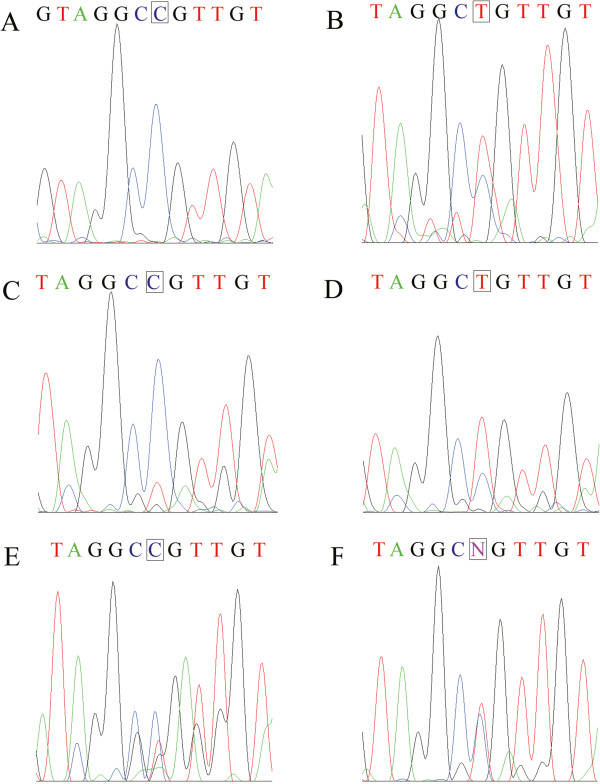
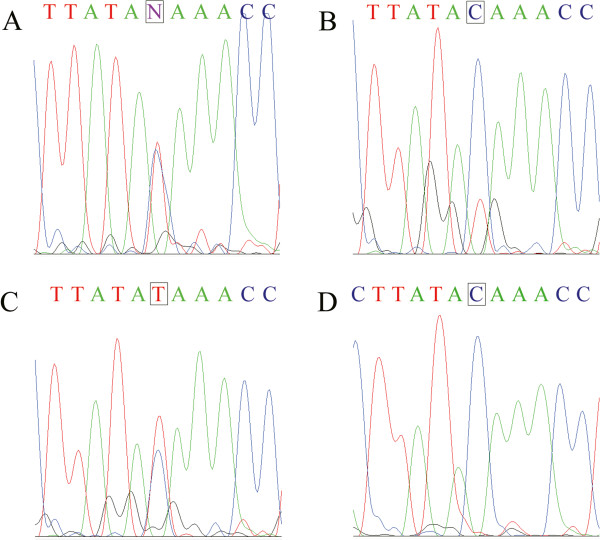
Renal cell carcinoma, a common malignant tumor arising from the kidney, occurs in 3.62 and 1.95 cases per one hundred thousand people among men and women, respectively, in Taiwan each year. Approximately 80% of cases are classified as clear-cell renal cell carcinoma. Inactivation of the von Hippel-Lindau tumor suppressor gene has been implicated in the tumorigenic pathway of renal cell carcinoma. Two single nucleotide polymorphisms, rs779805 and rs1642742, located in the promoter and 3' untranslated regions of the von Hippel-Lindau gene are informative and implicated in the occurrence of renal cell carcinoma worldwide. The aim of this study is to clarify whether these polymorphisms are associated with renal cell carcinoma in Taiwanese. Genomic DNA was isolated from normal and tumor tissues of 19 renal cell carcinoma patients. The samples were screened for allelic polymorphisms by restriction fragment length polymorphism with BsaJ I and Acc I digestion. Reconfirmation was carried out by direct sequencing.
Consistent with Knudson's two-hit theory, AA to AG somatic mutations were observed in rs779805. In addition, loss of heterozygosity in both rs779805 and rs1642742 was demonstrated in 10 out of 15 RCC patients aged 50 or over. The G allele or AG heterozygote frequencies at these two loci were much higher in patient germline DNA when compared with the control group. After adjusting for age, the frequency of the G allele in both loci was much higher for late onset renal cell carcinoma in the Taiwanese population.
Our current results confirmed that the existence of G allele in both rs779805 and rs1642742 in the von Hippel-Lindau tumor suppressor gene is of importance in renal cell carcinoma tumorigenesis. However, more comprehensive and detailed research is needed to address the clinical relevance. Larger sample size is required to determine the exact power of correlation between these two genetic polymorphisms and renal cell carcinoma.
肾细胞癌是一种常见的起源于肾脏的恶性肿瘤,在台湾地区,每年男性和女性的发病率分别为每十万人3.62例和1.95例。大约80%的病例被归类为透明细胞肾细胞癌。冯·希佩尔-林道肿瘤抑制基因的失活与肾细胞癌的致癌途径有关。位于冯·希佩尔-林道基因启动子和3'非翻译区的两个单核苷酸多态性位点rs779805和rs1642742具有信息价值,且与全球肾细胞癌的发生有关。本研究的目的是阐明这些多态性是否与台湾人群的肾细胞癌相关。从19例肾细胞癌患者的正常组织和肿瘤组织中分离基因组DNA。通过用BsaJ I和Acc I酶切的限制性片段长度多态性方法筛选样本中的等位基因多态性。通过直接测序进行再次确认。
与克努森的双击理论一致,在rs779805中观察到从AA到AG的体细胞突变。此外,在15例年龄在50岁及以上的肾细胞癌患者中,有10例在rs779805和rs1642742中均表现出杂合性缺失。与对照组相比,患者生殖系DNA中这两个位点的G等位基因或AG杂合子频率要高得多。在调整年龄后,台湾人群中晚发性肾细胞癌在这两个位点的G等位基因频率要高得多。
我们目前的结果证实,冯·希佩尔-林道肿瘤抑制基因中rs779805和rs1642742中G等位基因的存在在肾细胞癌的肿瘤发生中具有重要意义。然而,需要更全面和详细的研究来阐明其临床相关性。需要更大的样本量来确定这两种基因多态性与肾细胞癌之间相关性的确切强度。