Wang Shuo, Xu Juan, Jiang Ming, Zhao Qi, Hurlemann Rene, Adolphs Ralph
Computation and Neural Systems, California Institute of Technology, Pasadena, CA 91125, USA.
Department of Electrical and Computer Engineering, National University of Singapore, 117583 Singapore, Singapore.
Neuropsychologia. 2014 Oct;63:259-74. doi: 10.1016/j.neuropsychologia.2014.09.002. Epub 2014 Sep 8.
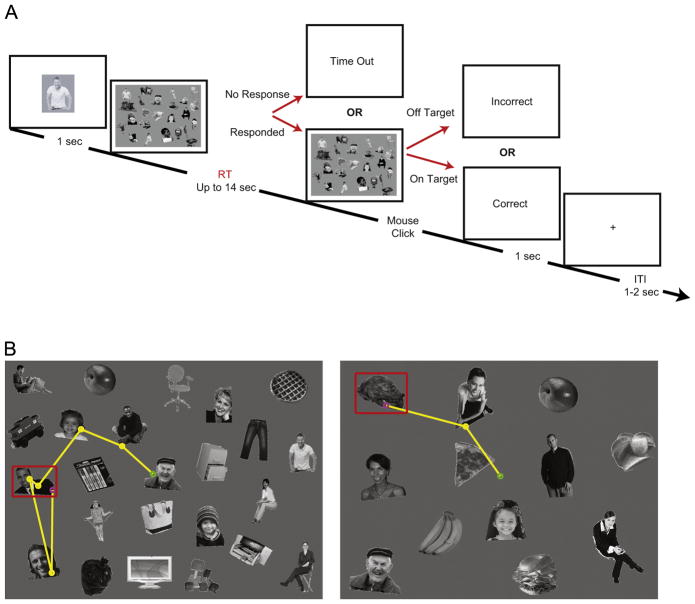
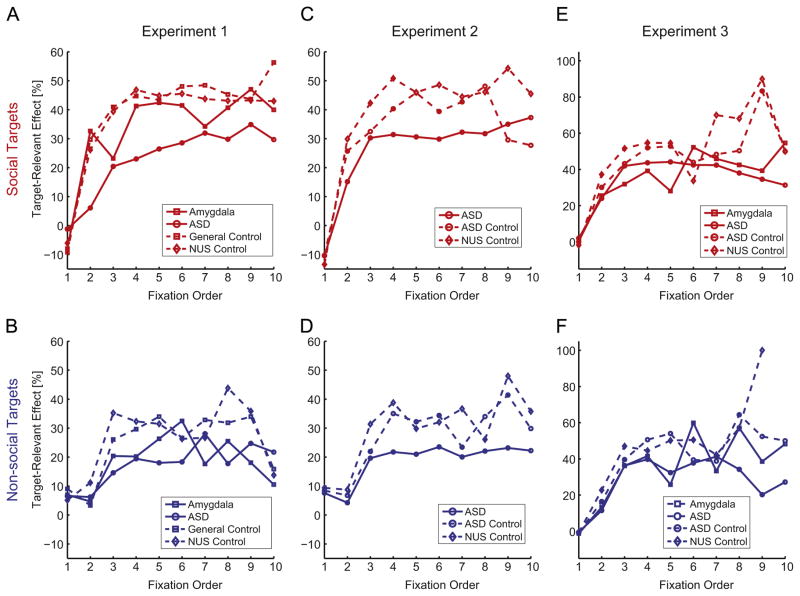
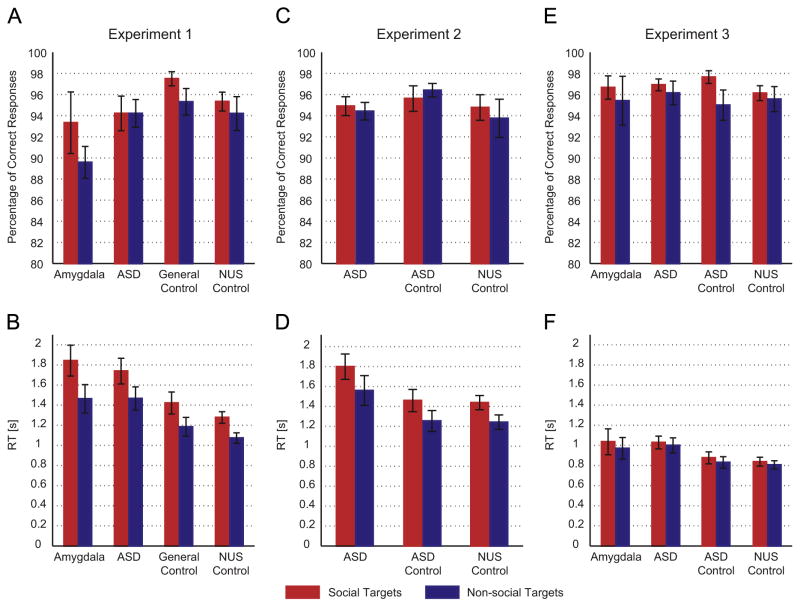
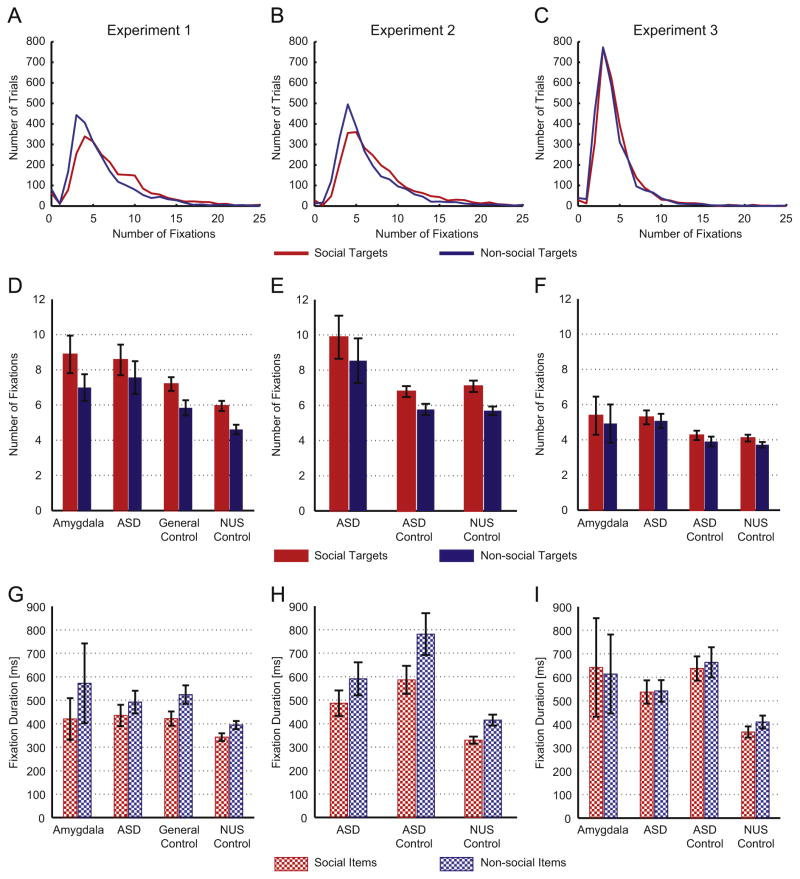
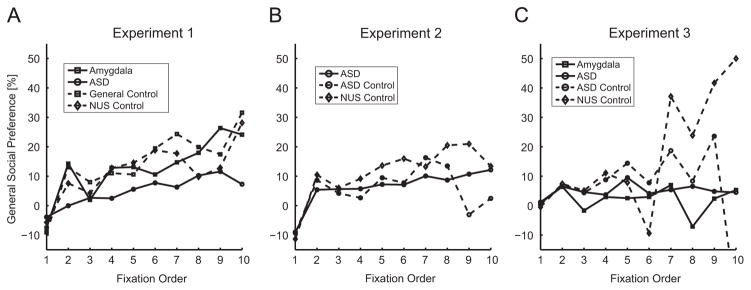
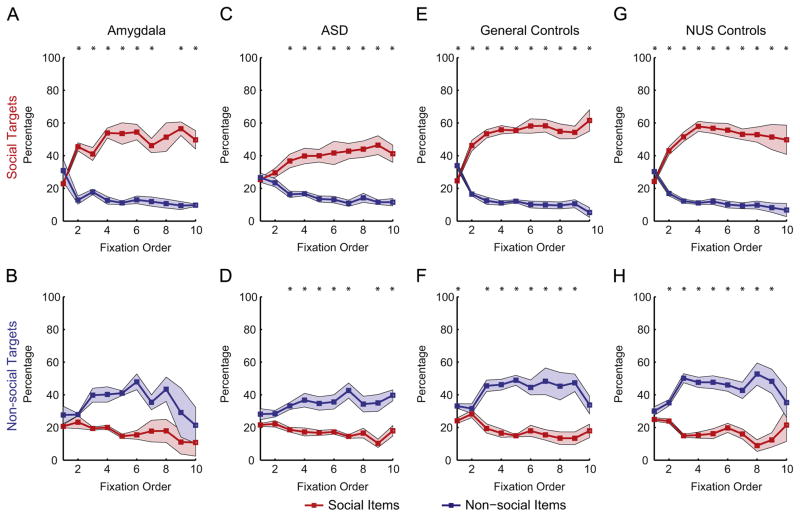
People with autism spectrum disorders (ASD) have pervasive impairments in social interactions, a diagnostic component that may have its roots in atypical social motivation and attention. One of the brain structures implicated in the social abnormalities seen in ASD is the amygdala. To further characterize the impairment of people with ASD in social attention, and to explore the possible role of the amygdala, we employed a series of visual search tasks with both social (faces and people with different postures, emotions, ages, and genders) and non-social stimuli (e.g., electronics, food, and utensils). We first conducted trial-wise analyses of fixation properties and elucidated visual search mechanisms. We found that an attentional mechanism of initial orientation could explain the detection advantage of non-social targets. We then zoomed into fixation-wise analyses. We defined target-relevant effects as the difference in the percentage of fixations that fell on target-congruent vs. target-incongruent items in the array. In Experiment 1, we tested 8 high-functioning adults with ASD, 3 adults with focal bilateral amygdala lesions, and 19 controls. Controls rapidly oriented to target-congruent items and showed a strong and sustained preference for fixating them. Strikingly, people with ASD oriented significantly less and more slowly to target-congruent items, an attentional deficit especially with social targets. By contrast, patients with amygdala lesions performed indistinguishably from controls. In Experiment 2, we recruited a different sample of 13 people with ASD and 8 healthy controls, and tested them on the same search arrays but with all array items equalized for low-level saliency. The results replicated those of Experiment 1. In Experiment 3, we recruited 13 people with ASD, 8 healthy controls, 3 amygdala lesion patients and another group of 11 controls and tested them on a simpler array. Here our group effect for ASD strongly diminished and all four subject groups showed similar target-relevant effects. These findings argue for an attentional deficit in ASD that is disproportionate for social stimuli, cannot be explained by low-level visual properties of the stimuli, and is more severe with high-load top-down task demands. Furthermore, this deficit appears to be independent of the amygdala, and not evident from general social bias independent of the target-directed search.
患有自闭症谱系障碍(ASD)的人在社交互动方面存在普遍障碍,这一诊断要素可能源于非典型的社交动机和注意力。杏仁核是与ASD中所见社交异常有关的脑结构之一。为了进一步刻画ASD患者在社交注意力方面的损伤,并探究杏仁核可能发挥的作用,我们采用了一系列视觉搜索任务,包括社交刺激(面孔以及具有不同姿势、情绪、年龄和性别的人)和非社交刺激(如电子产品、食物和器具)。我们首先对注视特性进行了逐次试验分析,并阐明了视觉搜索机制。我们发现初始定向的注意机制可以解释非社交目标的检测优势。然后我们深入到基于注视的分析。我们将目标相关效应定义为落在阵列中与目标一致和与目标不一致项目上的注视百分比之差。在实验1中,我们测试了8名高功能ASD成年人、3名患有双侧杏仁核局灶性损伤的成年人以及19名对照组。对照组迅速定向到与目标一致的项目,并表现出对注视这些项目的强烈且持续的偏好。令人惊讶的是,ASD患者对与目标一致项目的定向明显更少且更慢,尤其是在社交目标方面存在注意力缺陷。相比之下,杏仁核损伤患者的表现与对照组无明显差异。在实验2中,我们招募了另一组样本,包括13名ASD患者和8名健康对照组,并在相同的搜索阵列上对他们进行测试,但所有阵列项目的低水平显著性都进行了均衡。结果重复了实验1的结果。在实验3中,我们招募了13名ASD患者、8名健康对照组、3名杏仁核损伤患者以及另一组11名对照组,并在一个更简单的阵列上对他们进行测试。在这里,我们发现的ASD组效应显著减弱,所有四个受试者组都表现出相似的目标相关效应。这些发现表明,ASD存在注意力缺陷,这种缺陷对社交刺激而言不成比例,不能用刺激的低水平视觉特性来解释,并且在高负荷自上而下任务要求下更为严重。此外,这种缺陷似乎与杏仁核无关,并且在独立于目标导向搜索的一般社会偏见中并不明显。