Brewer Casey J, Wood Ruth I, Wood John C
Division of Pediatric Cardiology, Children's Hospital Los Angeles, Los Angeles, CA, USA.
Department of Cell and Neurobiology, Keck School of Medicine of the University of Southern California, Los Angeles, CA, USA.
Exp Hematol. 2014 Dec;42(12):1059-67. doi: 10.1016/j.exphem.2014.09.002. Epub 2014 Sep 16.
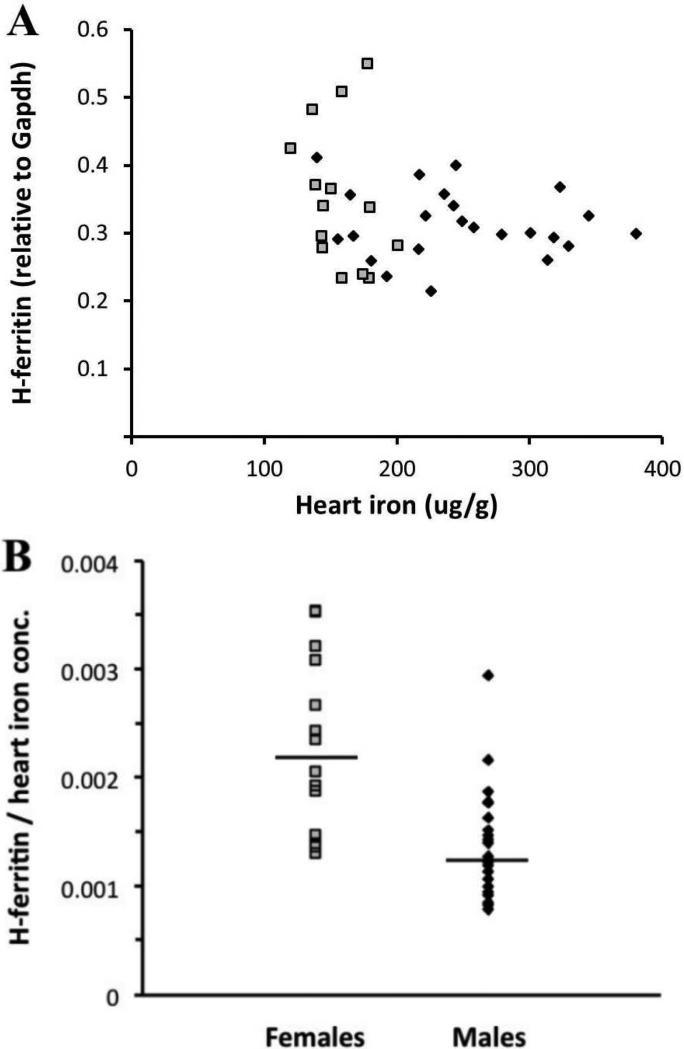
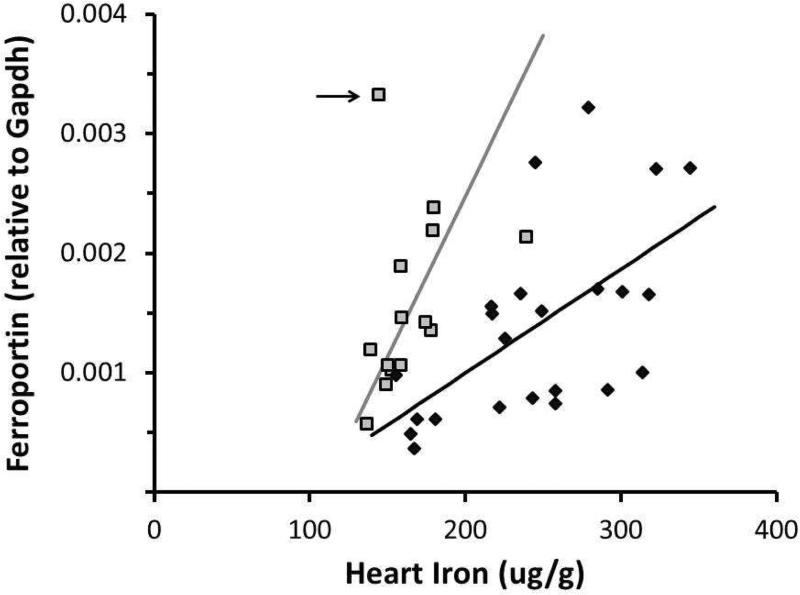
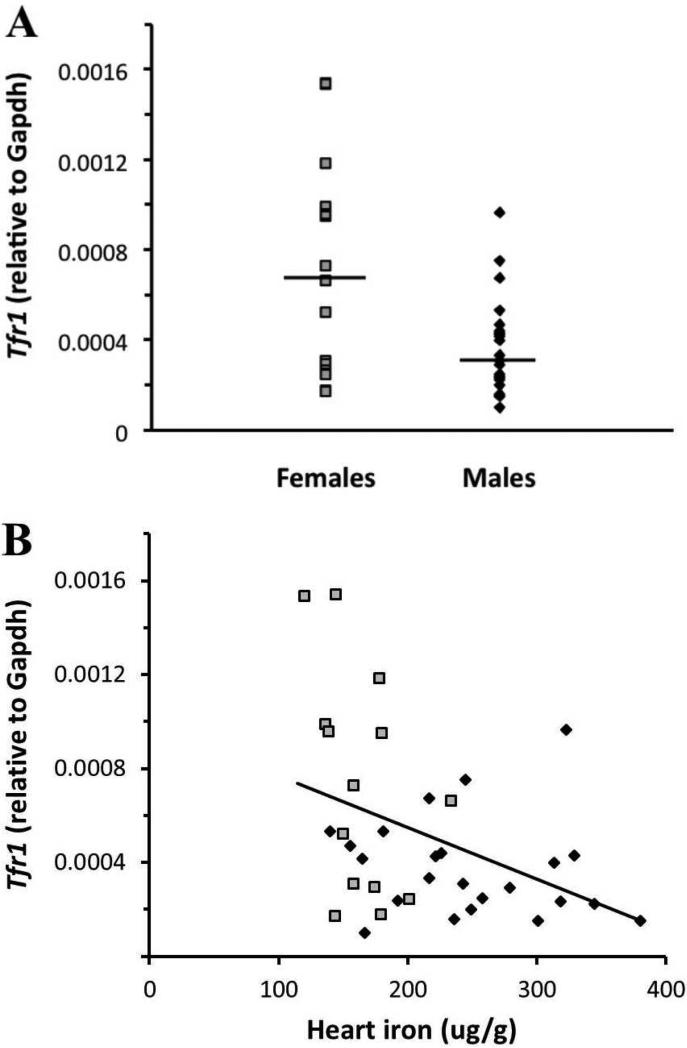
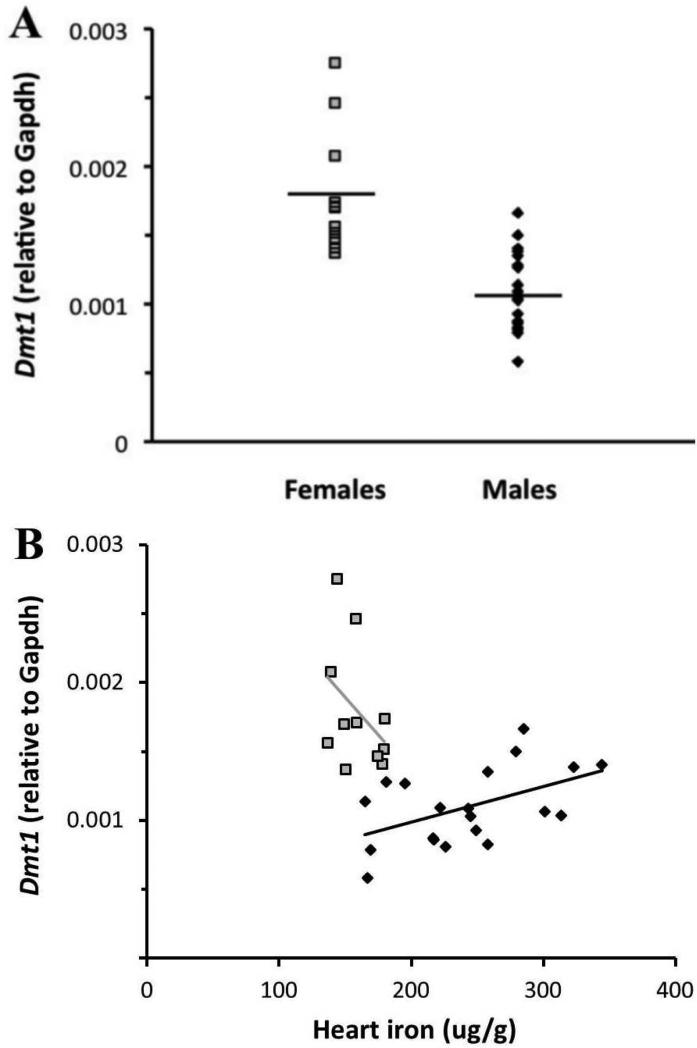
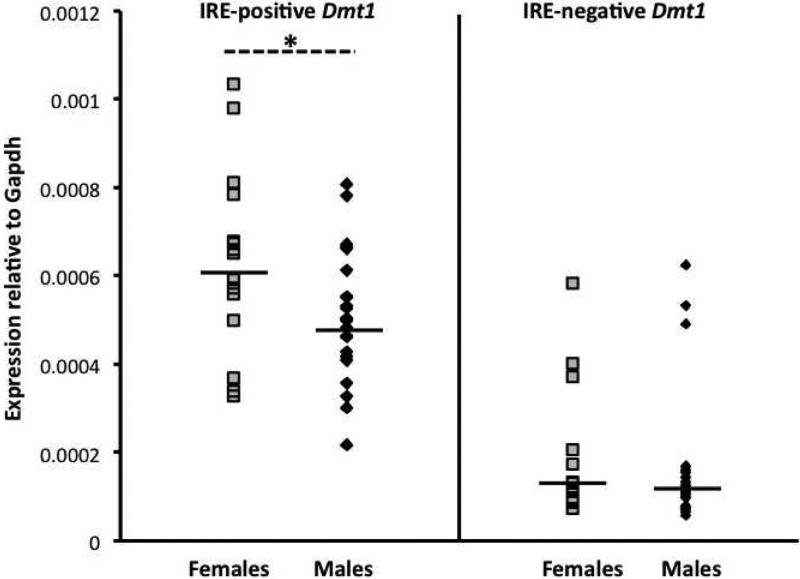
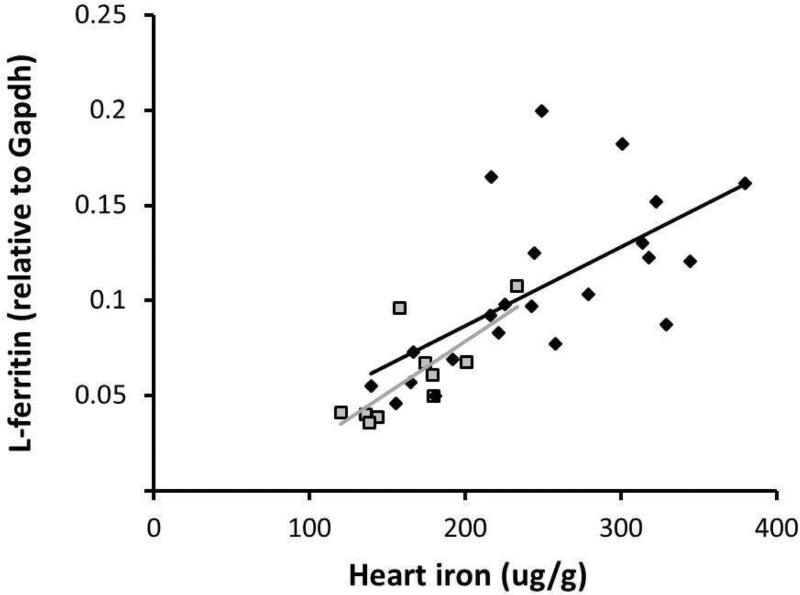
Iron cardiomyopathy is the leading cause of death in iron overload. Men have twice the mortality rate of women, though the cause is unknown. In hemojuvelin-knockout mice, a model of the disease, males load more cardiac iron than females. We postulated that sex differences in cardiac iron import cause differences in cardiac iron concentration. Reverse transcription polymerase chain reaction was used to measure mRNA of cardiac iron transporters in hemojuvelin-knockout mice. No sex differences were discovered among putative importers of nontransferrin-bound iron (L-type and T-type calcium channels, ZRT/IRT-like protein 14 zinc channels). Transferrin-bound iron transporters were also analyzed; these are controlled by the iron regulatory element/iron regulatory protein (IRE/IRP) system. There was a positive relationship between cardiac iron and ferroportin mRNA in both sexes, but it was significantly steeper in females (p < 0.05). Transferrin receptor 1 and divalent metal transporter 1 were more highly expressed in females than males (p < 0.01 and p < 0.0001, respectively), consistent with their lower cardiac iron levels, as predicted by IRE/IRP regulatory pathways. Light-chain ferritin showed a positive correlation with cardiac iron that was nearly identical in males and females (R(2) = 0.41, p < 0.01; R(2) = 0.56, p < 0.05, respectively), whereas heavy-chain ferritin was constitutively expressed in both sexes. This represents the first report of IRE/IRP regulatory pathways in the heart. Transcriptional regulation of ferroportin was suggested in both sexes, creating a potential mechanism for differential set points for iron export. Constitutive heavy-chain-ferritin expression suggests a logical limit to cardiac iron buffering capacity at levels known to produce heart failure in humans.
铁过载心肌病是铁过载导致死亡的主要原因。男性的死亡率是女性的两倍,但其原因尚不清楚。在血色素沉着症相关基因敲除小鼠(一种该疾病的模型)中,雄性小鼠心脏中的铁负荷比雌性小鼠更多。我们推测心脏铁摄取的性别差异导致了心脏铁浓度的差异。采用逆转录聚合酶链反应来测量血色素沉着症相关基因敲除小鼠心脏中铁转运蛋白的mRNA。在非转铁蛋白结合铁的假定摄取蛋白(L型和T型钙通道、ZRT/IRT样蛋白14锌通道)中未发现性别差异。还分析了转铁蛋白结合铁转运蛋白;这些蛋白受铁调节元件/铁调节蛋白(IRE/IRP)系统控制。两性的心脏铁与铁输出蛋白mRNA之间均呈正相关,但在雌性中这种相关性明显更强(p < 0.05)。转铁蛋白受体1和二价金属转运蛋白1在雌性中的表达高于雄性(分别为p < 0.01和p < 0.0001),这与IRE/IRP调节途径预测的它们较低的心脏铁水平一致。轻链铁蛋白与心脏铁呈正相关,在雄性和雌性中几乎相同(R(2) = 0.41,p < 0.01;R(2) = 0.56,p < 0.05),而重链铁蛋白在两性中均为组成性表达。这是关于心脏中IRE/IRP调节途径的首次报道。提示两性中铁输出蛋白均存在转录调控,这为铁输出的不同设定点创造了一种潜在机制。重链铁蛋白的组成性表达表明,在已知会导致人类心力衰竭的水平上,心脏铁缓冲能力存在合理的限制。