Department of Biochemistry, University of Texas Southwestern Medical Center, Dallas, TX 75390, USA.
Biochem J. 2011 Mar 15;434(3):365-81. doi: 10.1042/BJ20101825.
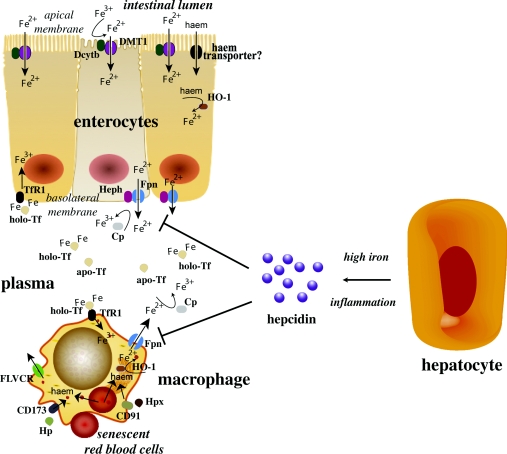
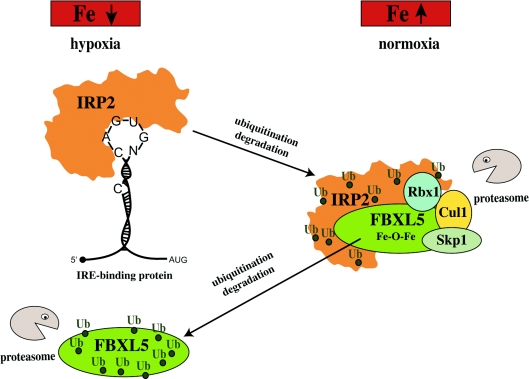
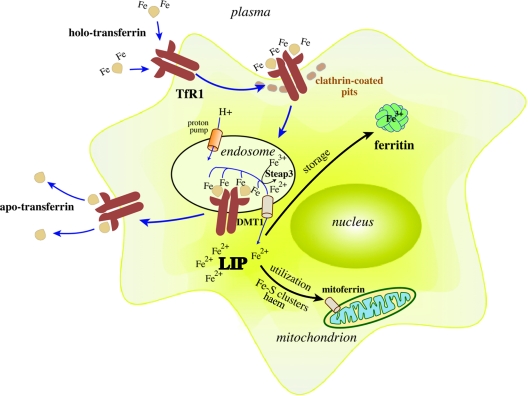
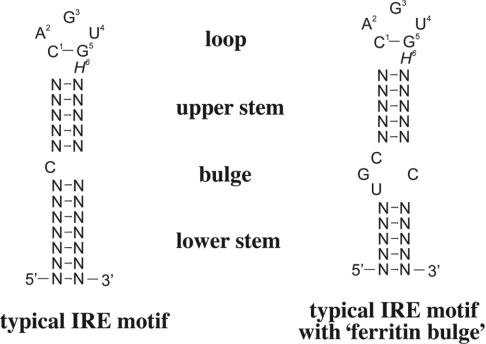
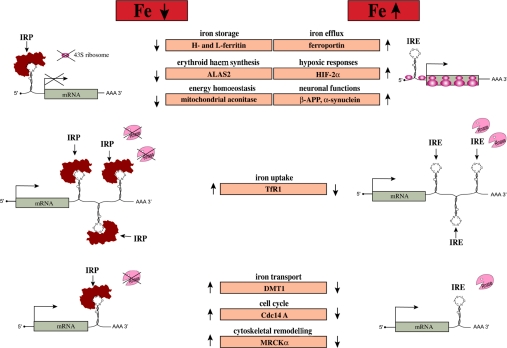
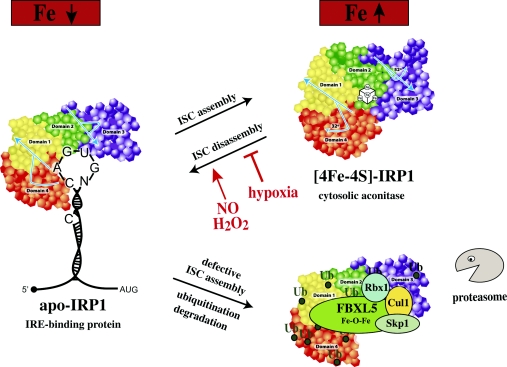
Iron is an essential but potentially hazardous biometal. Mammalian cells require sufficient amounts of iron to satisfy metabolic needs or to accomplish specialized functions. Iron is delivered to tissues by circulating transferrin, a transporter that captures iron released into the plasma mainly from intestinal enterocytes or reticuloendothelial macrophages. The binding of iron-laden transferrin to the cell-surface transferrin receptor 1 results in endocytosis and uptake of the metal cargo. Internalized iron is transported to mitochondria for the synthesis of haem or iron-sulfur clusters, which are integral parts of several metalloproteins, and excess iron is stored and detoxified in cytosolic ferritin. Iron metabolism is controlled at different levels and by diverse mechanisms. The present review summarizes basic concepts of iron transport, use and storage and focuses on the IRE (iron-responsive element)/IRP (iron-regulatory protein) system, a well known post-transcriptional regulatory circuit that not only maintains iron homoeostasis in various cell types, but also contributes to systemic iron balance.
铁是一种必需但潜在危险的生物金属。哺乳动物细胞需要足够的铁来满足代谢需求或完成特殊功能。循环转铁蛋白将铁输送到组织中,转铁蛋白是一种将主要从肠上皮细胞或网状内皮巨噬细胞释放到血浆中的铁捕获的转运蛋白。含铁转铁蛋白与细胞表面转铁蛋白受体 1 的结合导致金属货物的内吞和摄取。内化的铁被转运到线粒体中用于血红素或铁硫簇的合成,这些是几种金属蛋白的组成部分,多余的铁在细胞质铁蛋白中储存和解毒。铁代谢在不同水平和通过多种机制进行控制。本综述总结了铁运输、利用和储存的基本概念,并重点介绍了IRE(铁反应元件)/IRP(铁调节蛋白)系统,这是一个众所周知的转录后调节回路,不仅在各种细胞类型中维持铁的体内平衡,而且有助于全身铁平衡。