Choi Sun-Hye, Lee Byung-Hwan, Kim Hyeon-Joong, Jung Seok-Won, Kim Hyun-Sook, Shin Ho-Chul, Lee Jun-Hee, Kim Hyoung-Chun, Rhim Hyewhon, Hwang Sung-Hee, Ha Tal Soo, Kim Hyun-Ji, Cho Hana, Nah Seung-Yeol
Department of Physiology, College of Veterinary Medicine and Bio/Molecular Informatics Center, Konkuk University, Seoul 143-701, Korea.
Department of Pharmacology and Toxicology, College of Veterinary Medicine, Konkuk University, Seoul 143-701, Korea.
Mol Cells. 2014 Sep;37(9):656-63. doi: 10.14348/molcells.2014.0087. Epub 2014 Sep 18.
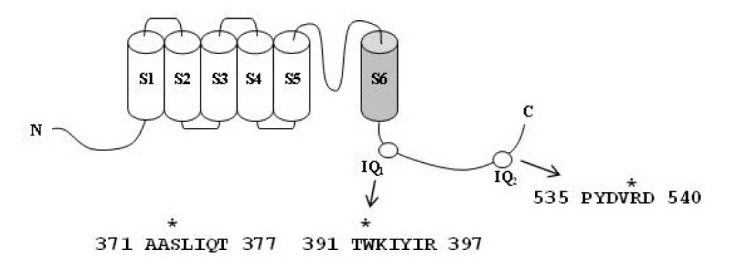
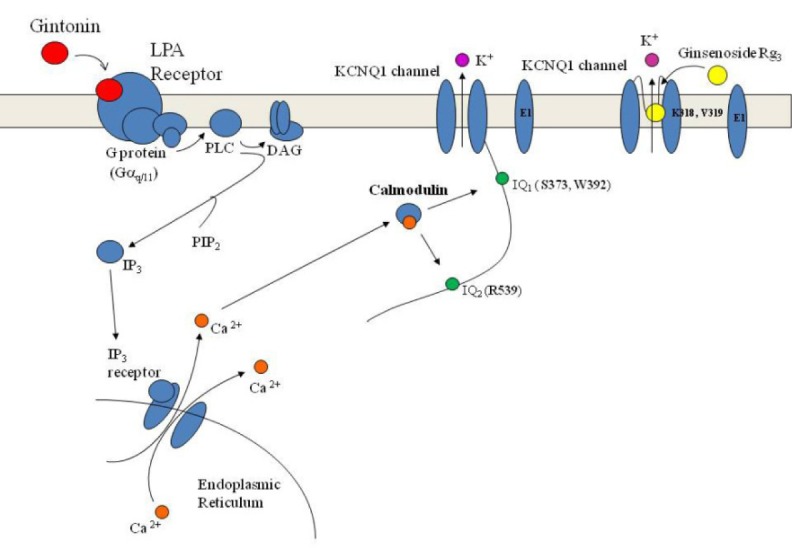
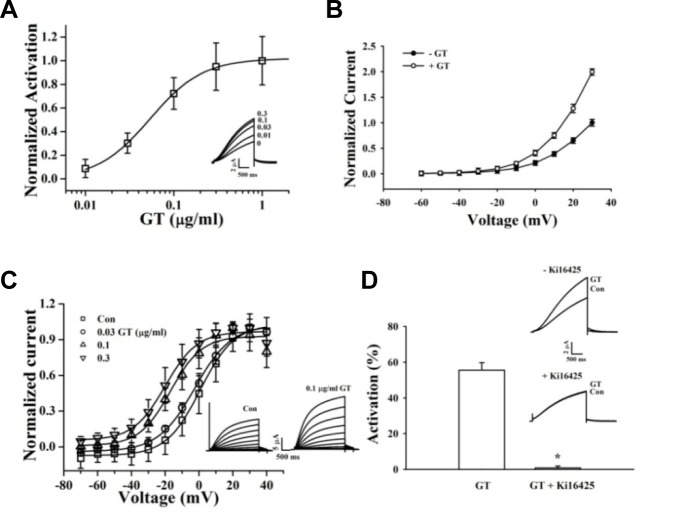
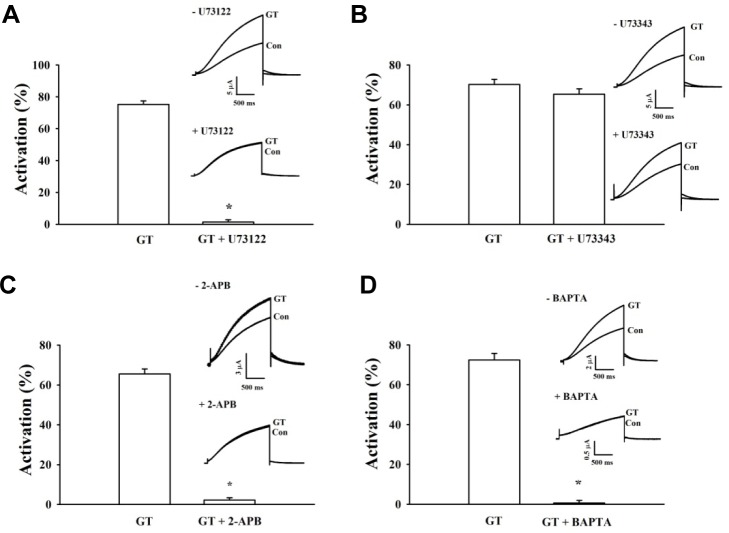
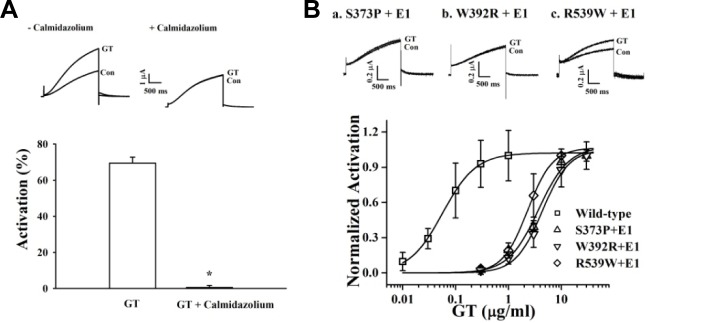
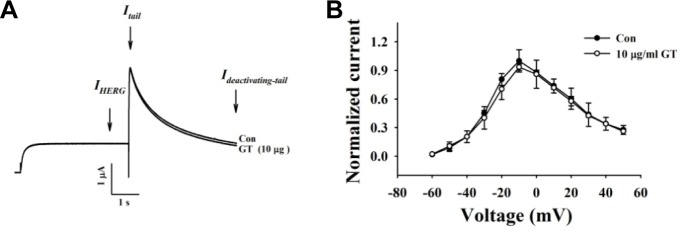
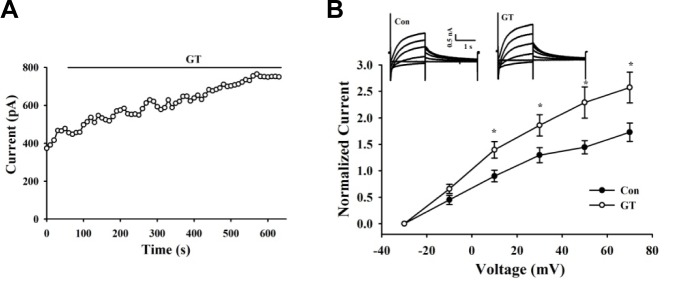
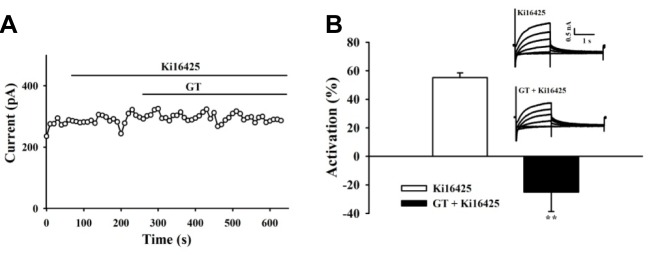
Gintonin, a novel, ginseng-derived G protein-coupled lysophosphatidic acid (LPA) receptor ligand, elicits [Ca(2+)]i transients in neuronal and non-neuronal cells via pertussis toxin-sensitive and pertussis toxin-insensitive G proteins. The slowly activating delayed rectifier K(+) (I(Ks)) channel is a cardiac K(+) channel composed of KCNQ1 and KCNE1 subunits. The C terminus of the KCNQ1 channel protein has two calmodulin-binding sites that are involved in regulating I(Ks) channels. In this study, we investigated the molecular mechanisms of gintonin-mediated activation of human I(Ks) channel activity by expressing human I(Ks) channels in Xenopus oocytes. We found that gintonin enhances IKs channel currents in concentration- and voltage-dependent manners. The EC50 for the I(Ks) channel was 0.05 ± 0.01 μg/ml. Gintonin-mediated activation of the I(Ks) channels was blocked by an LPA1/3 receptor antagonist, an active phospholipase C inhibitor, an IP3 receptor antagonist, and the calcium chelator BAPTA. Gintonin-mediated activation of both the I(Ks) channel was also blocked by the calmodulin (CaM) blocker calmidazolium. Mutations in the KCNQ1 [Ca(2+)]i/CaM-binding IQ motif sites (S373P, W392R, or R539W)blocked the action of gintonin on I(Ks) channel. However, gintonin had no effect on hERG K(+) channel activity. These results show that gintonin-mediated enhancement of I(Ks) channel currents is achieved through binding of the [Ca(2+)]i/CaM complex to the C terminus of KCNQ1 subunit.
人参皂甙元是一种源自人参的新型G蛋白偶联溶血磷脂酸(LPA)受体配体,它通过百日咳毒素敏感和百日咳毒素不敏感的G蛋白在神经元和非神经元细胞中引发[Ca(2+)]i瞬变。缓慢激活延迟整流钾(I(Ks))通道是一种由KCNQ1和KCNE1亚基组成的心脏钾通道。KCNQ1通道蛋白的C末端有两个钙调蛋白结合位点,参与调节I(Ks)通道。在本研究中,我们通过在非洲爪蟾卵母细胞中表达人I(Ks)通道,研究了人参皂甙元介导的人I(Ks)通道活性激活的分子机制。我们发现人参皂甙元以浓度和电压依赖性方式增强IKs通道电流。I(Ks)通道的EC50为0.05±0.01μg/ml。人参皂甙元介导的I(Ks)通道激活被LPA1/3受体拮抗剂、活性磷脂酶C抑制剂、IP3受体拮抗剂和钙螯合剂BAPTA阻断。人参皂甙元介导的I(Ks)通道激活也被钙调蛋白(CaM)阻滞剂氯氮平阻断。KCNQ1 [Ca(2+)]i/CaM结合IQ模体位点(S373P、W392R或R539W)的突变阻断了人参皂甙元对I(Ks)通道的作用。然而,人参皂甙元对hERG钾通道活性没有影响。这些结果表明,人参皂甙元介导的I(Ks)通道电流增强是通过[Ca(2+)]i/CaM复合物与KCNQ1亚基的C末端结合实现的。