Department of Physiology, Sungkyunkwan University School of Medicine, Suwon, Korea.
Department of Anatomy and Cell Biology, Sungkyunkwan University School of Medicine, Suwon, Korea.
J Cell Physiol. 2022 Jul;237(7):3069-3079. doi: 10.1002/jcp.30775. Epub 2022 May 17.
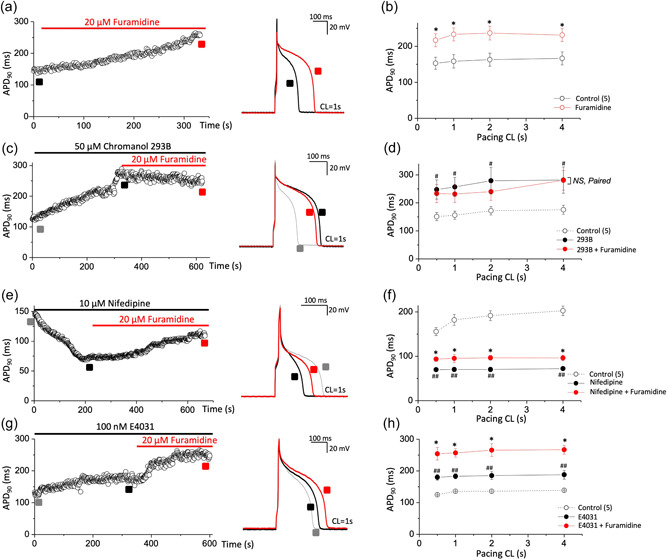
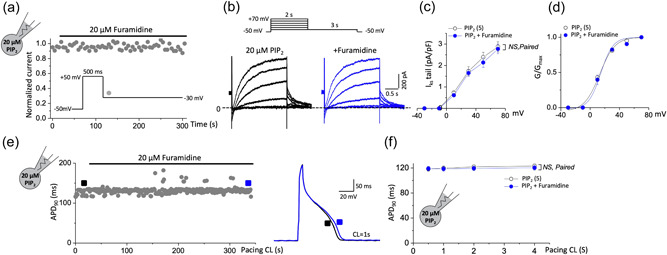
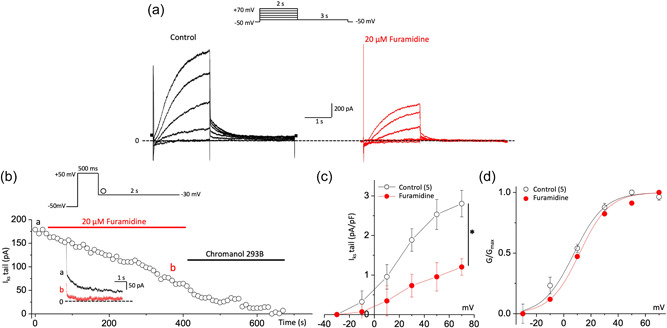
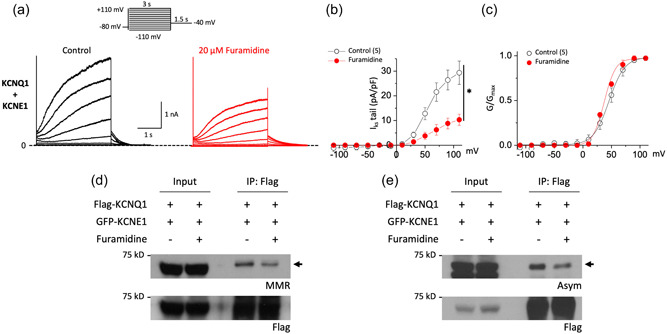
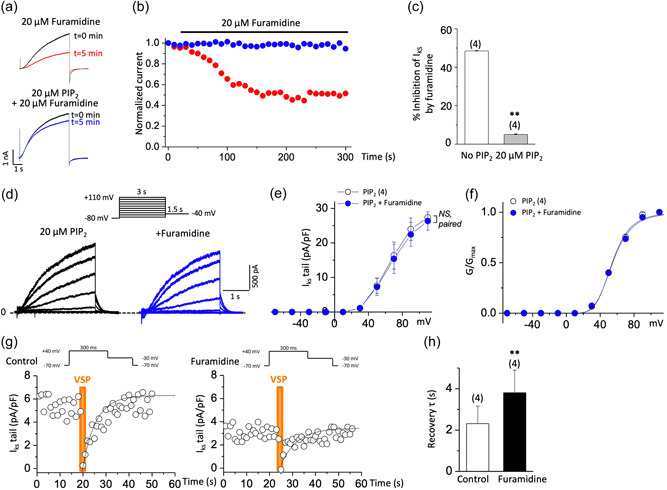
Recent studies have shown that protein arginine methyltransferase 1 (PRMT1) is highly expressed in the human heart, and loss of PRMT1 contributes to cardiac remodeling in the heart failure. However, the functional importance of PRMT1 in cardiac ion channels remains uncertain. The slow activating delayed rectifier K (I ) channel is a cardiac K channel composed of KCNQ1 and KCNE1 subunits and is a new therapeutic target for treating lethal arrhythmias in many cardiac pathologies, especially heart failure. Here, we demonstrate that PRMT1 is a critical regulator of the I channel and cardiac rhythm. In the guinea pig ventricular myocytes, treatment with furamidine, a PRMT1-specific inhibitor, prolonged the action potential duration (APD). We further show that this APD prolongation was attributable to I reduction. In HEK293T cells expressing human KCNQ1 and KCNE1, inhibiting PRMT1 via furamidine reduced I and concurrently decreased the arginine methylation of KCNQ1, a pore-forming α-subunit. Evidence presented here indicates that furamidine decreased I mainly by lowering the affinity of I channels for the membrane phospholipid, phosphatidylinositol 4,5-bisphosphate (PIP ), which is crucial for pore opening. Finally, applying exogenous PIP to cardiomyocytes prevented the furamidine-induced I reduction and APD prolongation. Taken together, these results indicate that PRMT1 positively regulated I activity through channel-PIP interaction, thereby restricting excessive cardiac action potential.
最近的研究表明,蛋白精氨酸甲基转移酶 1(PRMT1)在人心肌中高度表达,PRMT1 的缺失导致心力衰竭中的心脏重构。然而,PRMT1 在心脏离子通道中的功能重要性仍不确定。缓慢激活的延迟整流钾(I)通道是一种由 KCNQ1 和 KCNE1 亚基组成的心脏 K 通道,是治疗许多心脏病理中致命性心律失常的新的治疗靶点,尤其是心力衰竭。在这里,我们证明 PRMT1 是 I 通道和心脏节律的关键调节因子。在豚鼠心室肌细胞中,用 PRMT1 特异性抑制剂 furamidine 处理可延长动作电位时程(APD)。我们进一步表明,这种 APD 延长归因于 I 减少。在表达人 KCNQ1 和 KCNE1 的 HEK293T 细胞中,通过 furamidine 抑制 PRMT1 可减少 I,并同时降低孔形成α亚基 KCNQ1 的精氨酸甲基化。这里提供的证据表明,furamidine 主要通过降低 I 通道对膜磷脂磷脂酰肌醇 4,5-二磷酸(PIP)的亲和力来减少 I,这对于孔开放至关重要。最后,将外源性 PIP 应用于心肌细胞可防止 furamidine 诱导的 I 减少和 APD 延长。总之,这些结果表明 PRMT1 通过通道-PIP 相互作用正向调节 I 活性,从而限制过度的心脏动作电位。