Ray William C, Rumpf R Wolfgang, Sullivan Brandon, Callahan Nicholas, Magliery Thomas, Machiraju Raghu, Wong Bang, Krzywinski Martin, Bartlett Christopher W
Nationwide Children's Hospital, 575 Children's Crossroad, 43215, Columbus, OH, USA ; The Ohio State University, 100 W. 18th Ave, 43210, Columbus, OH, USA ; Contest Chairs.
Nationwide Children's Hospital, 575 Children's Crossroad, 43215, Columbus, OH, USA.
BMC Proc. 2014 Aug 28;8(Suppl 2 Proceedings of the 3rd Annual Symposium on Biologica):S1. doi: 10.1186/1753-6561-8-S2-S1. eCollection 2014.
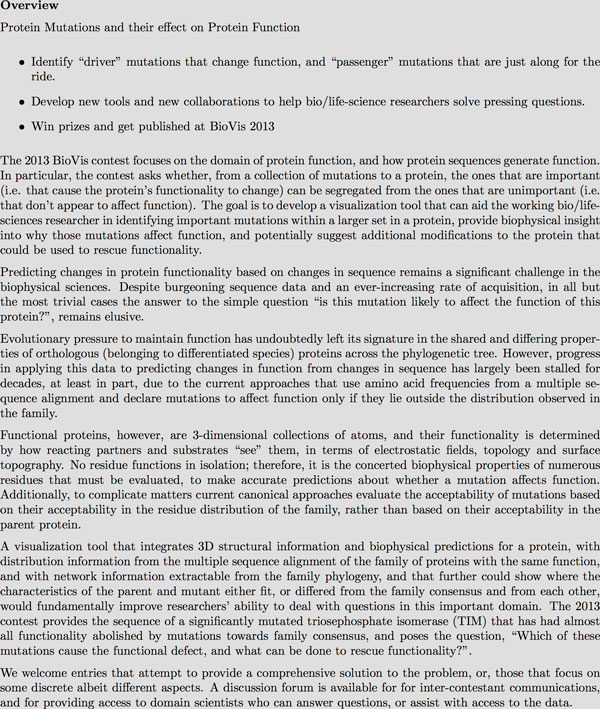
In 2011, the BioVis symposium of the IEEE VisWeek conferences inaugurated a new variety of data analysis contest. Aimed at fostering collaborations between computational scientists and biologists, the BioVis contest provided real data from biological domains with emerging visualization needs, in the hope that novel approaches would result in powerful new tools for the community. In 2011 and 2012 the theme of these contests was expression Quantitative Trait Locus analysis, within and across tissues respectively. In 2013 the topic was updated to protein sequence and mutation visualization.
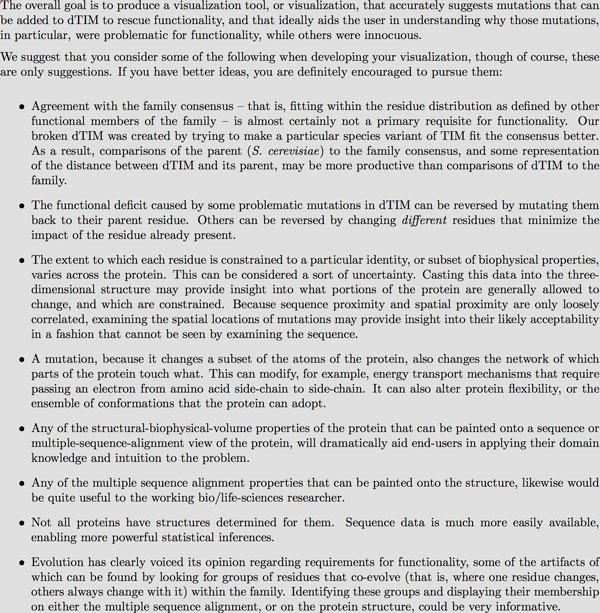
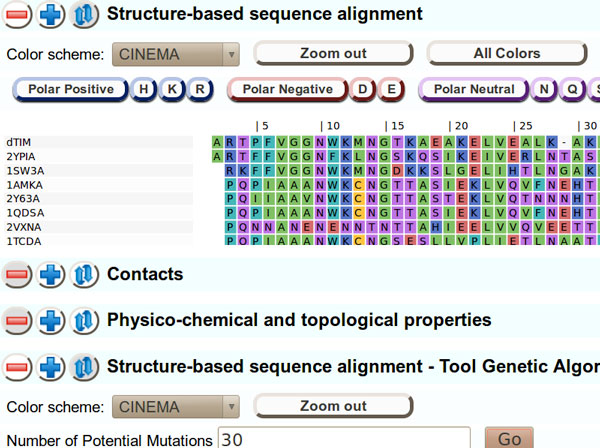
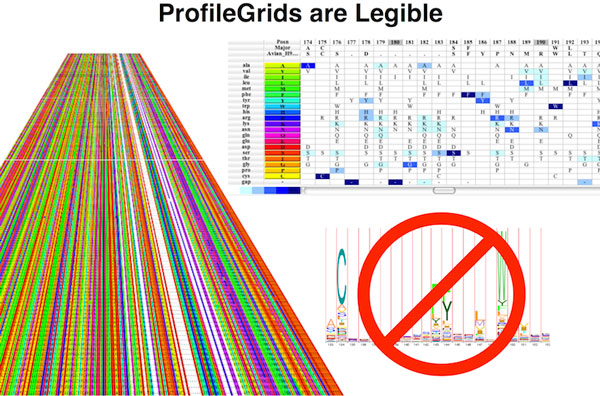
The contest was framed in the context of a real protein with numerous mutations that had lost function, and the question posed "what minimal set of changes would you propose to rescue function, or how could you support a biologist attempting to answer that question?". The data was grounded in actual experimental results in triosephosphate isomerase(TIM) enzymes. Seven teams composed of 36 individuals submitted entries with proposed solutions and approaches to the challenge. Their contributions ranged from careful analysis of the visualization and analytical requirements for the problem through integration of existing tools for analyzing the context and consequences of protein mutations, to completely new tools addressing the problem.
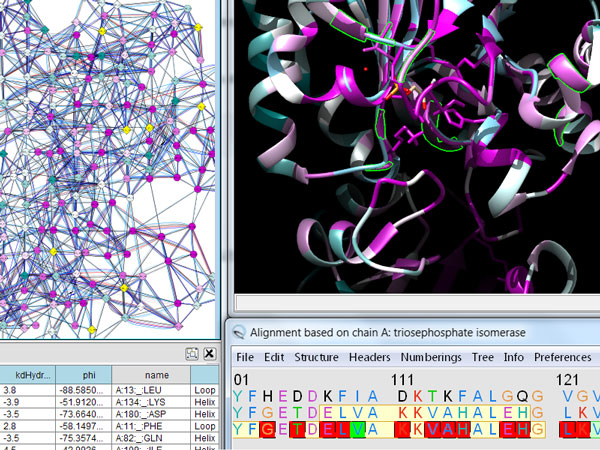
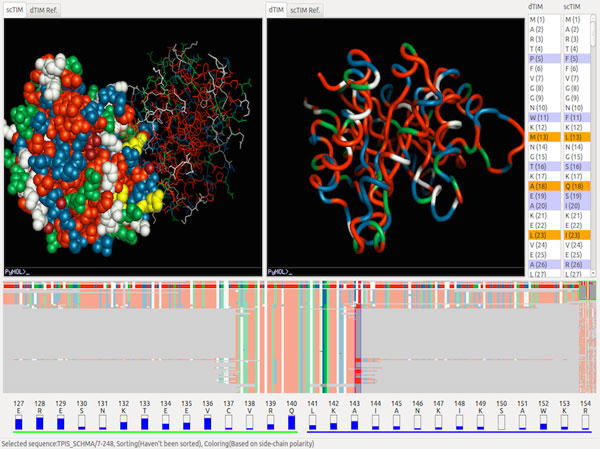
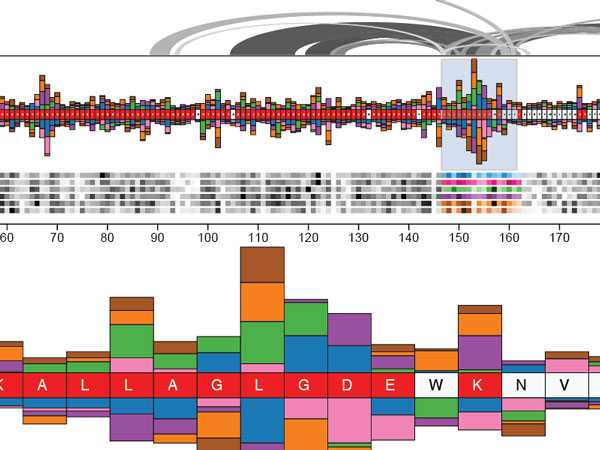
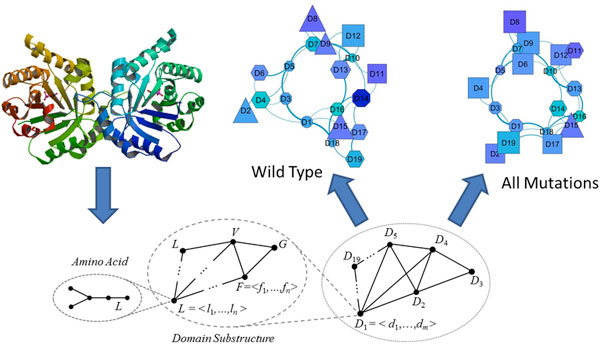
Judges found valuable and novel contributions in each of the entries, including interesting ways to hierarchicalize the protein into domains of informational interaction, tools for simultaneously understanding both sequential and spatial order, and approaches for conveying some types of inter-residue dependencies. In this manuscript we document the problem presented to the contestants, summarize the biological contributions of their entries, and suggest opportunities that this work has highlighted for even more improved tools in the future.
2011年,IEEE VisWeek会议的BioVis研讨会开创了一种新型数据分析竞赛。BioVis竞赛旨在促进计算科学家与生物学家之间的合作,提供来自具有新兴可视化需求的生物领域的真实数据,希望新颖的方法能为该领域带来强大的新工具。2011年和2012年这些竞赛的主题分别是组织内和跨组织的表达数量性状位点分析。2013年主题更新为蛋白质序列和突变可视化。
竞赛围绕一种具有众多功能丧失突变的真实蛋白质展开,提出的问题是“你会建议进行哪些最小的一组改变来恢复功能,或者你如何支持生物学家尝试回答这个问题?”。数据基于磷酸丙糖异构酶(TIM)酶的实际实验结果。由36人组成的7个团队提交了针对该挑战的建议解决方案和方法。他们的贡献范围从仔细分析问题的可视化和分析要求,到整合用于分析蛋白质突变背景和后果的现有工具,再到解决该问题的全新工具。
评委们在每个参赛作品中都发现了有价值且新颖的贡献,包括将蛋白质分层为信息相互作用域的有趣方法、同时理解序列和空间顺序的工具,以及传达某些类型残基间依赖性的方法。在本手稿中,我们记录了向参赛者提出的问题,总结了他们参赛作品的生物学贡献,并指出了这项工作为未来改进更多工具所凸显的机会。