Vegezzi Gaia, Anselmi Laura, Huynh Jennifer, Barocelli Elisabetta, Rozengurt Enrique, Raybould Helen, Sternini Catia
CURE Digestive Diseases Research Center, Digestive Diseases Division, Department of Medicine, David Geffen School of Medicine, University of California Los Angeles, Los Angeles, California, United States of America.
Department of Pharmacy, University of Parma, Parma, Italy.
PLoS One. 2014 Sep 19;9(9):e107732. doi: 10.1371/journal.pone.0107732. eCollection 2014.
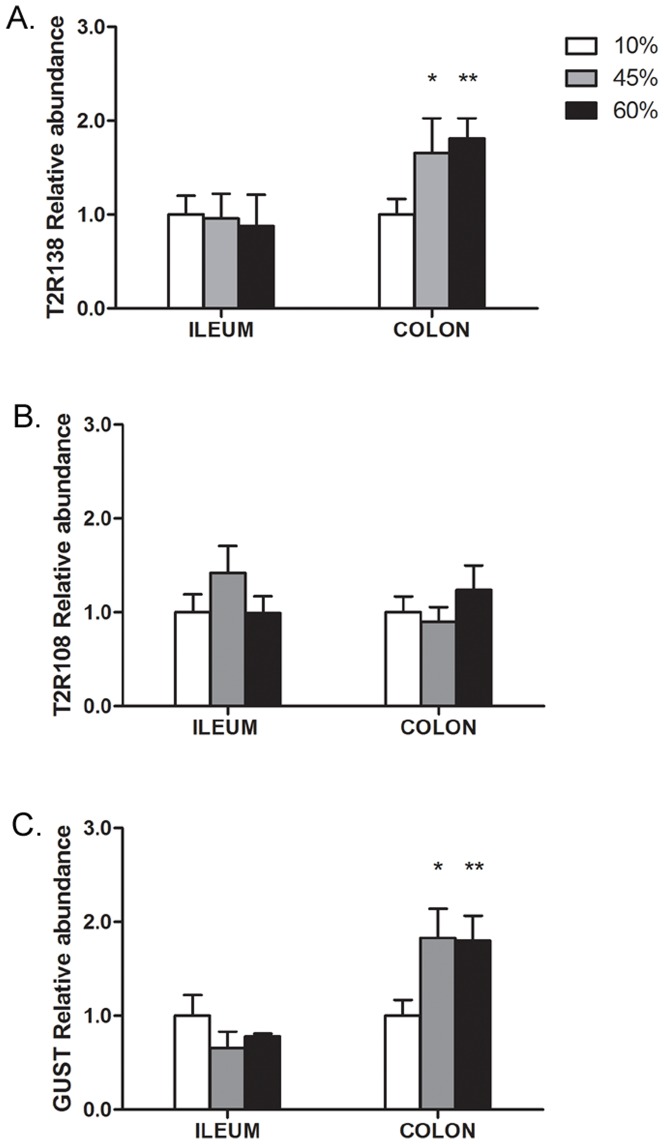
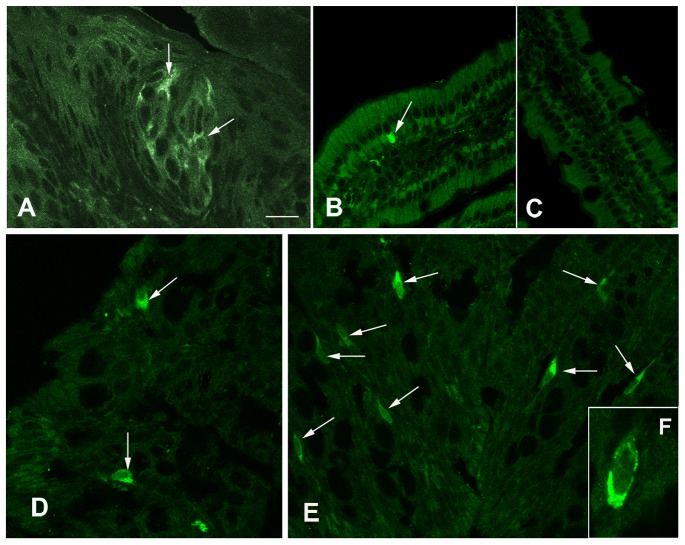
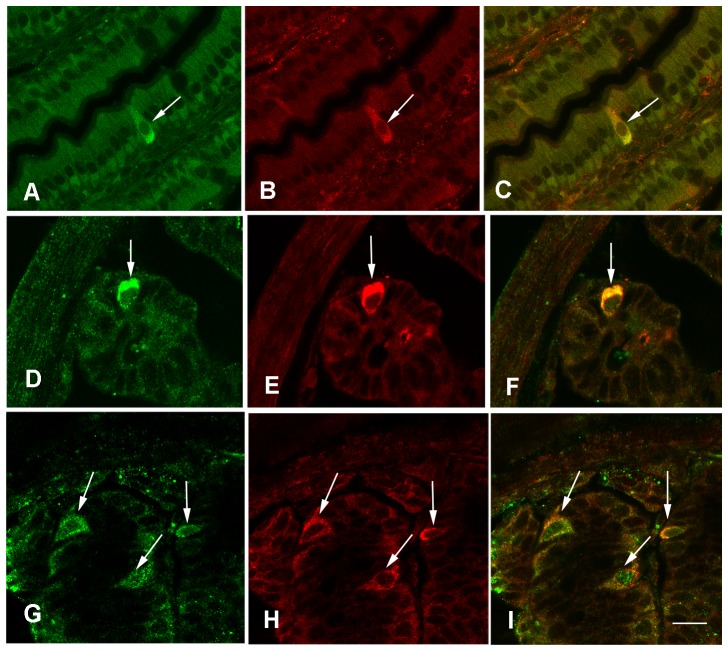
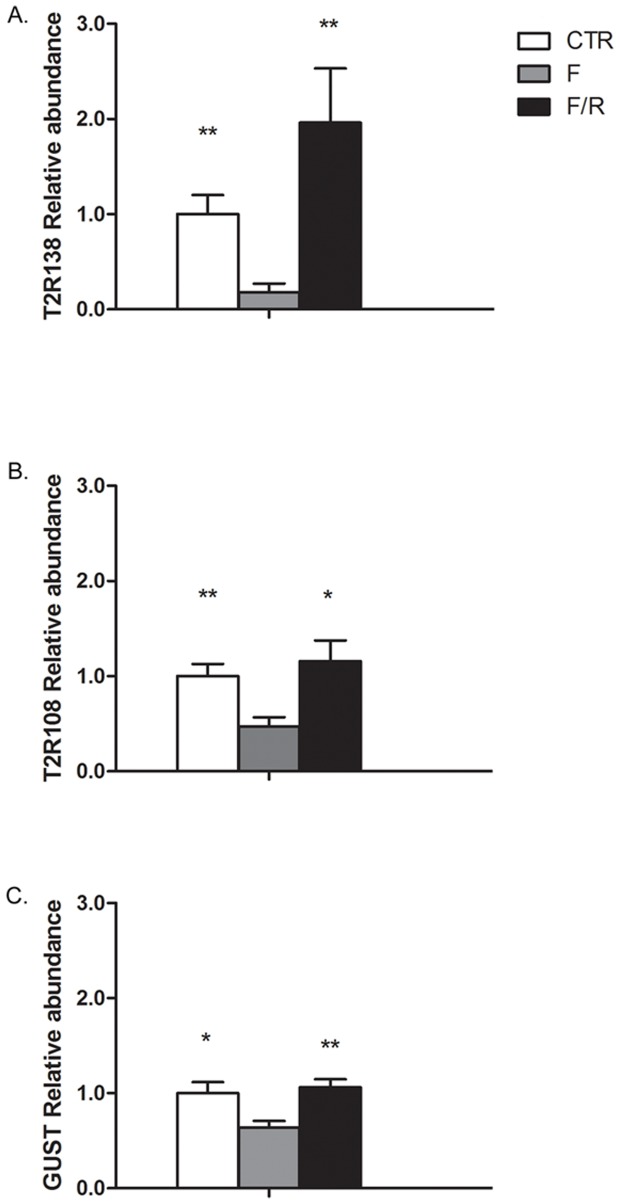
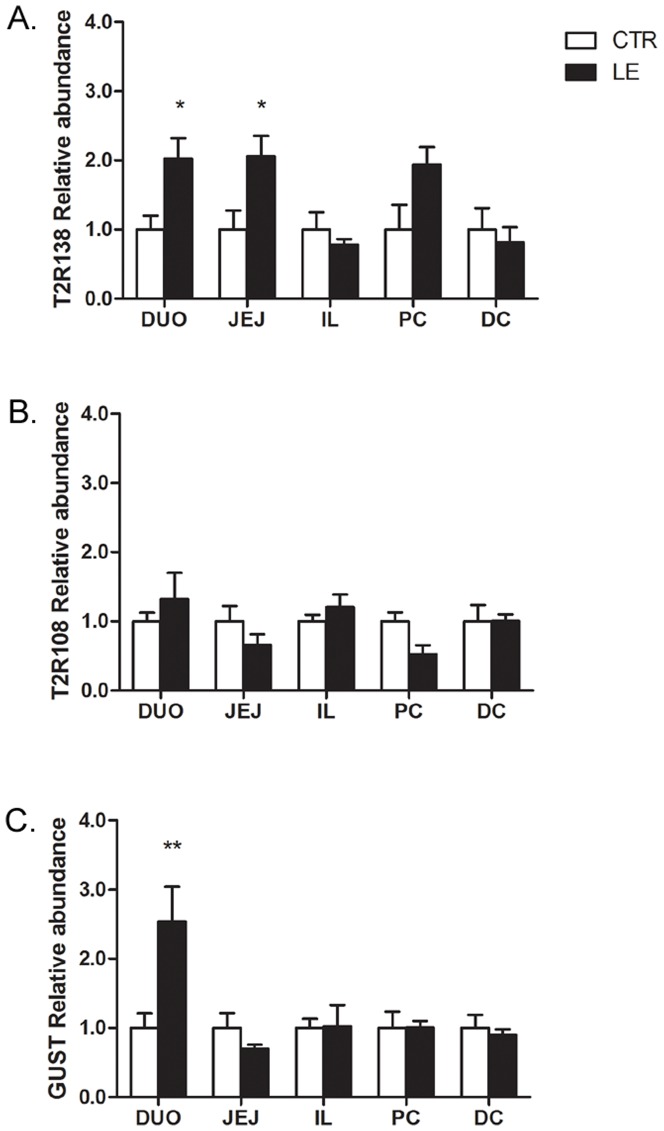
Bitter taste receptors and signaling molecules, which detect bitter taste in the mouth, are expressed in the gut mucosa. In this study, we tested whether two distinct bitter taste receptors, the bitter taste receptor 138 (T2R138), selectively activated by isothiocyanates, and the broadly tuned bitter taste receptor 108 (T2R108) are regulated by luminal content. Quantitative RT-PCR analysis showed that T2R138 transcript is more abundant in the colon than the small intestine and lowest in the stomach, whereas T2R108 mRNA is more abundant in the stomach compared to the intestine. Both transcripts in the stomach were markedly reduced by fasting and restored to normal levels after 4 hours re-feeding. A cholesterol-lowering diet, mimicking a diet naturally low in cholesterol and rich in bitter substances, increased T2R138 transcript, but not T2R108, in duodenum and jejunum, and not in ileum and colon. Long-term ingestion of high-fat diet increased T2R138 RNA, but not T2R108, in the colon. Similarly, α-gustducin, a bitter taste receptor signaling molecule, was reduced by fasting in the stomach and increased by lowering cholesterol in the small intestine and by high-fat diet in the colon. These data show that both short and long term changes in the luminal contents alter expression of bitter taste receptors and associated signaling molecules in the mucosa, supporting the proposed role of bitter taste receptors in luminal chemosensing in the gastrointestinal tract. Bitter taste receptors might serve as regulatory and defensive mechanism to control gut function and food intake and protect the body from the luminal environment.
能在口腔中检测苦味的苦味受体和信号分子在肠道黏膜中也有表达。在本研究中,我们测试了两种不同的苦味受体——异硫氰酸盐选择性激活的苦味受体138(T2R138)和广谱性苦味受体108(T2R108)是否受肠腔内容物的调节。定量逆转录聚合酶链反应(RT-PCR)分析表明,T2R138转录本在结肠中的含量高于小肠,在胃中最低;而T2R108 mRNA在胃中的含量高于肠道。禁食会使胃中的这两种转录本显著减少,重新喂食4小时后恢复到正常水平。模拟低胆固醇、富含苦味物质的天然饮食的降胆固醇饮食,会增加十二指肠和空肠中T2R138转录本,但不会增加回肠和结肠中的T2R138转录本,也不会增加T2R108转录本。长期摄入高脂饮食会增加结肠中T2R138 RNA,但不会增加T2R108。同样,苦味受体信号分子α-味导素在胃中因禁食而减少,在小肠中因降低胆固醇而增加,在结肠中因高脂饮食而增加。这些数据表明,肠腔内容物的短期和长期变化都会改变黏膜中苦味受体和相关信号分子的表达,支持了苦味受体在胃肠道肠腔化学感应中所起作用的观点。苦味受体可能作为一种调节和防御机制,来控制肠道功能和食物摄入,并保护身体免受肠腔环境的影响。