Specchia Maria Lucia, de Waure Chiara, Gualano Maria Rosaria, Doria Andrea, Turchetti Giuseppe, Pippo Lara, Di Nardo Francesco, Capizzi Silvio, Cadeddu Chiara, Kheiraoui Flavia, Iaccarino Luca, Pierotti Francesca, Palla Ilaria, Veneziano Maria Assunta, Gliubizzi Daniela, Sferrazza Antonella, Nicolotti Nicola, Porcasi Rolando, La Torre Giuseppe, Di Pietro Maria Luisa, Ricciardi Walter
Institute of Public Health, Catholic University of the Sacred Heart, 00168 Rome, Italy.
Department of Public Health, University of Turin, 10126 Turin, Italy.
Biomed Res Int. 2014;2014:704207. doi: 10.1155/2014/704207. Epub 2014 Aug 17.
Systemic lupus erythematosus (SLE) is treated with anti-inflammatory and immunosuppressive drugs and off-label biologics. Belimumab is the first biologic approved after 50 years as an add-on therapy for active disease. This paper summarizes a health technology assessment performed in Italy.
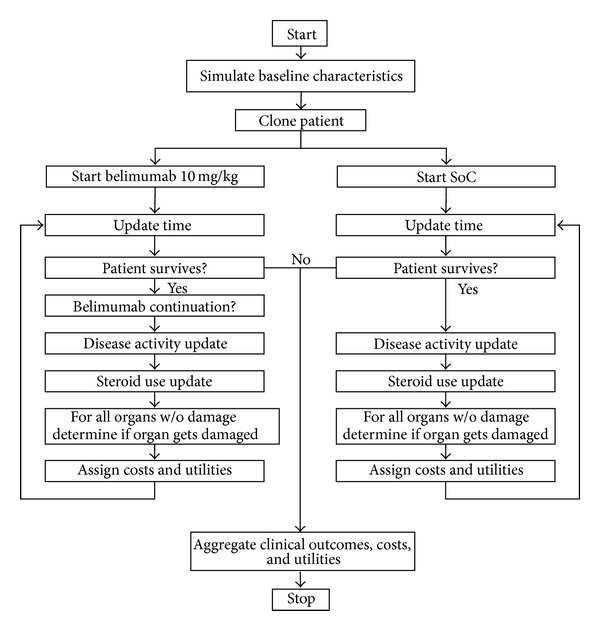
SLE epidemiology and burden were assessed using the best published international and national evidences and efficacy and safety of belimumab were synthesized using clinical data. A cost-effectiveness analysis was performed by a lifetime microsimulation model comparing belimumab to standard of care (SoC). Organizational and ethical implications were discussed.
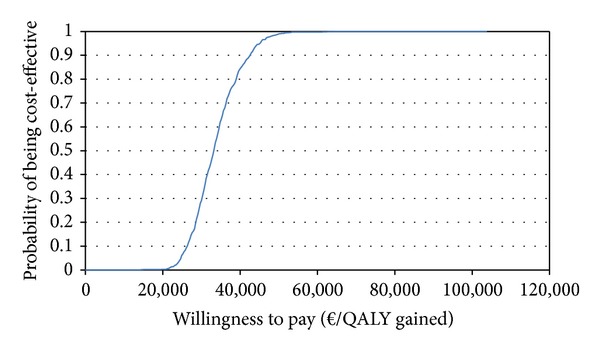
Literature review showed that SLE affects 47 per 100,000 people for a total of 28,500 patients in Italy, 50% of whom are affected by active form of the disease despite SoC. These patients, if autoantibodies and anti-dsDNA positive with low complement, are eligible for belimumab. SLE determines work disability and a 2-5-fold increase in mortality. Belimumab with SoC may prevent 4,742 flares in three years being cost-effective with an incremental cost-effectiveness ratio of €32,859 per quality adjusted life year gained. From the organizational perspective, the development of clear and comprehensive clinical pathways is crucial.
The assessment supports the use of belimumab into the SLE treatment paradigm in Italy.
系统性红斑狼疮(SLE)采用抗炎和免疫抑制药物以及未按药品说明书用药的生物制剂进行治疗。贝利尤单抗是50年来首个获批用于活动性疾病附加治疗的生物制剂。本文总结了在意大利进行的一项卫生技术评估。
利用已发表的最佳国际和国内证据评估SLE的流行病学和疾病负担,并使用临床数据综合分析贝利尤单抗的疗效和安全性。通过终生微观模拟模型进行成本效益分析,将贝利尤单抗与标准治疗(SoC)进行比较。讨论了组织和伦理方面的影响。
文献综述表明,SLE在意大利每10万人中有47人受影响,共计28500名患者,其中50%的患者尽管接受了标准治疗,但仍患有活动性疾病。这些患者如果自身抗体和抗双链DNA呈阳性且补体水平低,则有资格使用贝利尤单抗。SLE会导致工作残疾,死亡率增加2至5倍。贝利尤单抗联合标准治疗在三年内可预防4742次病情发作,具有成本效益,每获得一个质量调整生命年的增量成本效益比为32859欧元。从组织角度来看,制定清晰全面的临床路径至关重要。
该评估支持在意大利的SLE治疗模式中使用贝利尤单抗。