Bokhari Abdullah A B, Mita-Mendoza Neida K, Fuller Alexandra, Pillai Ajay D, Desai Sanjay A
The Laboratory of Malaria and Vector Research, National Institute of Allergy and Infectious Diseases, National Institutes of Health, Rockville, MD 20852, USA.
Biomed Res Int. 2014;2014:741024. doi: 10.1155/2014/741024. Epub 2014 Aug 27.
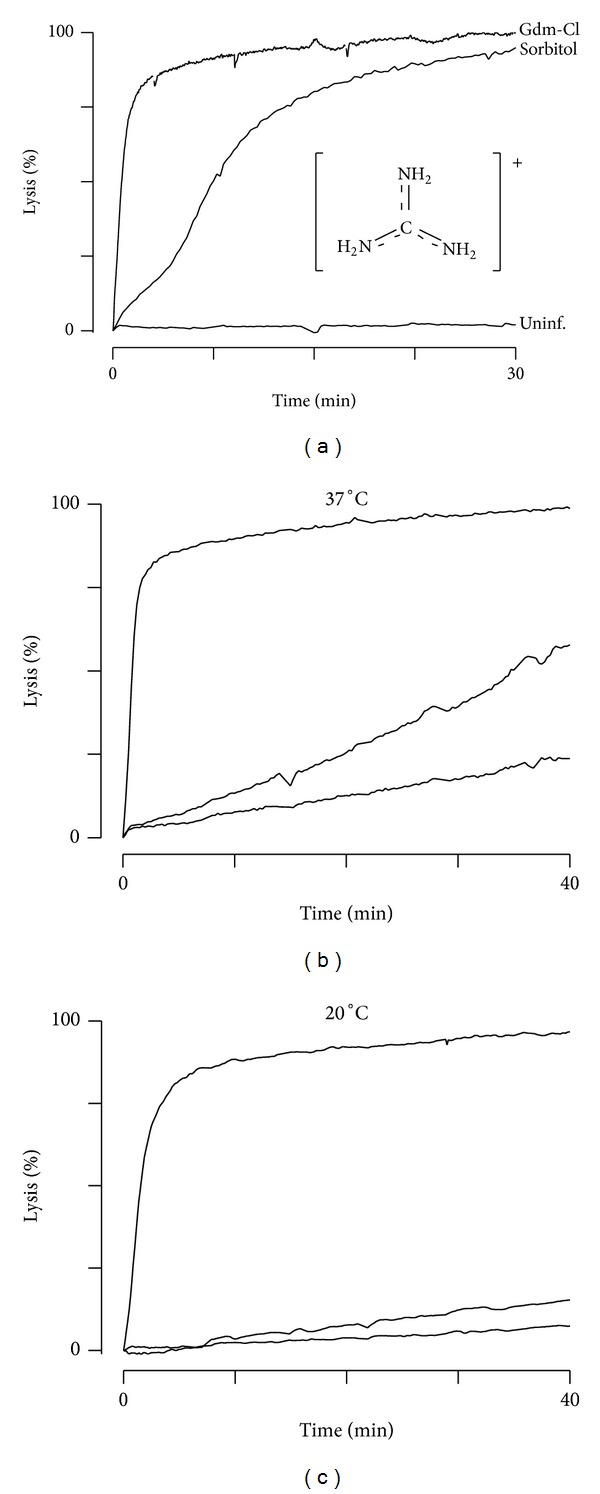
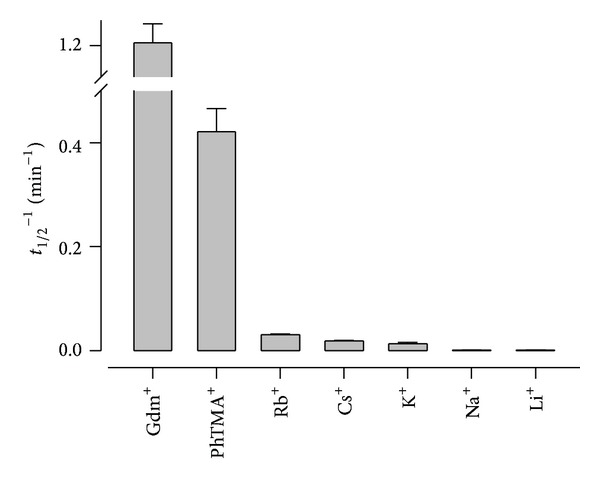
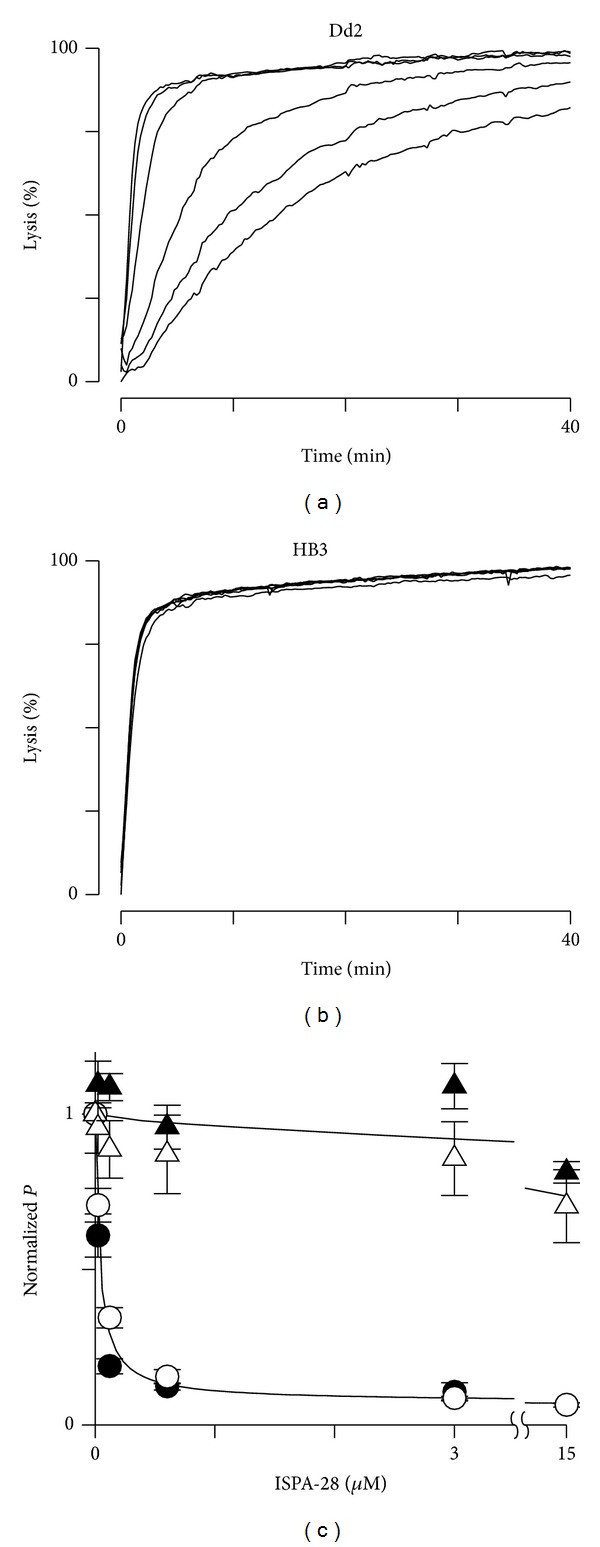
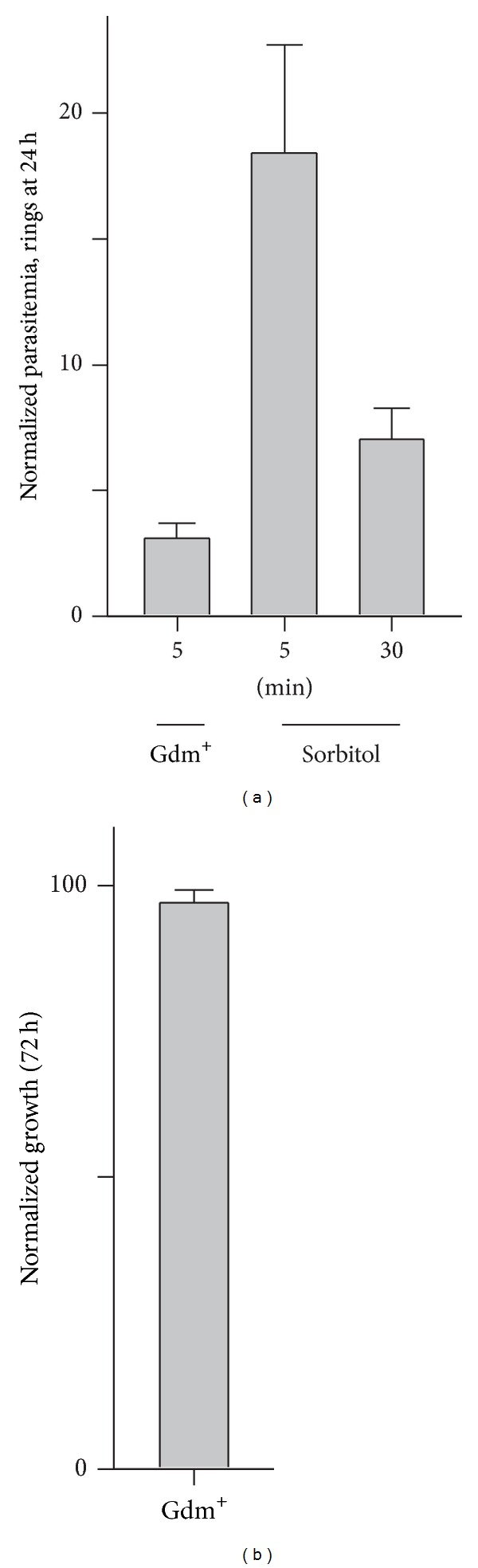
Malaria parasites grow within vertebrate erythrocytes and increase host cell permeability to access nutrients from plasma. This increase is mediated by the plasmodial surface anion channel (PSAC), an unusual ion channel linked to the conserved clag gene family. Although PSAC recognizes and transports a broad range of uncharged and charged solutes, it must efficiently exclude the small Na(+) ion to maintain infected cell osmotic stability. Here, we examine possible mechanisms for this remarkable solute selectivity. We identify guanidinium as an organic cation with high permeability into human erythrocytes infected with Plasmodium falciparum, but negligible uptake by uninfected cells. Transport characteristics and pharmacology indicate that this uptake is specifically mediated by PSAC. The rank order of organic and inorganic cation permeabilities suggests cation dehydration as the rate-limiting step in transport through the channel. The high guanidinium permeability of infected cells also allows rapid and stringent synchronization of parasite cultures, as required for molecular and cellular studies of this pathogen. These studies provide important insights into how nutrients and ions are transported via PSAC, an established target for antimalarial drug development.
疟原虫在脊椎动物红细胞内生长,并增加宿主细胞通透性以从血浆中获取营养物质。这种增加是由疟原虫表面阴离子通道(PSAC)介导的,PSAC是一种与保守的clag基因家族相关的特殊离子通道。尽管PSAC能识别并转运多种不带电荷和带电荷的溶质,但它必须有效排除小的Na(+)离子以维持被感染细胞的渗透稳定性。在此,我们研究这种显著溶质选择性的可能机制。我们确定胍盐是一种对感染恶性疟原虫的人类红细胞具有高通透性的有机阳离子,但未感染细胞对其摄取可忽略不计。转运特性和药理学表明这种摄取是由PSAC特异性介导的。有机和无机阳离子通透性的排序表明阳离子脱水是通过该通道转运的限速步骤。感染细胞对胍盐的高通透性还使得寄生虫培养物能够快速且严格地同步化,这是对该病原体进行分子和细胞研究所需的。这些研究为营养物质和离子如何通过PSAC转运提供了重要见解,PSAC是抗疟药物开发的既定靶点。