Department of Molecular Tropical Medicine, Faculty of Tropical Medicine, Mahidol University, 420/6 Ratchawithi Road, Ratchathewi, Bangkok, 10400, Thailand.
Mahidol Vivax Research Unit, Faculty of Tropical Medicine, Mahidol University, 420/6 Ratchawithi Road, Ratchathewi, Bangkok, 10400, Thailand.
Malar J. 2019 Apr 25;18(1):148. doi: 10.1186/s12936-019-2783-1.
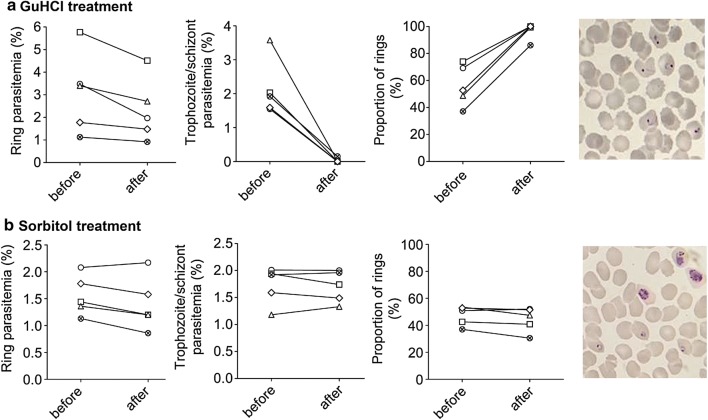
Long-term in vitro culture of blood stage Plasmodium parasites invariably leads to asynchronous parasite development. The most often used technique to synchronize Plasmodium falciparum culture is sorbitol treatment, which differentially induces osmotic lysis of trophozoite- and schizont-infected red blood cells due to presence of the new permeation pathways in the membranes of these cells. However, sorbitol treatment does not work well when used to synchronize the culture-adapted Plasmodium knowlesi A1-H.1 line.
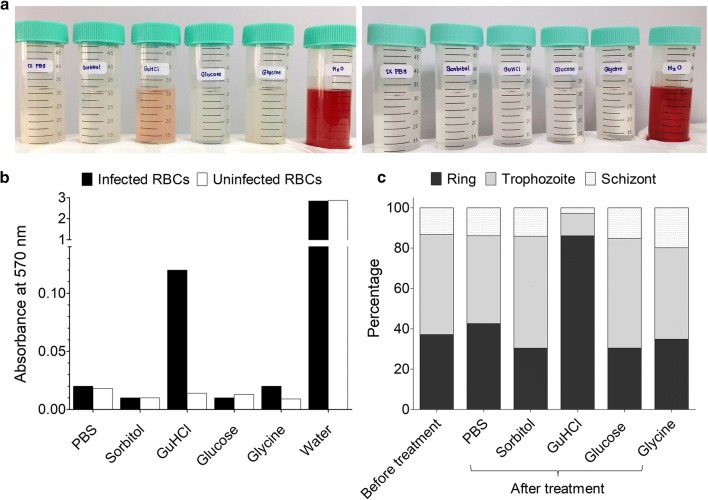
A number of common solutes were tested in lieu of sorbitol for synchronization of P. knowlesi A1-H.1 ring stage.
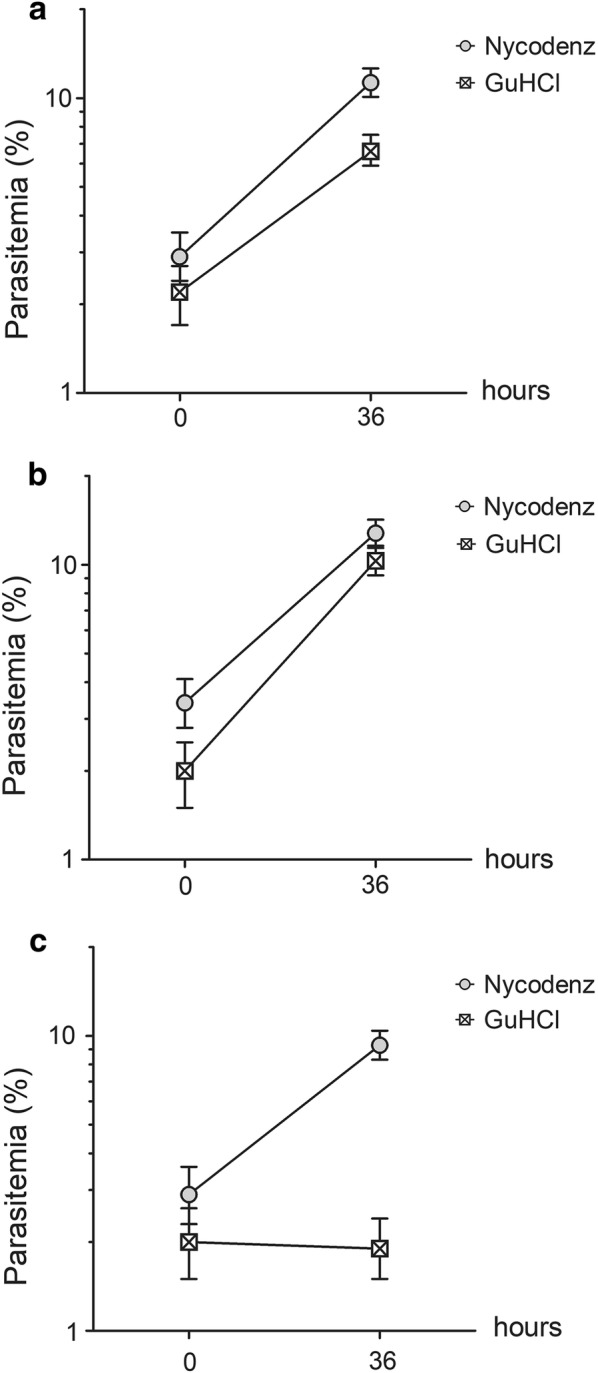
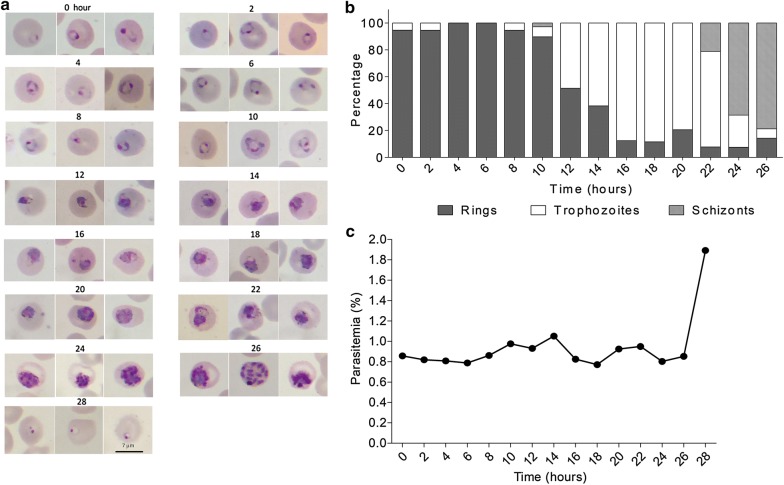
Guanidine hydrochloride was found to selectively lyse trophozoite- and schizont-infected red blood cells, yielding highly synchronous and viable rings.
A method for synchronization of P. knowlesi in human red blood cells was developed. Requiring only common laboratory reagents, this method is simple and should be applicable to most laboratory settings.
长期的体外培养血阶段疟原虫不可避免地导致寄生虫发育不同步。最常用来同步疟原虫培养的技术是山梨醇处理,由于这些细胞的膜中新的渗透途径的存在,山梨醇处理会导致滋养体和裂殖体感染的红细胞的差异渗透裂解。然而,当用于同步适应培养的疟原虫 knowlesi A1-H.1 系时,山梨醇处理效果不佳。
用几种常见的溶质代替山梨醇来同步疟原虫 knowlesi A1-H.1 的环期。
发现盐酸胍选择性地裂解滋养体和裂殖体感染的红细胞,产生高度同步和有活力的环。
开发了一种在人红细胞中同步疟原虫 knowlesi 的方法。该方法仅需要常用的实验室试剂,简单易行,应适用于大多数实验室环境。