Quimbaya Mauricio, Raspé Eric, Denecker Geertrui, De Craene Bram, Roelandt Ria, Declercq Wim, Sagaert Xavier, De Veylder Lieven, Berx Geert
Unit of Molecular and Cellular Oncology, Inflammation Research Center, VIB, 9052 Ghent, Belgium; Department of Biomedical Molecular Biology, Ghent University, 9052 Ghent, Belgium; Department of Plant Systems Biology, VIB, 9052 Gent, Belgium; Department of Plant Biotechnology and Bioinformatics, Ghent University, 9052 Gent, Belgium; Pontificia Universidad Javeriana Cali, Department of Natural Sciences and Mathematics, Cali, Colombia.
Unit of Molecular and Cellular Oncology, Inflammation Research Center, VIB, 9052 Ghent, Belgium; Department of Biomedical Molecular Biology, Ghent University, 9052 Ghent, Belgium.
Neoplasia. 2014 Sep;16(9):694-709. doi: 10.1016/j.neo.2014.07.011.
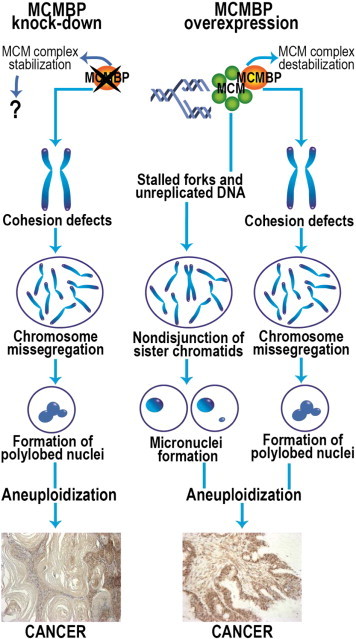
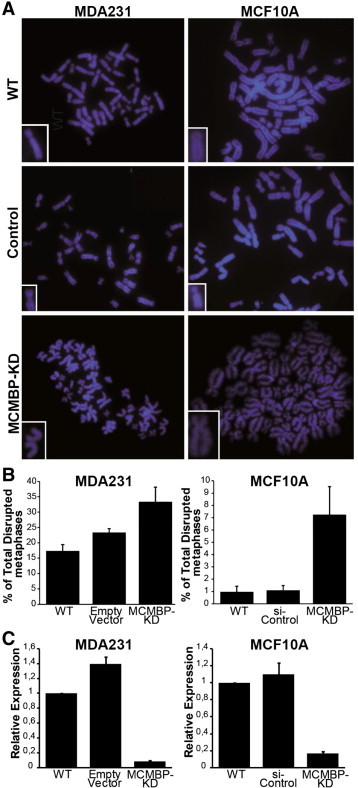
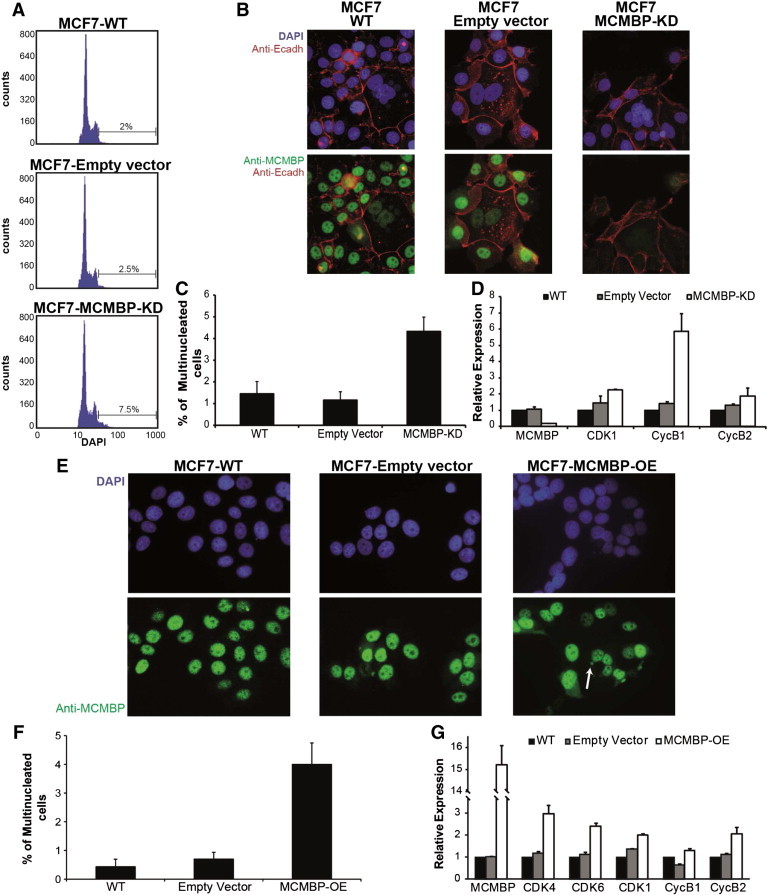
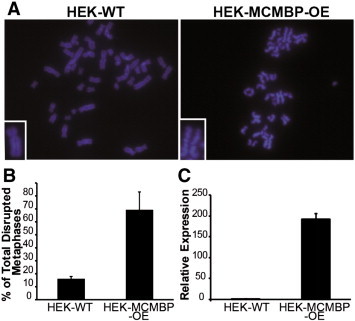
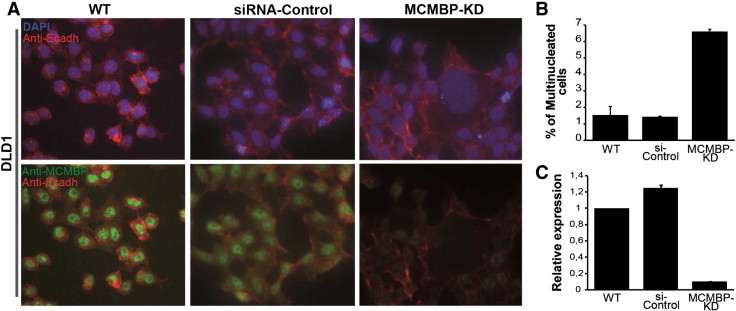
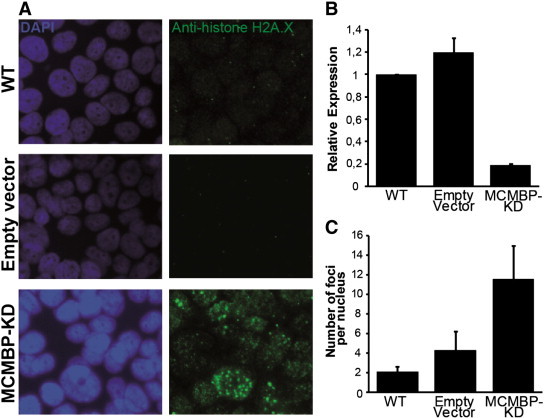
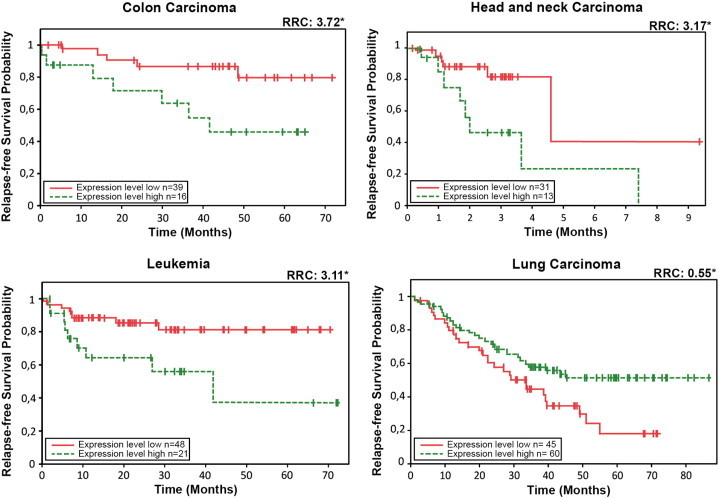
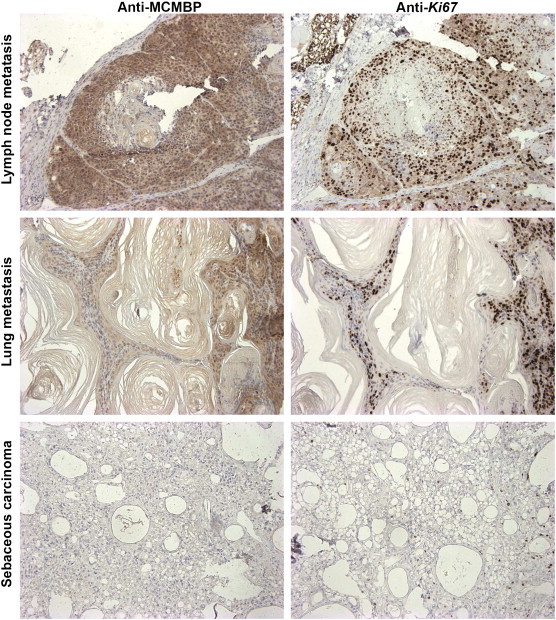
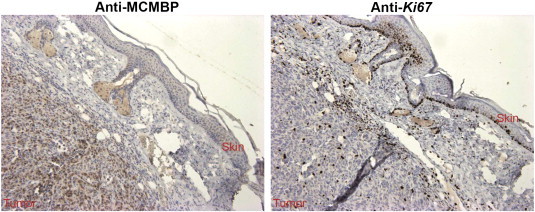
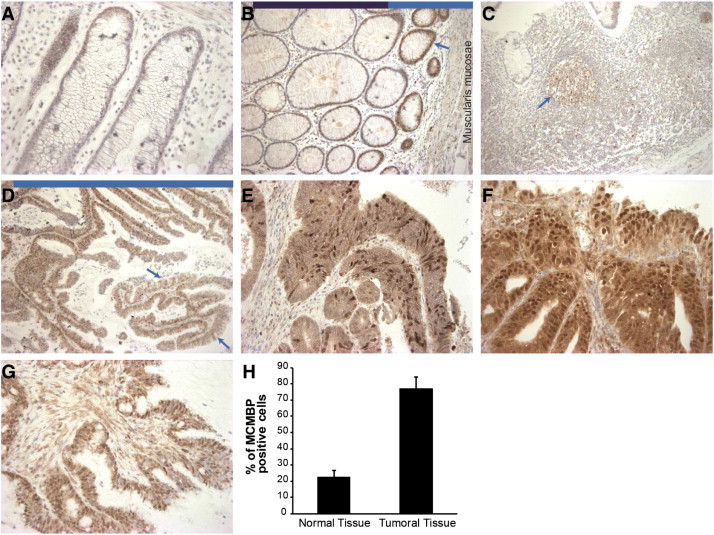
Genetic instability has emerged as an important hallmark of human neoplasia. Although most types of cancers exhibit genetic instability to some extent, in colorectal cancers genetic instability is a distinctive characteristic. Recent studies have shown that deregulation of genes involved in sister chromatid cohesion can result in chromosomal instability in colorectal cancers. Here, we show that the replisome factor minichromosome maintenance complex-binding protein (MCMBP), which is directly involved in the dynamics of the minichromosome maintenance complex and contributes to maintaining sister chromatid cohesion, is transcriptionally misregulated in different types of carcinomas. Cellular studies revealed that both MCMBP knockdown and overexpression in different breast and colorectal cell lines is associated with the emergence of a subpopulation of cells with abnormal nuclear morphology that likely arise as a consequence of aberrant cohesion events. Association analysis integrating gene expression data with clinical information revealed that enhanced MCMBP transcript levels correlate with an increased probability of relapse risk in colorectal cancers and different types of carcinomas. Moreover, a detailed study of a cohort of colorectal tumors showed that the MCMBP protein accumulates to high levels in cancer cells, whereas in normal proliferating tissue its abundance is low, indicating that MCMBP could be exploited as a novel diagnostic marker for this type of carcinoma.
基因不稳定已成为人类肿瘤形成的一个重要标志。尽管大多数类型的癌症在某种程度上都表现出基因不稳定,但在结直肠癌中,基因不稳定是一个显著特征。最近的研究表明,参与姐妹染色单体黏连的基因失调可导致结直肠癌中的染色体不稳定。在此,我们表明复制体因子微小染色体维持复合体结合蛋白(MCMBP),它直接参与微小染色体维持复合体的动态变化并有助于维持姐妹染色单体黏连,在不同类型的癌中存在转录失调。细胞研究显示,在不同的乳腺癌和结肠直肠癌细胞系中,MCMBP的敲低和过表达均与出现具有异常核形态的细胞亚群有关,这些细胞亚群可能是异常黏连事件的结果。将基因表达数据与临床信息相结合的关联分析显示,在结直肠癌和不同类型的癌中,MCMBP转录水平的升高与复发风险增加的可能性相关。此外,对一组结肠直肠肿瘤的详细研究表明,MCMBP蛋白在癌细胞中积累到高水平,而在正常增殖组织中其丰度较低,这表明MCMBP可作为这类癌症的一种新型诊断标志物。