Division of Infectious Diseases, Boston Children's Hospital, Boston, Massachusetts, USA.
Department of Pharmacology and Toxicology, Indiana University School of Medicine, Indianapolis, IN, USA.
Cell Microbiol. 2021 Mar;23(3):e13284. doi: 10.1111/cmi.13284. Epub 2020 Nov 18.
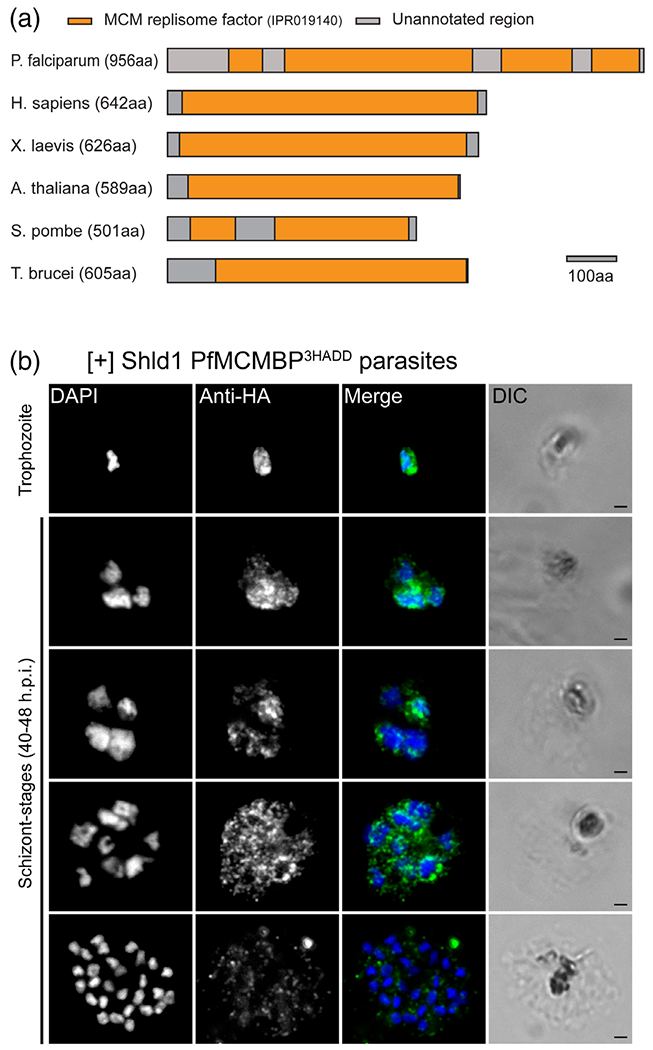
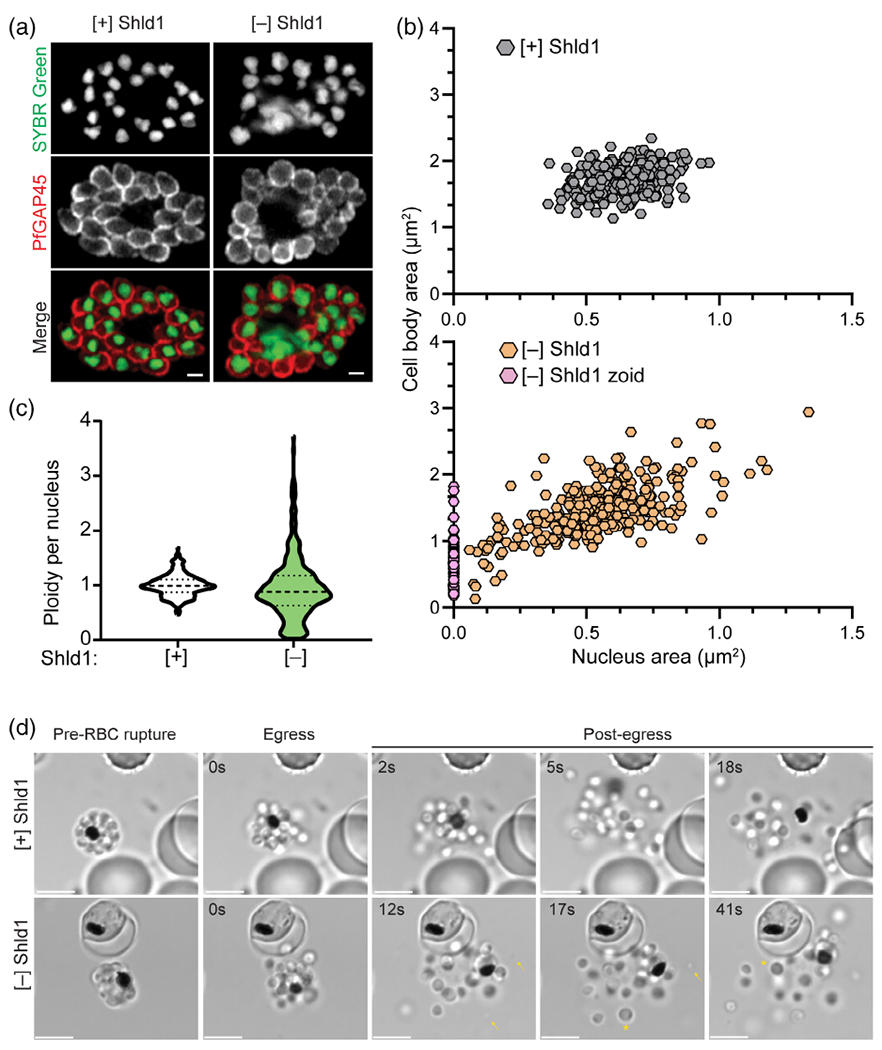
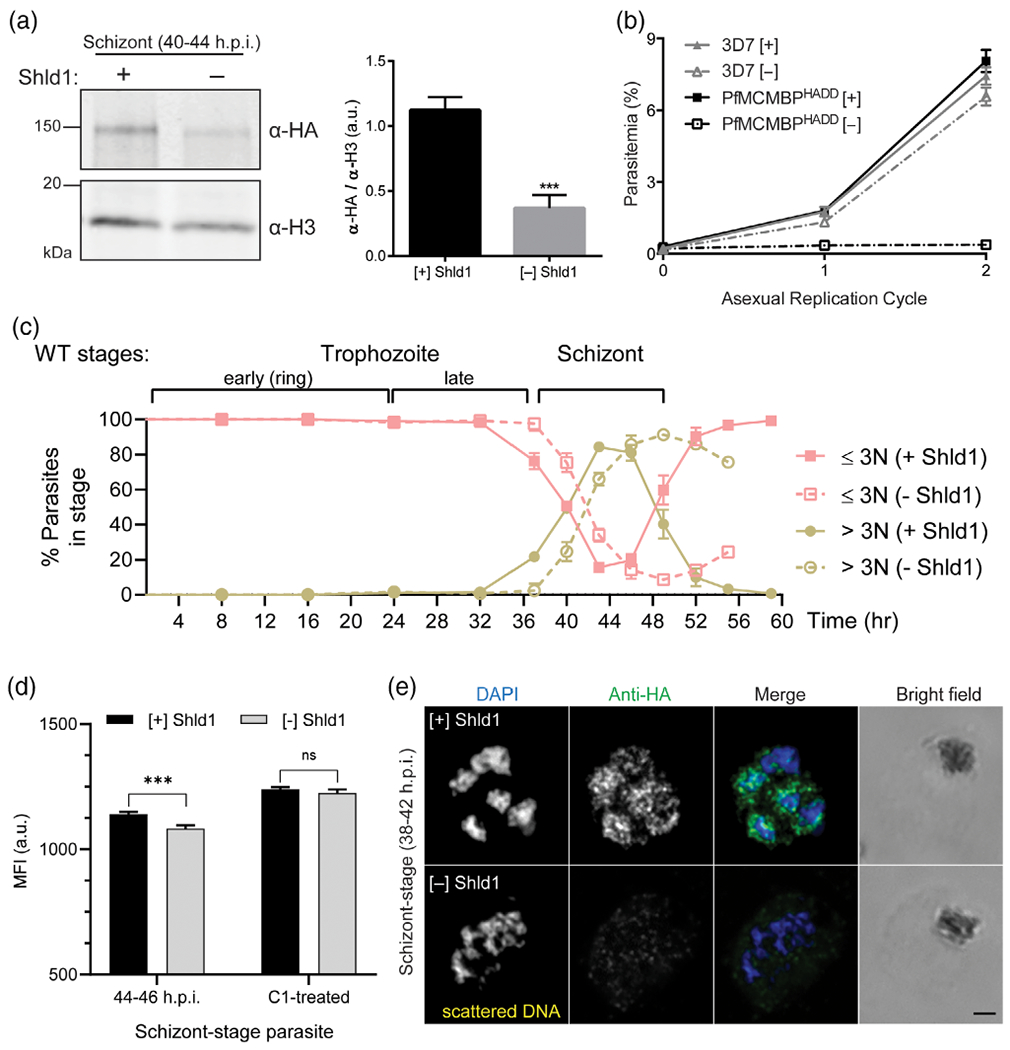
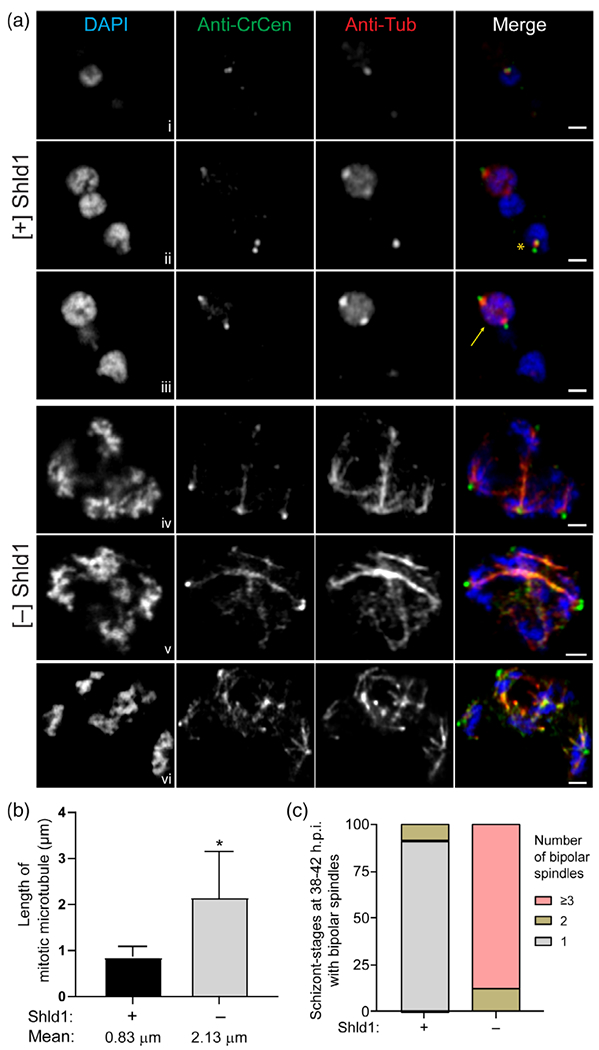
The eukaryotic cell cycle is typically divided into distinct phases with cytokinesis immediately following mitosis. To ensure proper cell division, each phase is tightly coordinated via feedback controls named checkpoints. During its asexual replication cycle, the malaria parasite Plasmodium falciparum undergoes multiple asynchronous rounds of mitosis with segregation of uncondensed chromosomes followed by nuclear division with intact nuclear envelope. The multi-nucleated schizont is then subjected to a single round of cytokinesis that produces dozens of daughter cells called merozoites. To date, no cell cycle checkpoints have been identified that regulate the Plasmodium spp. mode of division. Here, we identify the Plasmodium homologue of the Mini-Chromosome Maintenance Complex Binding Protein (PfMCMBP), which co-purified with the Mini-Chromosome Maintenance (MCM) complex, a replicative helicase required for genomic DNA replication. By conditionally depleting PfMCMBP, we disrupt nuclear morphology and parasite proliferation without causing a block in DNA replication. By immunofluorescence microscopy, we show that PfMCMBP depletion promotes the formation of mitotic spindle microtubules with extensions to more than one DNA focus and abnormal centrin distribution. Strikingly, PfMCMBP-deficient parasites complete cytokinesis and form aneuploid merozoites with variable cellular and nuclear sizes. Our study demonstrates that the parasite lacks a robust checkpoint response to prevent cytokinesis following aberrant karyokinesis.
真核细胞周期通常分为不同的阶段,有丝分裂后紧接着是胞质分裂。为了确保细胞分裂的正常进行,每个阶段都通过名为检查点的反馈控制紧密协调。在无性复制周期中,疟原虫 Plasmodium falciparum 经历多次异步有丝分裂,未浓缩染色体分离,随后核膜完整的核分裂。然后,多核的裂殖子经历一轮胞质分裂,产生数十个称为疟原虫的子细胞。迄今为止,尚未发现调节疟原虫分裂方式的细胞周期检查点。在这里,我们鉴定了与 Mini-Chromosome Maintenance Complex Binding Protein(PfMCMBP)的疟原虫同源物,它与 Mini-Chromosome Maintenance(MCM)复合物共纯化,MCM 复合物是基因组 DNA 复制所需的复制解旋酶。通过条件性耗尽 PfMCMBP,我们破坏了核形态和寄生虫增殖,而不会导致 DNA 复制受阻。通过免疫荧光显微镜,我们表明 PfMCMBP 耗尽会促进有丝分裂纺锤体微管的形成,微管延伸到一个以上的 DNA 焦点,并导致中心体分布异常。引人注目的是,PfMCMBP 缺陷型寄生虫完成胞质分裂并形成非整倍体疟原虫,具有不同的细胞和核大小。我们的研究表明,寄生虫缺乏阻止异常核分裂后进行胞质分裂的稳健检查点反应。