Translational Public Health Unit, Stroke and Ageing Research Centre, Department of Medicine, Monash Medical Centre, School of Clinical Sciences at Monash Health, Monash University, Clayton, VIC, Australia ; Stroke Division, Florey Institute of Neuroscience and Mental Health, Melbourne Brain Centre, Heidelberg, VIC, Australia.
Stroke Division, Florey Institute of Neuroscience and Mental Health, Melbourne Brain Centre, Heidelberg, VIC, Australia.
J Multidiscip Healthc. 2014 Sep 15;7:389-400. doi: 10.2147/JMDH.S67348. eCollection 2014.
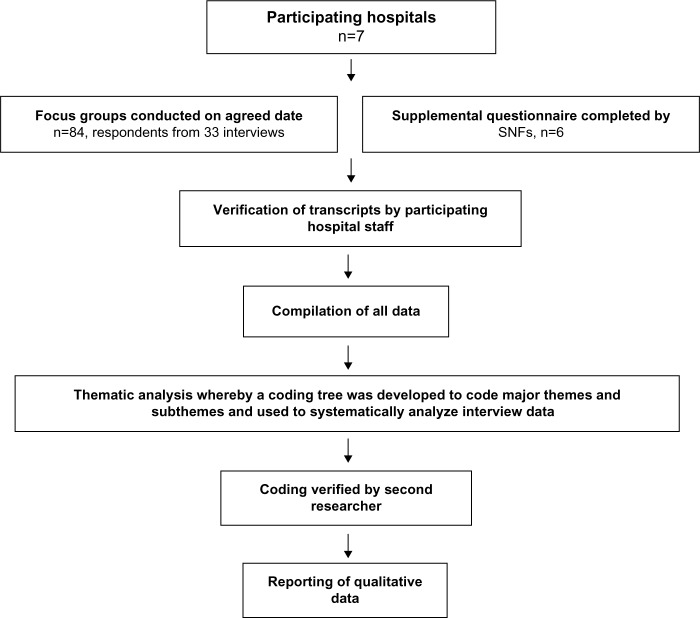
A stroke care strategy was developed in 2007 to improve stroke services in Victoria, Australia. Eight stroke network facilitators (SNFs) were appointed in selected hospitals to enable the establishment of stroke units, develop thrombolysis services, and implement protocols. We aimed to explain the main issues being faced by clinicians in providing evidence-based stroke care, and to determine if the appointment of an SNF was perceived as an acceptable strategy to improve stroke care. Face-to-face semistructured interviews were used in a qualitative research design. Interview transcripts were verified by respondents prior to coding. Two researchers conducted thematic analysis of major themes and subthemes. Overall, 84 hospital staff participated in 33 interviews during 2008. The common factors found to impact on stroke care included staff and equipment availability, location of care, inconsistent use of clinical pathways, and professional beliefs. Other barriers included limited access to specialist clinicians and workload demands. The establishment of dedicated stroke units was considered essential to improve the quality of care. The SNF role was valued for identifying gaps in care and providing capacity to change clinical processes. This is the first large, qualitative multicenter study to describe issues associated with delivering high-quality stroke care and the potential benefits of SNFs to facilitate these improvements.
2007 年制定了一项中风护理策略,以改善澳大利亚维多利亚州的中风服务。在选定的医院任命了 8 名中风网络协调员 (SNF),以建立中风病房、开发溶栓服务并实施协议。我们旨在解释临床医生在提供基于证据的中风护理方面面临的主要问题,并确定任命 SNF 是否被认为是改善中风护理的可接受策略。采用面对面半结构化访谈进行定性研究设计。在编码之前,受访者对访谈记录进行了核实。两位研究人员对主要主题和子主题进行了主题分析。总体而言,2008 年期间共有 84 名医院工作人员参加了 33 次访谈。发现影响中风护理的共同因素包括人员和设备的可用性、护理地点、临床路径使用不一致以及专业信念。其他障碍包括获得专科临床医生的机会有限和工作负荷需求。建立专门的中风病房被认为是改善护理质量的必要条件。SNF 的作用在于发现护理中的差距,并为改变临床流程提供能力。这是第一项大规模、多中心的定性研究,描述了提供高质量中风护理相关的问题,以及 SNF 促进这些改进的潜在益处。