General Practice and Primary Care, Institute of Health and Wellbeing, University of Glasgow, Glasgow, UK.
General Practice and Primary Care, Institute of Health and Wellbeing, University of Glasgow, Glasgow, UK
BMJ Open. 2020 Mar 18;10(3):e034113. doi: 10.1136/bmjopen-2019-034113.
Treatment burden is the healthcare workload experienced by individuals with long-term conditions and the impact on well-being. Excessive treatment burden can negatively affect quality-of-life and adherence to treatments. Patient capacity is the ability of an individual to manage their life and health problems and is dependent on a variety of physical, psychological and social factors. Previous work has suggested that stroke survivors experience considerable treatment burden and limitations on their capacity to manage their health. We aimed to examine the potential barriers and enablers to minimising treatment burden and maximising patient capacity faced by health professionals and managers providing care to those affected by stroke.
Primary and secondary care stroke services in a single health board area in Scotland.
Face-to-face qualitative interviews with 21 participants including stroke consultants, nurses, physiotherapists, occupational therapists, speech and language therapists, psychologists, general practitioners and health-service managers.
Data were analysed using thematic analysis to ascertain any factors that influence the provision of low-burden healthcare.
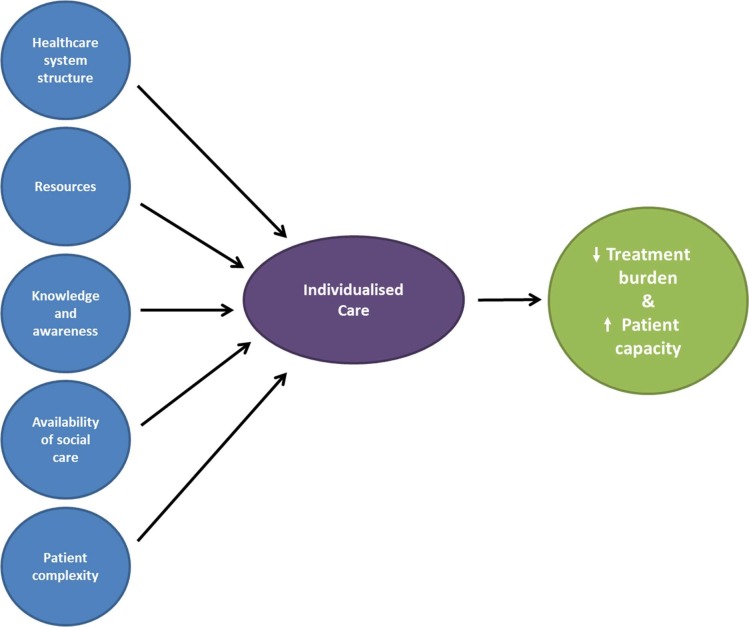
Barriers and facilitators to the provision of healthcare that minimises treatment burden and maximises patient capacity were reported under five themes: healthcare system structure (e.g. care coordination and autonomous working); resources (e.g. availability of ward nurses and community psychologists); knowledge and awareness (e.g. adequate time and materials for optimal information delivery); availability of social care (e.g. waiting times for home adaptations or extra social support) and patient complexity (e.g. multimorbidity).
Our findings have important implications for the design and implementation of stroke care pathways, emphasising the importance of removing barriers to health professional provision of person-centred care. This work can inform the design of interventions aimed at nurturing autonomous working by health professionals, improving communication and care coordination or ensuring availability of a named person throughout the patient journey.
治疗负担是患有慢性病的个体所经历的医疗工作量,以及对幸福感的影响。过多的治疗负担会对生活质量和治疗依从性产生负面影响。患者能力是个体管理生活和健康问题的能力,取决于各种身体、心理和社会因素。先前的研究表明,中风幸存者经历了相当大的治疗负担,并限制了他们管理健康的能力。我们旨在研究为受中风影响的患者提供护理的卫生专业人员和管理人员在减轻治疗负担和最大限度地提高患者能力方面面临的潜在障碍和促进因素。
苏格兰单一卫生委员会区域内的初级和二级保健中风服务。
对 21 名参与者进行了面对面的定性访谈,包括中风顾问、护士、物理治疗师、职业治疗师、言语和语言治疗师、心理学家、全科医生和卫生服务经理。
使用主题分析对数据进行分析,以确定影响提供低负担医疗保健的任何因素。
报告了减轻治疗负担和最大限度地提高患者能力的医疗保健提供的障碍和促进因素,分为五个主题:医疗保健系统结构(例如,护理协调和自主工作);资源(例如,病房护士和社区心理学家的可用性);知识和意识(例如,充足的时间和材料以提供最佳信息);社会保健的可用性(例如,家庭改造或额外社会支持的等待时间)和患者的复杂性(例如,多种疾病)。
我们的研究结果对中风护理途径的设计和实施具有重要意义,强调了消除卫生专业人员提供以患者为中心的护理的障碍的重要性。这项工作可以为旨在培养卫生专业人员自主工作、改善沟通和护理协调或确保患者整个治疗过程中都有指定人员的干预措施的设计提供信息。