Gaudichon Jérémie, Milano Francesco, Cahu Julie, DaCosta Lætitia, Martens Anton C, Renoir Jack-Michel, Sola Brigitte
Equipe Associée 4652, Université de Caen, Normandie Univ, Caen, France.
Institut National de la Santé et de la Recherche Médicale U749, Institut Gustave Roussy, Villejuif, France.
PLoS One. 2014 Sep 25;9(9):e107009. doi: 10.1371/journal.pone.0107009. eCollection 2014.
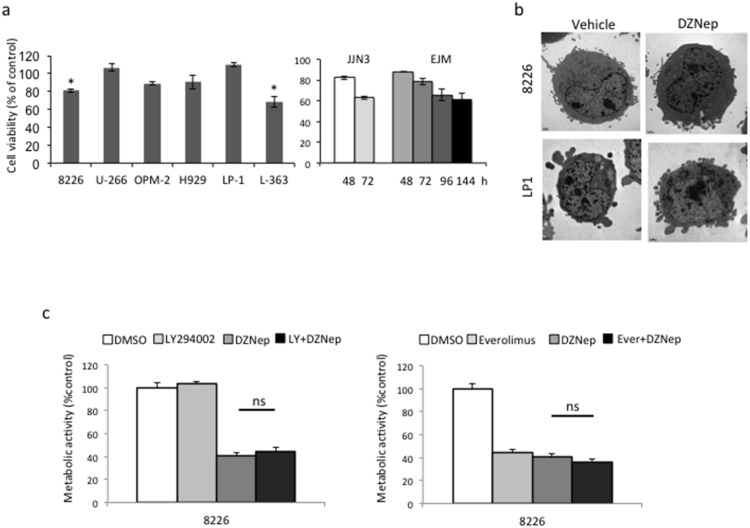
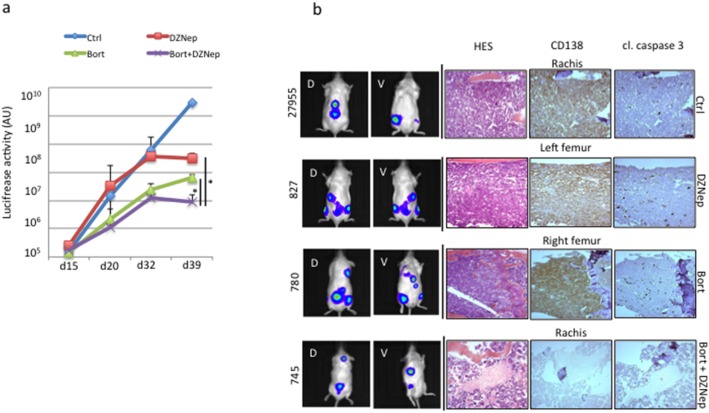
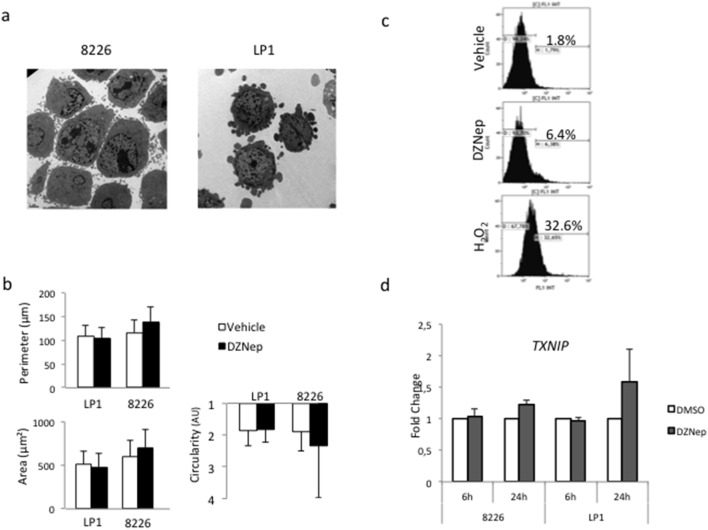
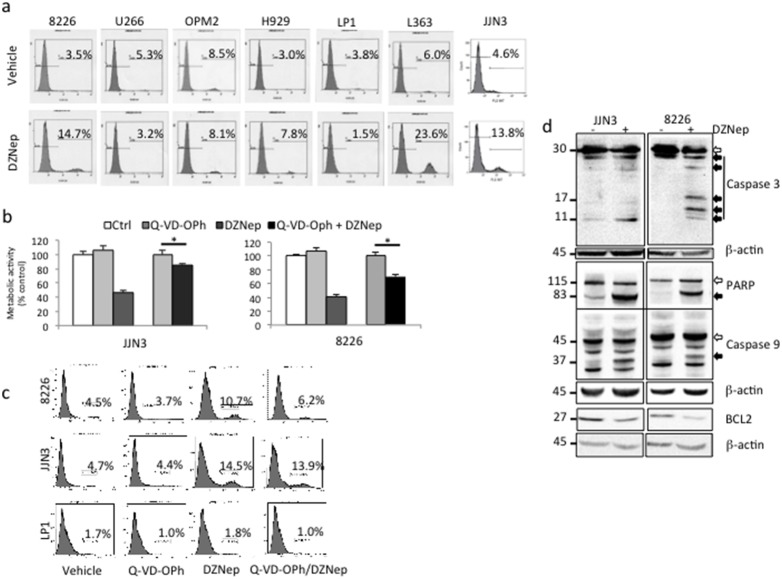
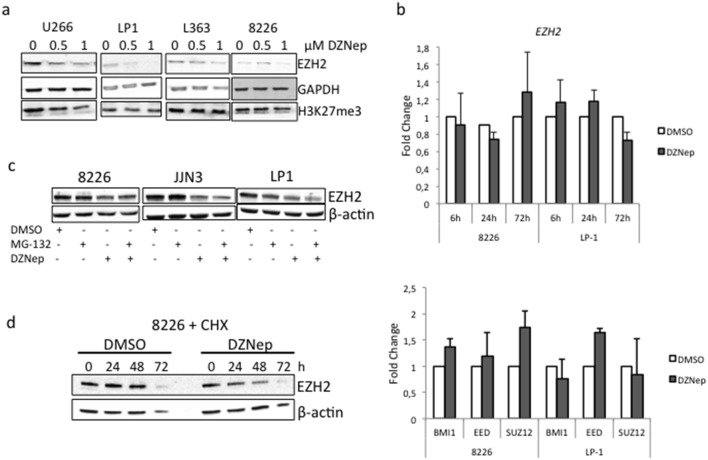
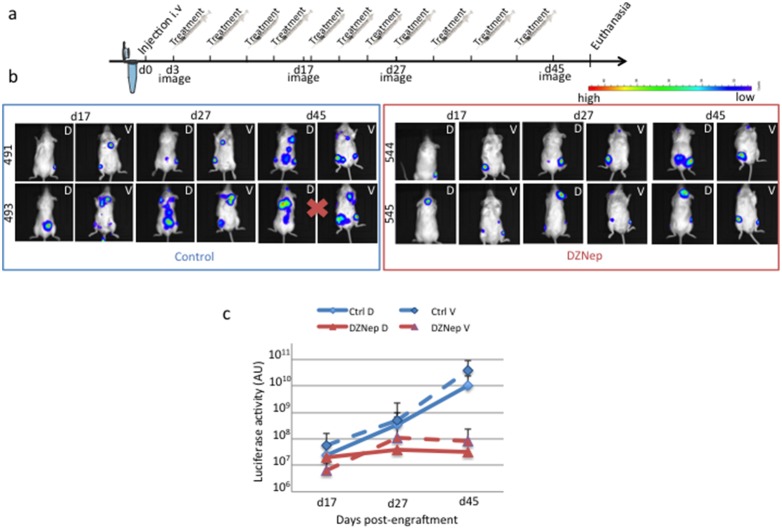
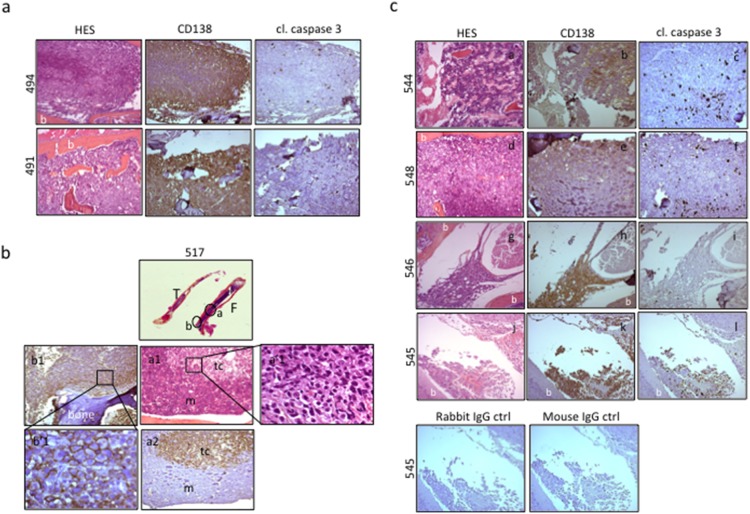
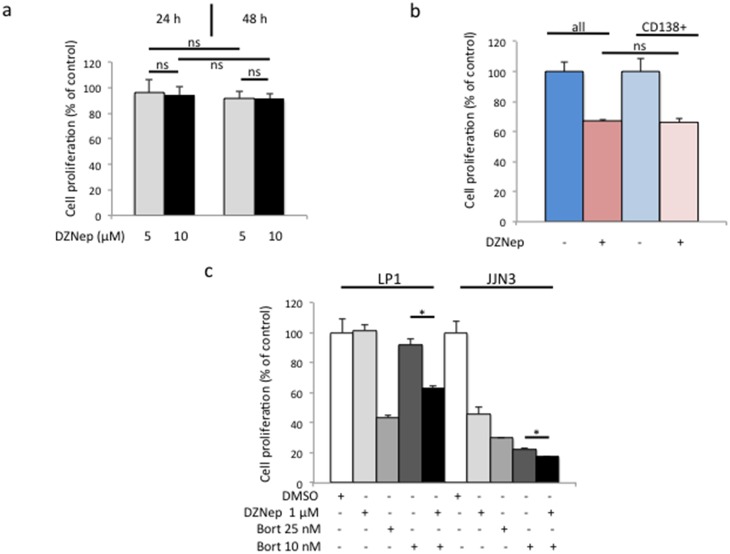
Tumoral plasma cells has retained stemness features and in particular, a polycomb-silenced gene expression signature. Therefore, epigenetic therapy could be a mean to fight for multiple myeloma (MM), still an incurable pathology. Deazaneplanocin A (DZNep), a S-adenosyl-L-homocysteine hydrolase inhibitor, targets enhancer of zest homolog 2 (EZH2), a component of polycomb repressive complex 2 (PRC2) and is capable to induce the death of cancer cells. We show here that, in some MM cell lines, DZNep induced both caspase-dependent and -independent apoptosis. However, the induction of cell death was not mediated through its effect on EZH2 and the trimethylation on lysine 27 of histone H3 (H3K27me3). DZNep likely acted through non-epigenetic mechanisms in myeloma cells. In vivo, in xenograft models, and in vitro DZNep showed potent antimyeloma activity alone or in combination with bortezomib. These preclinical data let us to envisage new therapeutic strategies for myeloma.
肿瘤性浆细胞保留了干性特征,尤其是一种多梳蛋白沉默的基因表达特征。因此,表观遗传疗法可能是对抗多发性骨髓瘤(MM)的一种手段,多发性骨髓瘤仍是一种无法治愈的疾病。去氮杂氮胞苷(DZNep)是一种S-腺苷-L-高半胱氨酸水解酶抑制剂,靶向多梳抑制复合物2(PRC2)的一个组成部分zeste同源物2增强子(EZH2),并能够诱导癌细胞死亡。我们在此表明,在一些MM细胞系中,DZNep诱导了半胱天冬酶依赖性和非依赖性凋亡。然而,细胞死亡的诱导并非通过其对EZH2和组蛋白H3赖氨酸27三甲基化(H3K27me3)的作用介导。DZNep可能通过骨髓瘤细胞中的非表观遗传机制发挥作用。在体内,在异种移植模型中,以及在体外,DZNep单独或与硼替佐米联合显示出强大的抗骨髓瘤活性。这些临床前数据使我们能够设想骨髓瘤的新治疗策略。