Stamato Maria Angelica, Juli Giada, Romeo Enrica, Ronchetti Domenica, Arbitrio Mariamena, Caracciolo Daniele, Neri Antonino, Tagliaferri Pierosandro, Tassone Pierfrancesco, Amodio Nicola
Department of Experimental and Clinical Medicine, Magna Graecia University of Catanzaro, Catanzaro, Italy.
Department of Oncology and Hemato-oncology, University of Milan, Milan, Italy.
Oncotarget. 2017 Nov 20;8(63):106527-106537. doi: 10.18632/oncotarget.22507. eCollection 2017 Dec 5.
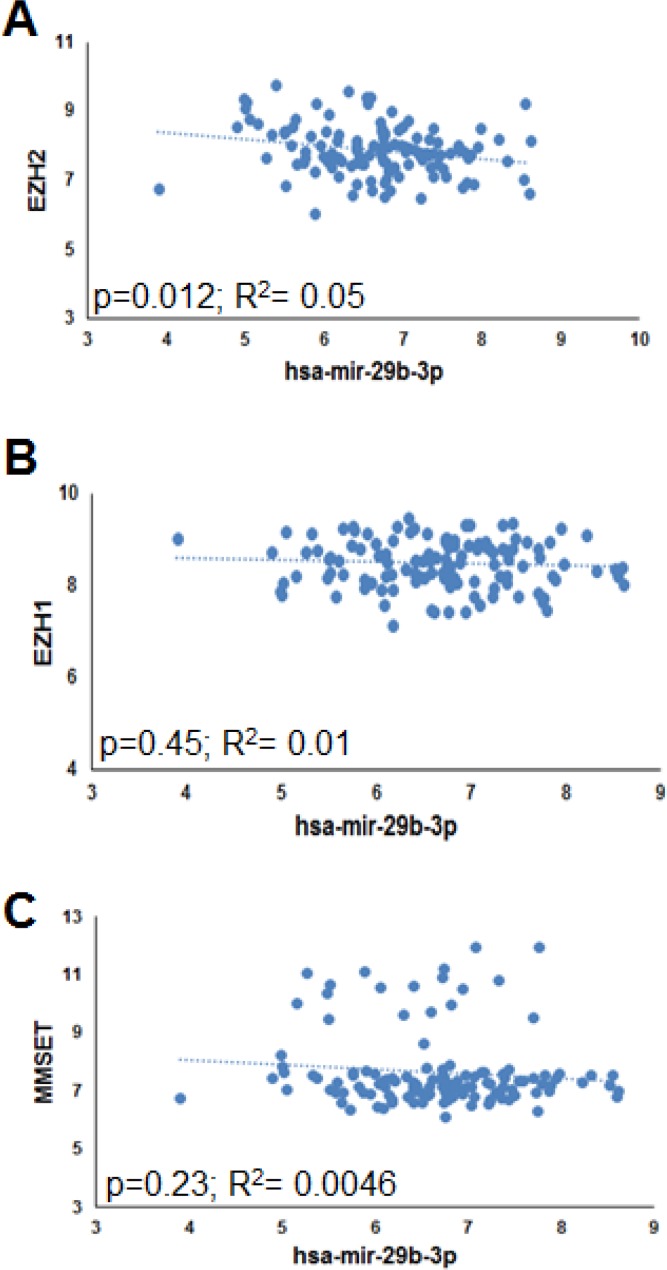
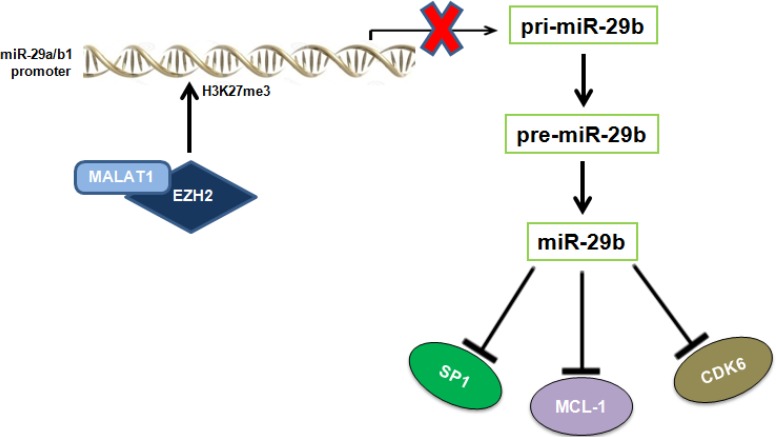
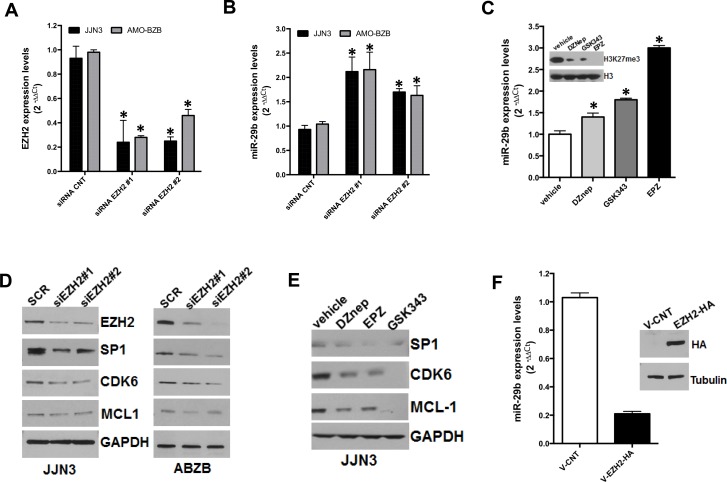
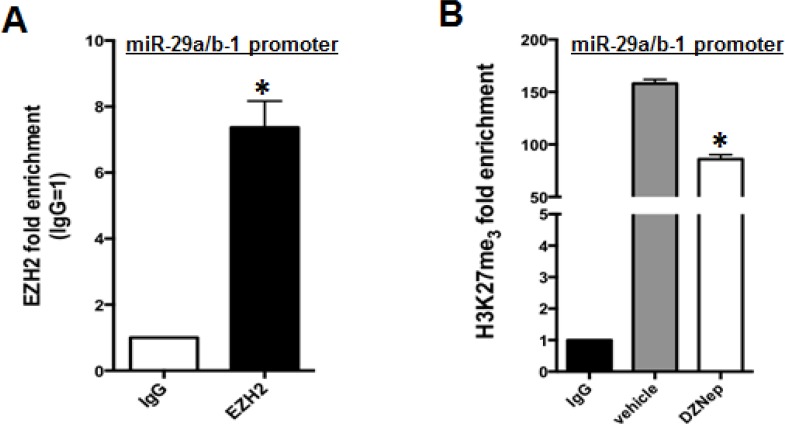
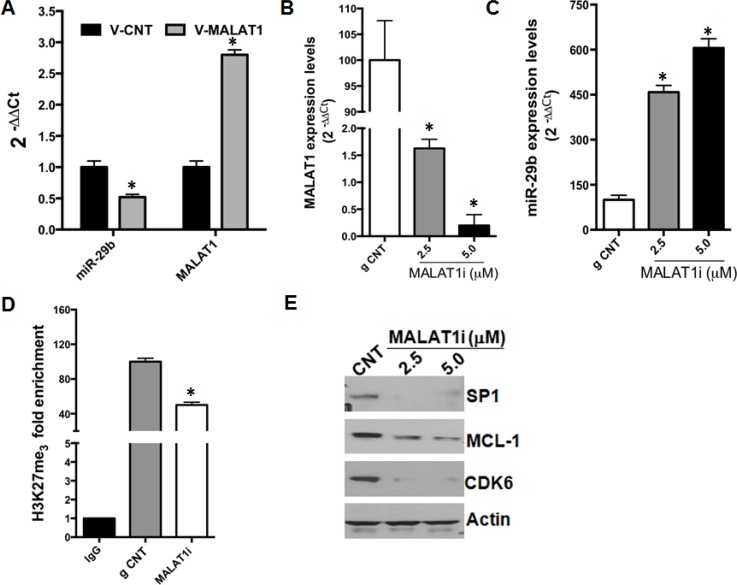
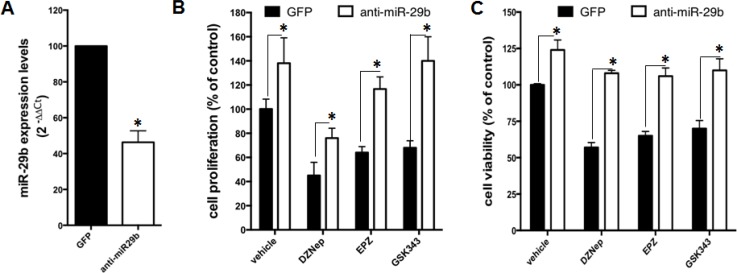
Downregulation of tumor suppressor (TS) microRNAs (miRNAs) commonly occurs in human cancer, including multiple myeloma (MM). We previously demonstrated that miR-29b is a relevant TS miRNA, whose expression in MM cells is inhibited by HDAC4-dependent deacetylation. Here, we provide novel insights into epigenetic mechanisms suppressing miR-29b in MM. In MM patient-derived plasma cells, we found inverse correlation between miR-29b and EZH2 mRNA expression. Both siRNAs and pharmacologic inhibitors of EZH2 led to miR-29b upregulation, and this effect was ascribed to reduced H3K27-trimethylation (H3K27me3) of miR-29a/b-1 promoter regions. Induction of miR-29b upon EZH2 inhibition occurred together with downregulation of major miR-29b pro-survival targets, such as SP1, MCL-1 and CDK6. Knock-down of the EZH2-interacting long non-coding RNA MALAT1 also reduced H3K27me3 of miR-29a/b-1 promoter, along with induction of miR-29b and downregulation of miR-29b targets. Importantly, inhibition of miR-29b by antagomiRs dramatically reduced anti-MM activity of small molecule EZH2-inhibitors, indicating that functional miR-29b is crucial for the activity of these compounds. Altogether, these results disclose novel epigenetic alterations contributing to the suppression of miR-29b molecular network, which can be instrumental for the development of rationally designed miRNA-based anti-MM therapeutics.
肿瘤抑制(TS)微小RNA(miRNA)的下调在包括多发性骨髓瘤(MM)在内的人类癌症中普遍存在。我们之前证明miR-29b是一种相关的TS miRNA,其在MM细胞中的表达受到HDAC4依赖性去乙酰化的抑制。在此,我们对MM中抑制miR-29b的表观遗传机制提供了新的见解。在MM患者来源的浆细胞中,我们发现miR-29b与EZH2 mRNA表达呈负相关。EZH2的小干扰RNA(siRNA)和药物抑制剂均导致miR-29b上调,这种效应归因于miR-29a/b-1启动子区域H3K27三甲基化(H3K27me3)的减少。EZH2抑制后miR-29b的诱导与主要的miR-29b促生存靶标如SP1、MCL-1和CDK6的下调同时发生。与EZH2相互作用的长链非编码RNA MALAT1的敲低也降低了miR-29a/b-1启动子的H3K27me3,同时诱导了miR-29b并下调了miR-29b靶标。重要的是,抗-miR对miR-29b的抑制显著降低了小分子EZH2抑制剂的抗MM活性,表明功能性miR-29b对这些化合物的活性至关重要。总之,这些结果揭示了导致miR-29b分子网络抑制的新表观遗传改变,这可能有助于开发合理设计的基于miRNA的抗MM疗法。