Wang Xingxing, Han Xu, Guo Xiaojing, Luo Xiaolong, Wang Dalin
Department of Stomatology, Changhai Hospital, The Second Military Medical University, Shanghai, China.
Department of Health Statistics, The Second Military Medical University, Shanghai, China.
PLoS One. 2014 Sep 25;9(9):e108412. doi: 10.1371/journal.pone.0108412. eCollection 2014.
There is growing evidence that periodontal treatment may affect glycemic control in diabetic patients. And several systematic reviews have been conducted to assess the effect of periodontal treatment on diabetes outcomes. Researches of this aspect are widely concerned, and several new controlled trials have been published. The aim of this study was to update the account for recent findings.
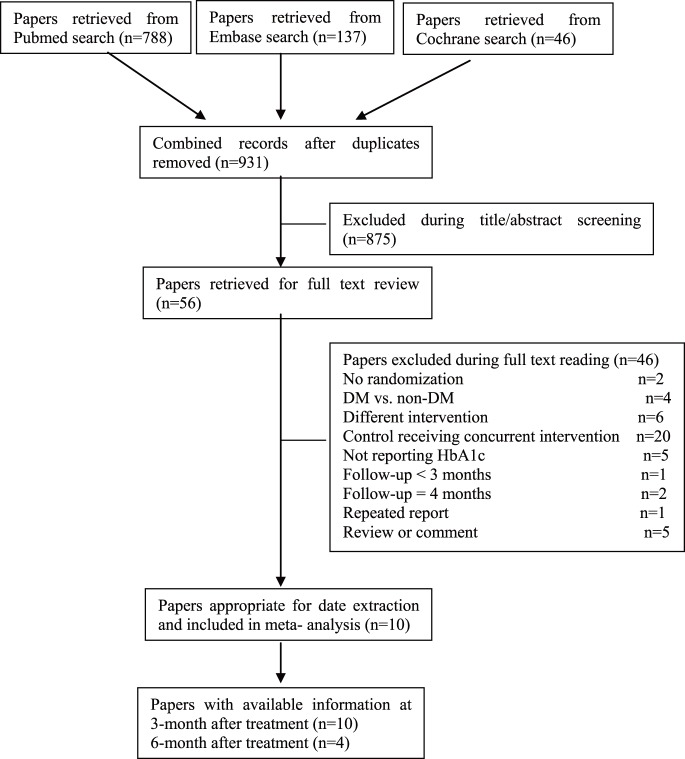
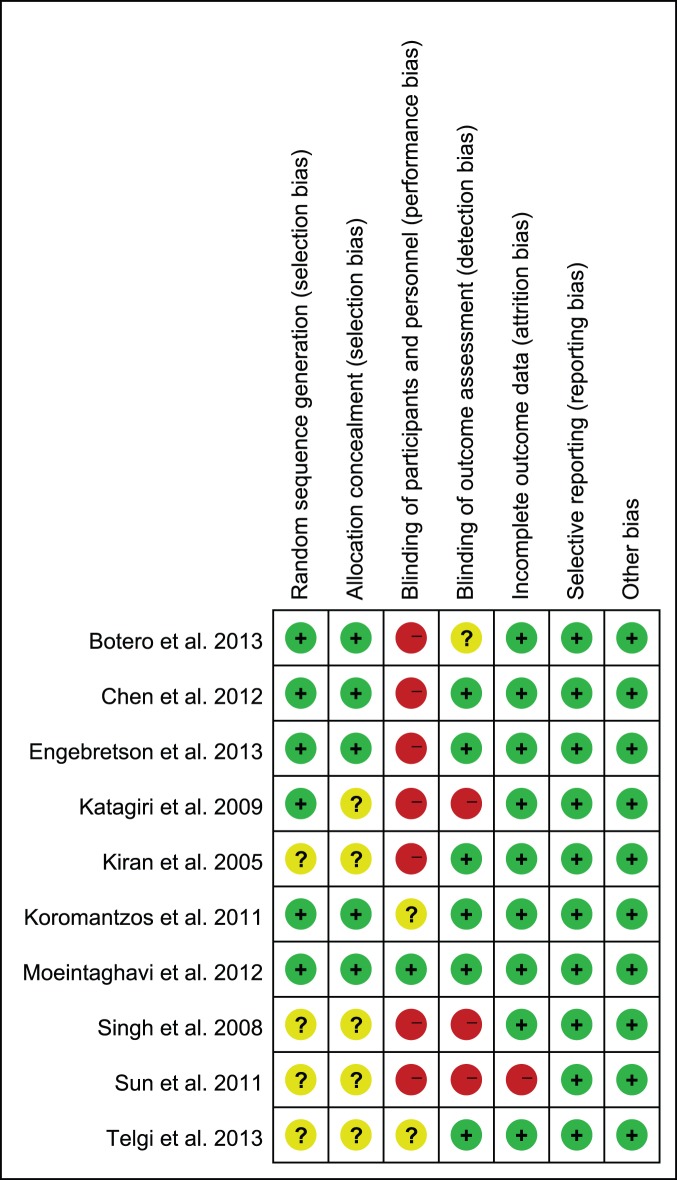
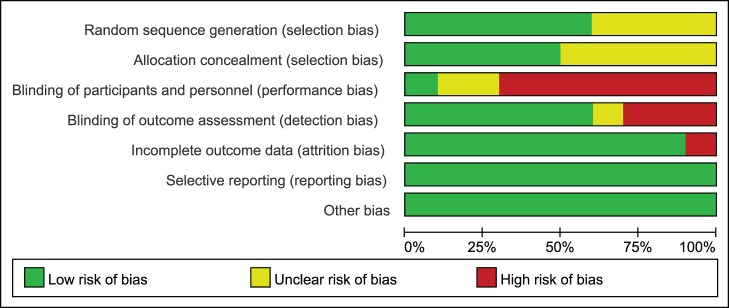
A literature search (until the end of January 2014) was carried out using various databases with language restriction to English. A randomized controlled trial (RCT) was selected if it investigated periodontal therapy for diabetic subjects compared with a control group received no periodontal treatment for at least 3 months of the follow-up period. The primary outcome was hemoglobin A1c (HbA1c), and secondary outcomes were periodontal parameters included probing pocket depth (PPD) and clinical attachment level (CAL).
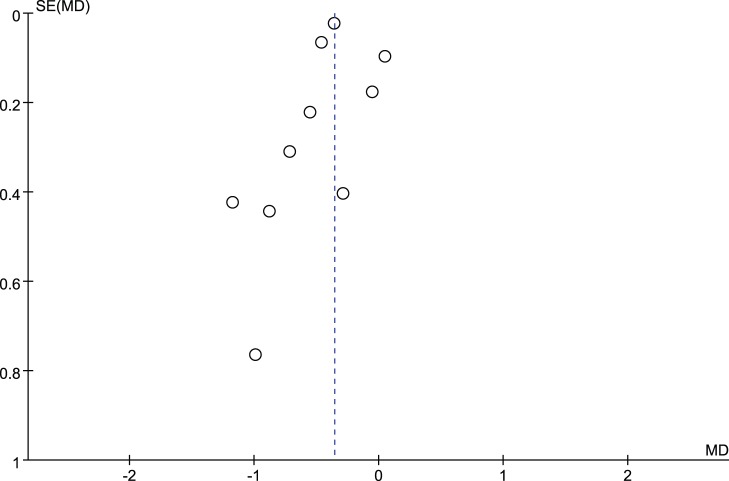
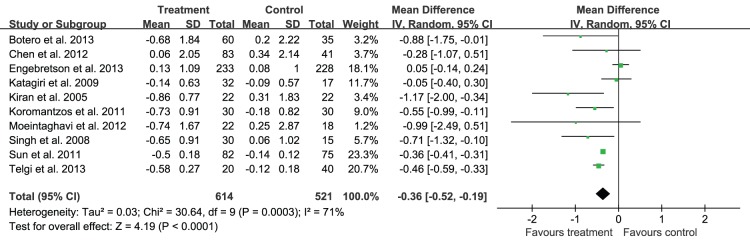
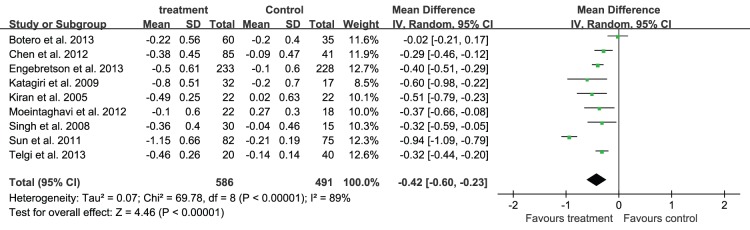
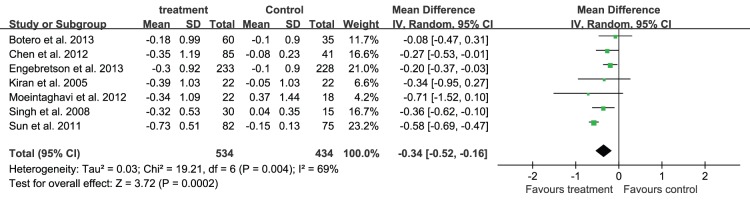
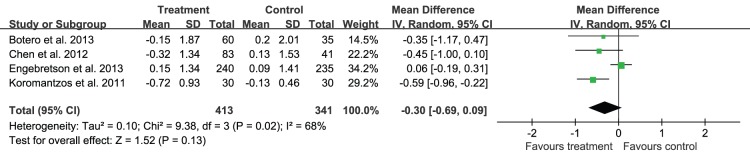
Ten trials of 1135 patients were included in the analysis. After the follow-up of 3 months, treatment substantially lowered HbA1c compared with no treatment after periodontal therapy (-0.36%, 95%CI, -0.52% to -0.19%, P<0.0001). Clinically substantial and statistically significant reduction of PPD and CAL were found between subjects with and without treatment after periodontal therapy (PPD -0.42 mm, 95%CI: -0.60 to -0.23, P<0.00001; CAL -0.34 mm, 95%CI: -0.52 to -0.16, P=0.0002). And there is no significant change of the level of HbA1c at the 6-month comparing with no treatment (-0.30%, 95%CI, -0.69% to 0.09%, P=0.13).
Periodontal treatment leads to the modest reduction in HbA1c along with the improvement of periodontal status in diabetic patients for 3 months, and this result is consistent with previous systematic reviews. And the effect of periodontal treatment on HbA1c cannot be observed at 6-month after treatment.
越来越多的证据表明,牙周治疗可能会影响糖尿病患者的血糖控制。已有多项系统评价对牙周治疗对糖尿病结局的影响进行了评估。这方面的研究受到广泛关注,一些新的对照试验也已发表。本研究的目的是更新对近期研究结果的阐述。
通过各种数据库进行文献检索(截至2014年1月底),语言限制为英文。如果一项随机对照试验(RCT)研究了糖尿病受试者的牙周治疗,并与至少随访3个月未接受牙周治疗的对照组进行比较,则将其纳入。主要结局指标是糖化血红蛋白(HbA1c),次要结局指标是牙周参数,包括探诊深度(PPD)和临床附着水平(CAL)。
分析纳入了1135例患者的10项试验。牙周治疗后随访3个月,与未治疗相比,治疗显著降低了HbA1c(-0.36%,95%CI,-0.52%至-0.19%,P<0.0001)。在接受和未接受牙周治疗的受试者之间,PPD和CAL在临床上有显著且具有统计学意义的降低(PPD -0.42mm,95%CI:-0.60至-0.23,P<0.00001;CAL -0.34mm,95%CI:-0.52至-0.16,P = 0.0002)。与未治疗相比,6个月时HbA1c水平无显著变化(-0.30%,95%CI,-0.69%至0.09%,P = 0.13)。
牙周治疗可使糖尿病患者的HbA1c适度降低,同时在3个月内改善牙周状况,这一结果与之前的系统评价一致。治疗6个月后未观察到牙周治疗对HbA1c的影响。