Fong Lawrence, Carroll Peter, Weinberg Vivian, Chan Stephen, Lewis Jera, Corman John, Amling Christopher L, Stephenson Robert A, Simko Jeffrey, Sheikh Nadeem A, Sims Robert B, Frohlich Mark W, Small Eric J
University of California San Francisco Helen Diller Family Comprehensive Cancer Center, San Francisco, CA (LF, PC, VW, SC, JL, JS, EJS); Virginia Mason Medical Center, Seattle, WA (JC); Oregon Health & Science University, Portland, OR (CLA); University of Utah School of Medicine, Salt Lake City, UT (RAS); Dendreon Corporation, Seattle, WA (NAS, RBS, MWF).
J Natl Cancer Inst. 2014 Sep 24;106(11). doi: 10.1093/jnci/dju268. Print 2014 Nov.
Sipuleucel-T is a US Food and Drug Administration-approved immunotherapy for asymptomatic or minimally symptomatic metastatic castration-resistant prostate cancer (mCRPC). Its mechanism of action is not fully understood. This prospective trial evaluated the direct immune effects of systemically administered sipuleucel-T on prostatic cancer tissue in the preoperative setting.
Patients with untreated localized prostate cancer were treated on an open-label Phase II study of sipuleucel-T prior to planned radical prostatectomy (RP). Immune infiltrates in RP specimens (posttreatment) and in paired pretreatment biopsies were evaluated by immunohistochemistry (IHC). Correlations between circulating immune response and IHC were assessed using Spearman rank order.
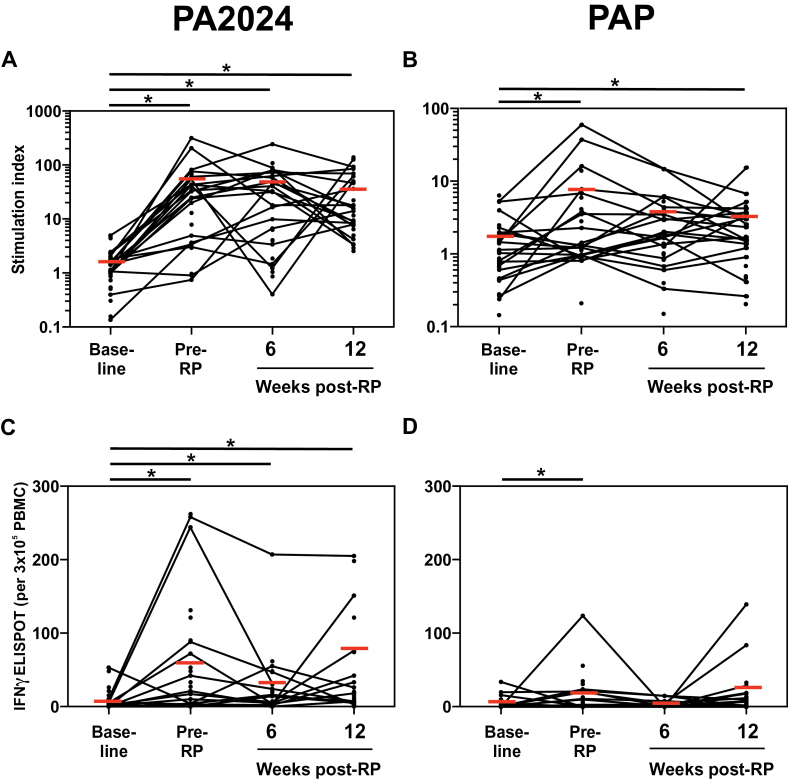
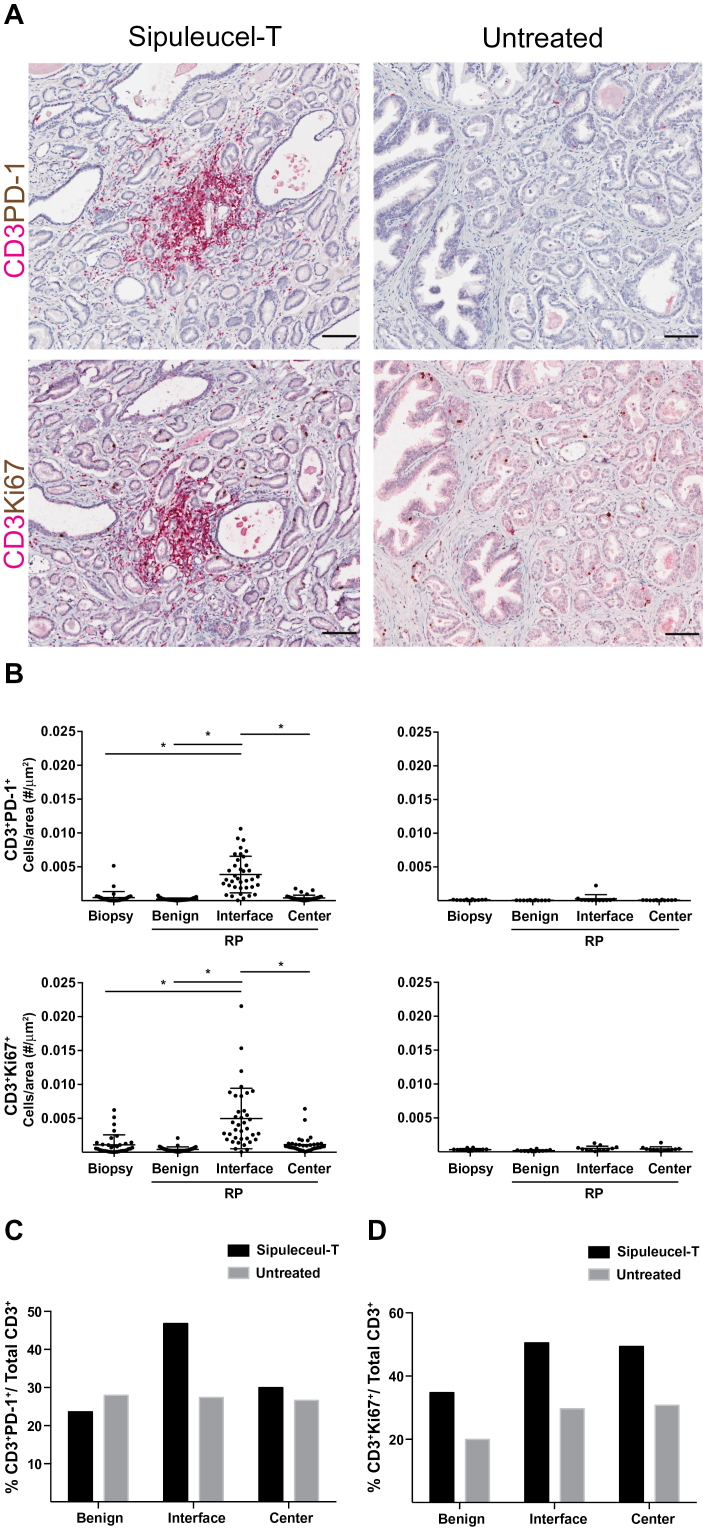
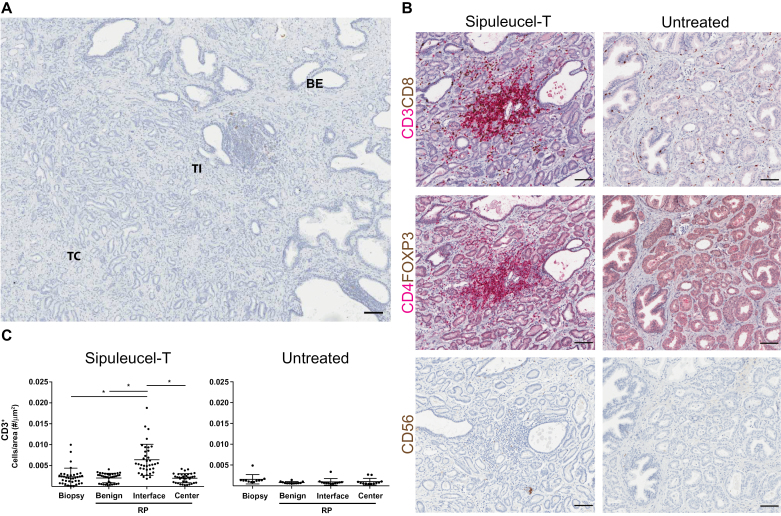
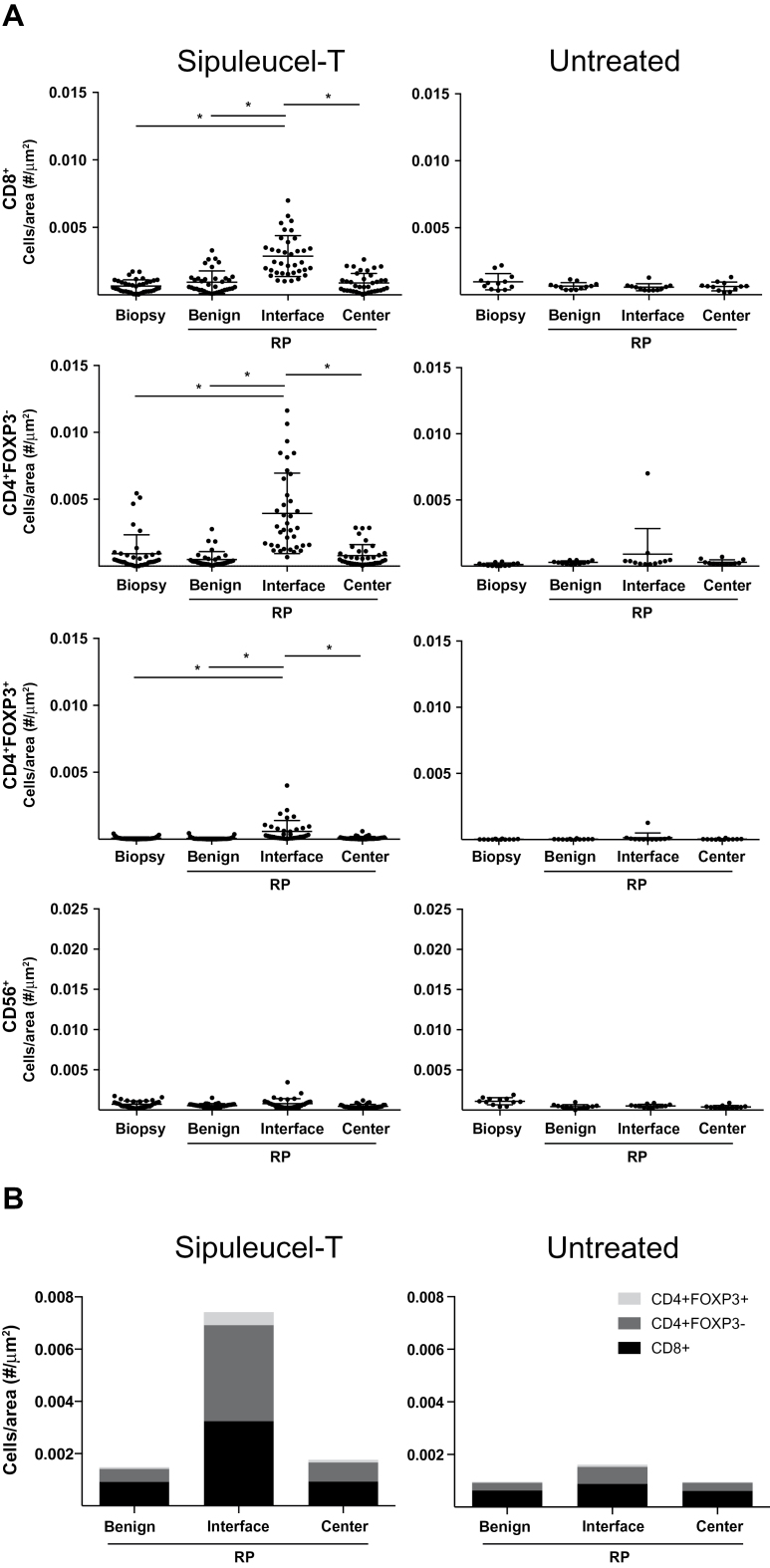
Of the 42 enrolled patients, 37 were evaluable. Adverse events were primarily transient, mild-to-moderate and infusion related. Patients developed T cell proliferation and interferon-γ responses detectable in the blood following treatment. Furthermore, a greater-than-three-fold increase in infiltrating CD3(+), CD4(+) FOXP3(-), and CD8(+) T cells was observed in the RP tissues compared with the pretreatment biopsy (binomial proportions: all P < .001). This level of T cell infiltration was observed at the tumor interface, and was not seen in a control group consisting of 12 concurrent patients who did not receive any neoadjuvant treatment prior to RP. The majority of infiltrating T cells were PD-1(+) and Ki-67(+), consistent with activated T cells. Importantly, the magnitude of the circulating immune response did not directly correlate with T cell infiltration within the prostate based upon Spearman's rank order correlation.
This study is the first to demonstrate a local immune effect from the administration of sipuleucel-T. Neoadjuvant sipuleucel-T elicits both a systemic antigen-specific T cell response and the recruitment of activated effector T cells into the prostate tumor microenvironment.
西妥昔单抗是一种经美国食品药品监督管理局批准用于无症状或症状轻微的转移性去势抵抗性前列腺癌(mCRPC)的免疫疗法。其作用机制尚未完全明确。这项前瞻性试验评估了术前全身应用西妥昔单抗对前列腺癌组织的直接免疫效应。
未接受过治疗的局限性前列腺癌患者在计划进行根治性前列腺切除术(RP)之前,参加了一项西妥昔单抗的开放标签II期研究。通过免疫组织化学(IHC)评估RP标本(治疗后)和配对的治疗前活检组织中的免疫浸润情况。使用Spearman等级相关分析评估循环免疫反应与IHC之间的相关性。
42例入组患者中,37例可评估。不良事件主要为短暂性、轻至中度且与输注相关。治疗后患者血液中可检测到T细胞增殖和干扰素-γ反应。此外,与治疗前活检相比,RP组织中浸润的CD3(+)、CD4(+) FOXP3(-)和CD8(+) T细胞增加了三倍以上(二项式比例:所有P <.001)。这种T细胞浸润水平在肿瘤界面观察到,而在由12例同期未接受任何新辅助治疗的RP患者组成的对照组中未观察到。大多数浸润的T细胞为PD-1(+)和Ki-67(+),与活化T细胞一致。重要的是,根据Spearman等级相关分析,循环免疫反应的强度与前列腺内T细胞浸润无直接相关性。
本研究首次证明了西妥昔单抗给药后的局部免疫效应。新辅助西妥昔单抗可引发全身抗原特异性T细胞反应,并将活化的效应T细胞募集到前列腺肿瘤微环境中。