Velmurugan Natarajan, Sung Minji, Yim Sung Sun, Park Min S, Yang Ji Won, Jeong Ki Jun
Department of Chemical and Biomolecular Engineering (BK21+ Program), KAIST, 291 Daehak-ro, Yuseong-gu Daejeon, 305-701 Republic of Korea.
Department of Chemical and Biomolecular Engineering (BK21+ Program), KAIST, 291 Daehak-ro, Yuseong-gu Daejeon, 305-701 Republic of Korea ; Bioscience Division, Los Alamos National Laboratory, Bikini Atoll Road, Los Alamos, NM 87545 USA.
Biotechnol Biofuels. 2014 Sep 6;7(1):117. doi: 10.1186/s13068-014-0117-7. eCollection 2014.
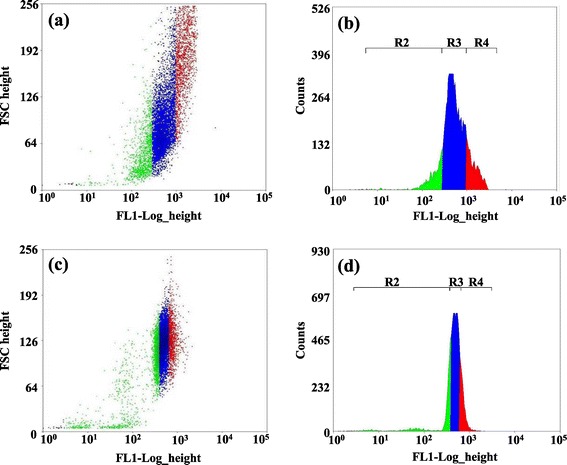
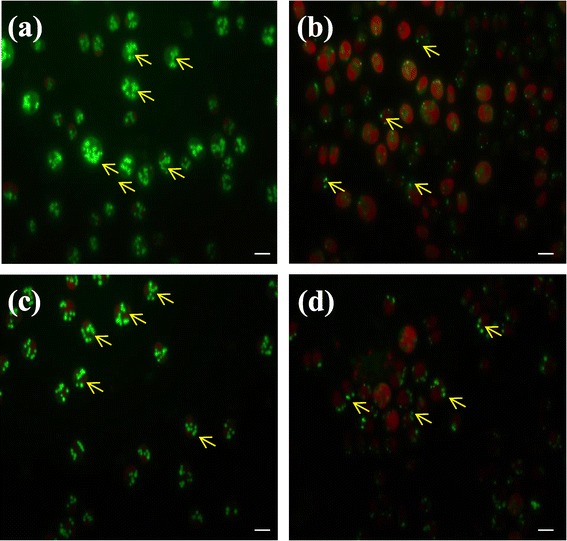
The concept of adaptive evolution implies underlying genetic mutations conferring a selective advantage to an organism under particular environmental conditions. Thus, a flow cytometry-based strategy was used to study the adaptive evolution in Chlamydomonas reinhardtii wild-type strain CC124 and starchless mutant sta6-1 cells, with respect to lipid metabolism under nitrogen-(N) depleted and -replete conditions.
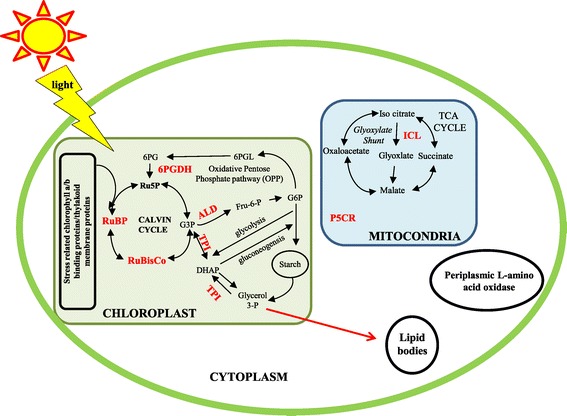
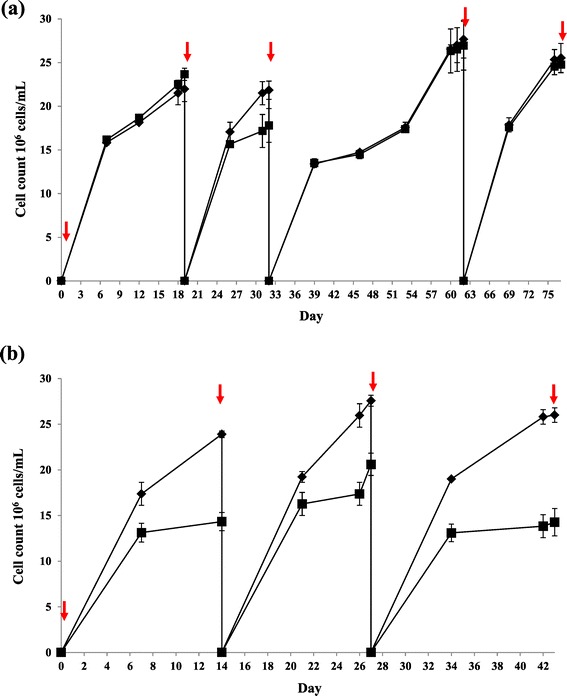
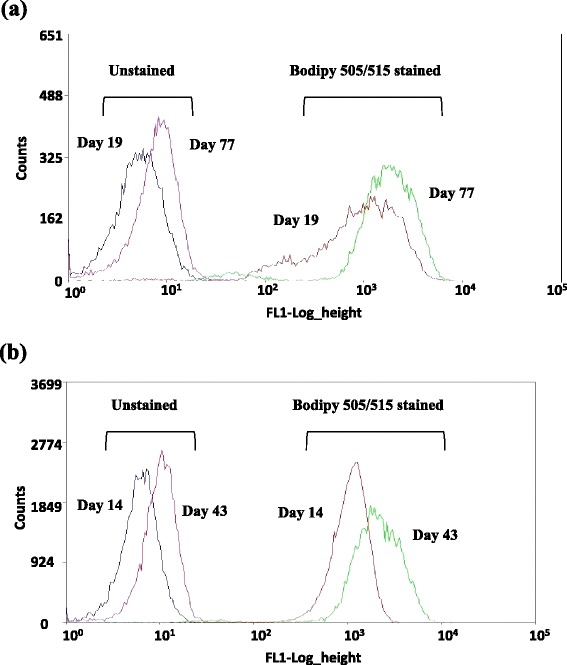
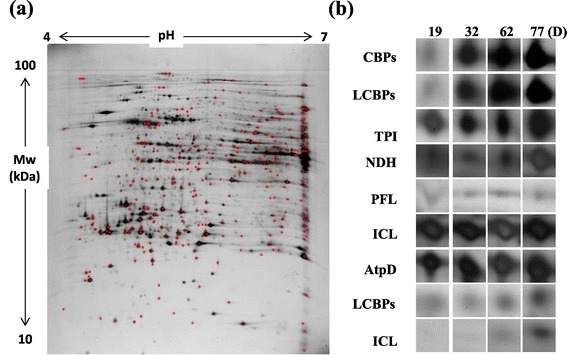
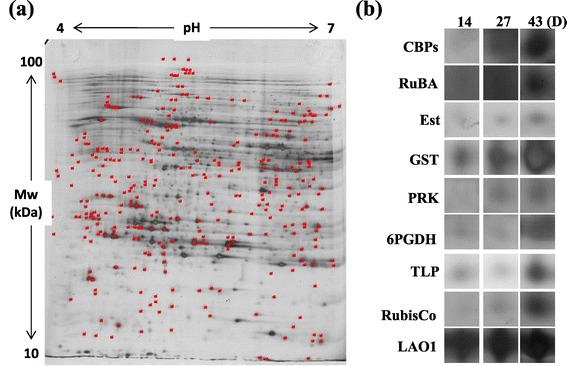
The successive sorting and regeneration of the top 25,000 high-lipid content cells of CC124 and sta6-1, combined with nitrogen starvation, led to the generation of a new population with an improved lipid content when compared to the original populations (approximately 175% and 50% lipid increase in sta6-1 and CC124, respectively). During the adaptive evolution period, the major fatty acid components observed in cells were C16:0, C16:1, C18:0, and C18:1-3, and elemental analysis revealed that cellular carbon to nitrogen ratio increased at the end of adaptive evolution period In order to gain an insight into highly stimulated intracellular lipid accumulation in CC124 and sta6-1 resulting from the adaptive evolution, proteomics analyses of newly generated artificial high-lipid content populations were performed. Functional classifications showed the heightened regulation of the major chlorophyll enzymes, and the enzymes involved in carbon fixation and uptake, including chlorophyll-ab-binding proteins and Rubisco activase. The key control protein (periplasmic L-amino acid oxidase (LAO1)) of carbon-nitrogen integration was specifically overexpressed. Glutathione-S-transferases and esterase, the enzymes involved in lipid-metabolism and lipid-body associated proteins, were also induced during adaptive evolution.
Adaptive evolution results demonstrate the potential role of photosynthesis in terms of carbon partitioning, flux, and fixation and carbon-nitrogen metabolism during lipid accumulation in microalgae. This strategy can be used as a new tool to develop C. reinhardtii strains and other microalgal strains with desired phenotypes such as high lipid accumulation.
适应性进化的概念意味着潜在的基因突变在特定环境条件下赋予生物体选择优势。因此,采用基于流式细胞术的策略,研究莱茵衣藻野生型菌株CC124和无淀粉突变体sta6 - 1细胞在氮(N)缺乏和充足条件下脂质代谢方面的适应性进化。
对CC124和sta6 - 1中脂质含量最高的25000个细胞进行连续分选和再生,并结合氮饥饿处理,与原始群体相比,产生了脂质含量提高的新群体(sta6 - 1和CC124的脂质含量分别增加了约175%和50%)。在适应性进化期间,细胞中观察到的主要脂肪酸成分是C16:0、C16:1、C18:0和C18:1 - 3,元素分析表明,在适应性进化末期细胞碳氮比增加。为了深入了解适应性进化导致的CC124和sta6 - 1细胞内脂质高度积累,对新产生的人工高脂质含量群体进行了蛋白质组学分析。功能分类显示主要叶绿素酶以及参与碳固定和摄取的酶(包括叶绿素 - ab结合蛋白和核酮糖 - 1,5 - 二磷酸羧化酶/加氧酶激活酶)的调控增强。碳氮整合的关键控制蛋白(周质L - 氨基酸氧化酶(LAO1))特异性过表达。参与脂质代谢的谷胱甘肽 - S - 转移酶和酯酶以及与脂质体相关的蛋白在适应性进化期间也被诱导。
适应性进化结果证明了光合作用在微藻脂质积累过程中的碳分配、通量、固定以及碳氮代谢方面的潜在作用。该策略可作为一种新工具,用于开发具有所需表型(如高脂质积累)的莱茵衣藻菌株和其他微藻菌株。