Division of Marine Science and Conservation, Nicholas School of the Environment, Duke University , Beaufort, NC , USA.
Department of Biology, Bryn Mawr College , Bryn Mawr, PA , USA.
PeerJ. 2014 Sep 23;2:e567. doi: 10.7717/peerj.567. eCollection 2014.
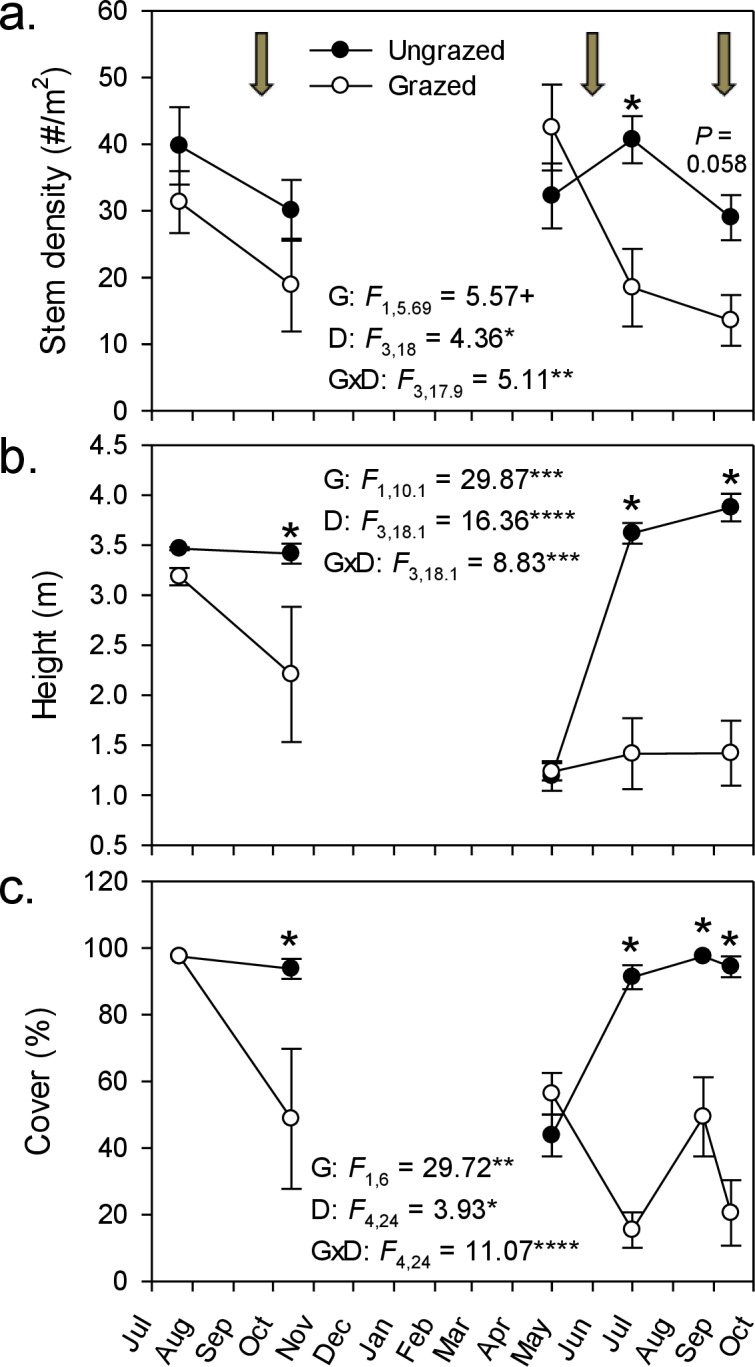
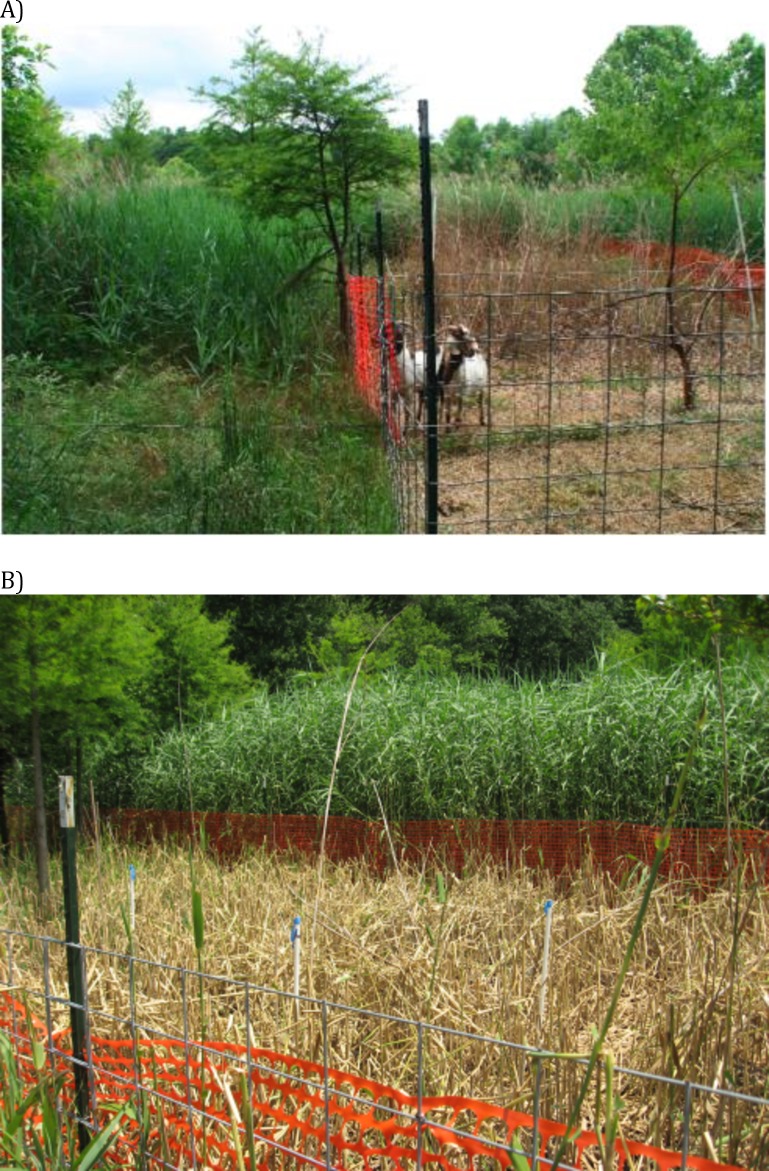
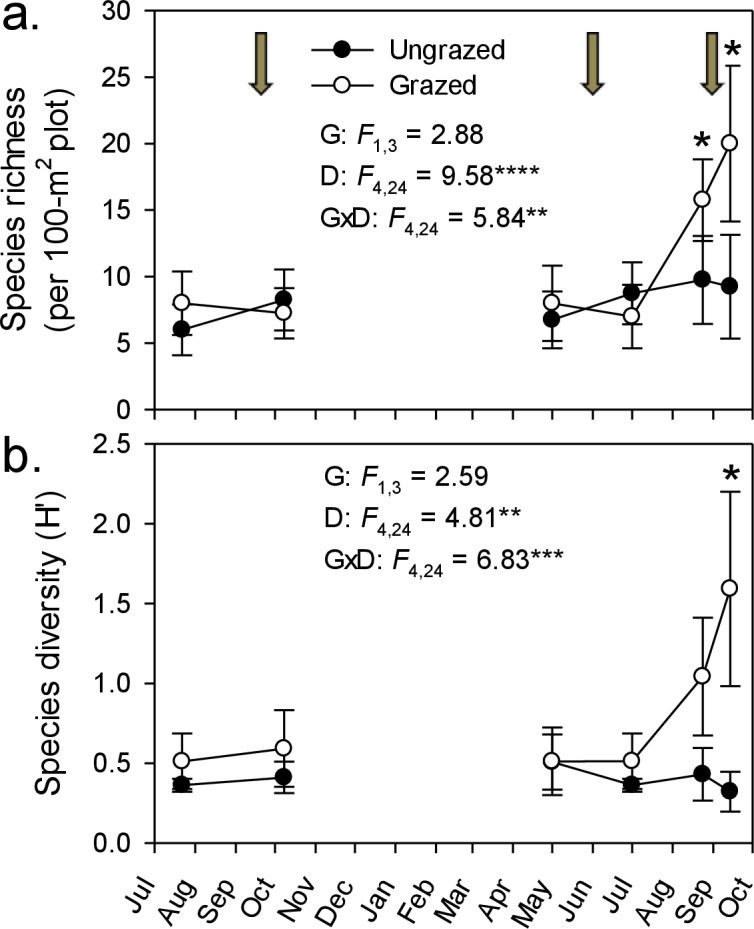
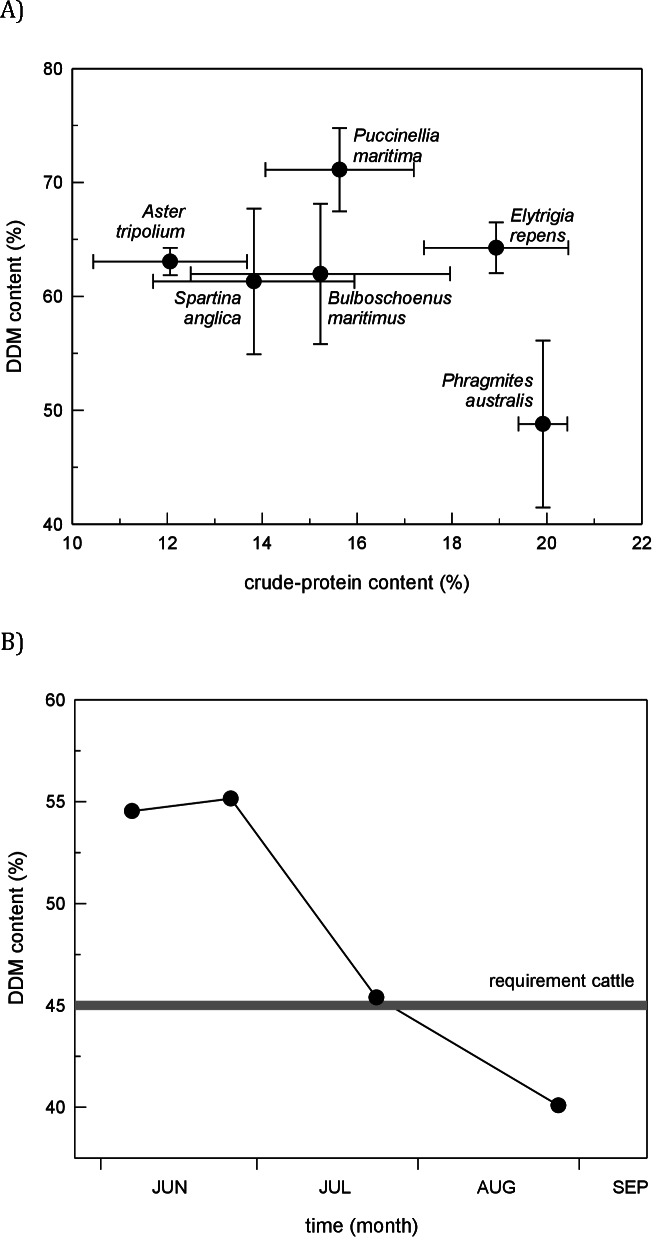
Invasive species threaten biodiversity and incur costs exceeding billions of US$. Eradication efforts, however, are nearly always unsuccessful. Throughout much of North America, land managers have used expensive, and ultimately ineffective, techniques to combat invasive Phragmites australis in marshes. Here, we reveal that Phragmites may potentially be controlled by employing an affordable measure from its native European range: livestock grazing. Experimental field tests demonstrate that rotational goat grazing (where goats have no choice but to graze Phragmites) can reduce Phragmites cover from 100 to 20% and that cows and horses also readily consume this plant. These results, combined with the fact that Europeans have suppressed Phragmites through seasonal livestock grazing for 6,000 years, suggest Phragmites management can shift to include more economical and effective top-down control strategies. More generally, these findings support an emerging paradigm shift in conservation from high-cost eradication to economically sustainable control of dominant invasive species.
入侵物种威胁生物多样性,并造成数十亿 美元的损失。然而,根除工作几乎总是不成功的。在北美洲的大部分地区,土地管理者一直在使用昂贵且最终无效的技术来对抗沼泽地中的入侵性芦苇。在这里,我们揭示了通过采用其原产欧洲地区的一种经济实惠的措施,芦苇可能具有潜在的控制能力:牲畜放牧。实验性田间试验表明,轮牧山羊(山羊别无选择,只能放牧芦苇)可以将芦苇的覆盖率从 100%降低到 20%,并且牛和马也很容易食用这种植物。这些结果,再加上欧洲人通过季节性牲畜放牧抑制芦苇长达 6000 年的事实,表明芦苇管理可以转向包括更经济和有效的自上而下的控制策略。更广泛地说,这些发现支持了保护领域从高成本根除到经济可持续控制优势入侵物种的新兴范式转变。