
用于心肌空化介导治疗的高强度脉冲的定时
Timing of high-intensity pulses for myocardial cavitation-enabled therapy.
作者信息
Miller Douglas L, Dou Chunyan, Owens Gabe E, Kripfgans Oliver D
机构信息
Department of Radiology, University of Michigan Health System, 3240A Medical Sciences Building I, 1301 Catherine Street, Ann Arbor 48109-5667, USA.
Department of Pediatrics, University of Michigan Health System, Ann Arbor, MI, USA.
出版信息
J Ther Ultrasound. 2014 Oct 2;2:20. doi: 10.1186/2050-5736-2-20. eCollection 2014.
BACKGROUND
High-intensity ultrasound pulses intermittently triggered from an ECG signal can interact with circulating contrast agent microbubbles to produce myocardial cavitation microlesions of potential therapeutic value. In this study, the timing of therapy pulses relative to the ECG R wave was investigated to identify the optimal time point for tissue reduction therapy with regard to both the physiological cardiac response and microlesion production.
METHODS
Rats were anesthetized, prepared for ultrasound, placed in a heated water bath, and treated with 1.5 MHz focused ultrasound pulses targeted to the left ventricular myocardium with an 8 MHz imaging transducer. Initially, the rats were treated for 1 min at each of six different time points in the ECG while monitoring blood pressure responses to assess cardiac functional effects. Next, groups of rats were treated at three different time points: end diastole, end systole, and mid-diastole to assess the impact of timing on microlesion creation. These rats were pretreated with Evans blue injections and were allowed to recover for 1 day until hearts were harvested for scoring of injured cardiomyocytes.
RESULTS
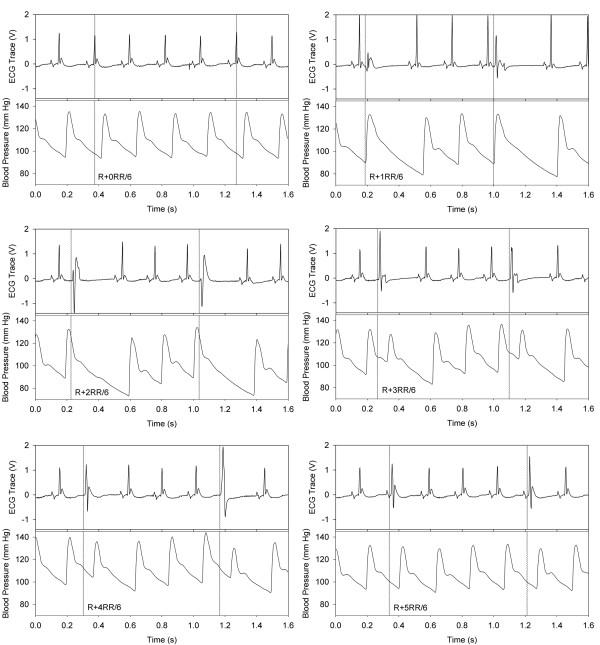
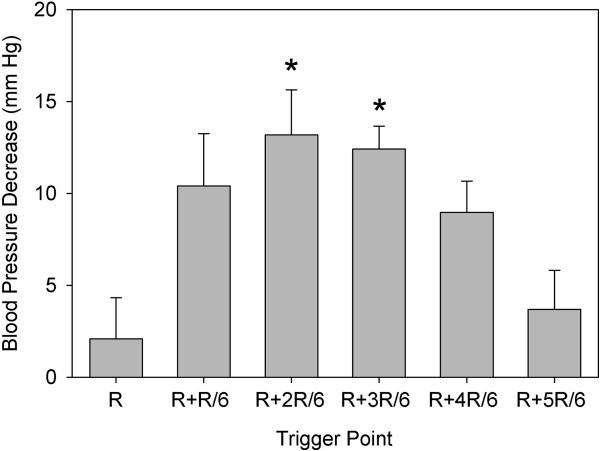
The initial results showed a wide range of cardiac premature complexes in the ECG, which corresponded with blood pressure pulses for ultrasound pulses triggered during diastole. However, the microlesion experiment did not reveal any statistically significant variations in cardiomyocyte injury.
CONCLUSION
The end of systole (R + RR/3) was identified as an optimal trigger time point which produced identifiable ECG complexes and substantial cardiomyocyte injury but minimal cardiac functional disruption during treatment.
背景
由心电图信号间歇性触发的高强度超声脉冲可与循环中的造影剂微泡相互作用,产生具有潜在治疗价值的心肌空化微损伤。在本研究中,研究了治疗脉冲相对于心电图R波的时间,以确定在生理心脏反应和微损伤产生方面组织消融治疗的最佳时间点。
方法
将大鼠麻醉,准备进行超声检查,置于热水浴中,并用8MHz成像换能器将1.5MHz聚焦超声脉冲靶向左心室心肌进行治疗。最初,在心电图的六个不同时间点分别对大鼠进行1分钟的治疗,同时监测血压反应以评估心脏功能影响。接下来,将大鼠分组在三个不同时间点进行治疗:舒张末期、收缩末期和舒张中期,以评估时间对微损伤形成的影响。这些大鼠预先注射伊文思蓝,恢复1天,直到心脏被摘取用于对受损心肌细胞进行评分。
结果
初步结果显示心电图中有广泛的心脏早搏复合波,这与舒张期触发的超声脉冲的血压脉冲相对应。然而,微损伤实验未发现心肌细胞损伤有任何统计学上的显著差异。
结论
收缩末期(R+RR/3)被确定为最佳触发时间点,该时间点可产生可识别的心电图复合波和实质性心肌细胞损伤,但治疗期间心脏功能破坏最小。




 Zotero 插件