Stepanek Ondrej, Prabhakar Arvind S, Osswald Celine, King Carolyn G, Bulek Anna, Naeher Dieter, Beaufils-Hugot Marina, Abanto Michael L, Galati Virginie, Hausmann Barbara, Lang Rosemarie, Cole David K, Huseby Eric S, Sewell Andrew K, Chakraborty Arup K, Palmer Ed
Departments of Biomedicine and Nephrology, University Hospital Basel and University of Basel, 4031 Basel, Switzerland.
Department of Chemical Engineering, Massachusetts Institute of Technology, Cambridge, MA 02139, USA.
Cell. 2014 Oct 9;159(2):333-45. doi: 10.1016/j.cell.2014.08.042. Epub 2014 Oct 2.
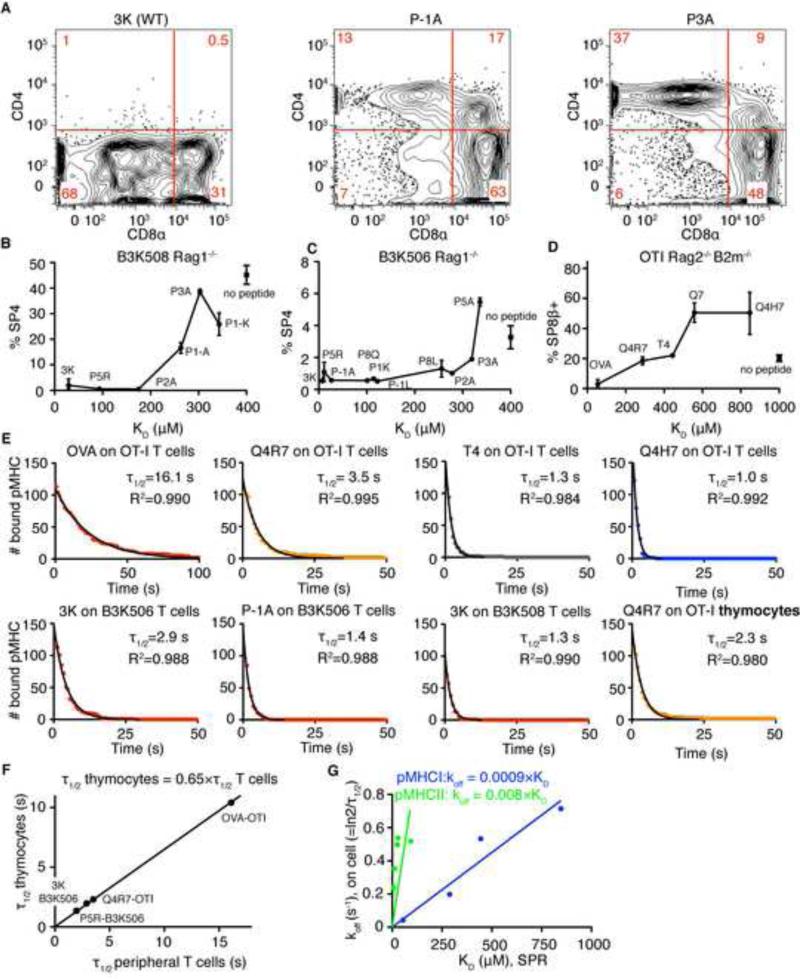
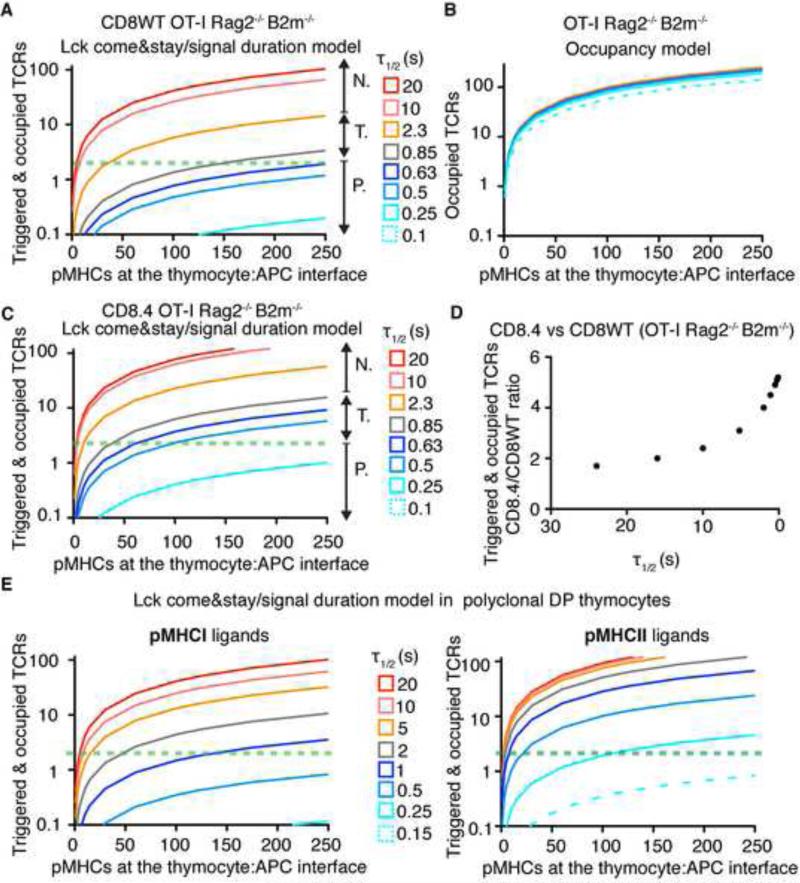
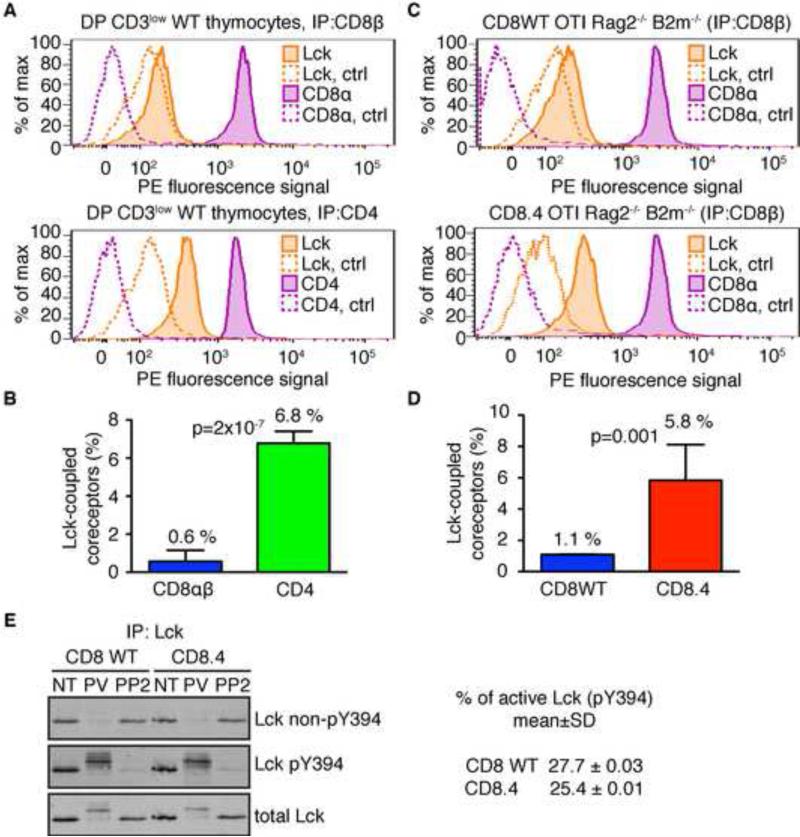
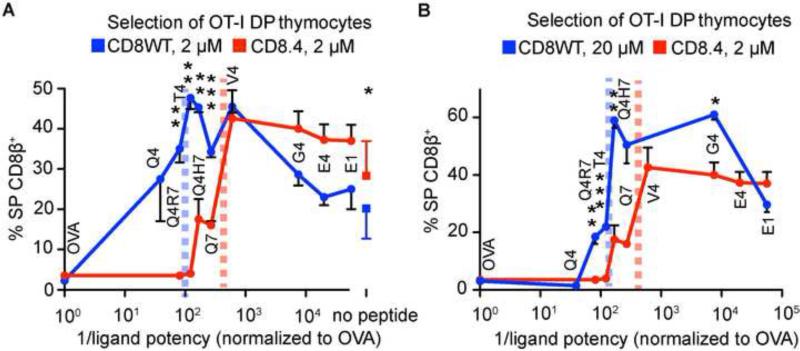
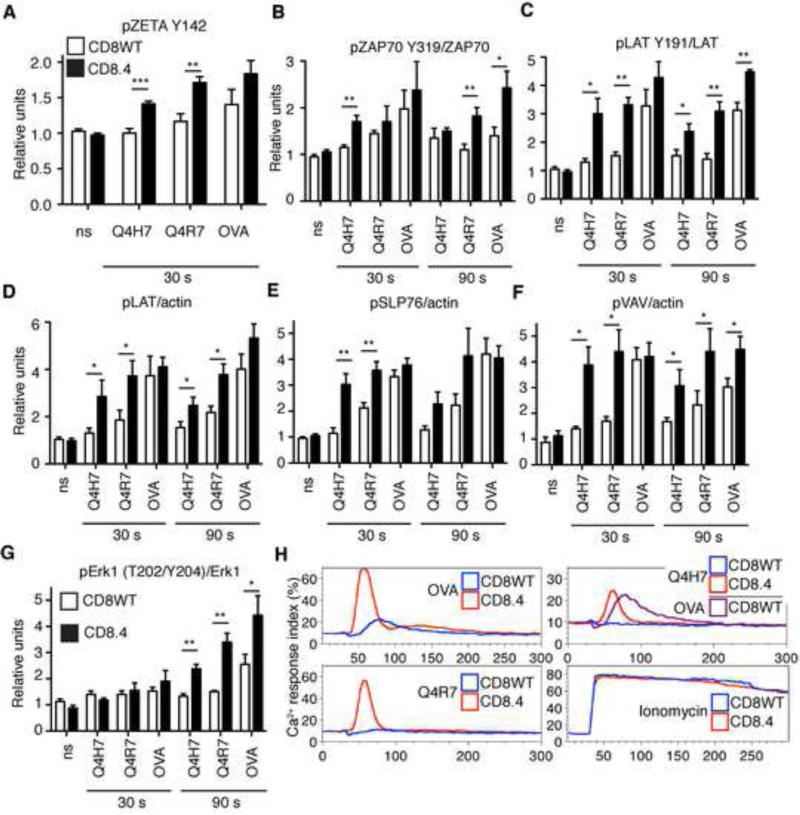
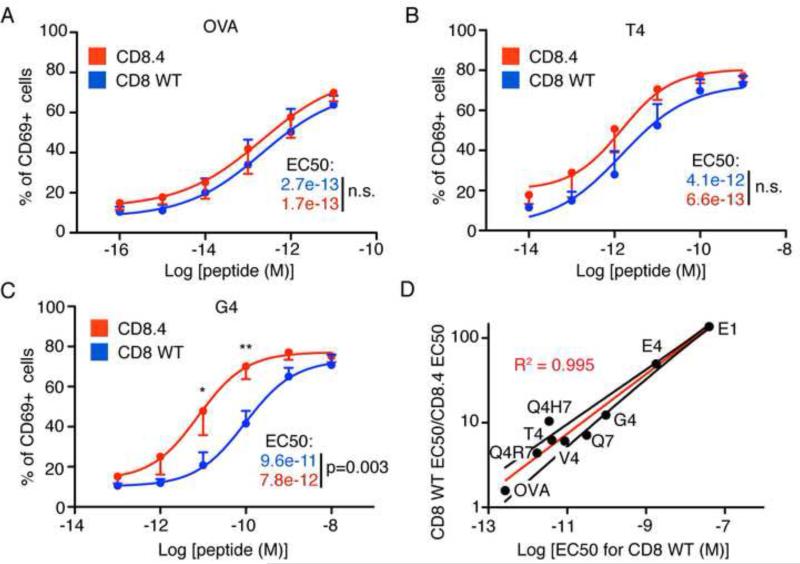
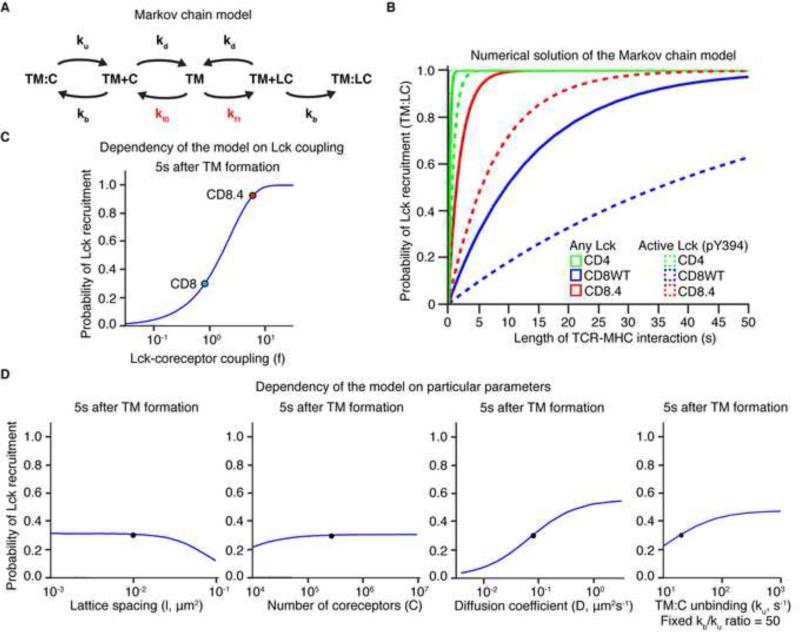
In the thymus, high-affinity, self-reactive thymocytes are eliminated from the pool of developing T cells, generating central tolerance. Here, we investigate how developing T cells measure self-antigen affinity. We show that very few CD4 or CD8 coreceptor molecules are coupled with the signal-initiating kinase, Lck. To initiate signaling, an antigen-engaged T cell receptor (TCR) scans multiple coreceptor molecules to find one that is coupled to Lck; this is the first and rate-limiting step in a kinetic proofreading chain of events that eventually leads to TCR triggering and negative selection. MHCII-restricted TCRs require a shorter antigen dwell time (0.2 s) to initiate negative selection compared to MHCI-restricted TCRs (0.9 s) because more CD4 coreceptors are Lck-loaded compared to CD8. We generated a model (Lck come&stay/signal duration) that accurately predicts the observed differences in antigen dwell-time thresholds used by MHCI- and MHCII-restricted thymocytes to initiate negative selection and generate self-tolerance.
在胸腺中,高亲和力的自身反应性胸腺细胞会从发育中的T细胞库中被清除,从而产生中枢耐受。在此,我们研究发育中的T细胞如何测量自身抗原亲和力。我们发现,很少有CD4或CD8共受体分子与信号起始激酶Lck偶联。为了启动信号传导,一个与抗原结合的T细胞受体(TCR)会扫描多个共受体分子,以找到一个与Lck偶联的分子;这是一系列动力学校对事件中的第一步,也是限速步骤,最终会导致TCR触发和阴性选择。与MHCI限制性TCR(0.9秒)相比,MHCII限制性TCR启动阴性选择所需的抗原停留时间更短(0.2秒),因为与CD8相比,更多的CD4共受体加载了Lck。我们构建了一个模型(Lck来&留/信号持续时间),该模型能够准确预测MHCI和MHCII限制性胸腺细胞用于启动阴性选择并产生自身耐受的抗原停留时间阈值的观察到的差异。