1Division of Immunology and Pathogenesis, Department of Molecular and Cell Biology, University of California, Berkeley, Berkeley, CA 94720, USA.
Sci Signal. 2013 Oct 15;6(297):ra92. doi: 10.1126/scisignal.2004400.
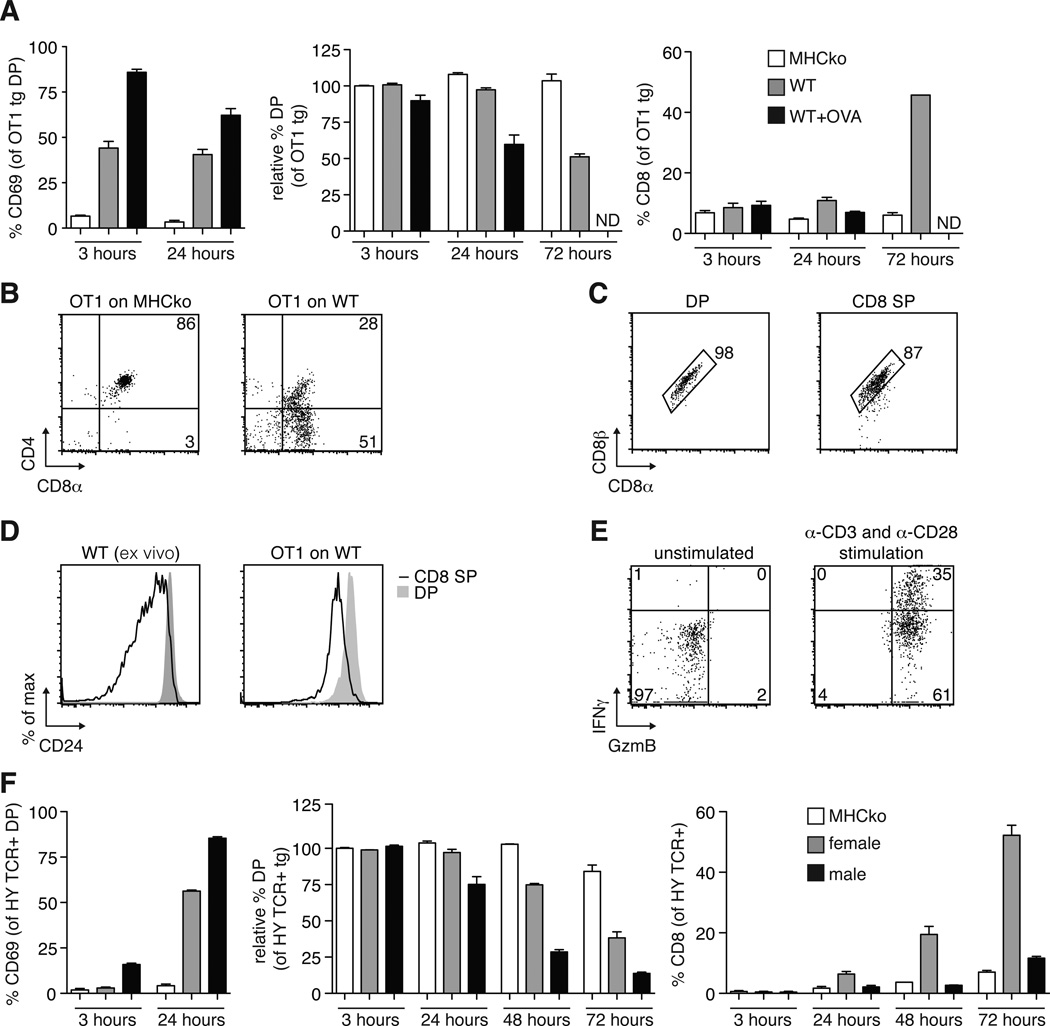
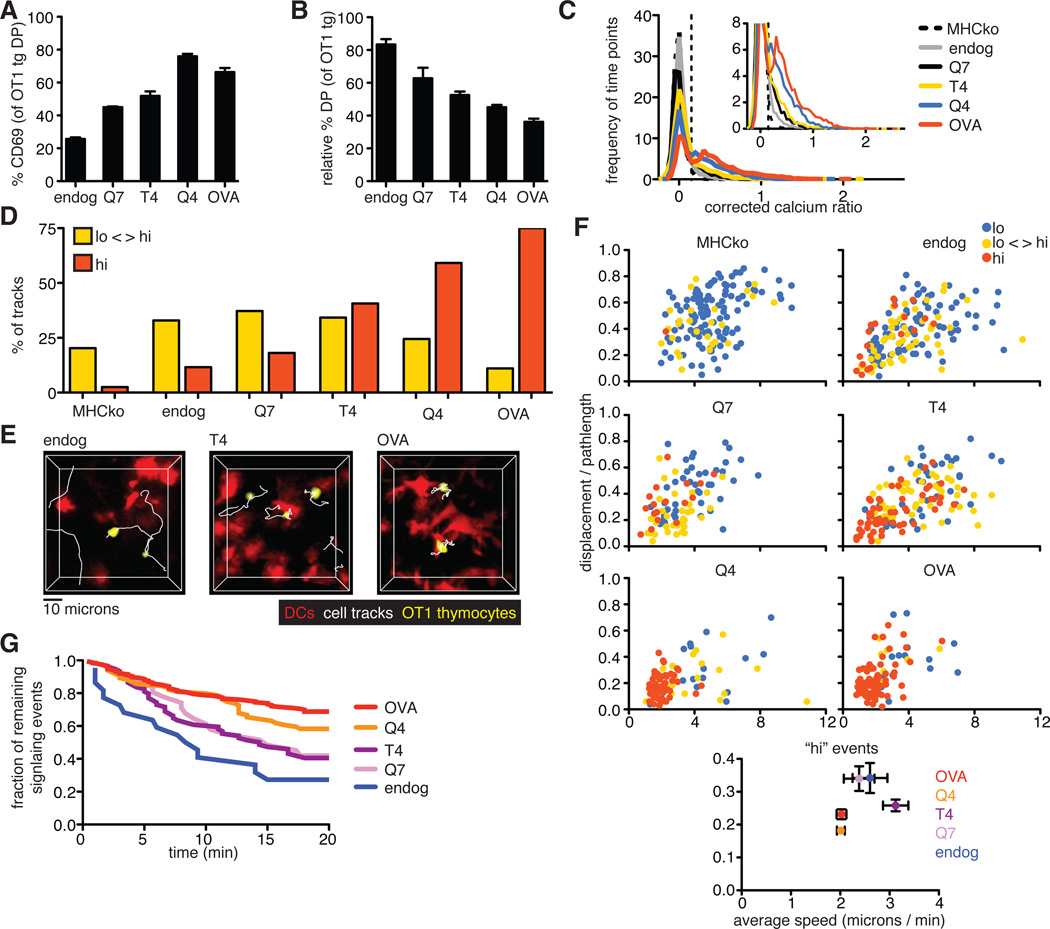
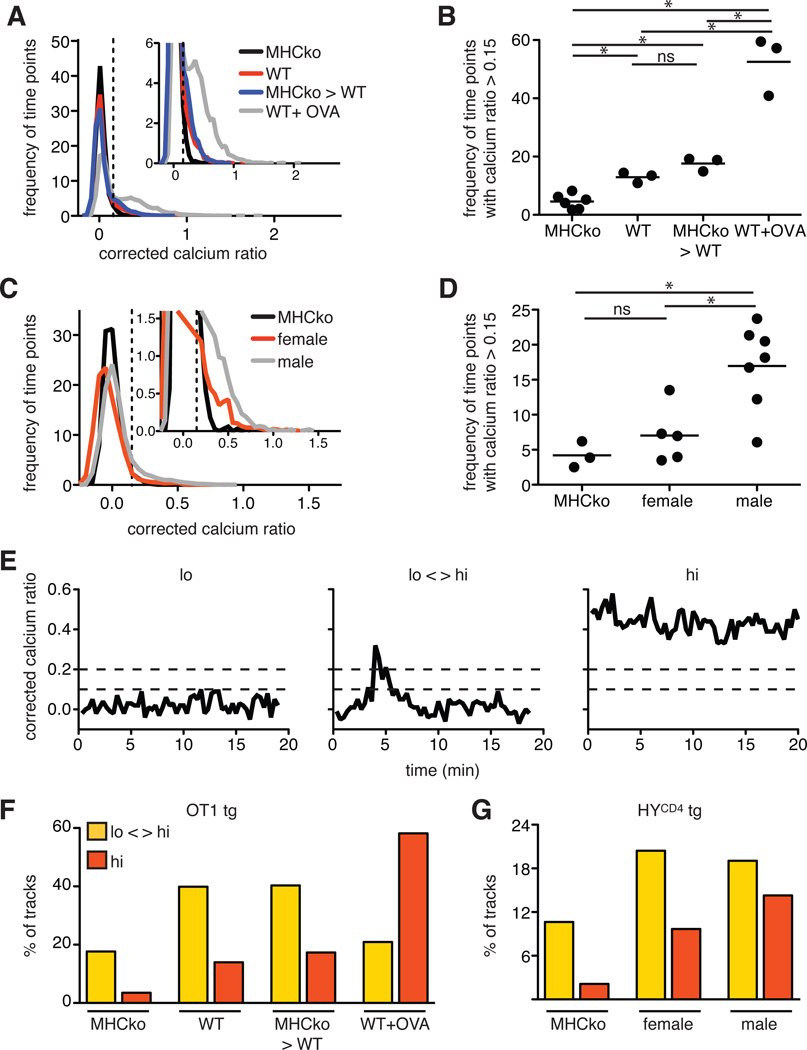
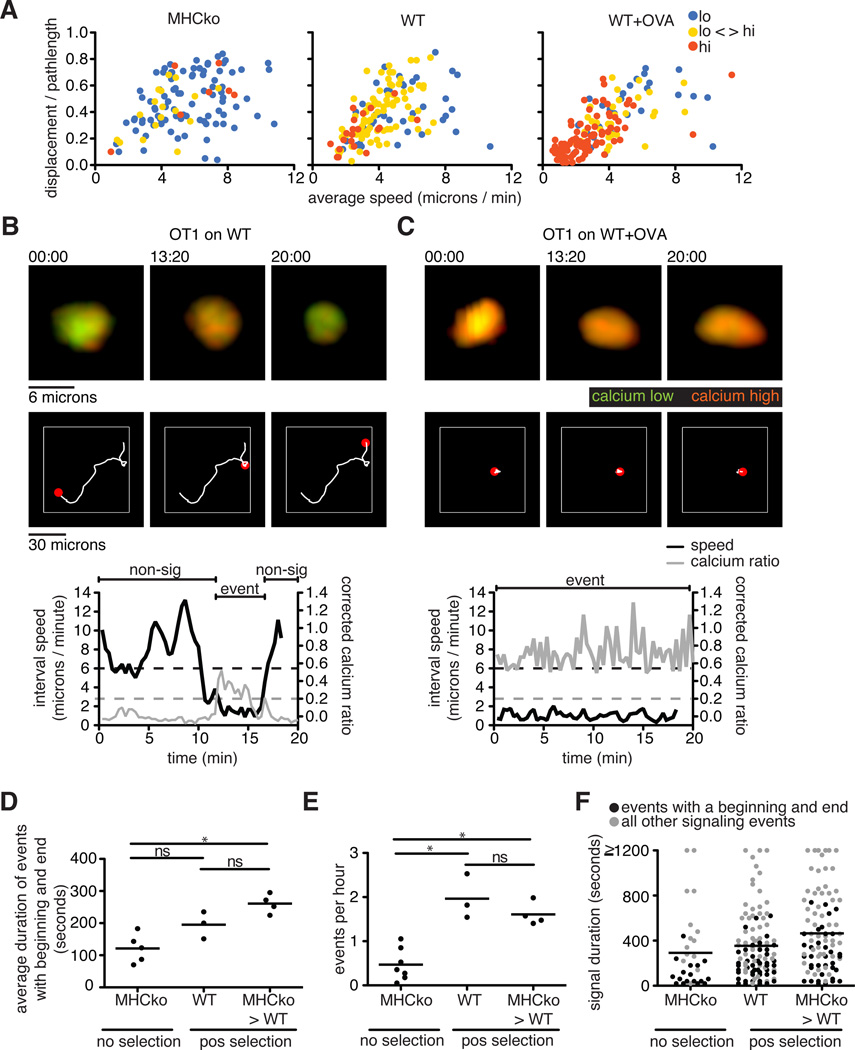
The recognition by the T cell receptor (TCR) of self-peptides presented by the major histocompatibility complex (MHC) on antigen-presenting cells, such as dendritic cells and thymic epithelial cells, controls T cell fate in the thymus, with weak TCR signals inducing survival (positive selection) and stronger signals inducing death (negative selection). In vitro studies indicate that peptide ligands that induce positive selection stimulate a low, but sustained, pattern of TCR signaling; however, the temporal pattern of TCR signaling in MHC class I-restricted thymocytes (thymocytes that are presented with peptides by MHC class I) in the thymus, under conditions that support positive selection, is unknown. We addressed this question by examining intracellular Ca(2+) dynamics and migratory changes in thymocytes undergoing positive and negative selection in thymic slices. Brief, serial signaling events that were separated by migratory periods and low cytosolic Ca(2+) concentrations correlated with the positive selection of MHC class I-restricted thymocytes, whereas sustained Ca(2+) signaling and the arrest of thymocytes were associated with negative selection. Low-avidity peptides and the presentation of peptides by cortical thymic epithelial cells, rather than dendritic cells, failed to induce strong migratory arrest of thymocytes, which led to transient TCR signaling. Thus, we provide a comparison of positive and negative selection signals in situ and suggest that the absence of strong stop signals distinguishes between positive and negative selection.
T 细胞受体 (TCR) 识别主要组织相容性复合体 (MHC) 在抗原呈递细胞(如树突状细胞和胸腺上皮细胞)上呈递的自身肽,控制胸腺中 T 细胞的命运,弱 TCR 信号诱导存活(阳性选择),而更强的信号诱导死亡(阴性选择)。体外研究表明,诱导阳性选择的肽配体刺激低但持续的 TCR 信号;然而,在支持阳性选择的条件下,MHC 类 I 限制的胸腺细胞(通过 MHC 类 I 呈递肽的胸腺细胞)中 TCR 信号的时间模式是未知的。我们通过检查胸腺切片中阳性和阴性选择过程中的细胞内 Ca(2+)动力学和迁移变化来解决这个问题。短暂的、连续的信号事件被迁移期和低胞浆 Ca(2+)浓度隔开,与 MHC 类 I 限制的胸腺细胞的阳性选择相关,而持续的 Ca(2+)信号和胸腺细胞的停滞与阴性选择相关。低亲和力肽和皮质胸腺上皮细胞而不是树突状细胞呈递肽,未能诱导胸腺细胞强烈的迁移停滞,从而导致 TCR 信号短暂。因此,我们提供了原位比较阳性和阴性选择信号的方法,并表明缺乏强烈的停止信号区分了阳性和阴性选择。