Swarup Vimal P, Mencio Caitlin P, Hlady Vladimir, Kuberan Balagurunathan
Department of Bioengineering, University of Utah, Salt Lake City, 84112 UT , USA
Biomol Concepts. 2013 Jun;4(3):233-57. doi: 10.1515/bmc-2012-0042.
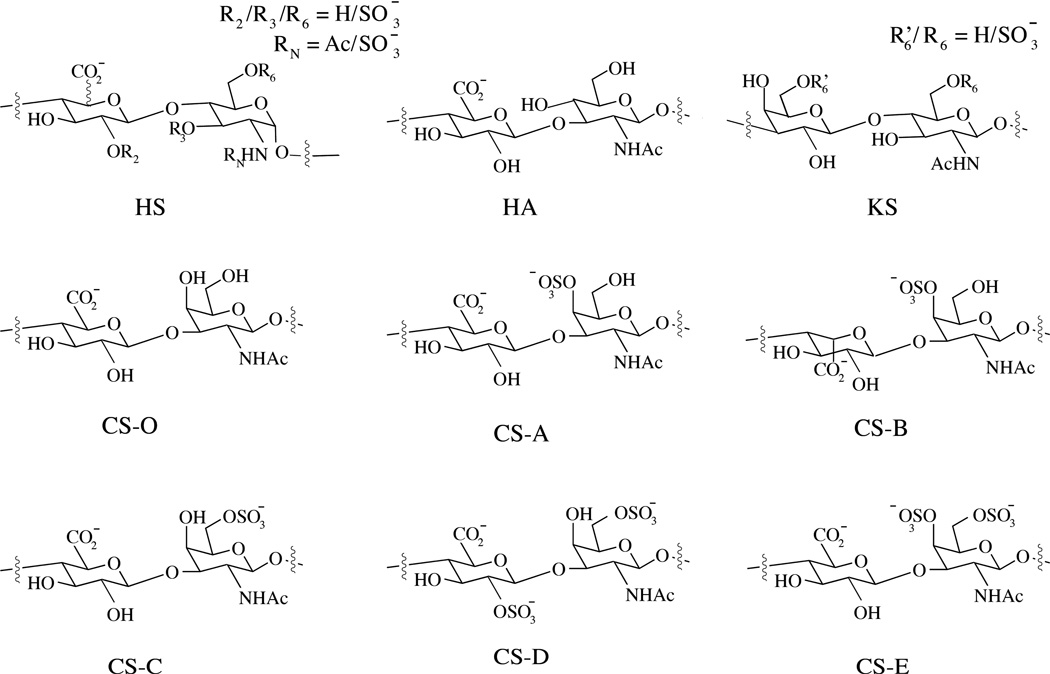
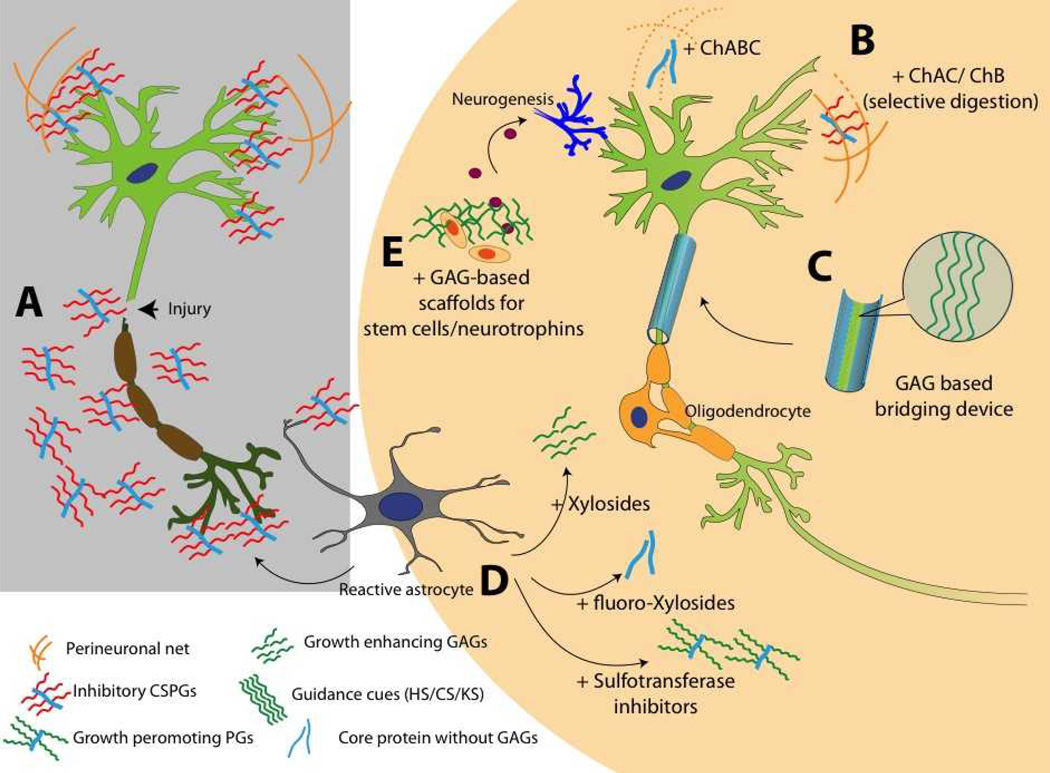
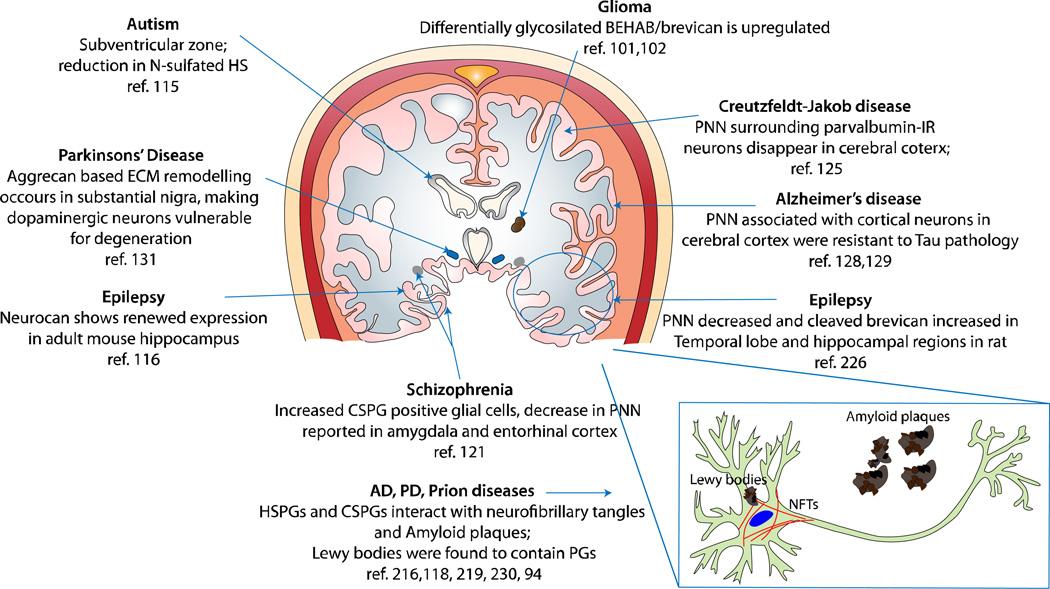
Proteoglycans (PGs) regulate diverse functions in the central nervous system (CNS) by interacting with a number of growth factors, matrix proteins, and cell surface molecules. Heparan sulfate (HS) and chondroitin sulfate (CS) are two major glycosaminoglycans present in the PGs of the CNS. The functionality of these PGs is to a large extent dictated by the fine sulfation patterns present on their glycosaminoglycan (GAG) chains. In the past 15 years, there has been a significant expansion in our knowledge on the role of HS and CS chains in various neurological processes, such as neuronal growth, regeneration, plasticity, and pathfinding. However, defining the relation between distinct sulfation patterns of the GAGs and their functionality has thus far been difficult. With the emergence of novel tools for the synthesis of defined GAG structures, and techniques for their characterization, we are now in a better position to explore the structure-function relation of GAGs in the context of their sulfation patterns. In this review, we discuss the importance of GAGs on CNS development, injury, and disorders with an emphasis on their sulfation patterns. Finally, we outline several GAG-based therapeutic strategies to exploit GAG chains for ameliorating various CNS disorders.
蛋白聚糖(PGs)通过与多种生长因子、基质蛋白和细胞表面分子相互作用,调节中枢神经系统(CNS)的多种功能。硫酸乙酰肝素(HS)和硫酸软骨素(CS)是中枢神经系统PGs中存在的两种主要糖胺聚糖。这些PGs的功能在很大程度上取决于其糖胺聚糖(GAG)链上存在的精细硫酸化模式。在过去15年里,我们对HS和CS链在各种神经过程(如神经元生长、再生、可塑性和路径寻找)中的作用的认识有了显著扩展。然而,迄今为止,确定GAGs不同硫酸化模式与其功能之间的关系一直很困难。随着合成特定GAG结构的新工具以及对其进行表征的技术的出现,我们现在更有能力在其硫酸化模式的背景下探索GAGs的结构-功能关系。在这篇综述中,我们讨论了GAGs对中枢神经系统发育、损伤和疾病的重要性,重点是它们的硫酸化模式。最后,我们概述了几种基于GAGs的治疗策略,以利用GAG链改善各种中枢神经系统疾病。