Brandenberg Oliver F, Rusert Peter, Magnus Carsten, Weber Jacqueline, Böni Jürg, Günthard Huldrych F, Regoes Roland R, Trkola Alexandra
Retrovirology. 2014 Sep 25;11:75. doi: 10.1186/s12977-014-0075-y.
Variable loops 1 and 2 (V1V2) of the HIV-1 envelope glycoprotein gp120 perform two key functions: ensuring envelope trimer entry competence and shielding against neutralizing antibodies. While preserving entry functionality would suggest a high need for V1V2 sequence optimization and conservation, shielding efficacy is known to depend on a high flexibility of V1V2 giving rise to its substantial sequence variability. How entry competence of the trimer is maintained despite the continuous emergence of antibody escape mutations within V1V2 has not been resolved. Since HIV cell-cell transmission is considered a highly effective means of virus dissemination, we investigated whether cell-cell transmission may serve to enhance infectivity of V1V2 variants with debilitated free virus entry.
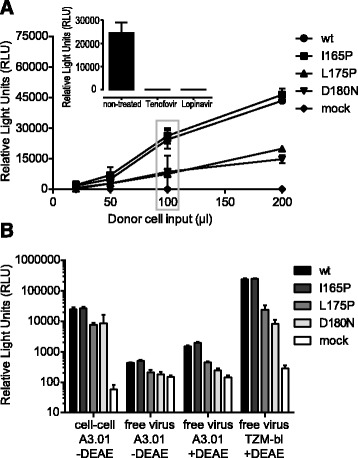
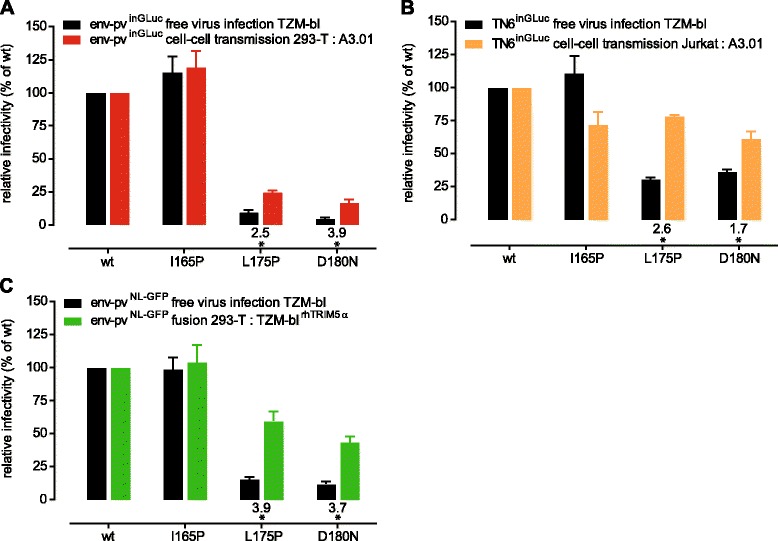
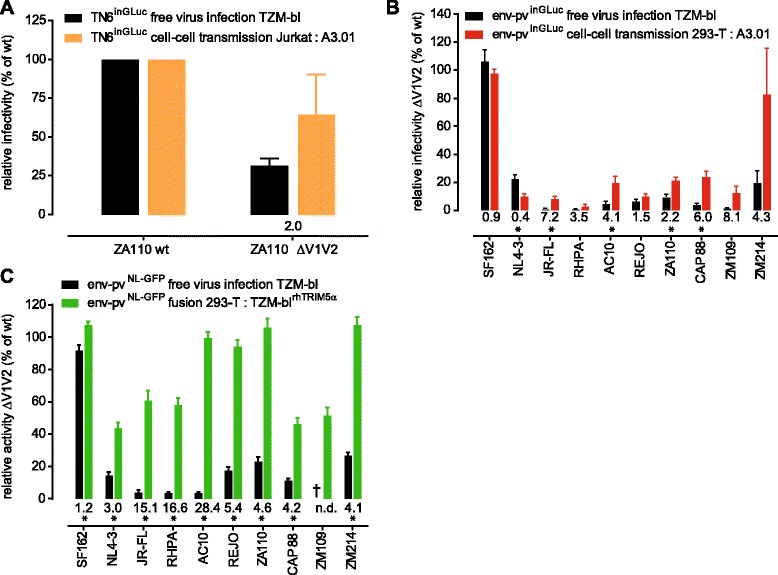
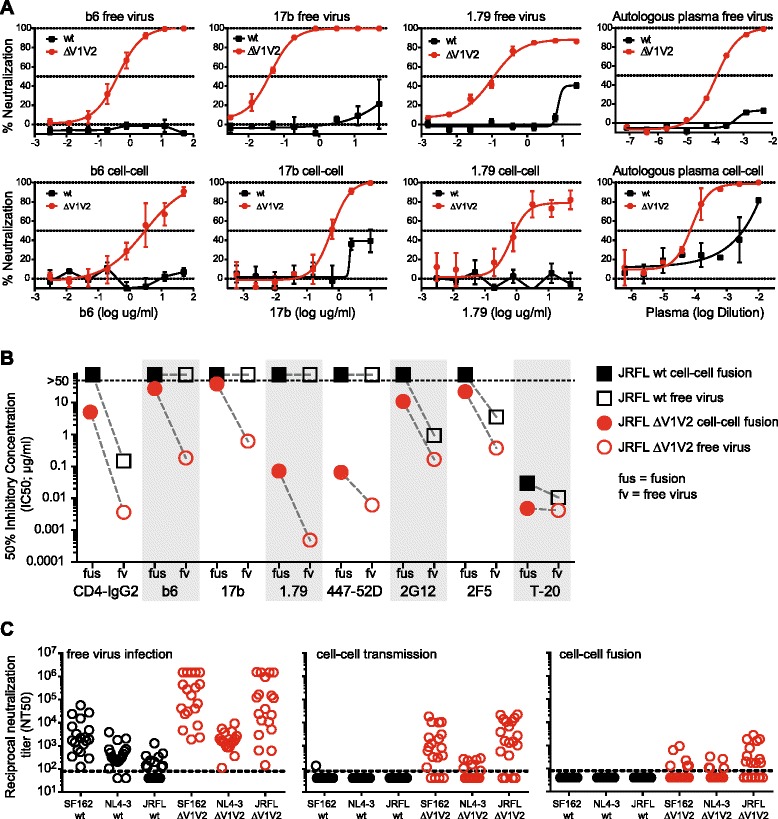
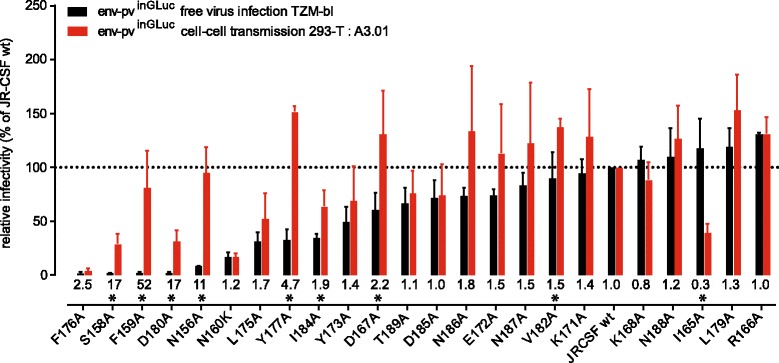
In a detailed comparison of wt and V1V2 mutant envelopes, V1V2 proved to be a key factor in ascertaining free virus infectivity, with V1V2 mutants displaying significantly reduced trimer integrity. Despite these defects, cell-cell transmission was able to partially rescue infectivity of V1V2 mutant viruses. We identified two regions, encompassing amino acids 156 to 160 (targeted by broadly neutralizing antibodies) and 175 to 180 (encompassing the α4β7 binding site) which were particularly prone to free virus infectivity loss upon mutation but maintained infectivity in cell-cell transmission. Of note, V1V2 antibody shielding proved important during both free virus infection and cell-cell transmission.
Based on our data we propose a model for V1V2 evolution that centers on cell-cell transmission as a salvage pathway for virus replication. Escape from antibody neutralization may frequently result in V1V2 mutations that reduce free virus infectivity. Cell-cell transmission could provide these escape viruses with sufficiently high replication levels that enable selection of compensatory mutations, thereby restoring free virus infectivity while ensuring antibody escape. Thus, our study highlights the need to factor in cell-cell transmission when considering neutralization escape pathways of HIV-1.
HIV-1包膜糖蛋白gp120的可变环1和2(V1V2)执行两项关键功能:确保包膜三聚体的进入能力并抵御中和抗体。虽然保留进入功能意味着对V1V2序列优化和保守性有很高的需求,但已知屏蔽效果取决于V1V2的高灵活性,这导致其序列具有很大的变异性。尽管V1V2内不断出现抗体逃逸突变,但三聚体的进入能力是如何维持的尚未得到解决。由于HIV细胞间传播被认为是病毒传播的一种高效方式,我们研究了细胞间传播是否有助于增强自由病毒进入能力受损的V1V2变体的感染性。
在对野生型和V1V2突变体包膜进行的详细比较中,V1V2被证明是确定自由病毒感染性的关键因素,V1V2突变体的三聚体完整性显著降低。尽管存在这些缺陷,细胞间传播仍能够部分挽救V1V2突变病毒的感染性。我们确定了两个区域,包括氨基酸156至160(被广泛中和抗体靶向)和175至180(包含α4β7结合位点),这两个区域在突变后特别容易导致自由病毒感染性丧失,但在细胞间传播中仍保持感染性。值得注意的是,V1V2抗体屏蔽在自由病毒感染和细胞间传播过程中都很重要。
基于我们的数据,我们提出了一个V1V2进化模型,该模型以细胞间传播作为病毒复制的挽救途径为核心。从抗体中和中逃逸可能经常导致V1V2突变,从而降低自由病毒的感染性。细胞间传播可以为这些逃逸病毒提供足够高的复制水平,从而能够选择补偿性突变,进而恢复自由病毒的感染性,同时确保抗体逃逸。因此,我们的研究强调在考虑HIV-1的中和逃逸途径时需要考虑细胞间传播因素。