Institute for Protein Research, Osaka University, Osaka, Japan.
Cancer Sci. 2014 Dec;105(12):1519-25. doi: 10.1111/cas.12551. Epub 2014 Nov 5.
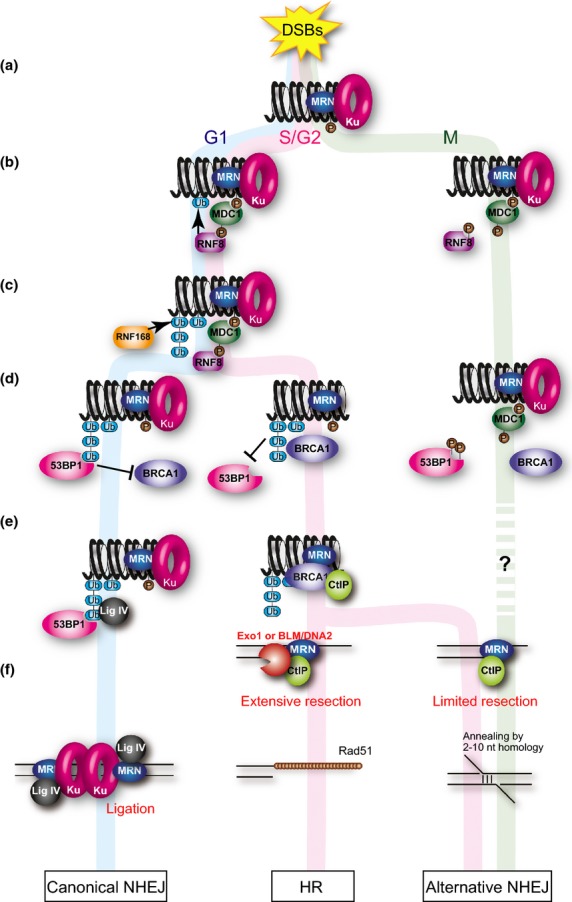
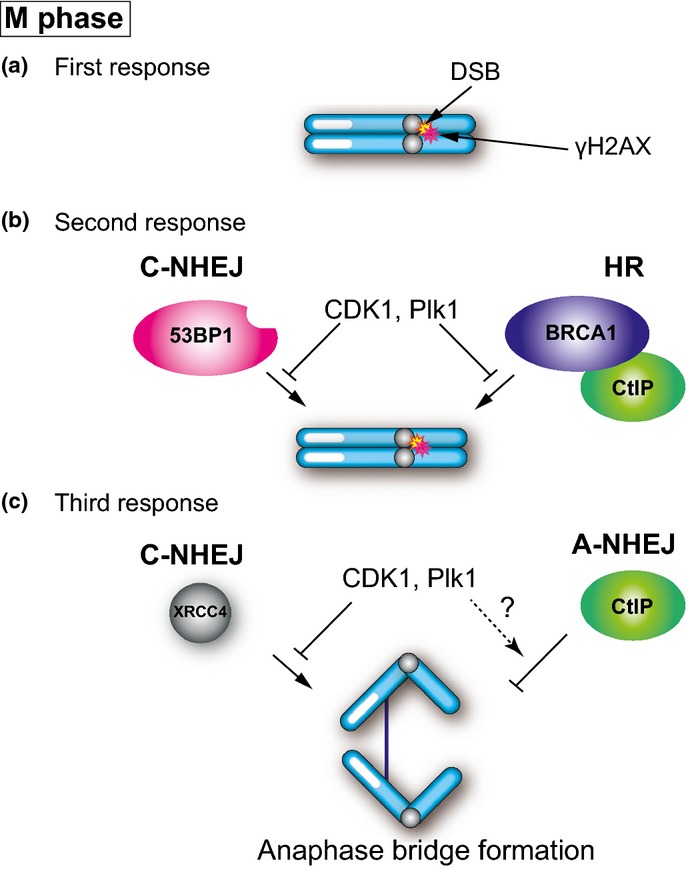
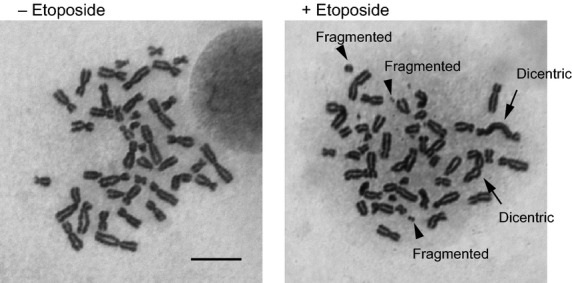
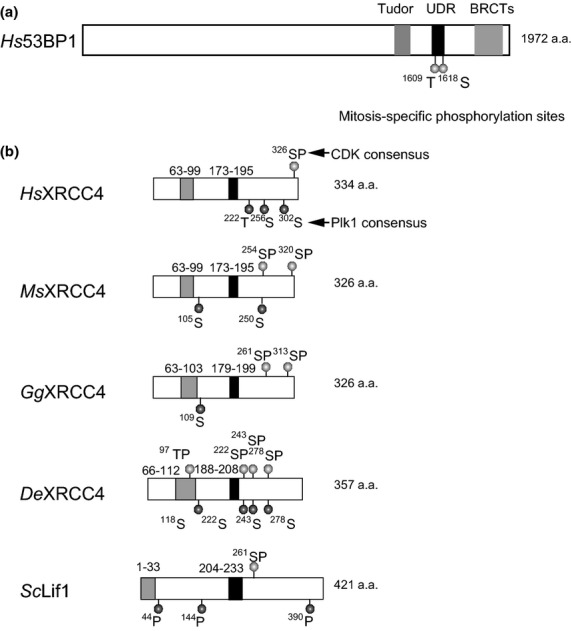
Double-strand breaks (DSBs) are one of the severest types of DNA damage. Unrepaired DSBs easily induce cell death and chromosome aberrations. To maintain genomic stability, cells have checkpoint and DSB repair systems to respond to DNA damage throughout most of the cell cycle. The failure of this process often results in apoptosis or genomic instability, such as aneuploidy, deletion, or translocation. Therefore, DSB repair is essential for maintenance of genomic stability. During mitosis, however, cells seem to suppress the DNA damage response and proceed to the next G1 phase, even if there are unrepaired DSBs. The biological significance of this suppression is not known. In this review, we summarize recent studies of mitotic DSB repair and discuss the mechanisms of suppression of DSB repair during mitosis. DSB repair, which maintains genomic integrity in other phases of the cell cycle, is rather toxic to cells during mitosis, often resulting in chromosome missegregation and aberration. Cells have multiple safeguards to prevent genomic instability during mitosis: inhibition of 53BP1 or BRCA1 localization to DSB sites, which is important to promote non-homologous end joining or homologous recombination, respectively, and also modulation of the non-homologous end joining core complex to inhibit DSB repair. We discuss how DSBs during mitosis are toxic and the multiple safeguard systems that suppress genomic instability.
双链断裂(DSBs)是最严重的 DNA 损伤类型之一。未修复的 DSB 很容易导致细胞死亡和染色体异常。为了维持基因组稳定性,细胞有检查点和 DSB 修复系统来响应整个细胞周期中的 DNA 损伤。该过程的失败通常会导致细胞凋亡或基因组不稳定,如非整倍体、缺失或易位。因此,DSB 修复对于维持基因组稳定性至关重要。然而,在有丝分裂期间,细胞似乎抑制了 DNA 损伤反应并进入下一个 G1 期,即使存在未修复的 DSB。这种抑制的生物学意义尚不清楚。在这篇综述中,我们总结了最近关于有丝分裂 DSB 修复的研究,并讨论了有丝分裂期间 DSB 修复抑制的机制。在其他细胞周期阶段维持基因组完整性的 DSB 修复,在有丝分裂期间对细胞是相当有毒的,通常导致染色体错误分离和异常。细胞有多种保护措施来防止有丝分裂期间的基因组不稳定性:抑制 53BP1 或 BRCA1 定位到 DSB 位点,这对于分别促进非同源末端连接或同源重组很重要,以及调节非同源末端连接核心复合物以抑制 DSB 修复。我们讨论了有丝分裂期间的 DSB 如何是有毒的,以及抑制基因组不稳定性的多种保护系统。