Department of Agricultural Biotechnology and Research Institute of Agriculture and Life Sciences, Seoul National University, Seoul 151-921, Korea.
Plant Pathol J. 2014 Sep;30(3):288-98. doi: 10.5423/PPJ.OA.02.2014.0013.
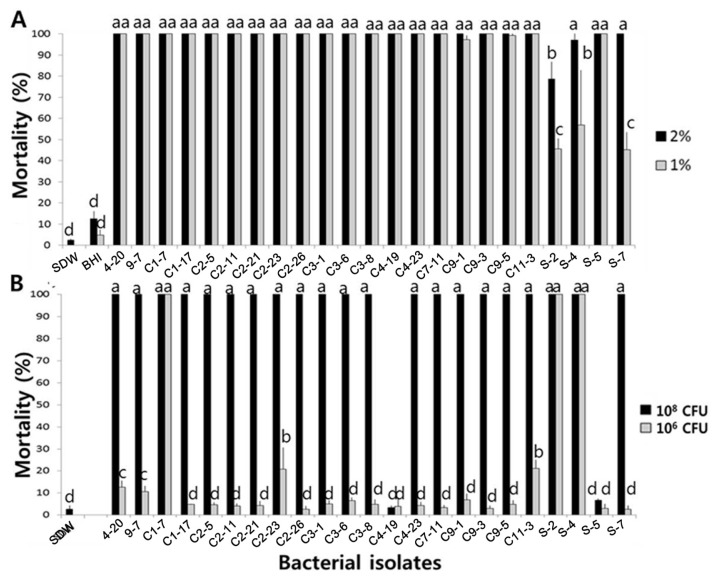
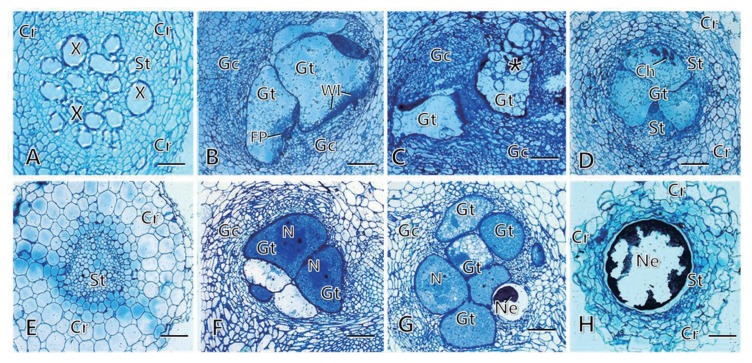
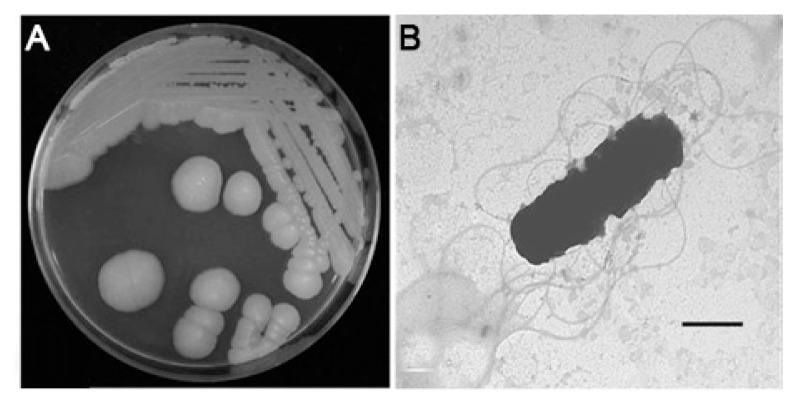
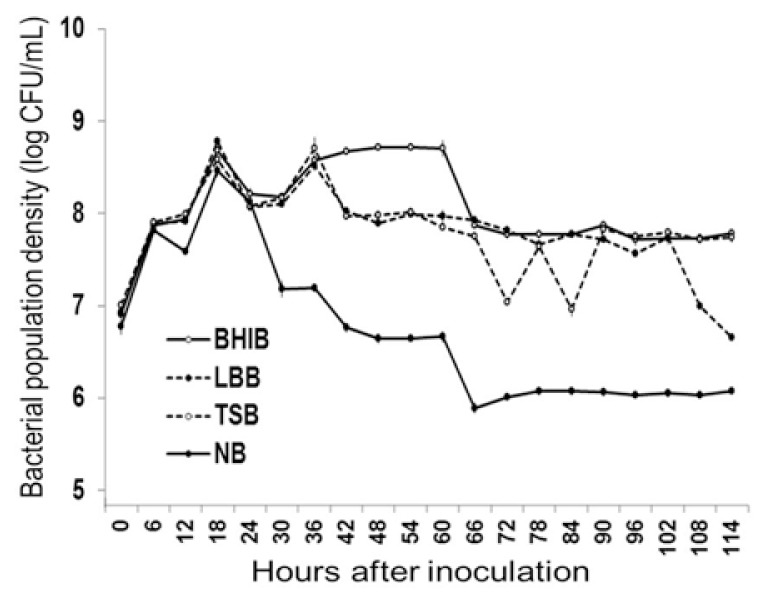
We examined the efficacy of a bacterium for biocontrol of the root-knot nematode (RKN) Meloidogyne hapla in carrot (Daucus carota subsp. sativus) and tomato (Solanum lycopersicum). Among 542 bacterial isolates from various soils and plants, the highest nematode mortality was observed for treatments with isolate C1-7, which was identified as Bacillus cereus based on cultural and morphological characteristics, the Biolog program, and 16S rRNA sequencing analyses. The population density and the nematicidal activity of B. cereus C1-7 remained high until the end of culture in brain heart infusion broth, suggesting that it may have sustainable biocontrol potential. In pot experiments, the biocontrol efficacy of B. cereus C1-7 was high, showing complete inhibition of root gall or egg mass formation by RKN in carrot and tomato plants, and subsequently reducing RKN damage and suppressing nematode population growth, respectively. Light microscopy of RKN-infected carrot root tissues treated with C1-7 showed reduced formation of gall cells and fully developed giant cells, while extensive gall cells and fully mature giant cells with prominent cell wall ingrowths formed in the untreated control plants infected with RKNs. These histopathological characteristics may be the result of residual or systemic biocontrol activity of the bacterium, which may coincide with the biocontrol efficacies of nematodes in pots. These results suggest that B. cereus C1-7 can be used as a biocontrol agent for M. hapla.
我们研究了一种细菌对胡萝卜(Daucus carota subsp. sativus)和番茄(Solanum lycopersicum)根结线虫(RKN)Meloidogyne hapla 的生防效果。在来自不同土壤和植物的 542 个细菌分离物中,处理 C1-7 分离物时观察到最高的线虫死亡率,该分离物基于文化和形态特征、Biolog 程序和 16S rRNA 测序分析被鉴定为蜡状芽孢杆菌。直到脑心浸液肉汤培养结束,B. cereus C1-7 的种群密度和杀线虫活性仍然很高,这表明它可能具有可持续的生防潜力。在盆栽试验中,B. cereus C1-7 的生防效果很高,在胡萝卜和番茄植物中完全抑制了 RKN 的根瘤或卵块形成,随后分别减少了 RKN 对植物的损害和抑制了线虫种群的生长。用 C1-7 处理感染 RKN 的胡萝卜根组织的光学显微镜显示,根瘤细胞的形成减少,完全发育的巨型细胞形成,而在未处理的对照植物中,感染 RKN 的根瘤细胞形成广泛的根瘤细胞和完全成熟的巨型细胞,并有明显的细胞壁内陷。这些组织病理学特征可能是细菌残留或系统生防活性的结果,这可能与盆栽中线虫的生防效果一致。这些结果表明,B. cereus C1-7 可作为 M. hapla 的生防剂。