School of GeoSciences, Grant Institute, University of Edinburgh , Edinburgh , United Kingdom ; School of Earth Sciences, University of Bristol , Bristol , United Kingdom.
School of GeoSciences, Grant Institute, University of Edinburgh , Edinburgh , United Kingdom ; School of Ocean and Earth Sciences, National Oceanography Centre, University of Southampton , Southampton , United Kingdom.
PeerJ. 2014 Oct 2;2:e608. doi: 10.7717/peerj.608. eCollection 2014.
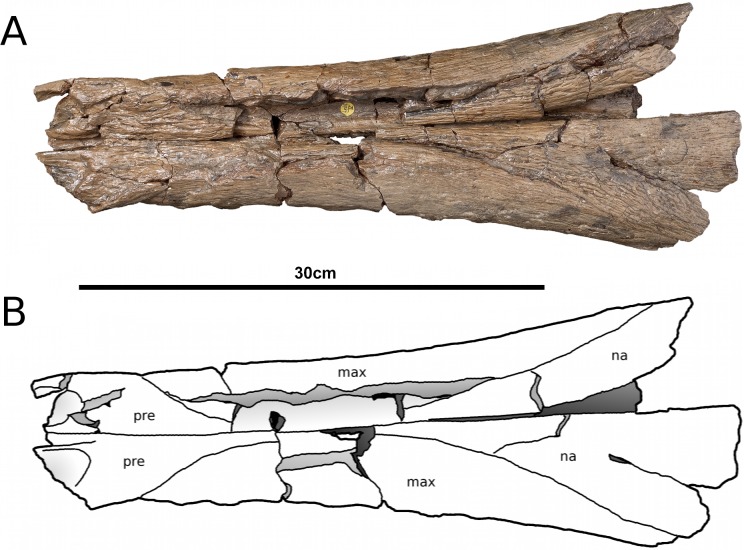
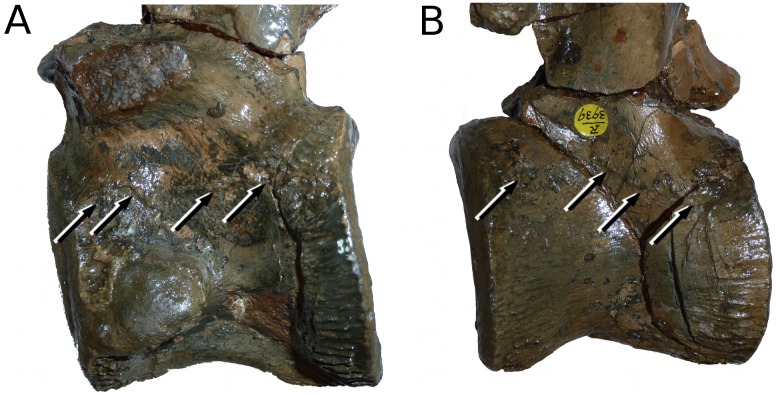
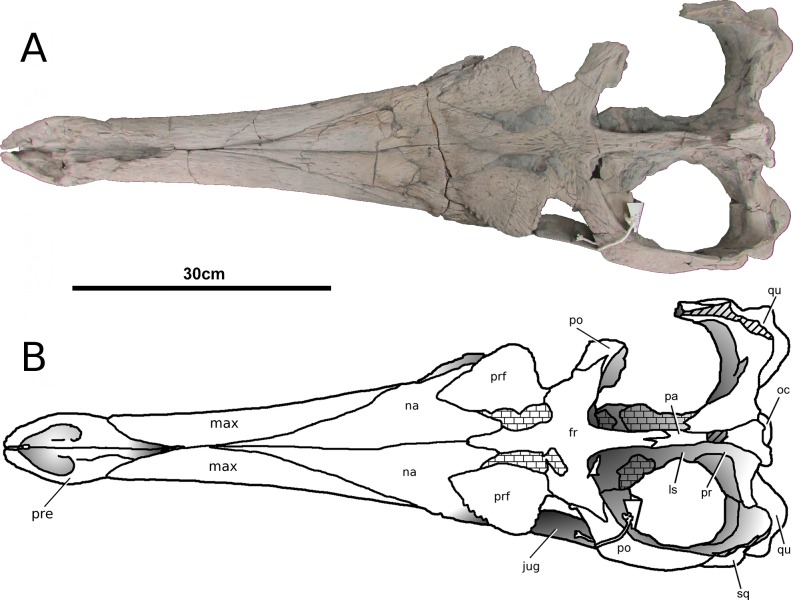
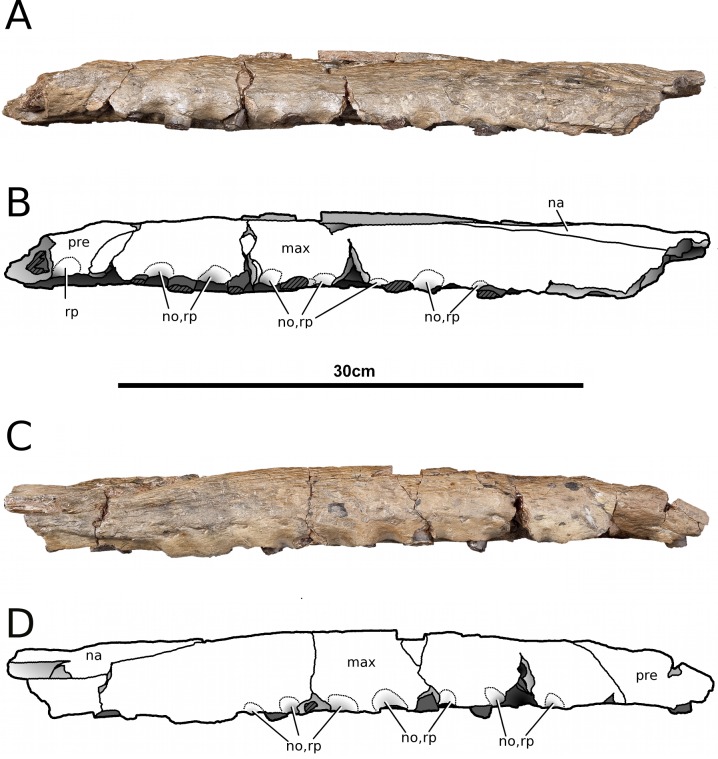
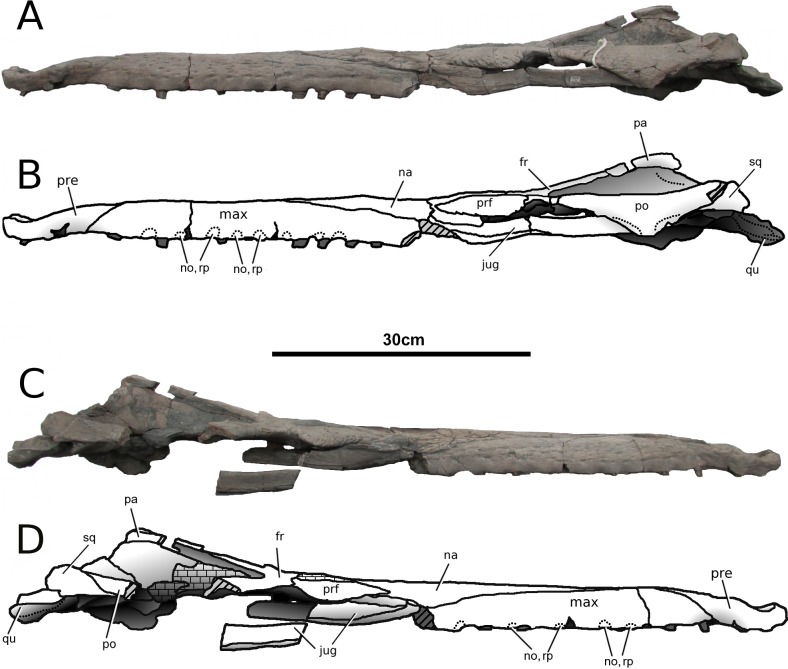
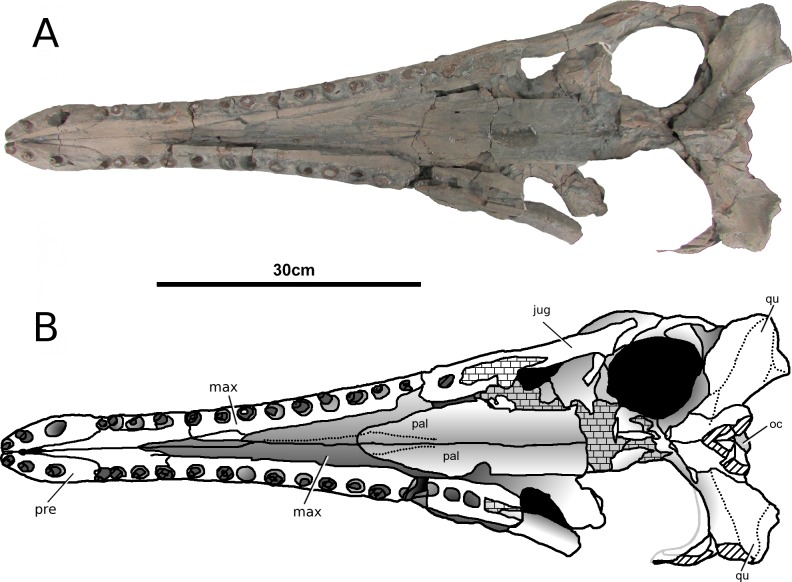
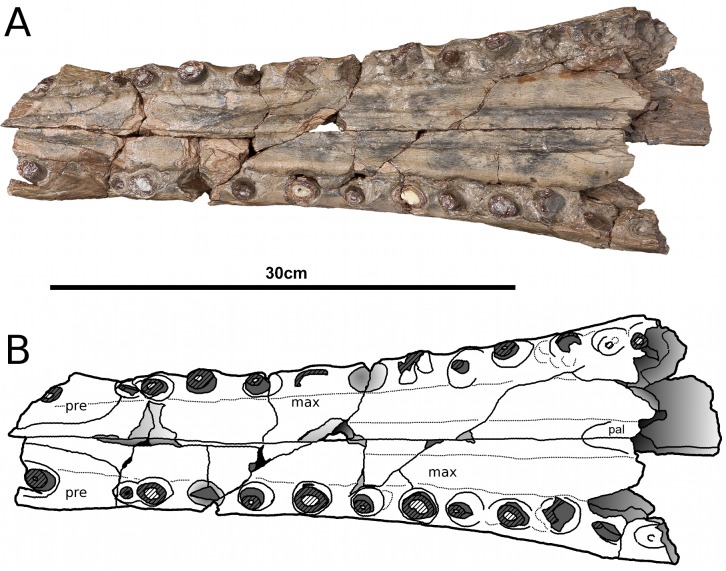
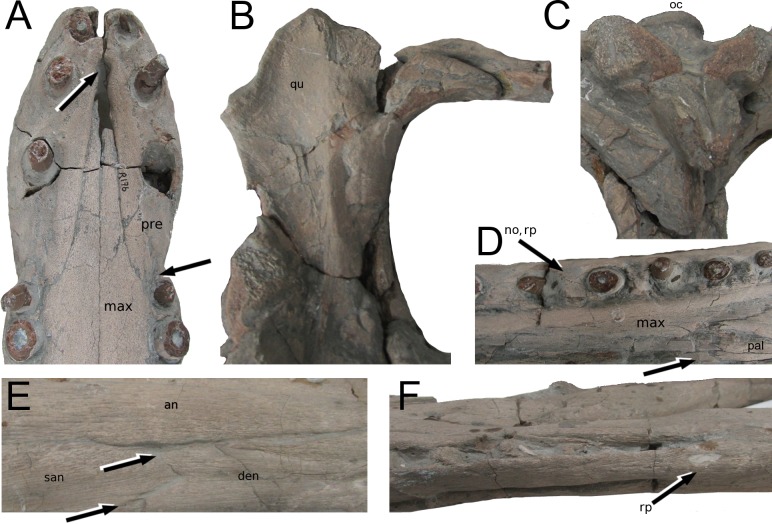
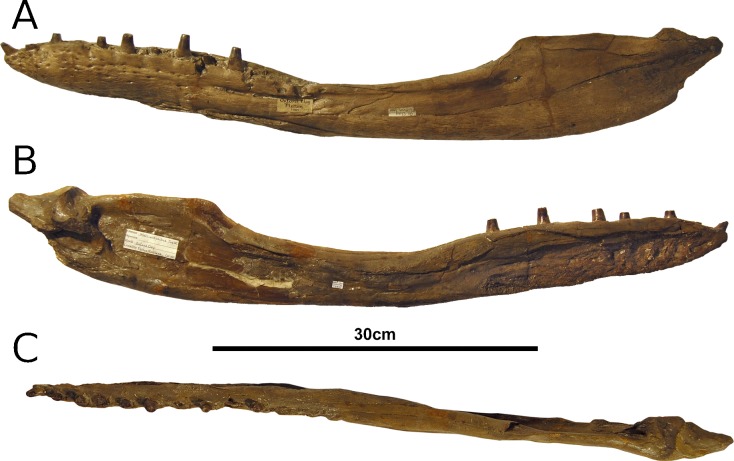
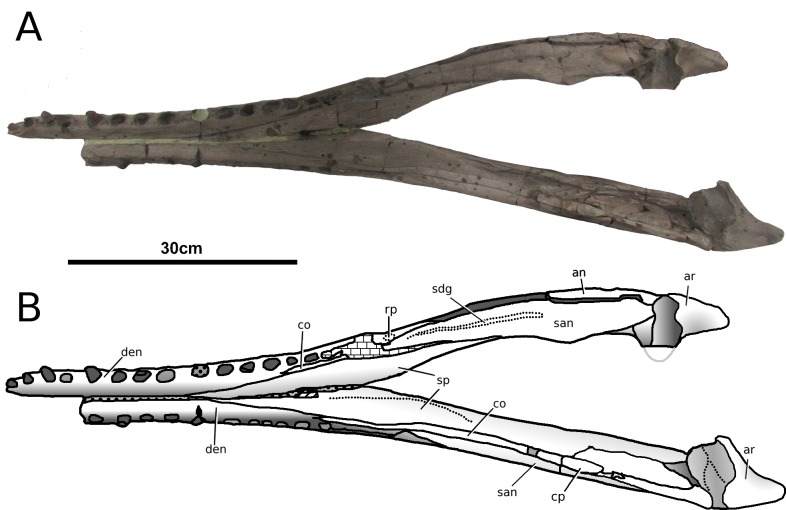
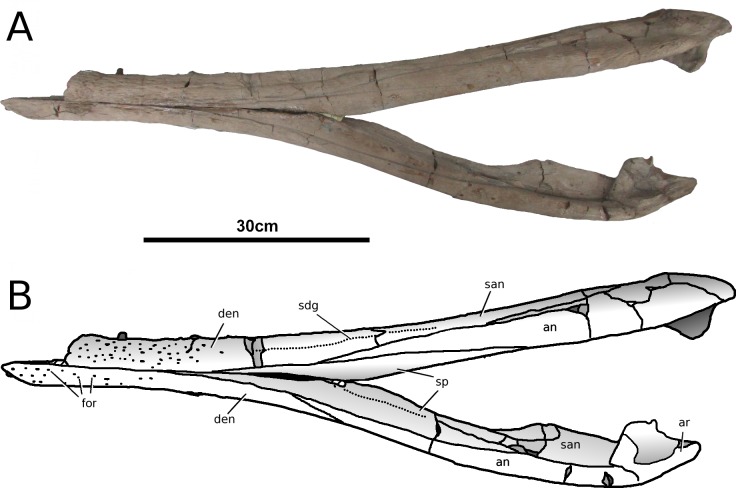
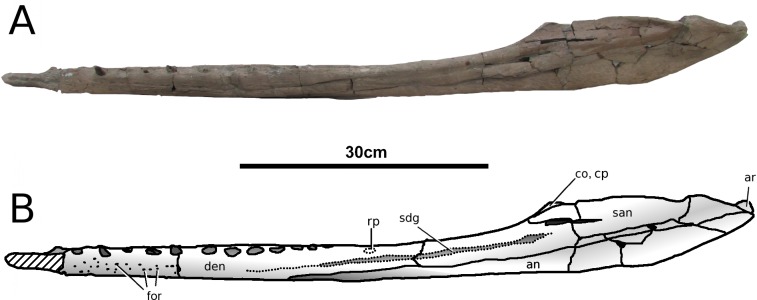
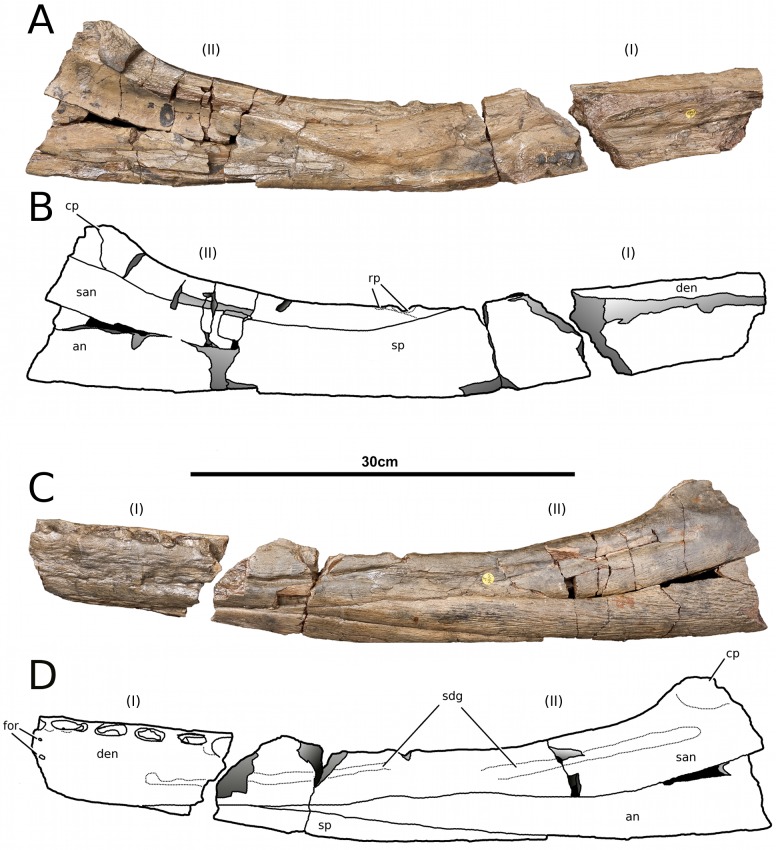
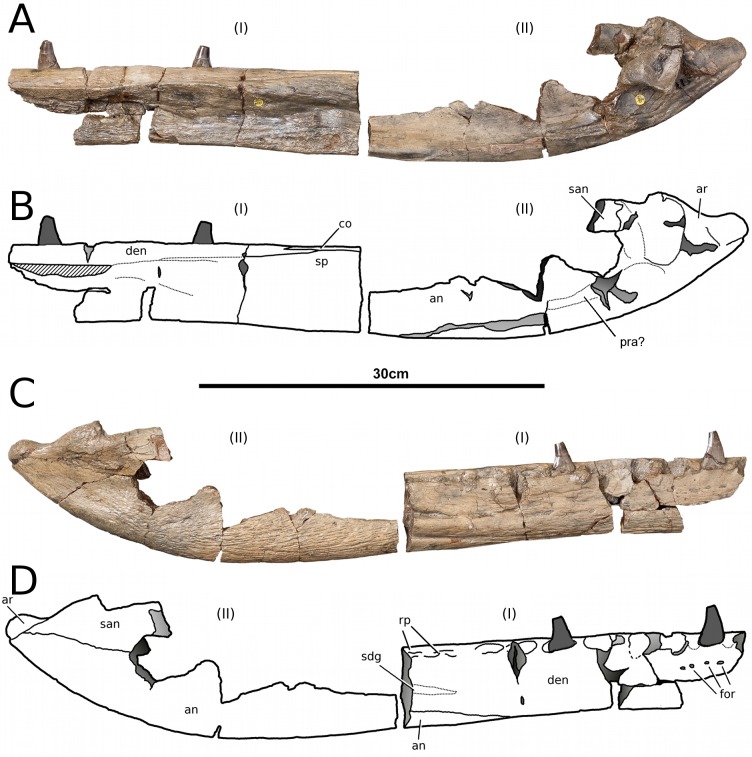
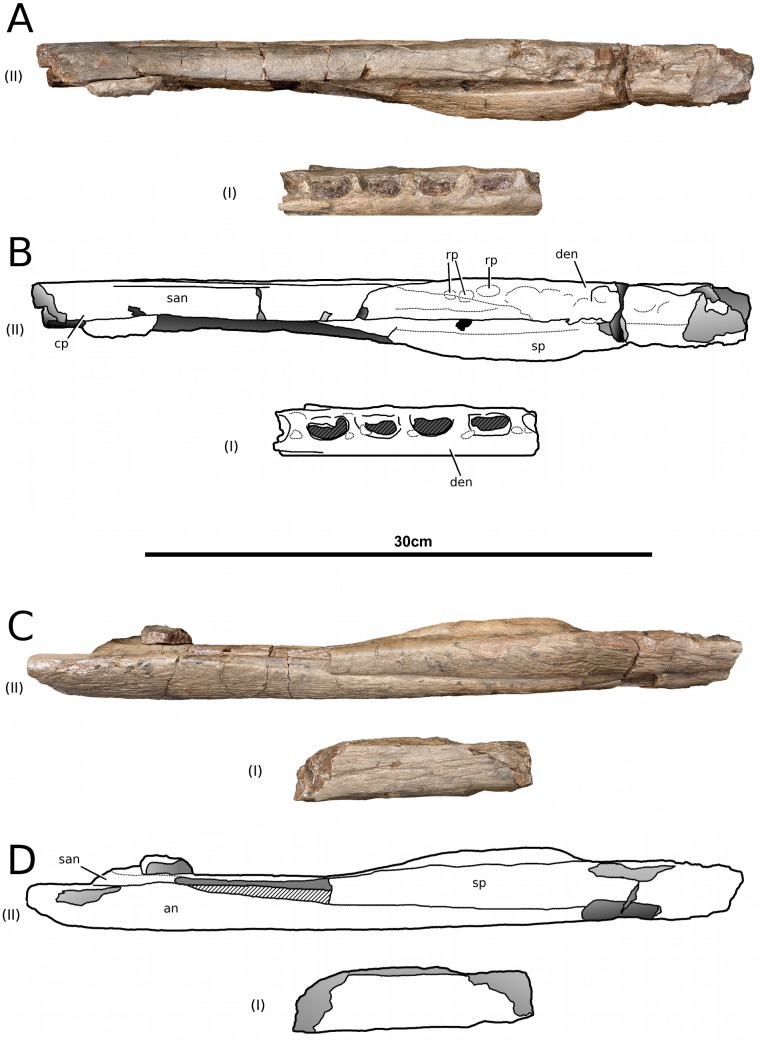
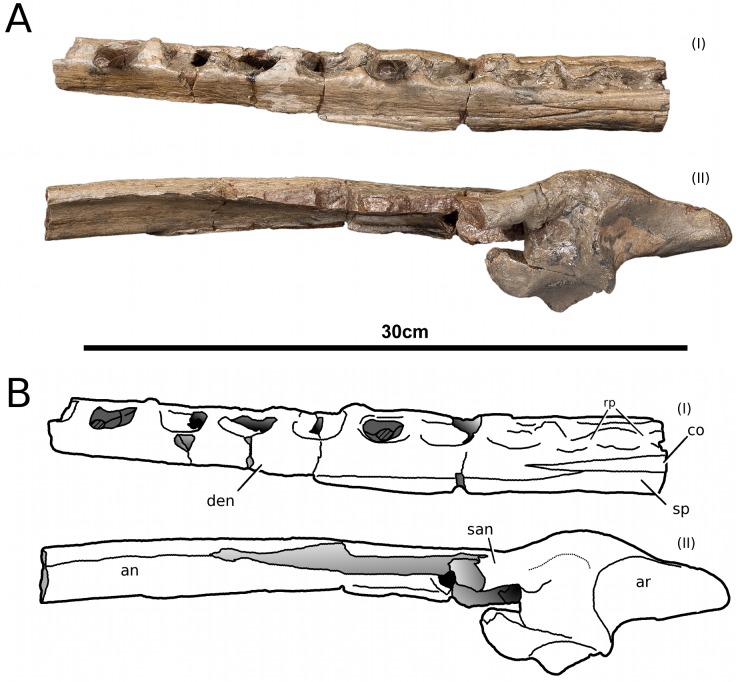
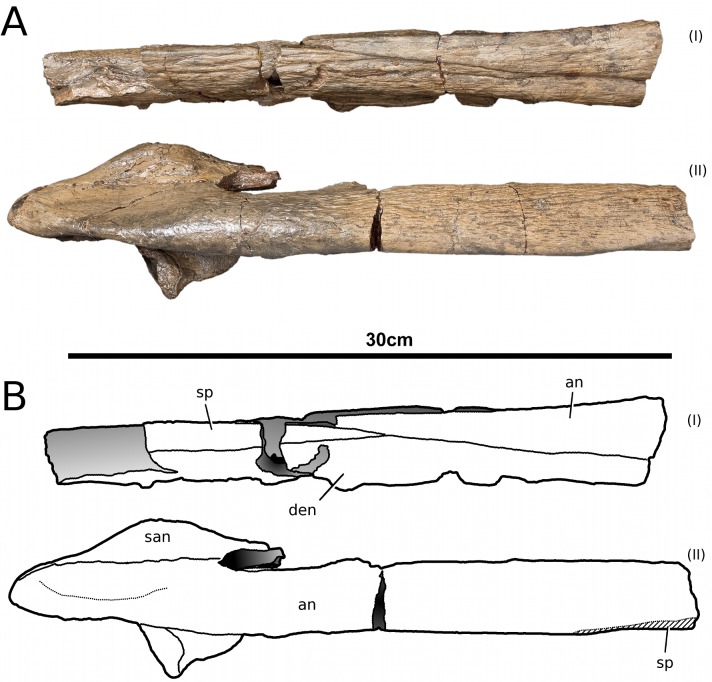
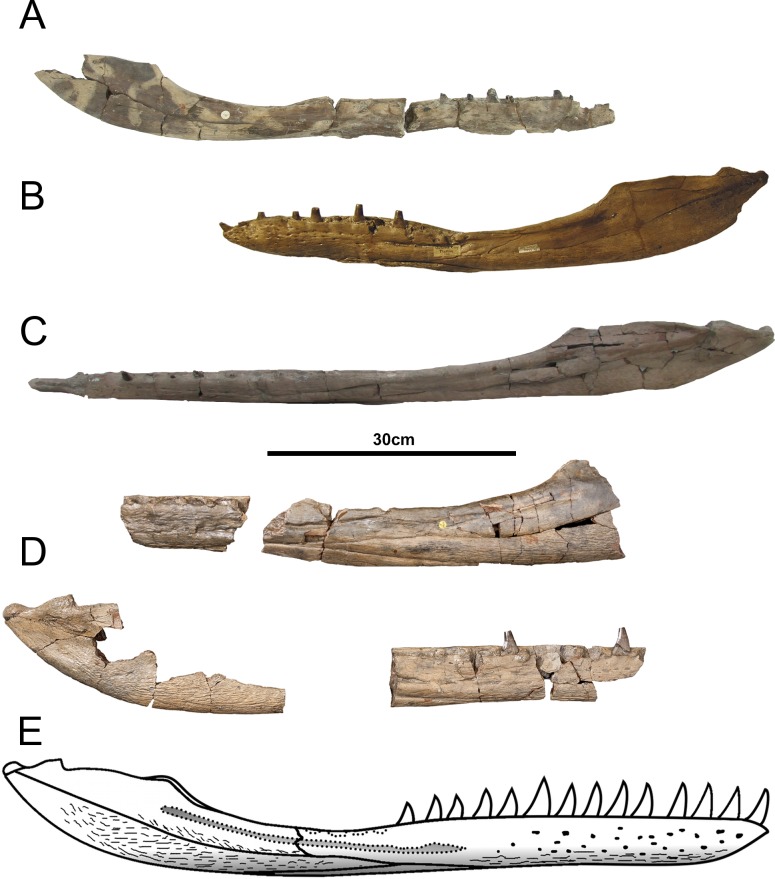
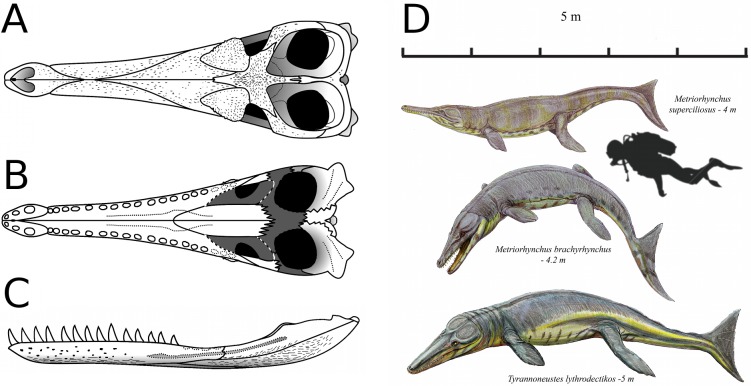
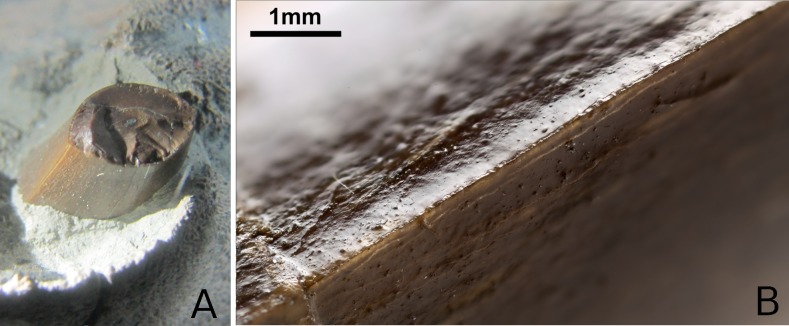
Tyrannoneustes lythrodectikos is one of numerous metriorhynchid crocodylomorph species known from the Oxford Clay Formation of England (Callovian-Oxfordian; Middle-Late Jurassic). This taxon is of evolutionary importance, as it is the oldest and most basal known macrophagous metriorhynchid. It has a mosaic of plesiomorphic and derived feeding related characteristics, including: teeth with microscopic, poorly formed and non-contiguous denticles; increased tooth apicobasal length; ventrally displaced dentary tooth row (increased gape); reduced dentary tooth count; and a proportionally long mandibular symphysis. However the type specimen, and current referred specimens, all lack a preserved cranium. As such, the craniofacial morphology of this taxon, and its potential feeding ecology, remains poorly understood. Here we describe two skulls and two lower jaws which we refer to T. lythrodectikos. Previously these specimens were referred to 'Metriorhynchus' brachyrhynchus. They share with the T. lythrodectikos holotype: the in-line reception pits on the dentary, dorsal margin of the surangular is strongly concave in lateral view, and the most of the angular ventral margin is strongly convex. Based on our description of these specimens, the skull of T. lythrodectikos has three autapomorphies: very long posterior processes of the premaxilla terminating in line with the 4th or 5th maxillary alveoli, deep lateral notches on the lateral surface of the maxillary with reception pits for dentary teeth, and the premaxilla forms the anterior margin of the first maxillary alveoli. Our description of the cranial anatomy of Tyrannoneustes lythrodectikos confirms that some macrophagous characteristics evolved during the Middle Jurassic, and were not exclusive to the clade Geosaurini. Moreover, the skulls further highlight the mosaic nature of Tyrannoneustes lythrodectikos and wide-gape macrophagous evolution in Geosaurinae.
泰曼鳄龙是从英格兰的牛津黏土组(中侏罗世至晚侏罗世,卡洛维阶至牛津阶)已知的众多长吻鳄形超目鳄形类物种之一。这个分类群具有进化意义,因为它是最古老和最基础的已知的食腐鳄形类。它具有镶嵌的祖征和衍生的摄食相关特征,包括:牙齿具有微观的、形态不佳的和不连续的小齿;增加的齿冠基长;齿骨齿列腹侧移位(张口增大);减少的齿骨齿数;以及相对较长的下颌联合。然而,模式标本和当前的参考标本都缺乏保存完好的头骨。因此,该分类群的颅面形态及其潜在的摄食生态学仍然知之甚少。在这里,我们描述了两个头骨和两个下颌骨,我们将其归为泰曼鳄龙。以前,这些标本被归为短吻鳄形超目“Metriorhynchus”brachyrhynchus。它们与泰曼鳄龙的模式标本共享:齿骨上的直线接收凹坑,关节骨的背缘在侧视时强烈凹入,以及大部分的隅骨腹缘强烈凸入。基于我们对这些标本的描述,泰曼鳄龙的头骨具有三个独特的特征:前颌骨的后突非常长,终止于第 4 或第 5 个上颌牙槽,上颌骨的侧面有深的侧凹,带有接收齿骨牙齿的凹坑,以及前颌骨形成了第一上颌牙槽的前缘。我们对泰曼鳄龙的颅解剖结构的描述证实,一些食腐特征是在中侏罗世进化的,而不是仅限于 Geosaurini 分支。此外,这些头骨进一步突出了泰曼鳄龙的镶嵌性质和 Geosaurinae 中的宽口食腐进化。