Lieu Fu-Kong, Lin Chih-Yung, Wang Paulus S, Jian Cai-Yun, Yeh Yung-Hsing, Chen Yi-An, Wang Kai-Lee, Lin Yi-Chun, Chang Ling-Ling, Wang Guei-Jane, Wang Shyi-Wu
Department of Rehabilitation, Cheng Hsin General Hospital, Taipei, Taiwan, ROC.
Department of Physiology, School of Medicine, National Yang-Ming University, Taipei, Taiwan, ROC.
PLoS One. 2014 Oct 7;9(10):e87080. doi: 10.1371/journal.pone.0087080. eCollection 2014.
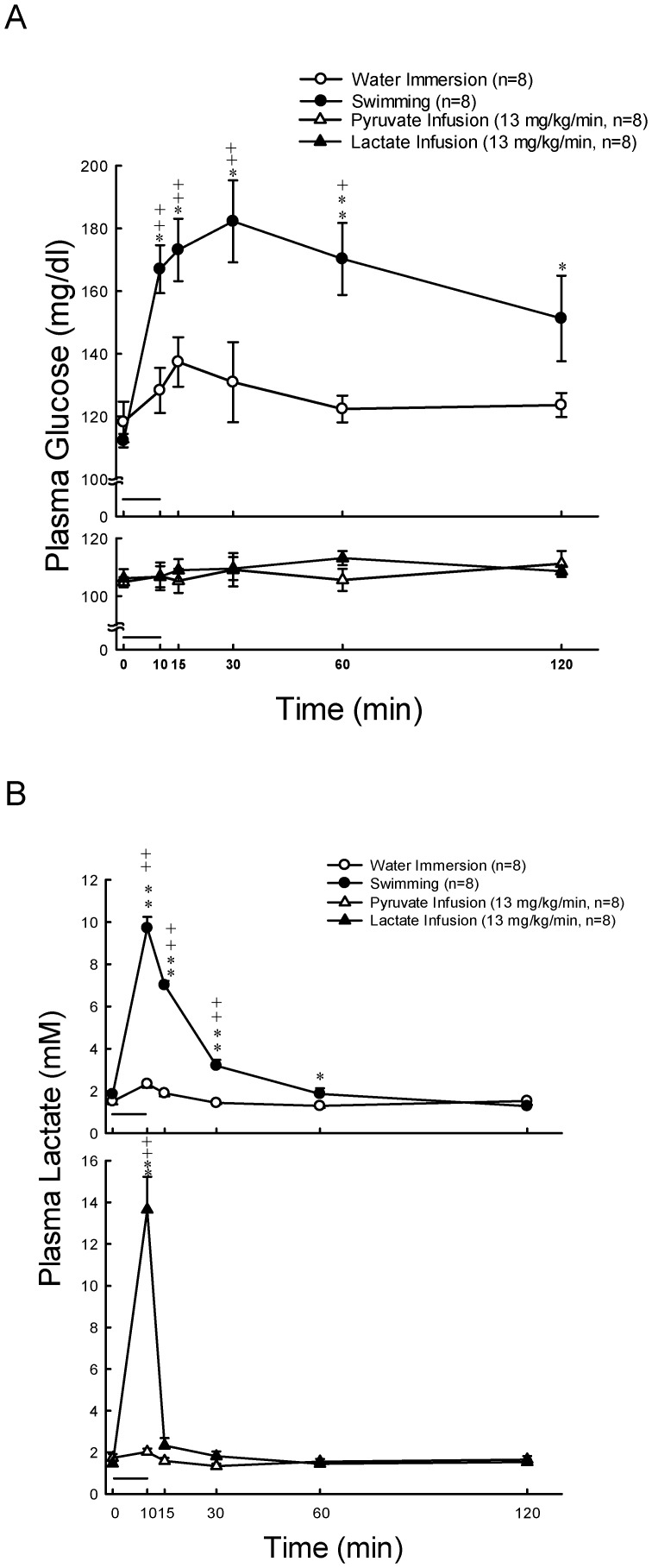
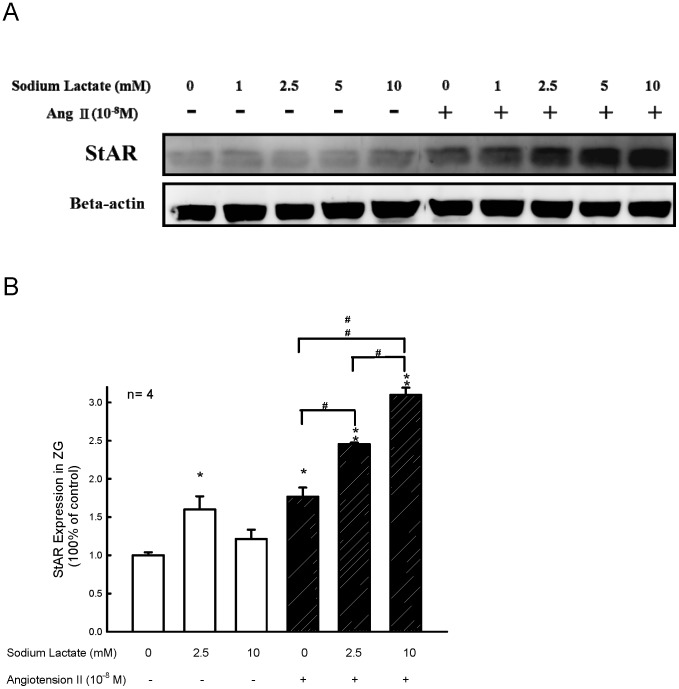
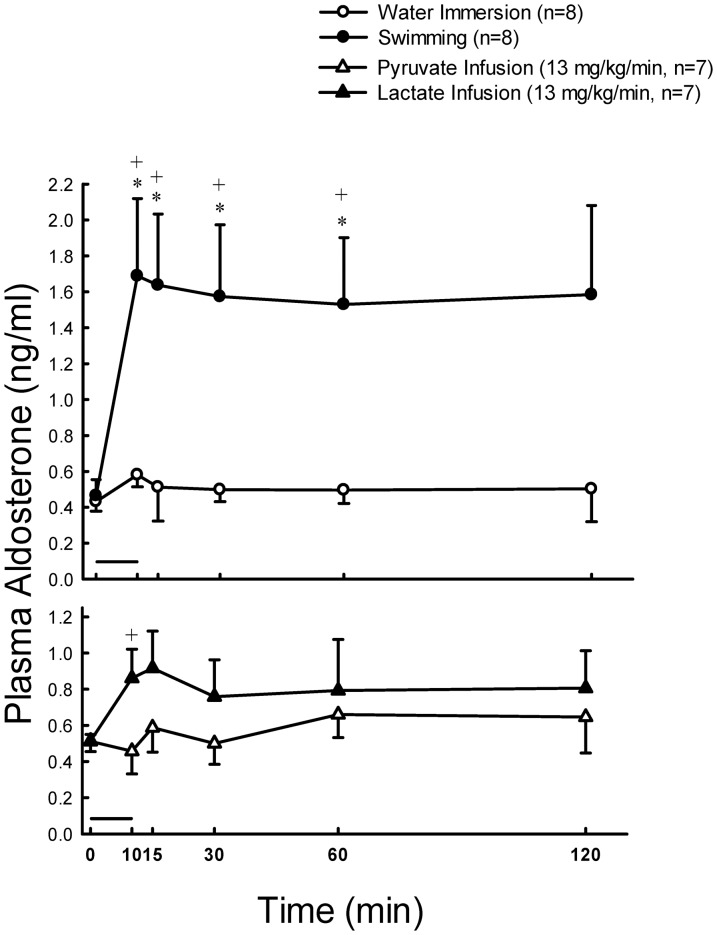
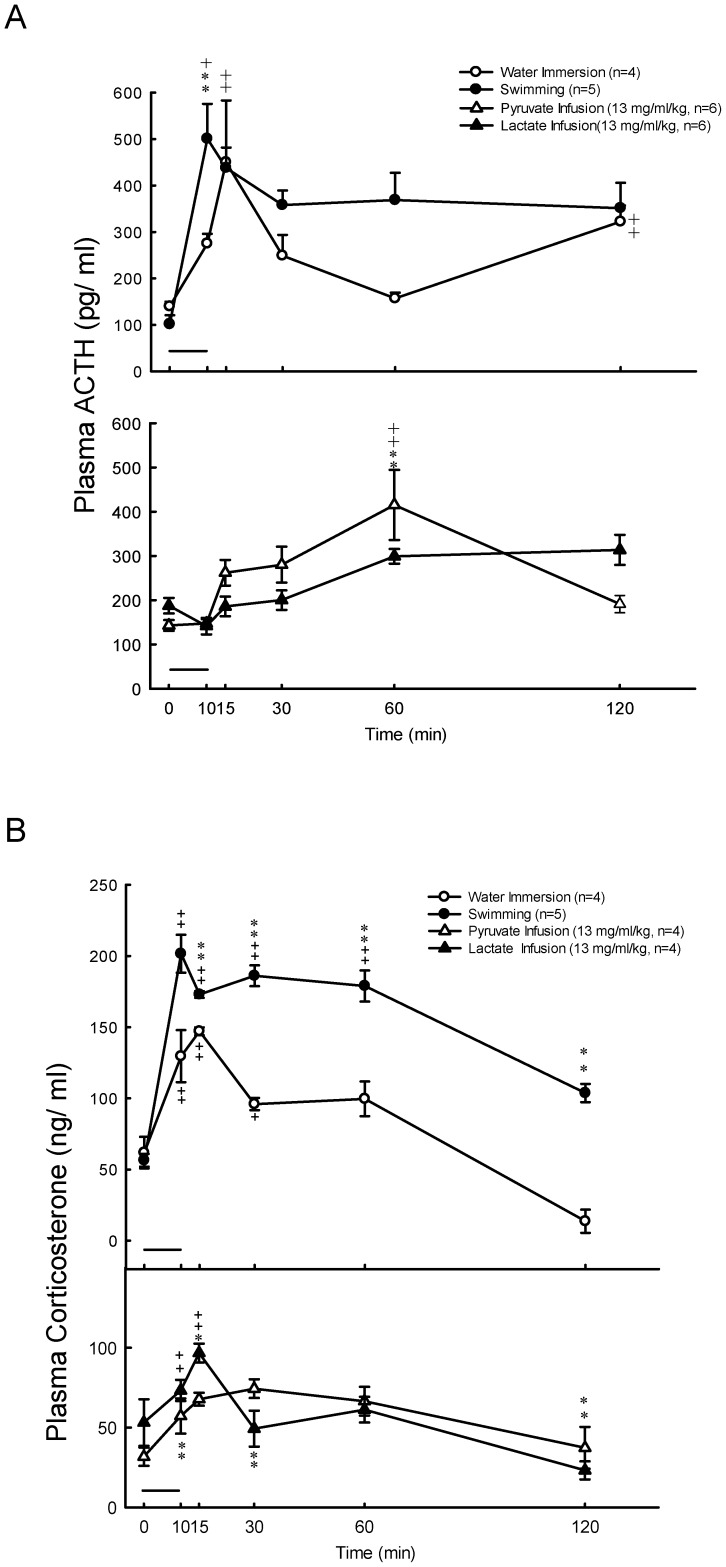
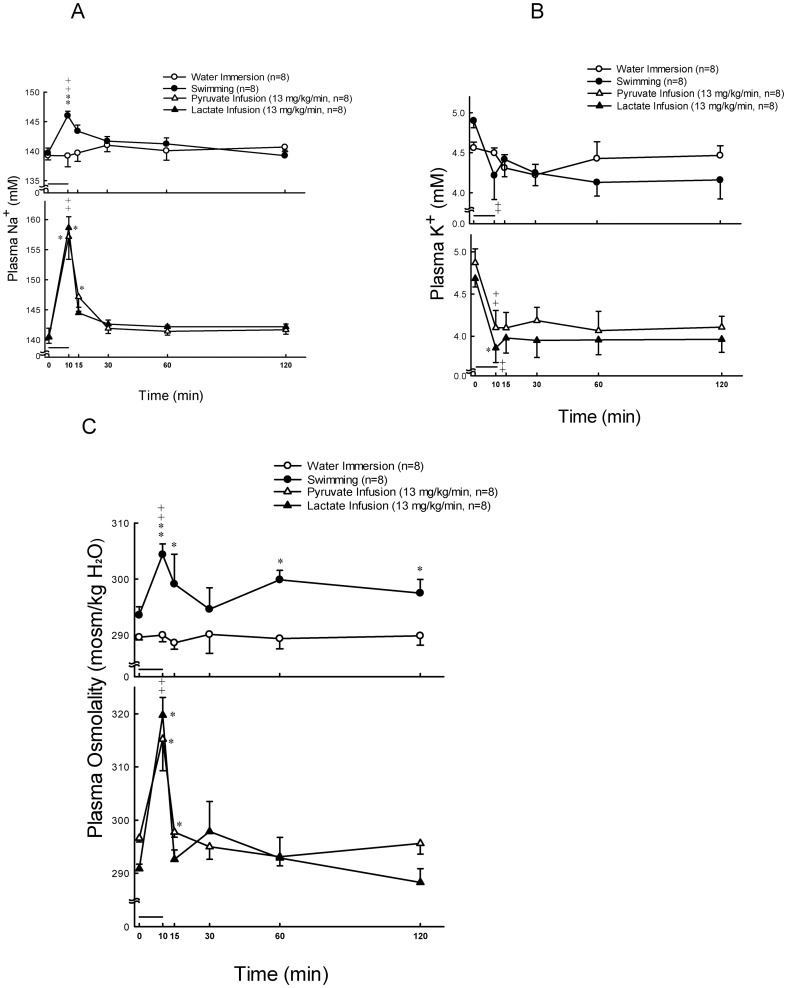
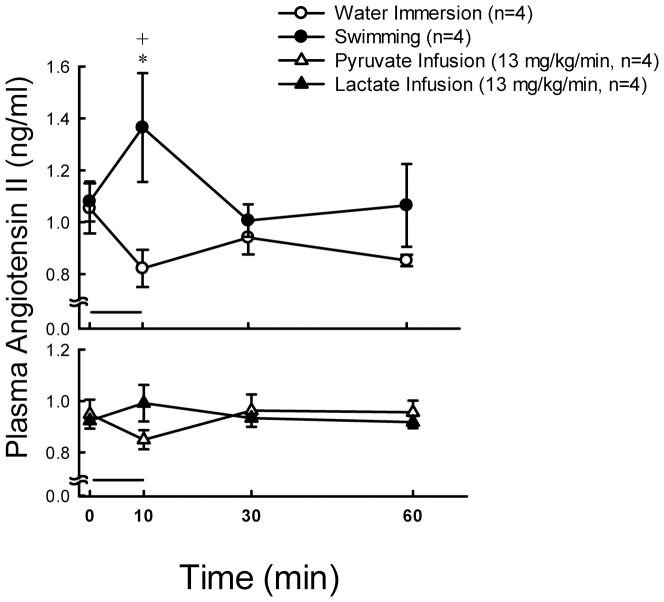
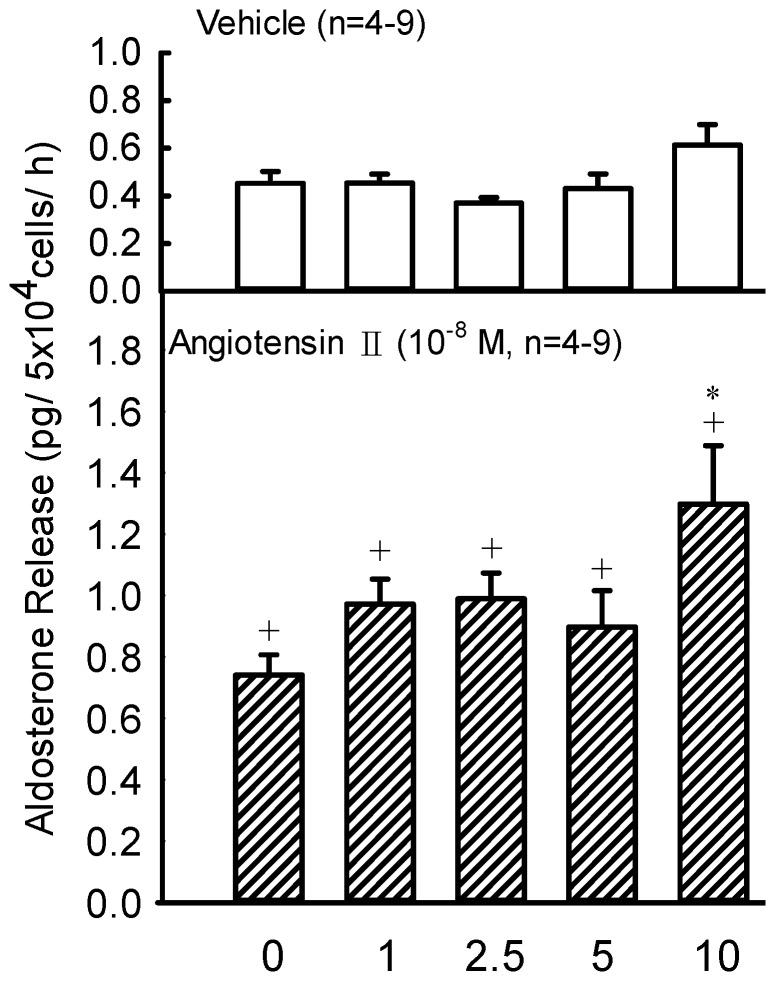
It has been demonstrated that exercise is one of the stresses known to increase the aldosterone secretion. Both potassium and angiotensin II (Ang II) levels are shown to be correlated with aldosterone production during exercise, but the mechanism is still unclear. In an in vivo study, male rats were catheterized via right jugular vein (RJV), and divided into four groups namely water immersion, swimming, lactate infusion (13 mg/kg/min) and pyruvate infusion (13 mg/kg/min) groups. Each group was treated for 10 min. Blood samples were collected at 0, 10, 15, 30, 60 and 120 min from RJV after administration. In an in vitro study, rat zona glomerulosa (ZG) cells were challenged by lactate (1-10 mM) in the presence or absence of Ang II (10(-8) M) for 60 min. The levels of aldosterone in plasma and medium were measured by radioimmunoassay. Cell lysates were analyzed by immunoblotting assay. After exercise and lactate infusion, plasma levels of aldosterone and lactate were significantly higher than those in the control group. Swimming for 10 min significantly increased the plasma Ang II levels in male rats. Administration of lactate plus Ang II significantly increased aldosterone production and enhanced protein expression of steroidogenic acute regulatory protein (StAR) in ZG cells. These results demonstrated that acute exercise led to the increase of both aldosterone and Ang II secretion, which is associated with lactate action on ZG cells and might be dependent on the activity of renin-angiotensin system.
业已证明,运动是已知可增加醛固酮分泌的应激因素之一。运动期间,钾和血管紧张素II(Ang II)水平均与醛固酮生成相关,但其机制仍不清楚。在一项体内研究中,雄性大鼠经右颈静脉(RJV)插管,并分为四组,即水浸组、游泳组、乳酸输注组(13mg/kg/min)和丙酮酸输注组(13mg/kg/min)。每组处理10分钟。给药后在0、10、15、30、60和120分钟从RJV采集血样。在一项体外研究中,大鼠肾小球带(ZG)细胞在存在或不存在Ang II(10(-8)M)的情况下用乳酸(1-10mM)刺激60分钟。通过放射免疫测定法测量血浆和培养基中醛固酮的水平。通过免疫印迹测定法分析细胞裂解物。运动和乳酸输注后,血浆醛固酮和乳酸水平显著高于对照组。雄性大鼠游泳10分钟显著增加血浆Ang II水平。给予乳酸加Ang II显著增加醛固酮生成并增强ZG细胞中类固醇生成急性调节蛋白(StAR)的蛋白表达。这些结果表明,急性运动导致醛固酮和Ang II分泌增加,这与乳酸对ZG细胞的作用有关,并且可能依赖于肾素-血管紧张素系统的活性。