Oliveira Hugo, Thiagarajan Viruthachalam, Walmagh Maarten, Sillankorva Sanna, Lavigne Rob, Neves-Petersen Maria Teresa, Kluskens Leon D, Azeredo Joana
Centre of Biological Engineering, University of Minho, Braga, Portugal.
School of Chemistry, Bharathidasan University, Tiruchirappalli, India.
PLoS One. 2014 Oct 7;9(10):e108376. doi: 10.1371/journal.pone.0108376. eCollection 2014.
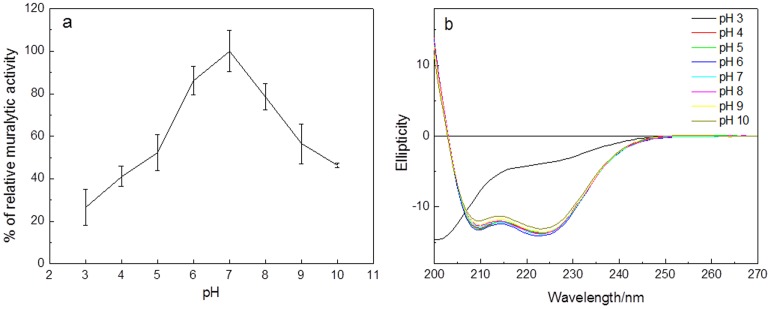
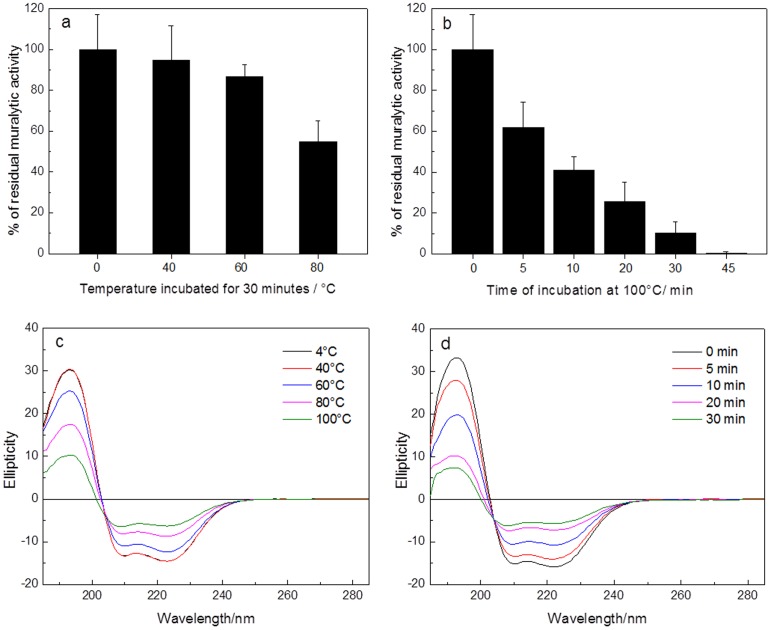
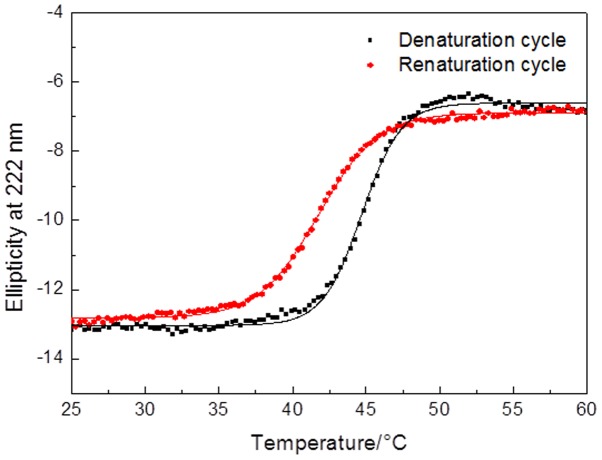
Resistance rates are increasing among several problematic Gram-negative pathogens, a fact that has encouraged the development of new antimicrobial agents. This paper characterizes a Salmonella phage endolysin (Lys68) and demonstrates its potential antimicrobial effectiveness when combined with organic acids towards Gram-negative pathogens. Biochemical characterization reveals that Lys68 is more active at pH 7.0, maintaining 76.7% of its activity when stored at 4°C for two months. Thermostability tests showed that Lys68 is only completely inactivated upon exposure to 100°C for 30 min, and circular dichroism analysis demonstrated the ability to refold into its original conformation upon thermal denaturation. It was shown that Lys68 is able to lyse a wide panel of Gram-negative bacteria (13 different species) in combination with the outer membrane permeabilizers EDTA, citric and malic acid. While the EDTA/Lys68 combination only inactivated Pseudomonas strains, the use of citric or malic acid broadened Lys68 antibacterial effect to other Gram-negative pathogens (lytic activity against 9 and 11 species, respectively). Particularly against Salmonella Typhimurium LT2, the combinatory effect of malic or citric acid with Lys68 led to approximately 3 to 5 log reductions in bacterial load/CFUs after 2 hours, respectively, and was also able to reduce stationary-phase cells and bacterial biofilms by approximately 1 log. The broad killing capacity of malic/citric acid-Lys68 is explained by the destabilization and major disruptions of the cell outer membrane integrity due to the acidity caused by the organic acids and a relatively high muralytic activity of Lys68 at low pH. Lys68 demonstrates good (thermo)stability properties that combined with different outer membrane permeabilizers, could become useful to combat Gram-negative pathogens in agricultural, food and medical industry.
几种有问题的革兰氏阴性病原体的耐药率正在上升,这一事实推动了新型抗菌剂的研发。本文对一种沙门氏菌噬菌体溶菌酶(Lys68)进行了表征,并证明了其与有机酸联合使用时对革兰氏阴性病原体的潜在抗菌效果。生化特性表明,Lys68在pH 7.0时活性更高,在4°C储存两个月后仍保持其76.7%的活性。热稳定性测试表明,Lys68仅在100°C暴露30分钟后才完全失活,圆二色性分析表明其在热变性后能够重新折叠成原始构象。结果表明,Lys68能够与外膜通透剂EDTA、柠檬酸和苹果酸联合裂解多种革兰氏阴性细菌(13个不同物种)。虽然EDTA/Lys68组合仅能使假单胞菌菌株失活,但柠檬酸或苹果酸的使用将Lys68的抗菌作用扩展到了其他革兰氏阴性病原体(分别对9种和11种有裂解活性)。特别是针对鼠伤寒沙门氏菌LT2,苹果酸或柠檬酸与Lys68的联合作用分别在2小时后使细菌载量/CFU降低了约3至5个对数,并且还能够使稳定期细胞和细菌生物膜减少约1个对数。苹果酸/柠檬酸-Lys68的广泛杀伤能力可归因于有机酸引起的酸度导致细胞外膜完整性的不稳定和重大破坏,以及Lys68在低pH下相对较高的溶壁活性。Lys68表现出良好的(热)稳定性,与不同的外膜通透剂联合使用,可能有助于在农业、食品和医疗行业对抗革兰氏阴性病原体。