Kiel Steffen, Glodny Johannes, Birgel Daniel, Bulot Luc G, Campbell Kathleen A, Gaillard Christian, Graziano Roberto, Kaim Andrzej, Lazăr Iuliana, Sandy Michael R, Peckmann Jörn
Georg-August-Universität Göttingen, Geowissenschaftliches Zentrum, Abteilung Geobiologie, Göttingen, Germany.
Deutsches GeoForschungsZentrum GFZ, Sektion 4.2, Anorganische und Isotopengeochemie, Telegrafenberg, Potsdam, Germany.
PLoS One. 2014 Oct 8;9(10):e109260. doi: 10.1371/journal.pone.0109260. eCollection 2014.
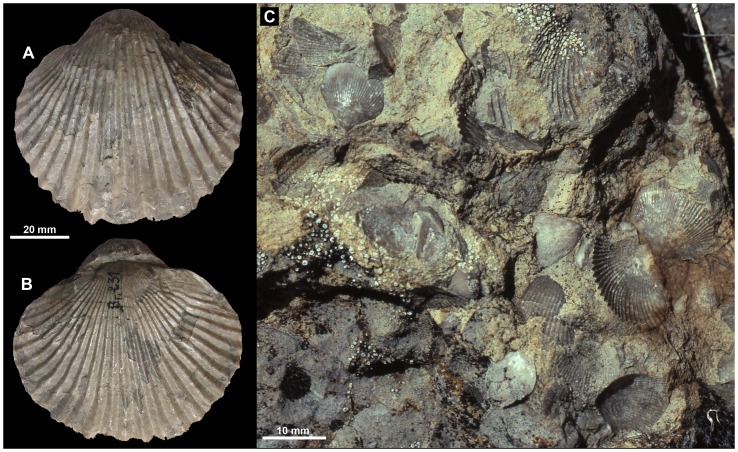
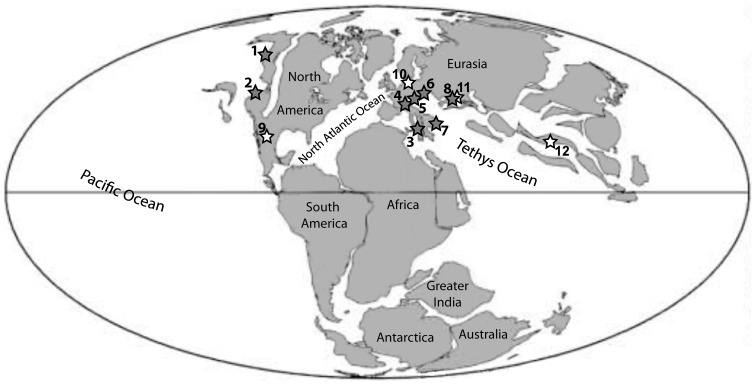
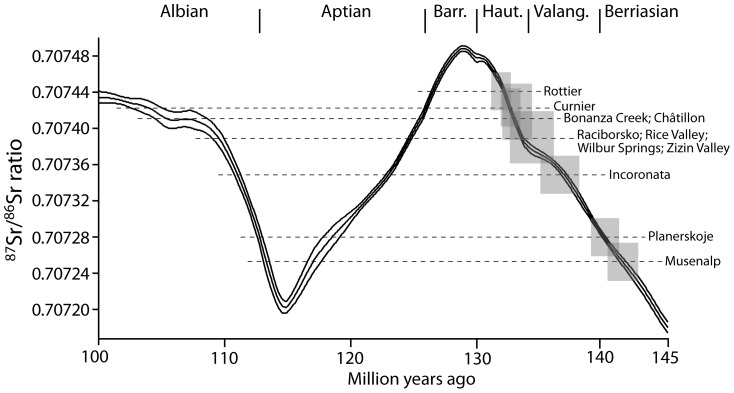
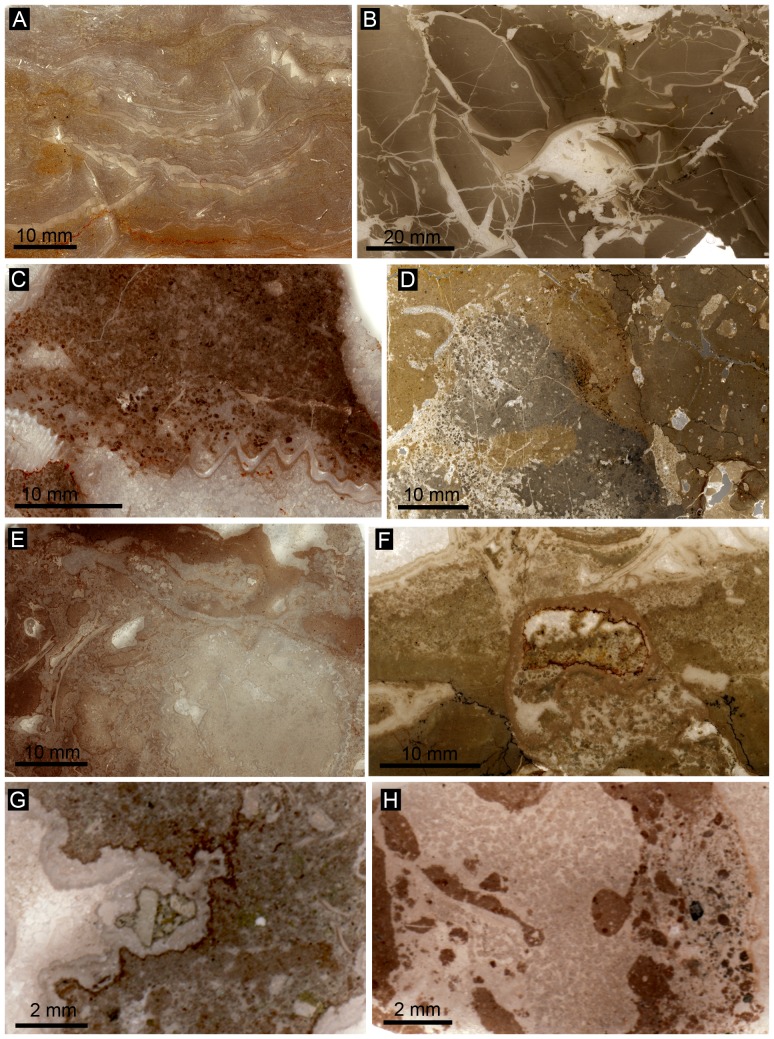
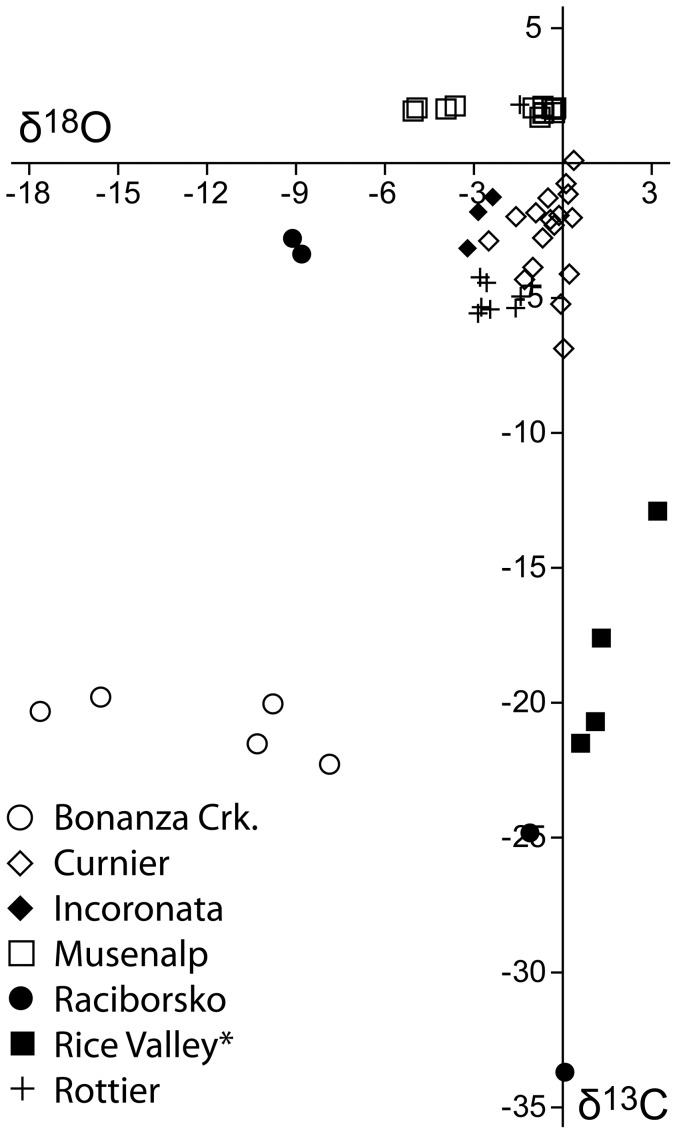
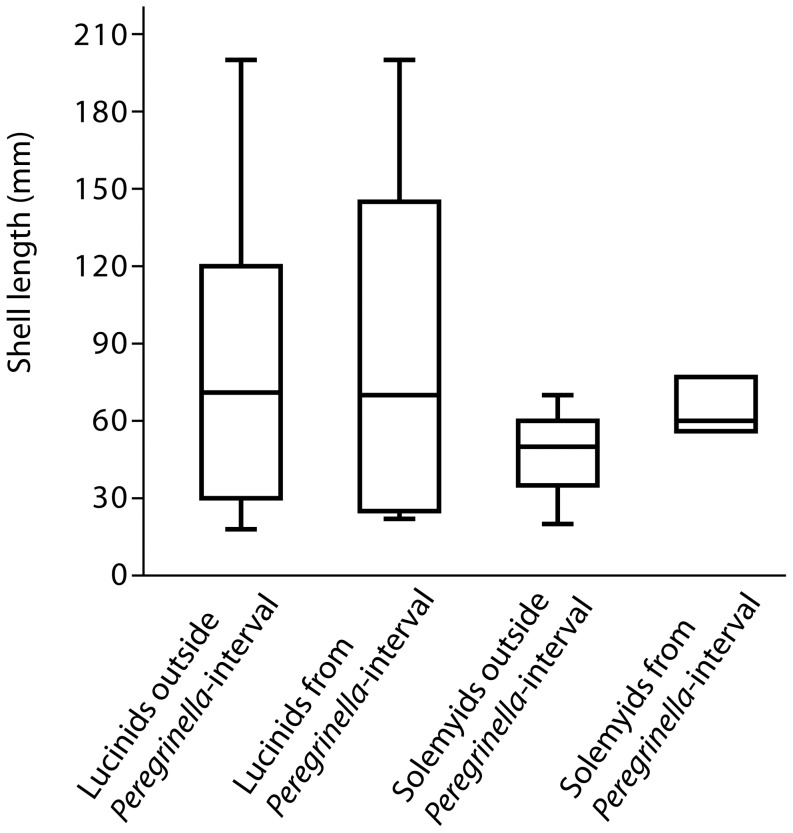
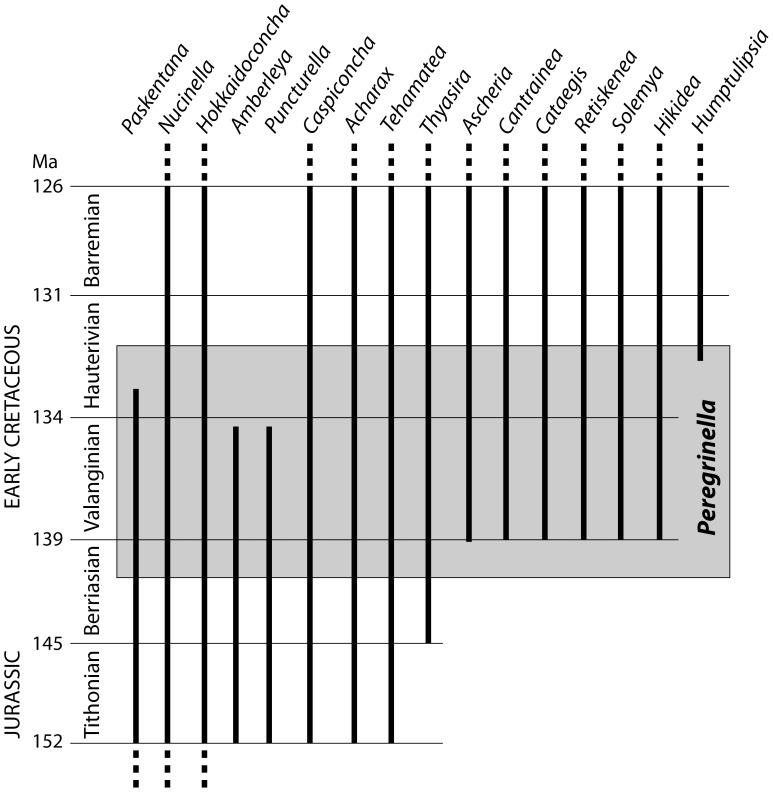
Modern and Cenozoic deep-sea hydrothermal-vent and methane-seep communities are dominated by large tubeworms, bivalves and gastropods. In contrast, many Early Cretaceous seep communities were dominated by the largest Mesozoic rhynchonellid brachiopod, the dimerelloid Peregrinella, the paleoecologic and evolutionary traits of which are still poorly understood. We investigated the nature of Peregrinella based on 11 occurrences world wide and a literature survey. All in situ occurrences of Peregrinella were confirmed as methane-seep deposits, supporting the view that Peregrinella lived exclusively at methane seeps. Strontium isotope stratigraphy indicates that Peregrinella originated in the late Berriasian and disappeared after the early Hauterivian, giving it a geologic range of ca. 9.0 (+1.45/-0.85) million years. This range is similar to that of rhynchonellid brachiopod genera in general, and in this respect Peregrinella differs from seep-inhabiting mollusks, which have, on average, longer geologic ranges than marine mollusks in general. Furthermore, we found that (1) Peregrinella grew to larger sizes at passive continental margins than at active margins; (2) it grew to larger sizes at sites with diffusive seepage than at sites with advective fluid flow; (3) despite its commonly huge numerical abundance, its presence had no discernible impact on the diversity of other taxa at seep sites, including infaunal chemosymbiotic bivalves; and (4) neither its appearance nor its extinction coincides with those of other seep-restricted taxa or with global extinction events during the late Mesozoic. A preference of Peregrinella for diffusive seepage is inferred from the larger average sizes of Peregrinella at sites with more microcrystalline carbonate (micrite) and less seep cements. Because other seep-inhabiting brachiopods occur at sites where such cements are very abundant, we speculate that the various vent- and seep-inhabiting dimerelloid brachiopods since Devonian time may have adapted to these environments in more than one way.
现代和新生代的深海热液喷口及甲烷冷泉群落主要由大型管虫、双壳类和腹足类动物构成。相比之下,许多早白垩世冷泉群落则由中生代最大的小嘴贝纲腕足动物、双体贝形的奇异贝主导,其古生态和进化特征仍鲜为人知。我们基于全球范围内的11个产地以及文献调查,对奇异贝的特性展开了研究。所有奇异贝的原位产地均被确认为甲烷冷泉沉积,这支持了奇异贝仅生活在甲烷冷泉的观点。锶同位素地层学表明,奇异贝起源于贝里亚斯阶晚期,在豪特里维阶早期之后消失,其地质时间跨度约为900万年(±145万年/±85万年)。这个时间跨度与一般的小嘴贝纲腕足动物属类似,在这方面,奇异贝与栖息在冷泉的软体动物不同,后者的地质时间跨度总体上比海洋软体动物平均更长。此外,我们发现:(1)奇异贝在被动大陆边缘比在活动边缘长得更大;(2)在扩散性渗流的地点比在平流流体流动的地点长得更大;(3)尽管其数量通常极为庞大,但它的存在对冷泉地点其他类群的多样性并无明显影响,包括底内化学共生双壳类;(4)它的出现和灭绝既不与其他受冷泉限制的类群一致,也不与中生代晚期的全球灭绝事件相符。奇异贝对扩散性渗流的偏好可从微晶碳酸盐(泥晶)较多且冷泉胶结物较少的地点奇异贝的较大平均尺寸推断出来。由于其他栖息在冷泉的腕足动物出现在此类胶结物非常丰富的地点,我们推测自泥盆纪以来,各种栖息在热液喷口和冷泉的双体贝形腕足动物可能以多种方式适应了这些环境。