Zhu Kangli, Zhou Xuming, Xu Shixia, Sun Di, Ren Wenhua, Zhou Kaiya, Yang Guang
Jiangsu Key Laboratory for Biodiversity and Biotechnology, College of Life Sciences, Nanjing Normal University, Nanjing, 210023, China.
Division of Genetics, Department of Medicine, Brigham and Women's Hospital, Harvard Medical School, Boston, MA, 02115, USA.
BMC Evol Biol. 2014 Oct 12;14:218. doi: 10.1186/s12862-014-0218-8.
Five basic taste modalities, sour, sweet, bitter, salt and umami, can be distinguished by humans and are fundamental for physical and ecological adaptations in mammals. Molecular genetic studies of the receptor genes for these tastes have been conducted in terrestrial mammals; however, little is known about the evolution and adaptation of these genes in marine mammals.
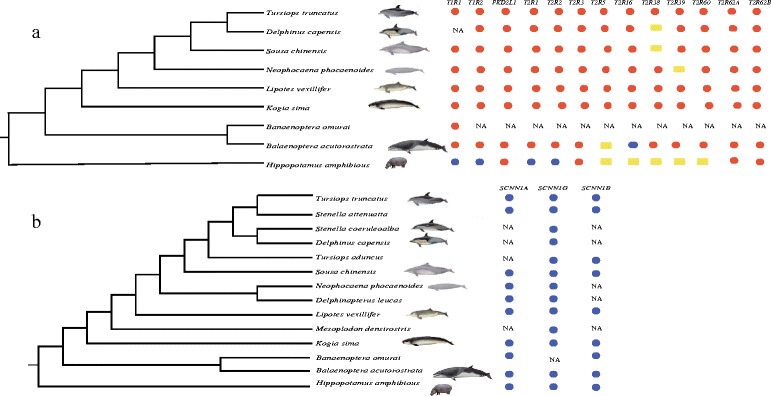
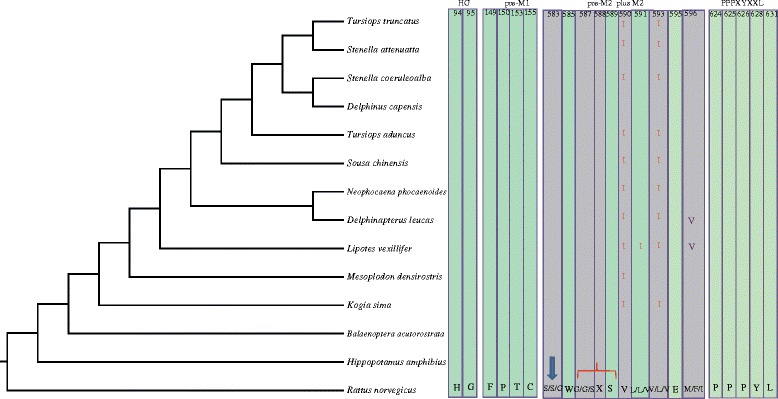
Here, all five basic taste modalities, sour, sweet, bitter, salt and umami, were investigated in cetaceans. The sequence characteristics and evolutionary analyses of taste receptor genes suggested that nearly all cetaceans may have lost all taste modalities except for that of salt.
This is the first study to comprehensively examine the five basic taste modalities in cetaceans with extensive taxa sampling. Our results suggest that cetaceans have lost four of the basic taste modalities including sour, sweet, umami, and most of the ability to sense bitter tastes. The integrity of the candidate salt taste receptor genes in all the cetaceans examined may be because of their function in Na(+) reabsorption, which is key to osmoregulation and aquatic adaptation.
人类能够区分酸、甜、苦、咸、鲜这五种基本味觉模式,它们是哺乳动物生理和生态适应的基础。陆地哺乳动物已对这些味觉的受体基因进行了分子遗传学研究;然而,对于这些基因在海洋哺乳动物中的进化和适应性了解甚少。
在此,我们对鲸类动物的所有五种基本味觉模式,即酸、甜、苦、咸、鲜进行了研究。味觉受体基因的序列特征和进化分析表明,几乎所有鲸类动物可能都已丧失了除咸味之外的所有味觉模式。
这是第一项通过广泛的分类群采样全面研究鲸类动物五种基本味觉模式的研究。我们的结果表明,鲸类动物已丧失了四种基本味觉模式,包括酸、甜、鲜味以及大部分苦味感知能力。在所有被检测的鲸类动物中,候选盐味受体基因的完整性可能是由于它们在钠(Na⁺)重吸收中的作用,这对渗透调节和水生适应至关重要。