Department of Veterinary Sciences, Faculty of Agriculture, University of Miyazaki, Miyazaki, Japan.
Mouse Genomics Resource Laboratory, National Institute of Genetics, Mishima, Japan.
Mol Biol Evol. 2024 Apr 2;41(4). doi: 10.1093/molbev/msae071.
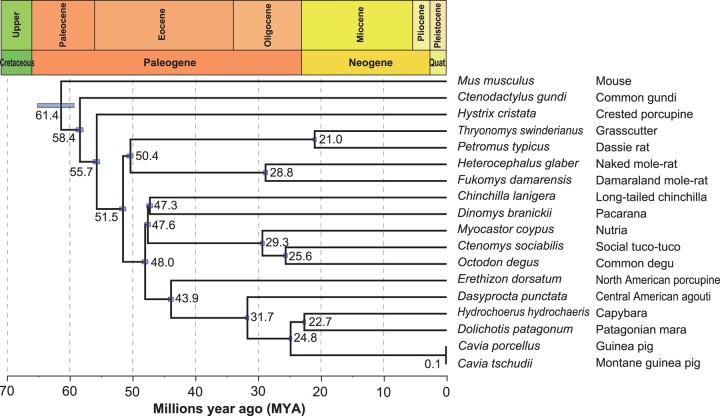
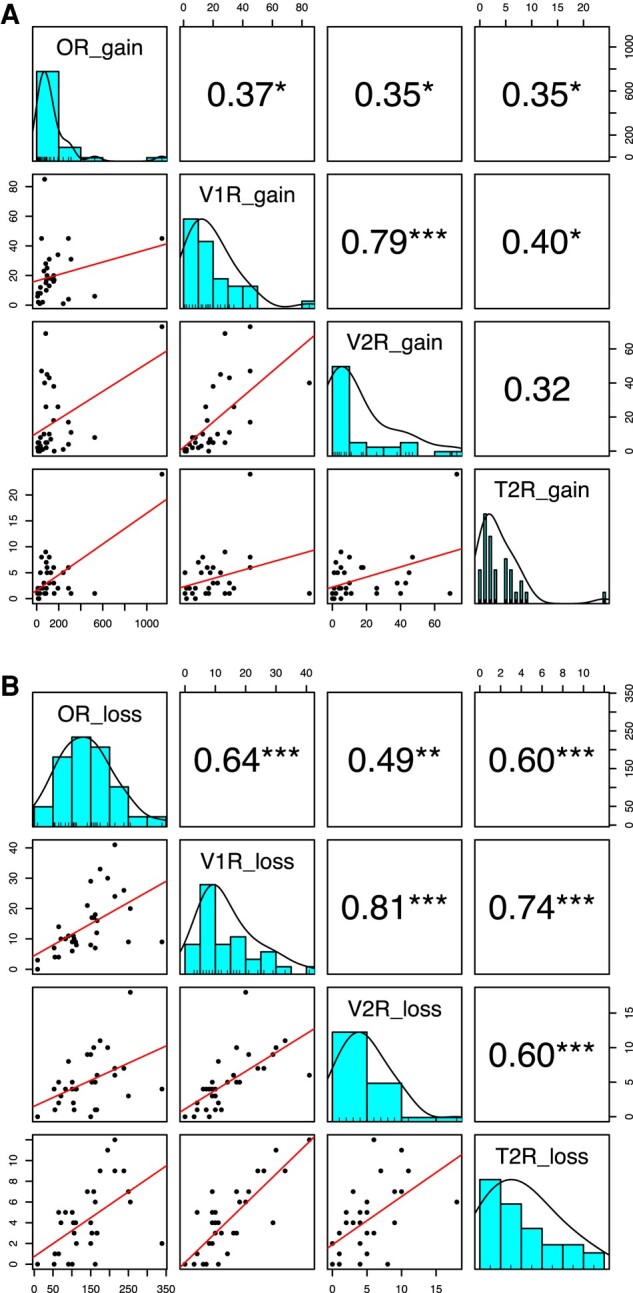
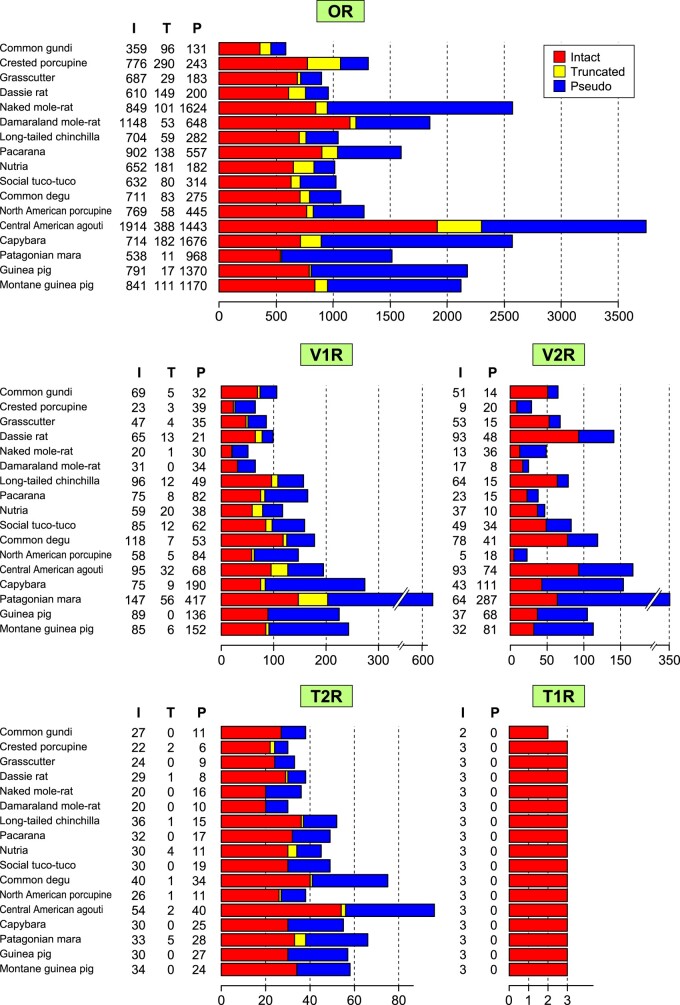
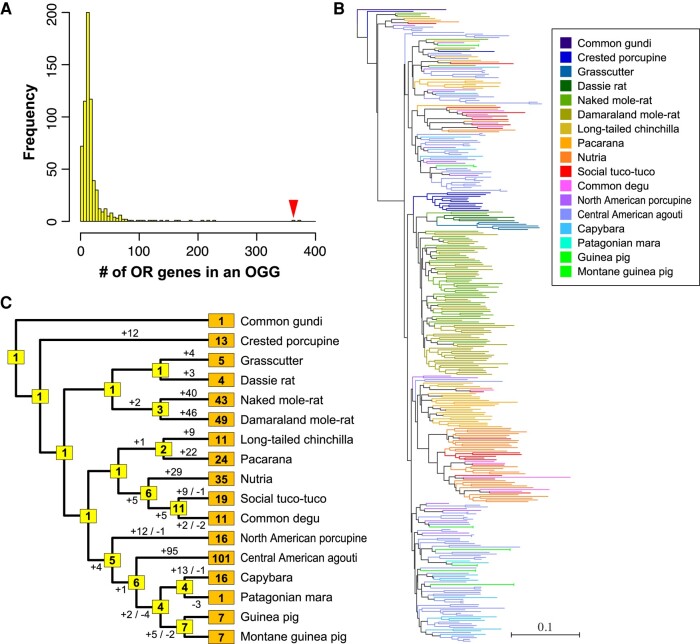
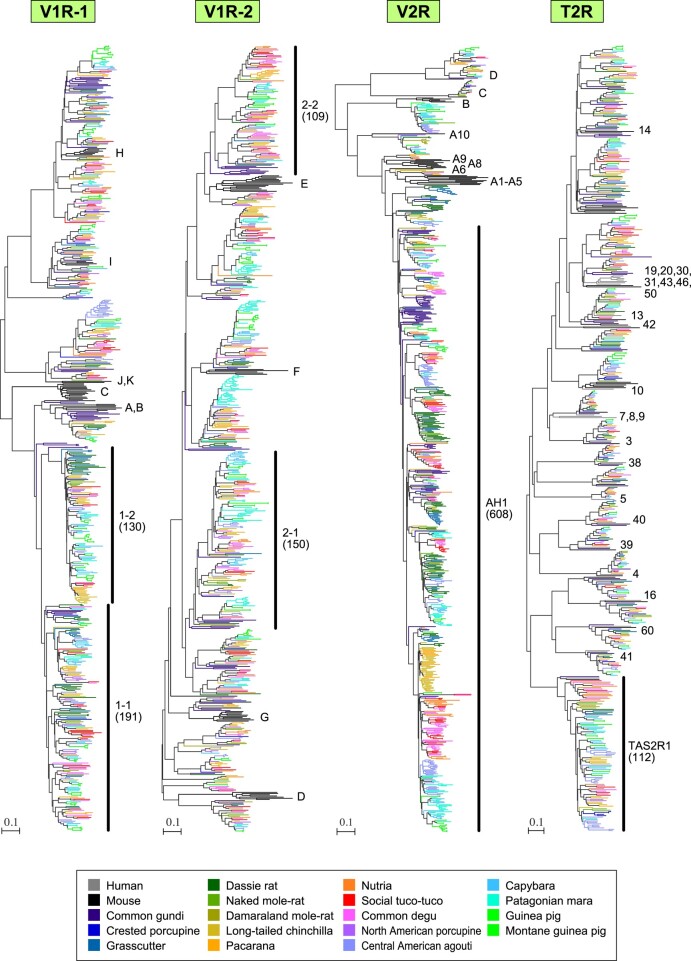
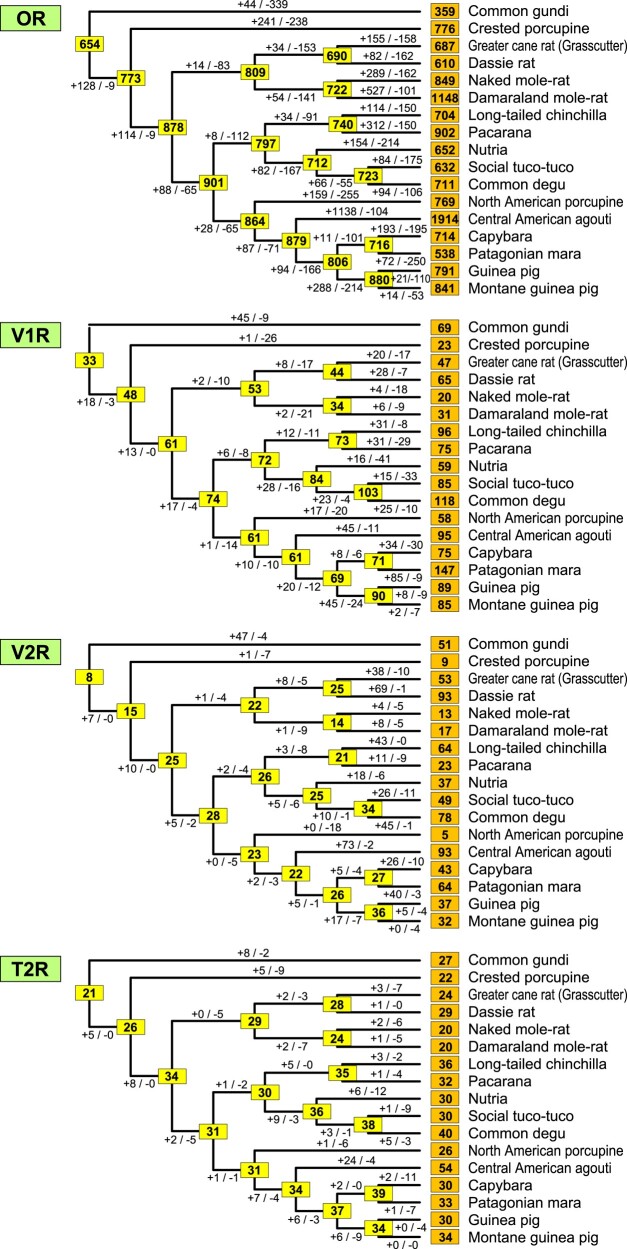
Chemical senses, including olfaction, pheromones, and taste, are crucial for the survival of most animals. There has long been a debate about whether different types of senses might influence each other. For instance, primates with a strong sense of vision are thought to have weakened olfactory abilities, although the oversimplified trade-off theory is now being questioned. It is uncertain whether such interactions between different chemical senses occur during evolution. To address this question, we examined four receptor gene families related to olfaction, pheromones, and taste: olfactory receptor (OR), vomeronasal receptor type 1 and type 2 (V1R and V2R), and bitter taste receptor (T2R) genes in Hystricomorpha, which is morphologically and ecologically the most diverse group of rodents. We also sequenced and assembled the genome of the grasscutter, Thryonomys swinderianus. By examining 16 available genome assemblies alongside the grasscutter genome, we identified orthologous gene groups among hystricomorph rodents for these gene families to separate the gene gain and loss events in each phylogenetic branch of the Hystricomorpha evolutionary tree. Our analysis revealed that the expansion or contraction of the four gene families occurred synchronously, indicating that when one chemical sense develops or deteriorates, the others follow suit. The results also showed that V1R/V2R genes underwent the fastest evolution, followed by OR genes, and T2R genes were the most evolutionarily stable. This variation likely reflects the difference in ligands of V1R/V2Rs, ORs, and T2Rs: species-specific pheromones, environment-based scents, and toxic substances common to many animals, respectively.
化学感觉,包括嗅觉、信息素和味觉,对大多数动物的生存至关重要。长期以来,人们一直在争论不同类型的感觉是否会相互影响。例如,具有强烈视觉的灵长类动物被认为嗅觉能力较弱,尽管过于简单的权衡理论现在受到质疑。在进化过程中,不同化学感觉之间是否存在这种相互作用还不确定。为了解决这个问题,我们研究了与嗅觉、信息素和味觉相关的四个受体基因家族:嗅觉受体(OR)、犁鼻器受体 1 型和 2 型(V1R 和 V2R)以及苦味受体(T2R)基因在形态和生态上是最具多样性的啮齿动物类群。我们还对竹鼠的基因组进行了测序和组装。通过检查 16 个可用的基因组组装以及竹鼠基因组,我们确定了这些基因家族在栉鼠啮齿动物中的同源基因群,以分离 Hystricomorpha 进化树中每个分支的基因获得和丢失事件。我们的分析表明,这四个基因家族的扩张或收缩是同步发生的,这表明当一种化学感觉发展或恶化时,其他感觉也会随之发展或恶化。结果还表明,V1R/V2R 基因进化最快,其次是 OR 基因,而 T2R 基因进化最稳定。这种变化可能反映了 V1R/V2R、OR 和 T2R 配体的差异:物种特异性信息素、基于环境的气味和许多动物共有的有毒物质。