Division of Pharmacotherapy and Experimental Therapeutics, Eshelman School of Pharmacy, University of North Carolina, Chapel Hill, North Carolina, United States of America.
Division of Intramural Research, National Institute of Environmental Health Sciences, National Institutes of Health, Research Triangle Park, North Carolina, United States of America.
PLoS One. 2014 Oct 13;9(10):e110162. doi: 10.1371/journal.pone.0110162. eCollection 2014.
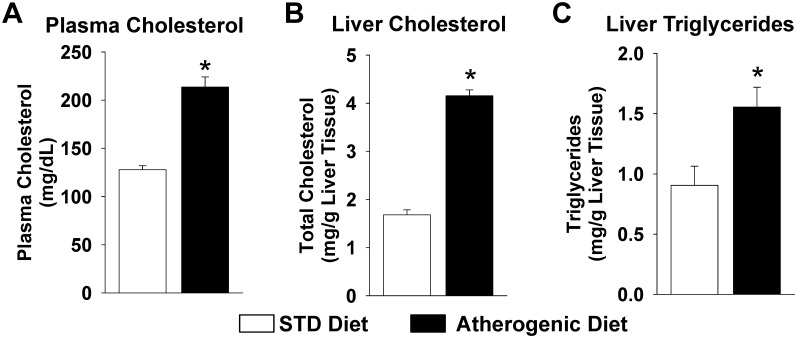
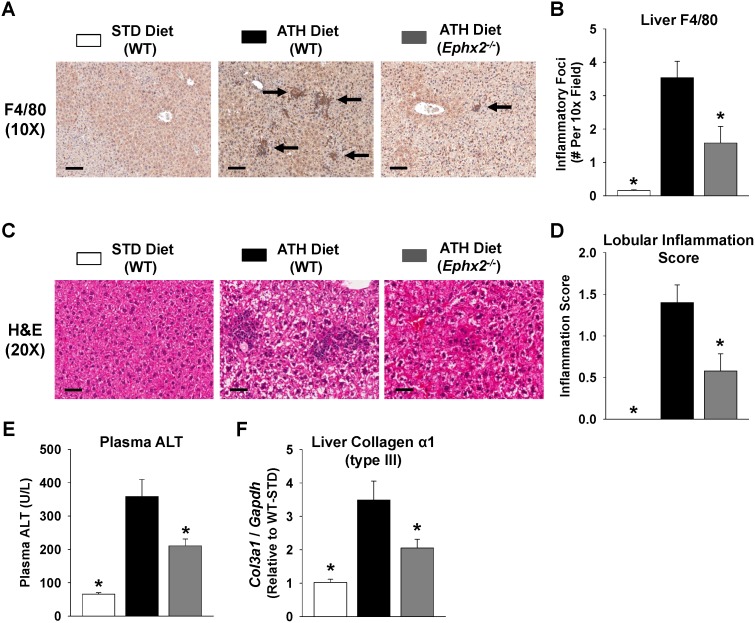
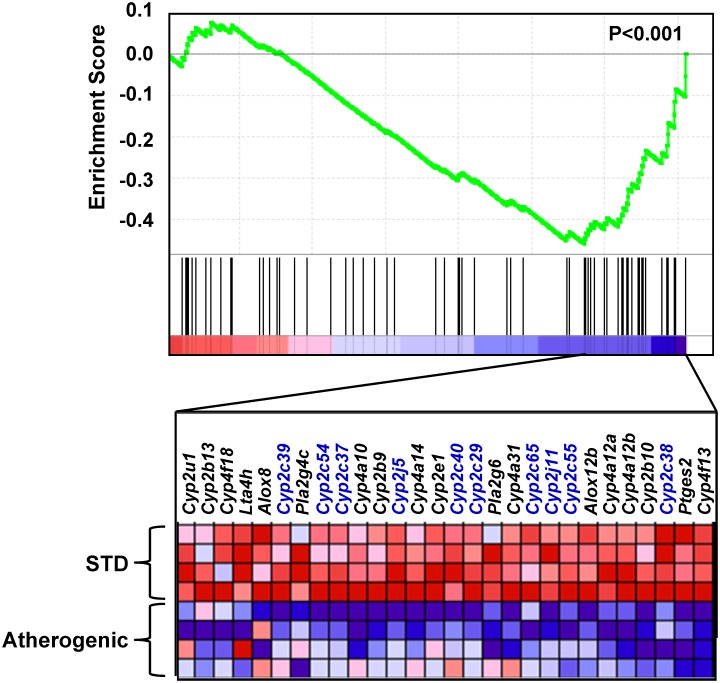
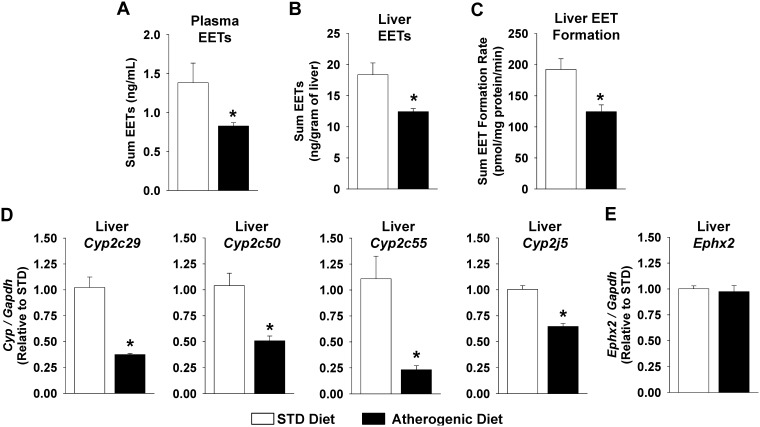
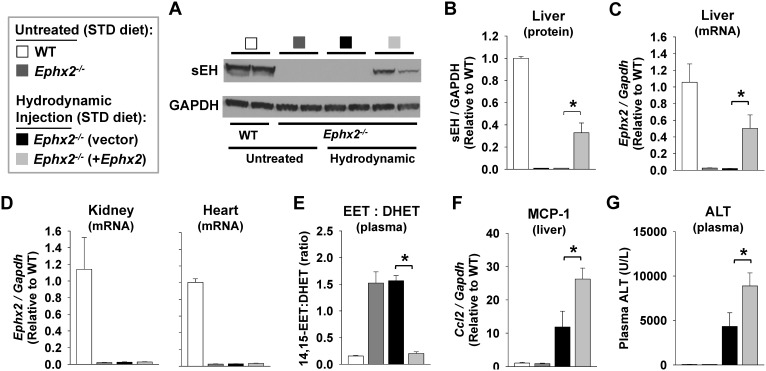
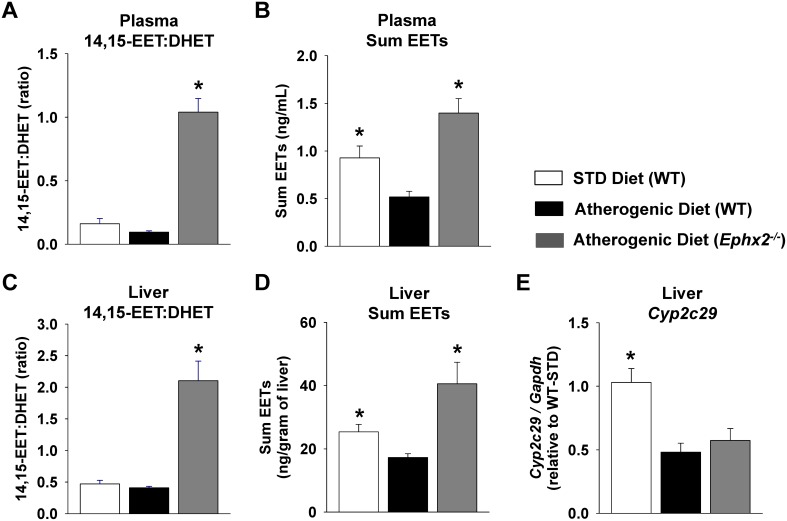
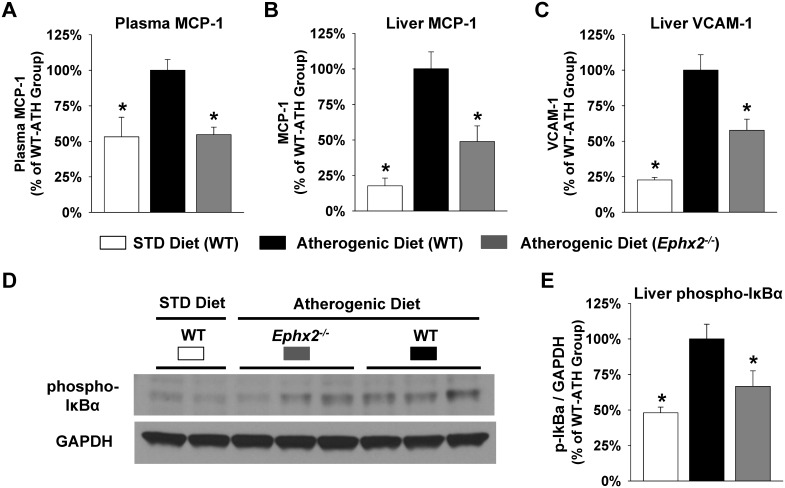
Fatty liver disease is an emerging public health problem without effective therapies, and chronic hepatic inflammation is a key pathologic mediator in its progression. Cytochrome P450 (CYP) epoxygenases metabolize arachidonic acid to biologically active epoxyeicosatrienoic acids (EETs), which have potent anti-inflammatory effects. Although promoting the effects of EETs elicits anti-inflammatory and protective effects in the cardiovascular system, the contribution of CYP-derived EETs to the regulation of fatty liver disease-associated inflammation and injury is unknown. Using the atherogenic diet model of non-alcoholic fatty liver disease/non-alcoholic steatohepatitis (NAFLD/NASH), our studies demonstrated that induction of fatty liver disease significantly and preferentially suppresses hepatic CYP epoxygenase expression and activity, and both hepatic and circulating levels of EETs in mice. Furthermore, mice with targeted disruption of Ephx2 (the gene encoding soluble epoxide hydrolase) exhibited restored hepatic and circulating EET levels and a significantly attenuated induction of hepatic inflammation and injury. Collectively, these data suggest that suppression of hepatic CYP-mediated EET biosynthesis is an important pathological consequence of fatty liver disease-associated inflammation, and that the CYP epoxygenase pathway is a central regulator of the hepatic inflammatory response in NAFLD/NASH. Future studies investigating the utility of therapeutic strategies that promote the effects of CYP-derived EETs in NAFLD/NASH are warranted.
脂肪肝疾病是一种新出现的公共健康问题,目前尚无有效的治疗方法,而慢性肝炎症是其进展的关键病理介质。细胞色素 P450(CYP)加单氧酶将花生四烯酸代谢为具有生物活性的环氧化物二十碳三烯酸(EETs),具有很强的抗炎作用。虽然促进 EETs 的作用会在心血管系统中引发抗炎和保护作用,但 CYP 衍生的 EETs 对调节与脂肪肝疾病相关的炎症和损伤的贡献尚不清楚。使用非酒精性脂肪性肝病/非酒精性脂肪性肝炎(NAFLD/NASH)的动脉粥样硬化饮食模型,我们的研究表明,脂肪肝疾病的诱导显著且优先抑制肝 CYP 加单氧酶的表达和活性,以及 EETs 在小鼠中的肝和循环水平。此外,靶向破坏 Ephx2(编码可溶性环氧化物水解酶的基因)的小鼠表现出恢复的肝和循环 EET 水平,以及肝炎症和损伤的诱导明显减弱。总之,这些数据表明,肝 CYP 介导的 EET 生物合成的抑制是与脂肪肝疾病相关的炎症的一个重要病理后果,而 CYP 加单氧酶途径是 NAFLD/NASH 中肝炎症反应的中央调节剂。未来研究调查促进 CYP 衍生的 EETs 在 NAFLD/NASH 中的作用的治疗策略的效用是值得的。