Fortunak Joseph M, de Souza Rodrigo O M A, Kulkarni Amol A, King Christopher L, Ellison Tiffany, Miranda Leandro S M
Departments of Chemistry and Pharmacy, Howard University, Washington, DC, USA.
Antivir Ther. 2014;19 Suppl 3(0 3):15-29. doi: 10.3851/IMP2897. Epub 2014 Oct 13.
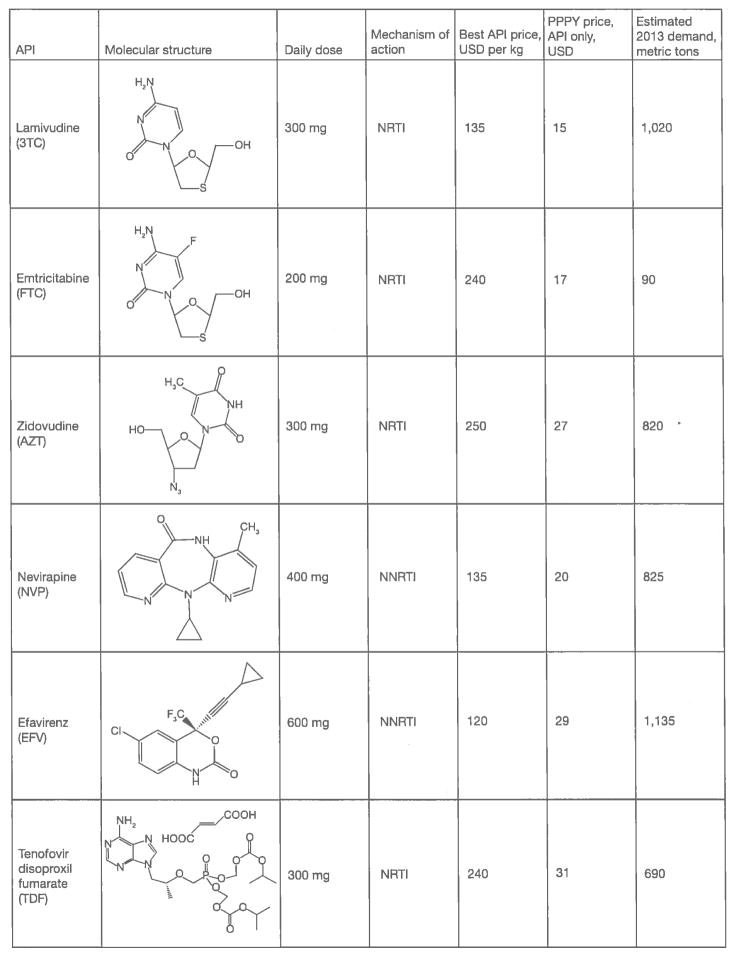
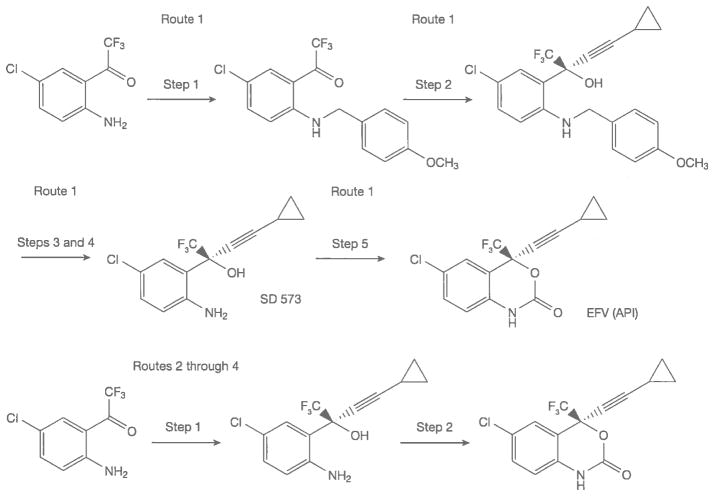
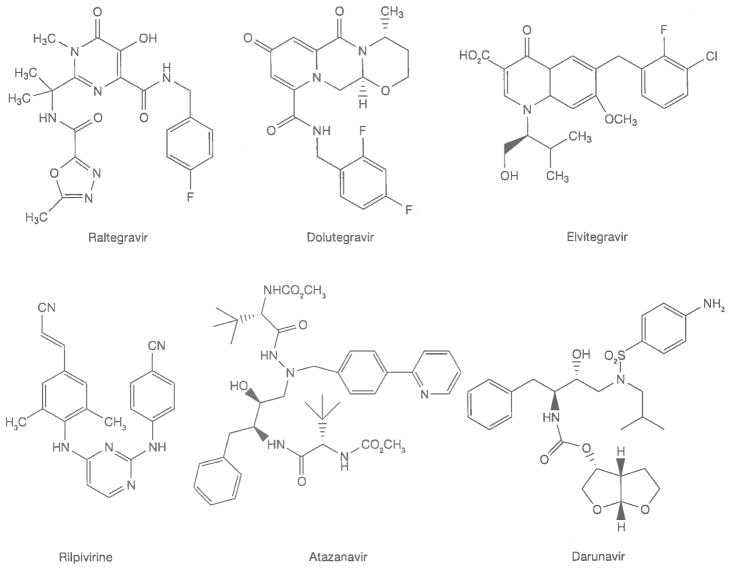
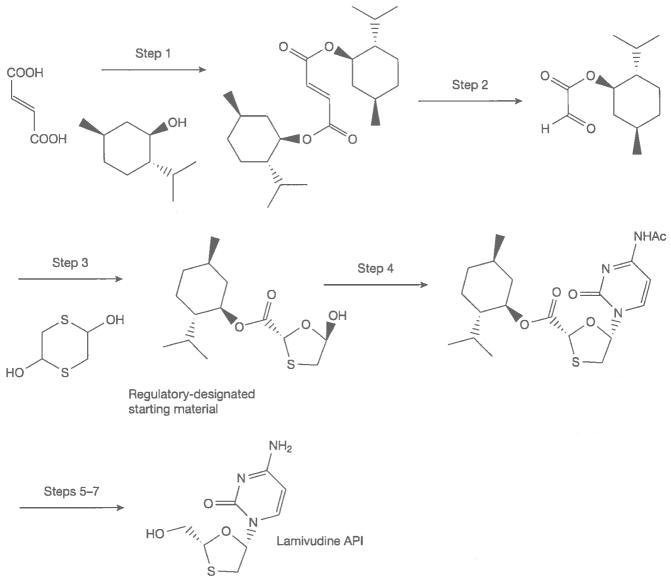
Active pharmaceutical ingredients (APIs) are the molecular entities that exert the therapeutic effects of medicines. This article provides an overview of the major APIs that are entered into antiretroviral therapy (ART), outlines how APIs are manufactured, and examines the regulatory and cost frameworks of manufacturing ART APIs used in low- and middle-income countries (LMICs). Almost all APIs for ART are prepared by chemical synthesis. Roughly 15 APIs account for essentially all of the ARTs used in LMICs. Nearly all of the ART APIs purchased through the Global Fund for AIDS, TB and Malaria (GFATM) or the United States President's Emergency Plan for AIDS Relief (PEPFAR) are produced by generic companies. API costs are very important because they are the largest contribution to the overall cost of ART. Efficient API production requires substantial investment in chemical manufacturing technologies and the ready availability of raw materials and energy at competitive prices. Generic API production is practiced in only a limited number of countries; the API market for ART is dominated by Indian companies. The quality of these APIs is ensured by manufacturing under good manufacturing practice (GMP), including process validation, testing against previously established specifications and the demonstration of clinical bioequivalence. The investment and personnel costs of a quality management system for GMP contribute significantly to the cost of API production. Chinese companies are the major suppliers for many advanced intermediates in API production. Improved chemistry of manufacturing, economies of scale and optimization of procurement have enabled drastic cost reductions for many ART APIs. The available capacity for global production of quality-assured APIs is likely adequate to meet forecasted demand for 2015. The increased use of ART for paediatric treatment, for second-line and salvage therapy, and the introduction of new APIs and combinations are important factors for the future of treatment in LMICs. The introduction of new fixed-dose combinations for ART and use of new drug delivery technologies could plausibly provide robust, durable ART for all patients in need, at an overall cost that is only moderately higher than what is presently being spent.
活性药物成分(APIs)是发挥药物治疗作用的分子实体。本文概述了用于抗逆转录病毒疗法(ART)的主要活性药物成分,概述了活性药物成分的生产方式,并研究了中低收入国家(LMICs)生产用于抗逆转录病毒疗法的活性药物成分的监管和成本框架。几乎所有用于抗逆转录病毒疗法的活性药物成分都是通过化学合成制备的。大约15种活性药物成分基本上占了中低收入国家使用的所有抗逆转录病毒疗法药物。通过全球抗击艾滋病、结核病和疟疾基金(GFATM)或美国总统艾滋病紧急救援计划(PEPFAR)购买的几乎所有抗逆转录病毒疗法活性药物成分都是由仿制药公司生产的。活性药物成分成本非常重要,因为它们在抗逆转录病毒疗法的总成本中占最大部分。高效的活性药物成分生产需要在化学制造技术方面进行大量投资,以及以具有竞争力的价格随时获得原材料和能源。仿制药活性药物成分生产仅在少数国家进行;抗逆转录病毒疗法的活性药物成分市场由印度公司主导。这些活性药物成分的质量通过在良好生产规范(GMP)下生产来确保,包括工艺验证、对照先前确定的规格进行测试以及临床生物等效性的证明。良好生产规范质量管理体系的投资和人员成本对活性药物成分生产的成本有重大贡献。中国公司是活性药物成分生产中许多高级中间体的主要供应商。制造化学的改进、规模经济和采购优化已使许多抗逆转录病毒疗法活性药物成分的成本大幅降低。全球生产有质量保证的活性药物成分的现有能力可能足以满足2015年的预测需求。在中低收入国家,增加用于儿科治疗、二线和挽救疗法的抗逆转录病毒疗法的使用,以及引入新的活性药物成分和联合用药,是未来治疗的重要因素。引入新的抗逆转录病毒疗法固定剂量联合用药和使用新的药物递送技术有望以仅略高于目前支出的总成本为所有有需要的患者提供强大、持久的抗逆转录病毒疗法。