Mathew Esha, Zhang Yaqing, Holtz Alexander M, Kane Kevin T, Song Jane Y, Allen Benjamin L, Pasca di Magliano Marina
Cellular and Molecular Biology Program, University of Michigan, Ann Arbor, MI 48109, USA.
Department of Surgery, University of Michigan, Ann Arbor, MI 48109, USA.
Cell Rep. 2014 Oct 23;9(2):484-94. doi: 10.1016/j.celrep.2014.09.010. Epub 2014 Oct 9.
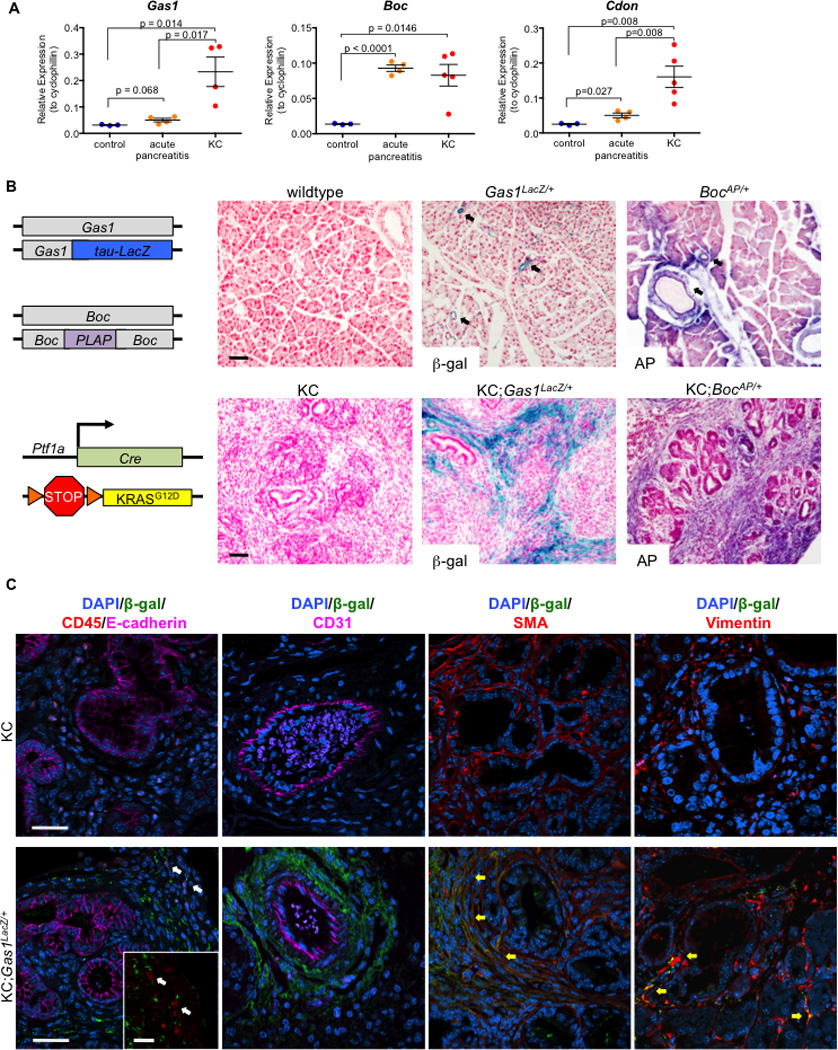
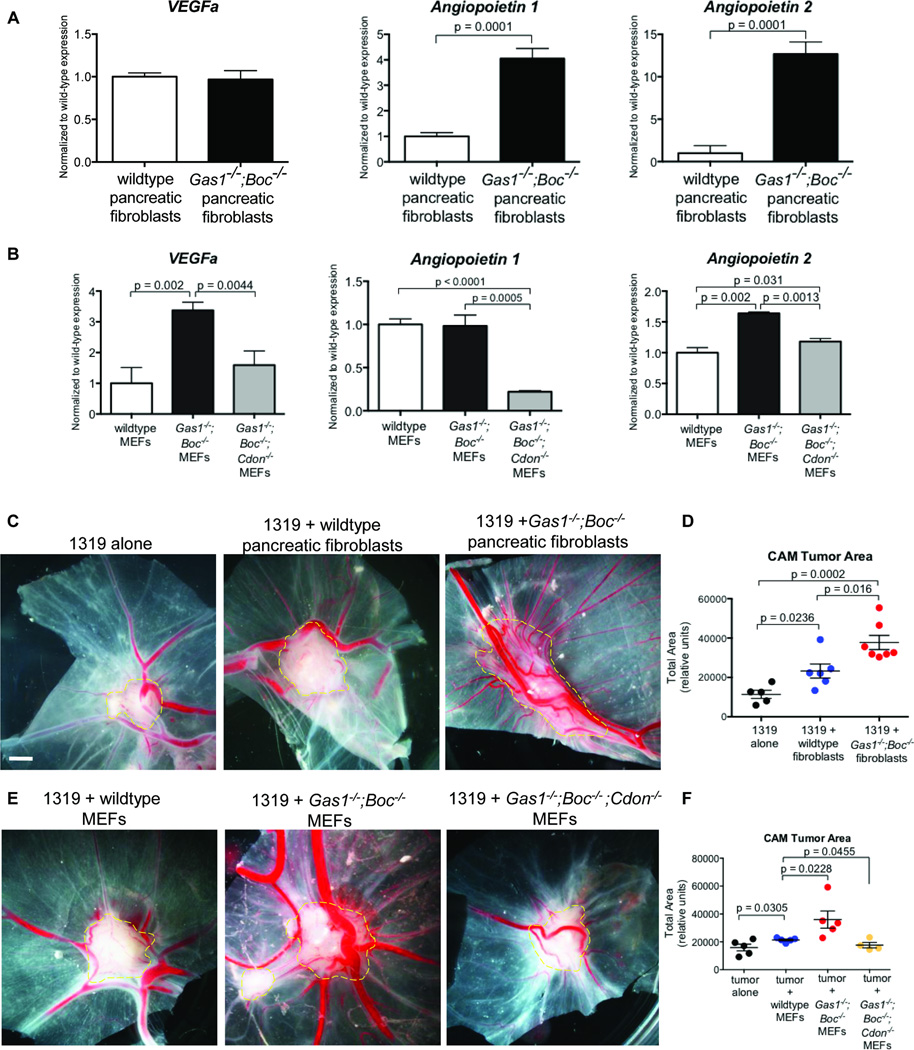
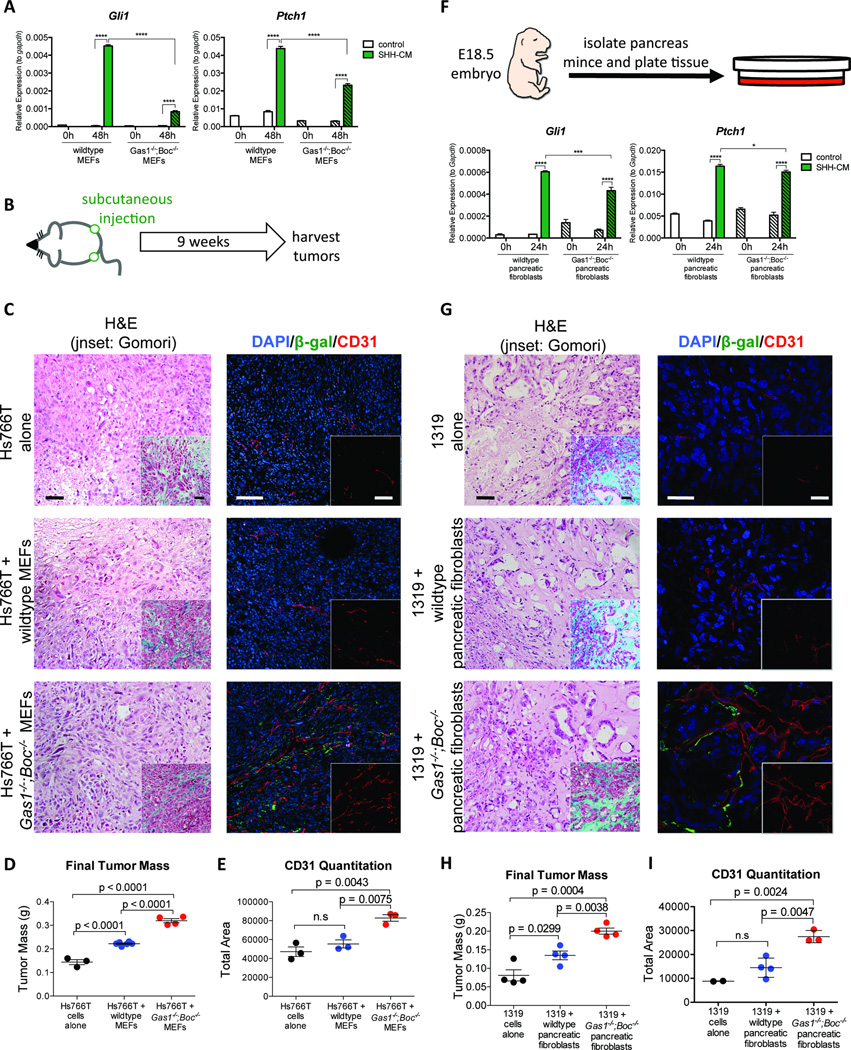
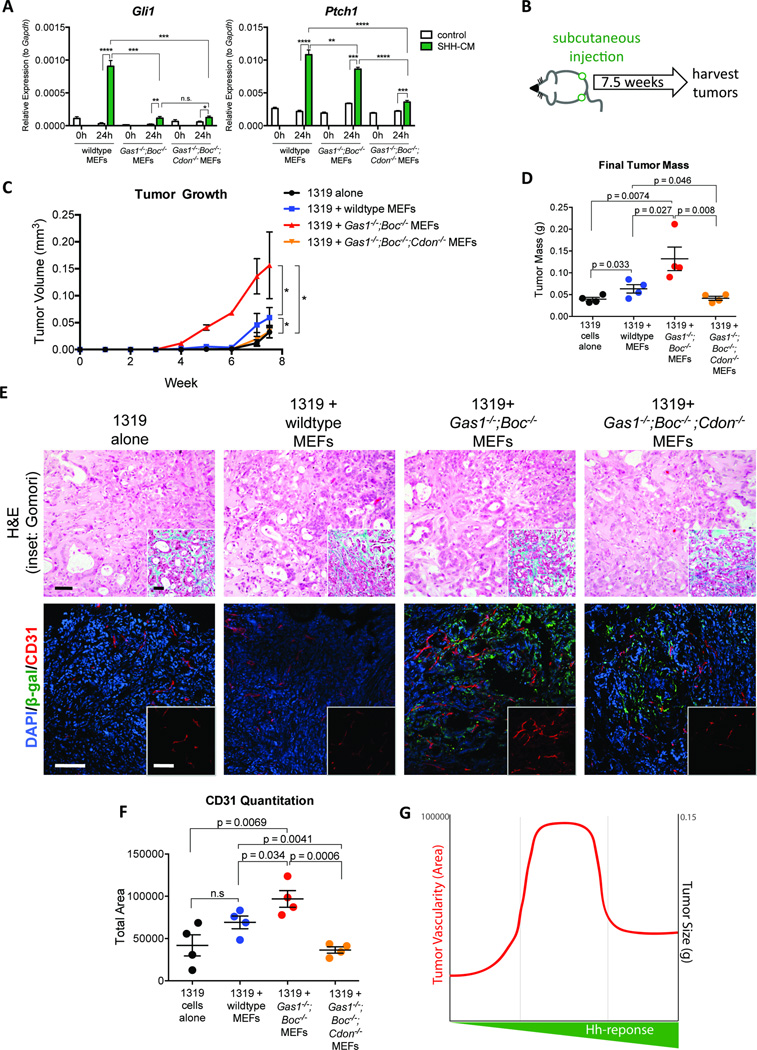
Pancreatic cancer, a hypovascular and highly desmoplastic cancer, is characterized by tumor expression of Hedgehog (HH) ligands that signal to fibroblasts in the surrounding stroma that in turn promote tumor survival and growth. However, the mechanisms and consequences of stromal HH pathway activation are not well understood. Here, we show that the HH coreceptors GAS1, BOC, and CDON are expressed in cancer-associated fibroblasts. Deletion of two coreceptors (Gas1 and Boc) in fibroblasts reduces HH responsiveness. Strikingly, these fibroblasts promote greater tumor growth in vivo that correlates with increased tumor-associated vascularity. In contrast, deletion of all three coreceptors (Gas1, Boc, and Cdon) results in the near complete abrogation of HH signaling and a corresponding failure to promote tumorigenesis and angiogenesis. Collectively, these data identify a role for HH dosage in pancreatic cancer promotion and may explain the clinical failure of HH pathway blockade as a therapeutic approach in pancreatic cancer.
胰腺癌是一种血管少且高度促结缔组织增生性的癌症,其特征在于肿瘤表达刺猬因子(HH)配体,该配体向周围基质中的成纤维细胞发出信号,进而促进肿瘤的存活和生长。然而,基质HH信号通路激活的机制和后果尚未完全明确。在此,我们表明HH共受体GAS1、BOC和CDON在癌症相关成纤维细胞中表达。成纤维细胞中两种共受体(Gas1和Boc)的缺失会降低HH反应性。令人惊讶的是,这些成纤维细胞在体内促进更大程度的肿瘤生长,这与肿瘤相关血管生成增加相关。相反,三种共受体(Gas1、Boc和Cdon)全部缺失导致HH信号几乎完全消除,并相应地无法促进肿瘤发生和血管生成。总体而言,这些数据确定了HH剂量在胰腺癌发生中的作用,并可能解释了HH信号通路阻断作为胰腺癌治疗方法的临床失败原因。