Perissinotto Renzo, Miranda Nelson A F, Raw Jacqueline L, Peer Nasreen
DST/NRF Research Chair in Shallow Water Ecosystems, Nelson Mandela Metropolitan University, P.O. Box 77000, Port Elizabeth 6031 South Africa ; School of Life Sciences, University of KwaZulu-Natal, P Bag X54001, Durban 4001 South Africa.
DST/NRF Research Chair in Shallow Water Ecosystems, Nelson Mandela Metropolitan University, P.O. Box 77000, Port Elizabeth 6031 South Africa.
Zookeys. 2014 Sep 15(440):1-43. doi: 10.3897/zookeys.440.7803. eCollection 2014.
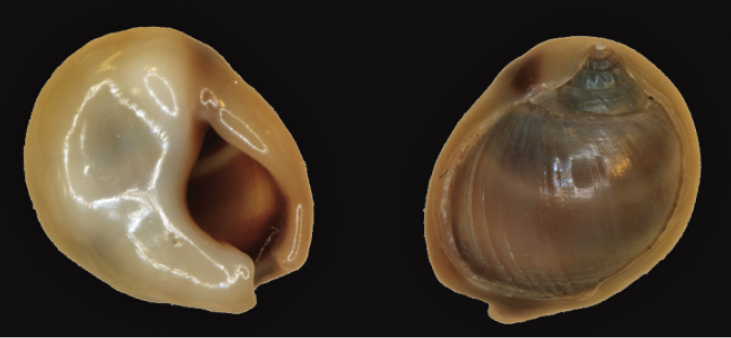
The recent dry phase experienced by the St Lucia estuarine system has led to unprecedented desiccation and hypersaline conditions through most of its surface area. This has changed only recently, at the end of 2011, with the onset of a new wet phase that has already caused a major shift to oligo- and mesohaline conditions. The estuary mouth, however, remains closed to the ocean, making the weak connection recently established between the St Lucia and the Mfolozi estuaries the only conveyance for marine recruitment. As a result, only 10 indigenous and two alien aquatic gastropod species are currently found living in the St Lucia estuarine lake. This is out of a total of 37 species recorded within the system since the earliest survey undertaken in 1924, half of which have not been reported in the literature before. The tick shell, Nassarius kraussianus, which was consistently found in large abundance prior to the recent dry phase, appears to have temporarily disappeared from the system, probably as a result of the extinction of Zostera marine grasses inside the lake. Population explosions of the bubble shell Haminoea natalensis, with its distinct egg masses, were recorded seasonally until 2009, but the species has subsequently not been observed again. A molecular DNA analysis of the various populations previously reported as belonging to the same assimineid species, variably referred to as Assiminea capensis, A. ovata, or A. bifasciata, has revealed that the St Lucia assemblage actually comprises two very distinct taxa, A. cf. capensis and a species provisionally referred to here as "A." aff. capensis or simply Assimineidae sp. In the mangroves, the climbing whelk Cerithidea decollata is still found in numbers, while ellobiids such as Cassidula labrella, Melampus semiaratus and M. parvulus are present in low abundances and all previously recorded littorinids have disappeared. A number of alien freshwater species have colonized areas of the system that have remained under low salinity. These include the invasive thiarid Tarebia granifera, which can be found in concentrations exceeding 5000 ind.m(-2), the lymnaeid Pseudosuccinea columella and the physid Aplexa marmorata.
圣卢西亚河口系统近期经历的干旱期,导致其大部分区域出现了前所未有的干涸和高盐度状况。这种情况直到2011年底才有所改变,随着新的湿润期的到来,该区域已大幅转变为低盐和中盐状况。然而,河口仍与海洋隔绝,使得圣卢西亚河口与姆福洛齐河口最近建立的微弱联系成为海洋生物进入的唯一通道。结果,目前在圣卢西亚河口湖仅发现10种本土和2种外来水生腹足类物种。自1924年最早开展调查以来,该系统共记录了37种腹足类物种,其中一半此前未曾在文献中报道过。在近期干旱期之前一直大量存在的刻纹织纹螺, Nassarius kraussianus,似乎已暂时从该系统中消失,这可能是由于湖内的海草 zostera marina灭绝所致。直到2009年,季节性记录到有独特卵块的泡螺Haminoea natalensis数量激增,但该物种随后再也未被观测到。对先前报告属于同一阿西米螺属物种(曾被不同地称为南非阿西米螺、卵形阿西米螺或双带阿西米螺)的不同种群进行的分子DNA分析表明,圣卢西亚的种群实际上由两个非常不同的分类单元组成,即南非阿西米螺cf. capensis和一个在此暂称为“A.” aff. capensis或简称为阿西米螺科物种的物种。在红树林中,仍能发现数量较多的渔舟蟹Cerithidea decollata,而像小笠贝Cassidula labrella、半突拟蟹守螺Melampus semiaratus和小拟蟹守螺M. parvulus等艾氏螺数量较少,所有先前记录的滨螺科物种都已消失。一些外来淡水物种已在该系统中盐度较低的区域定殖。这些物种包括入侵的田螺Tarebia granifera,其密度可达每平方米超过5000个个体,还有椎实螺Pseudosuccinea columella和瓶螺Aplexa marmorata。