Bird Matthew S, Bilton David T, Perissinotto Renzo
DST/NRF Research Chair in Shallow Water Ecosystems, Nelson Mandela Metropolitan University, C/o Department of Zoology, P.O. Box 77000, Port Elizabeth, 6031, South Africa; Current address: Department of Zoology and Entomology, University of Fort Hare, Alice, 5701, South Africa.
Marine Biology and Ecology Research Centre, Plymouth University, Drake Circus, Plymouth PL4 8AA, United Kingdom.
Zookeys. 2017 Feb 14(656):51-84. doi: 10.3897/zookeys.656.11622. eCollection 2017.
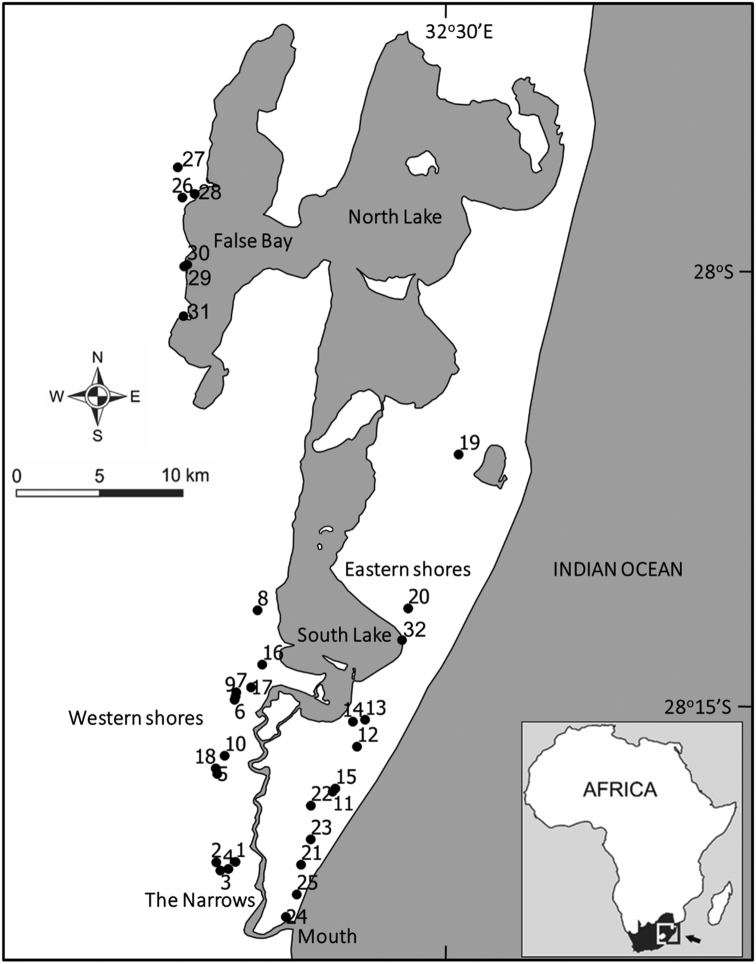
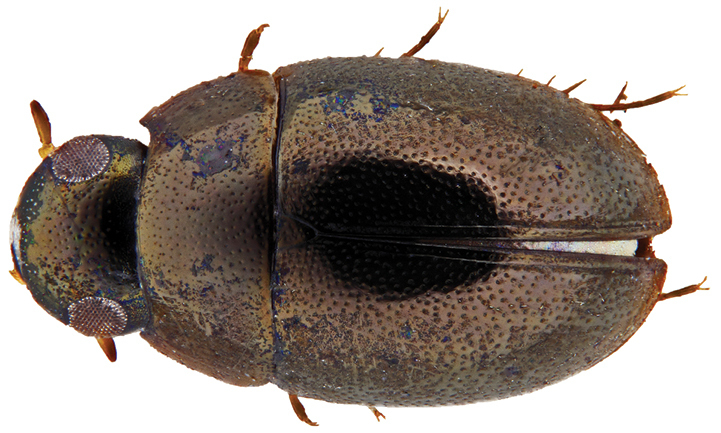
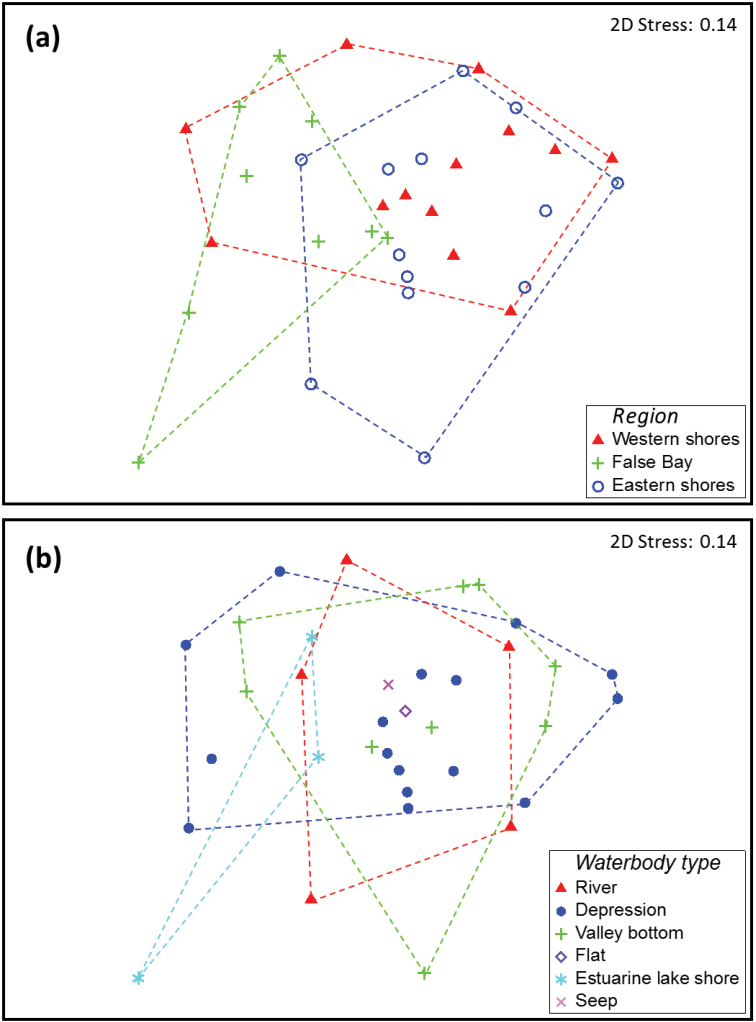
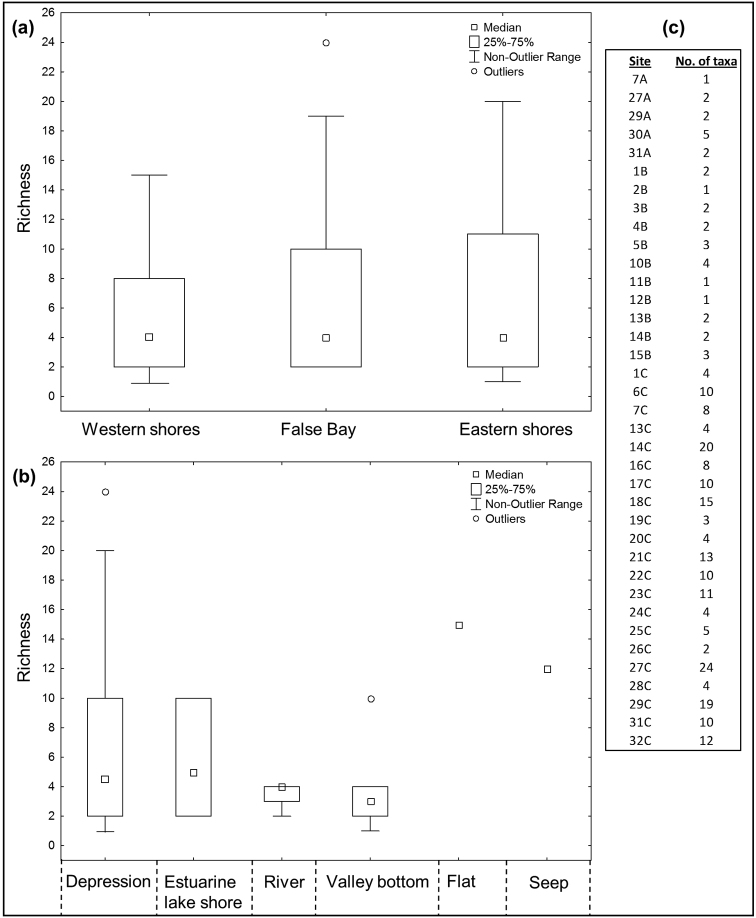
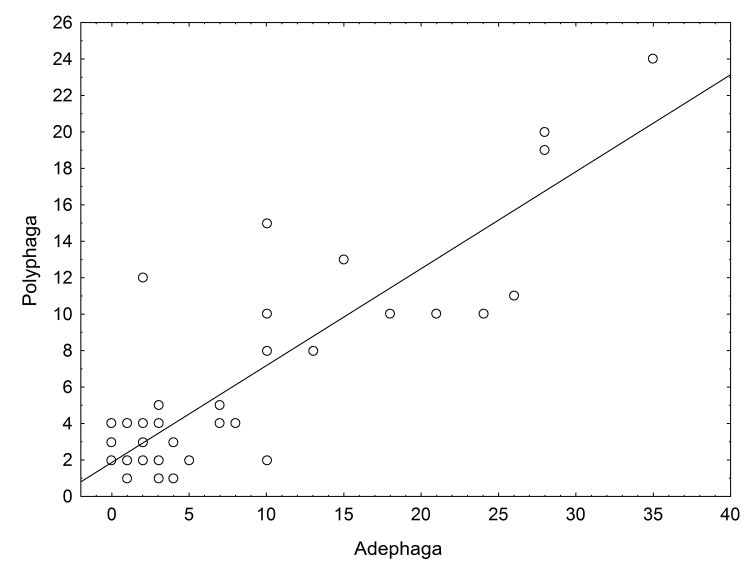
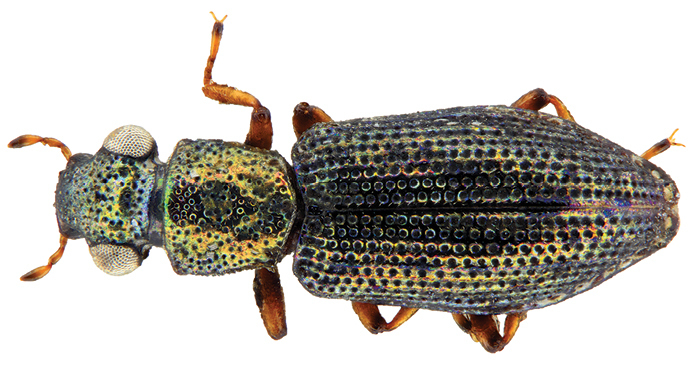
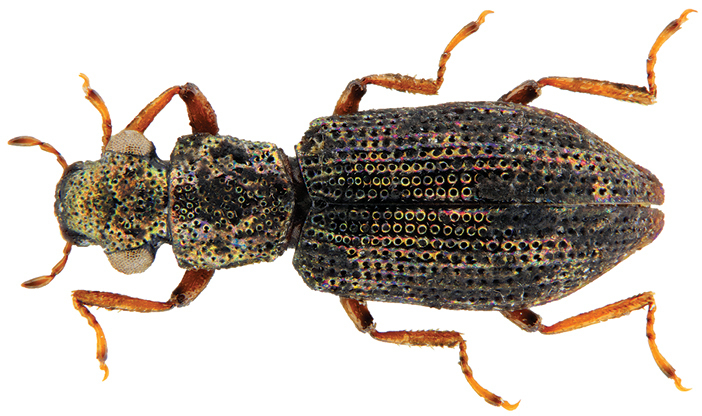
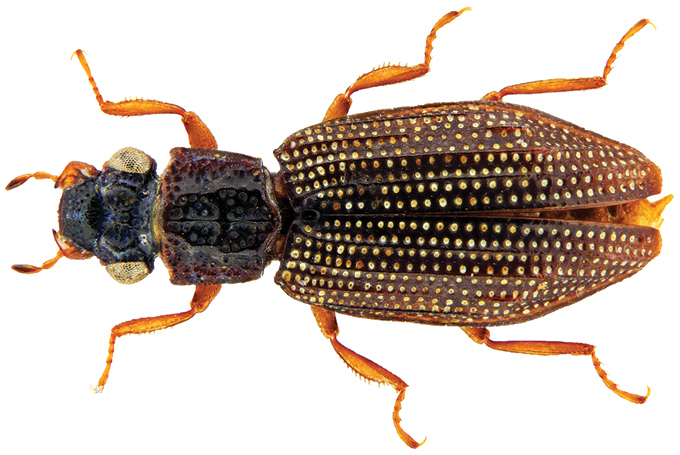
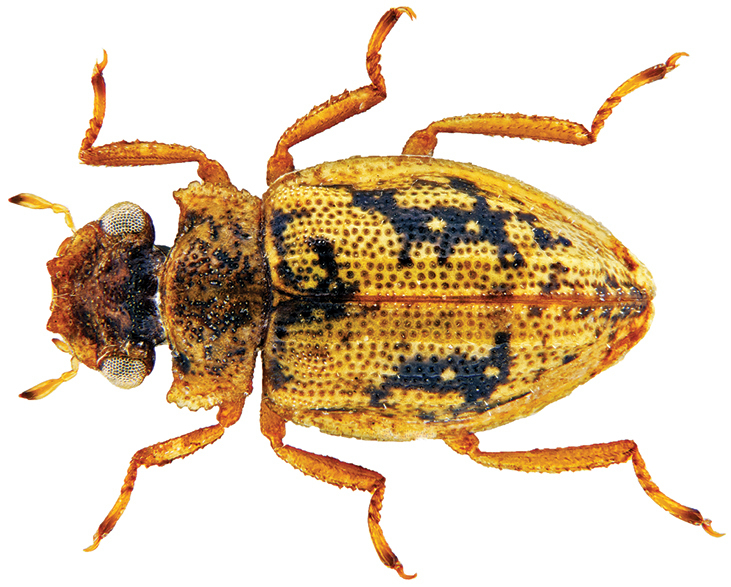
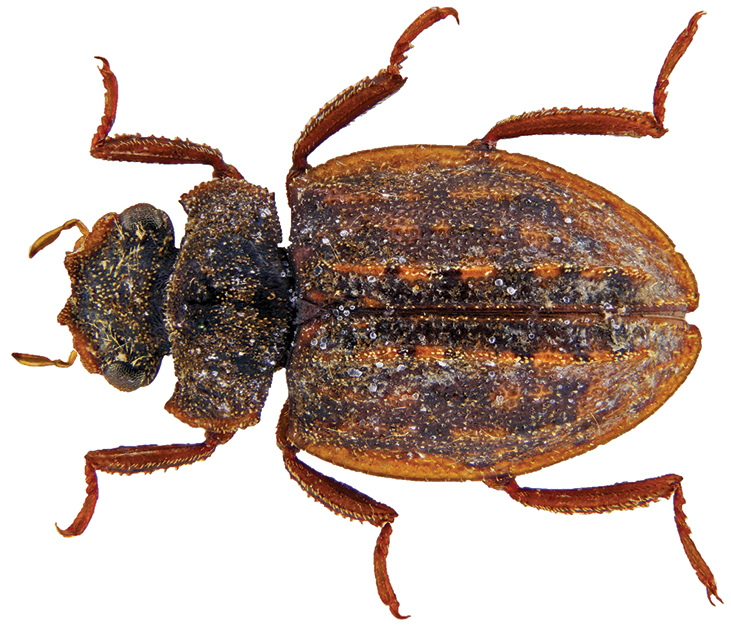
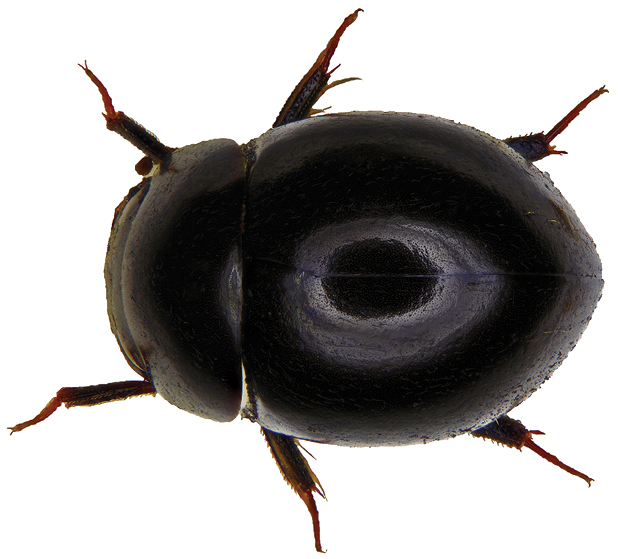
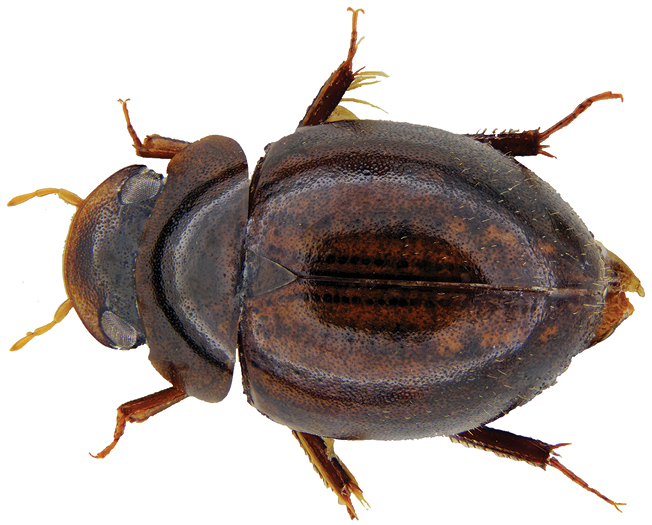
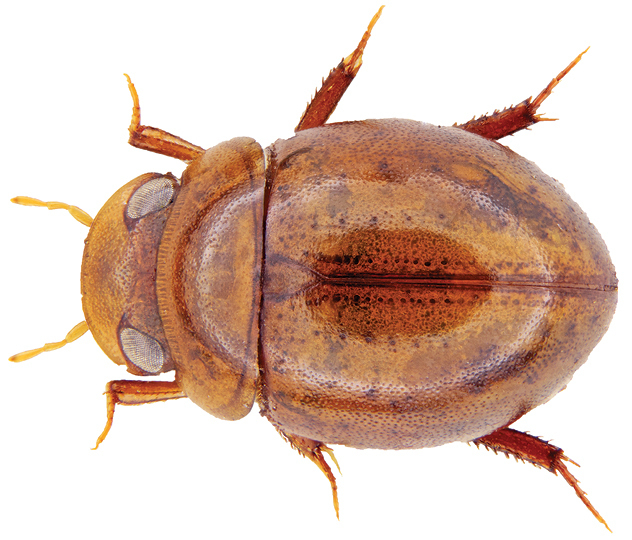
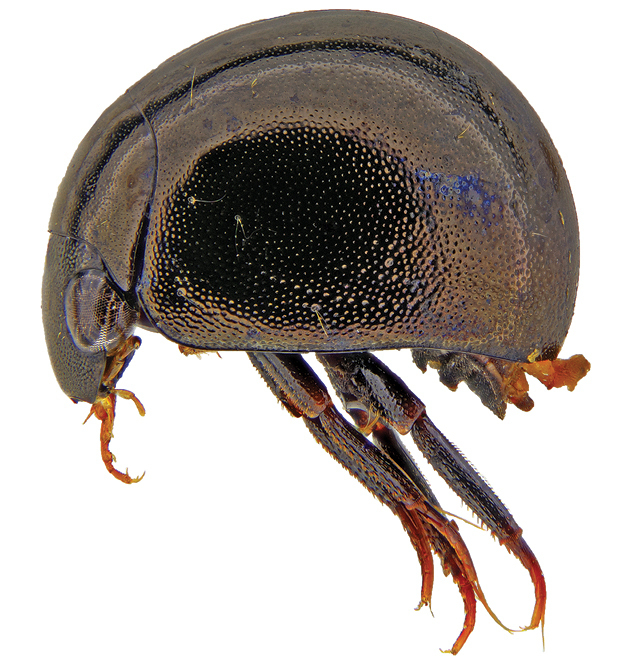
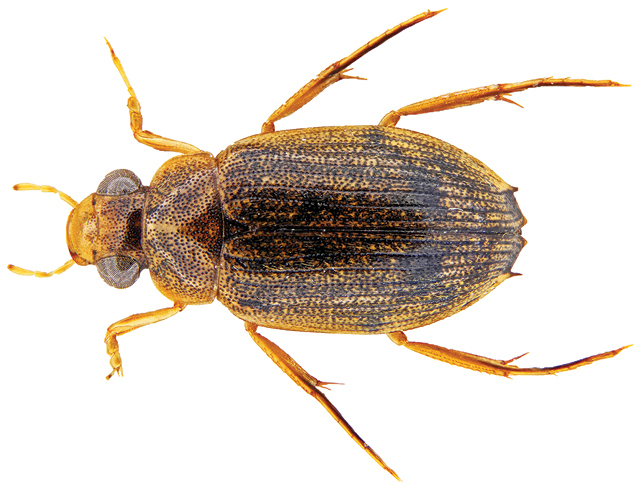
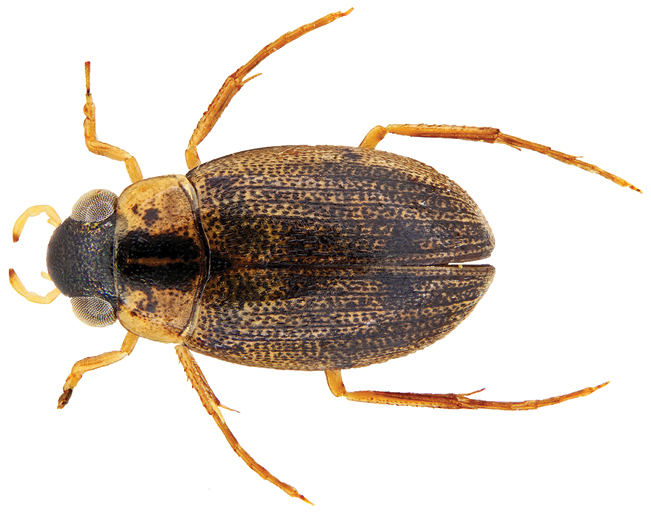
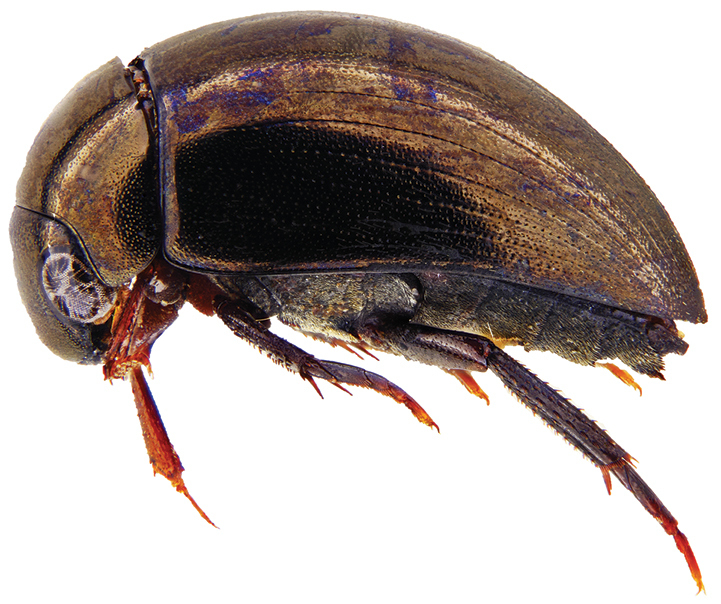
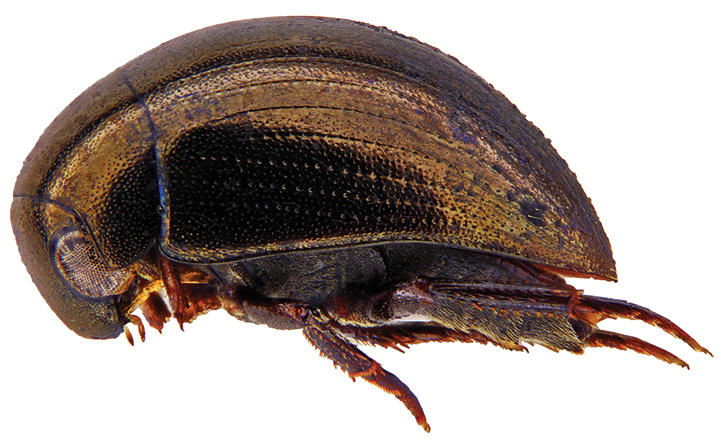
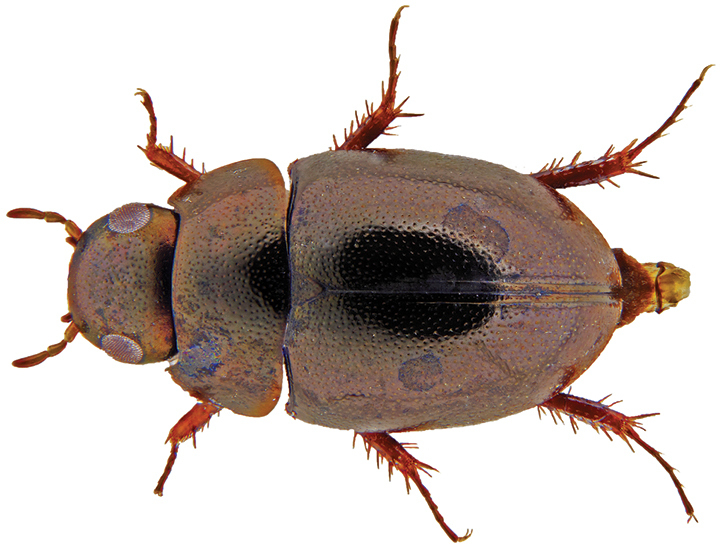
Water beetles belonging to the suborder Polyphaga vary greatly in larval and adult ecologies, and fulfil important functional roles in shallow-water ecosystems by processing plant material, scavenging and through predation. This study investigates the species richness and composition of aquatic polyphagan assemblages in and around the St Lucia estuarine lake (South Africa), within the iSimangaliso Wetland Park, a UNESCO World Heritage Site. A total of 32 sites were sampled over three consecutive collection trips between 2013 and 2015. The sites encompassed a broad range of aquatic habitats, being representative of the variety of freshwater and estuarine environments present on the St Lucia coastal plain. Thirty-seven polyphagan taxa were recorded during the dedicated surveys of this study, in addition to seven species-level records from historical collections. Most beetles recorded are relatively widespread Afrotropical species and only three are endemic to South Africa. Samples were dominated by members of the Hydrophilidae (27 taxa), one of which was new to science ( Bilton, 2016). Despite the fauna being dominated by relatively widespread taxa, five represent new records for South Africa, highlighting the poor state of knowledge on water beetle distribution patterns in the region. Wetlands within the dense woodland characterising the False Bay region of St Lucia supported a distinct assemblage of polyphagan beetles, whilst sites occurring on the Eastern and Western Shores of Lake St Lucia were very similar in their beetle composition. In line with the Afrotropical region as a whole, the aquatic Polyphaga of St Lucia appear to be less diverse than the Hydradephaga, for which 68 species were recorded during the same period. However, the results of the present study, in conjunction with those for Hydradephaga, show that the iSimangaliso Wetland Park contains a high beetle diversity. The ongoing and future ecological protection of not only the estuarine lake itself, but also surrounding freshwater wetlands, is imperative and should be taken into consideration during future management planning for the park.
多食亚目水甲虫的幼虫和成虫生态差异很大,它们通过处理植物材料、 scavenging 和捕食在浅水生态系统中发挥重要的功能作用。本研究调查了位于南非圣卢西亚河口湖及其周边、属于联合国教科文组织世界遗产地伊西曼加利索湿地公园内的水生多食亚目群落的物种丰富度和组成。在2013年至2015年期间连续三次采集行程中,共对32个地点进行了采样。这些地点涵盖了广泛的水生栖息地,代表了圣卢西亚沿海平原上各种淡水和河口环境。在本研究的专门调查中记录了37个多食亚目分类单元,此外还有来自历史收藏的7个物种级记录。记录的大多数甲虫是分布相对广泛的非洲热带物种,只有3种是南非特有的。样本中以水龟甲科成员为主(27个分类单元),其中一个是科学新物种(比尔顿,2016年)。尽管该动物群以分布相对广泛的分类单元为主,但有5种代表了南非的新记录,凸显了该地区水甲虫分布模式的知识匮乏状态。圣卢西亚假湾地区以茂密林地为特征的湿地支持着一个独特的多食亚目甲虫群落,而圣卢西亚湖东岸和西岸的地点甲虫组成非常相似。与整个非洲热带地区一致,圣卢西亚的水生多食亚目似乎比肉食亚目多样性更低,同期肉食亚目记录了68个物种。然而,本研究结果与肉食亚目的研究结果表明,伊西曼加利索湿地公园拥有很高的甲虫多样性。不仅河口湖本身,而且周边淡水湿地的持续和未来生态保护至关重要,在该公园未来的管理规划中应予以考虑。