Nkya Theresia Estomih, Poupardin Rodolphe, Laporte Frederic, Akhouayri Idir, Mosha Franklin, Magesa Stephen, Kisinza William, David Jean-Philippe
Laboratoire d'Ecologie Alpine, UMR CNRS 5553, BP 53, 38041, Grenoble cedex 09, France.
Université Grenoble-Alpes, Grenoble, France.
Parasit Vectors. 2014 Oct 16;7:480. doi: 10.1186/s13071-014-0480-z.
Resistance of mosquitoes to insecticides is mainly attributed to their adaptation to vector control interventions. Although pesticides used in agriculture have been frequently mentioned as an additional force driving the selection of resistance, only a few studies were dedicated to validate this hypothesis and characterise the underlying mechanisms. While insecticide resistance is rising dramatically in Africa, deciphering how agriculture affects resistance is crucial for improving resistance management strategies. In this context, the multigenerational effect of agricultural pollutants on the selection of insecticide resistance was examined in Anopheles gambiae.
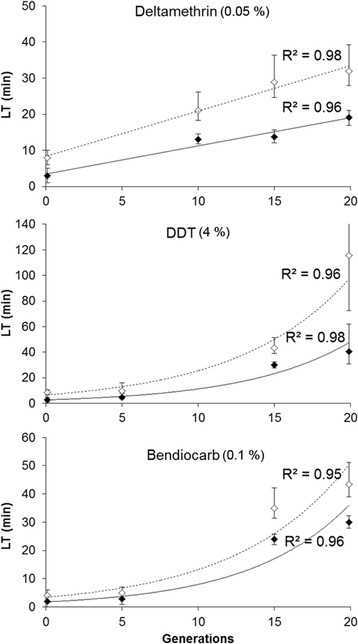
An urban Tanzanian An. gambiae population displaying a low resistance level was used as a parental strain for a selection experiment across 20 generations. At each generation larvae were selected with a mixture containing pesticides and herbicides classically used in agriculture in Africa. The resistance levels of adults to deltamethrin, DDT and bendiocarb were compared between the selected and non-selected strains across the selection process together with the frequency of kdr mutations. A microarray approach was used for pinpointing transcription level variations selected by the agricultural pesticide mixture at the adult stage.
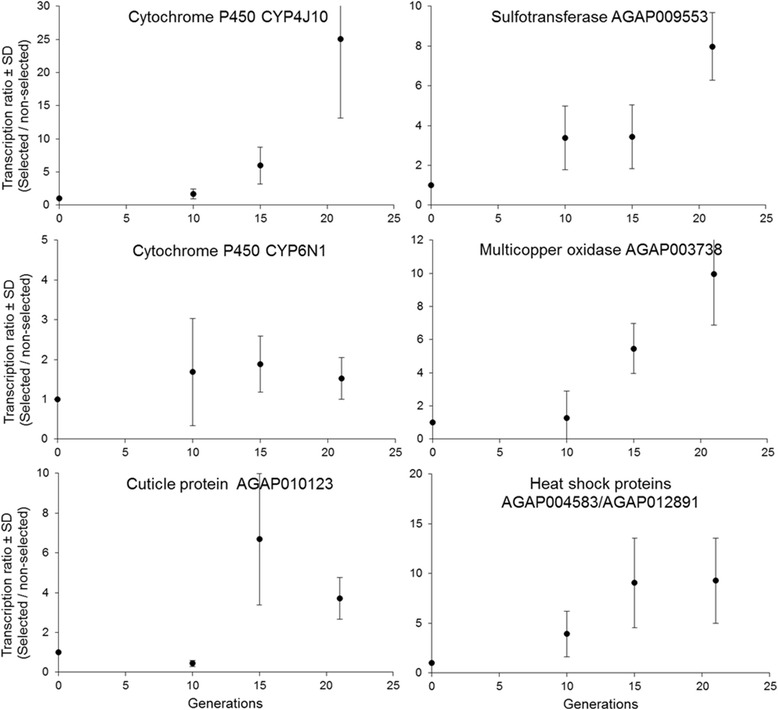
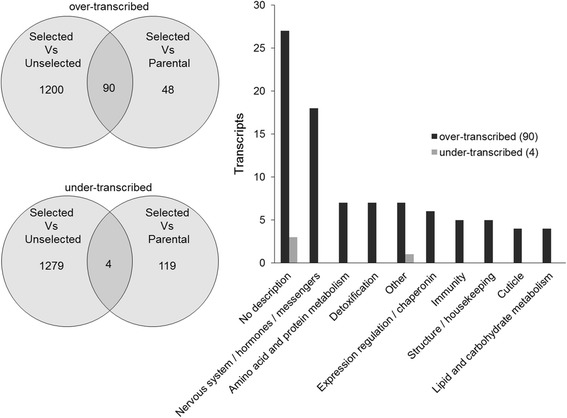
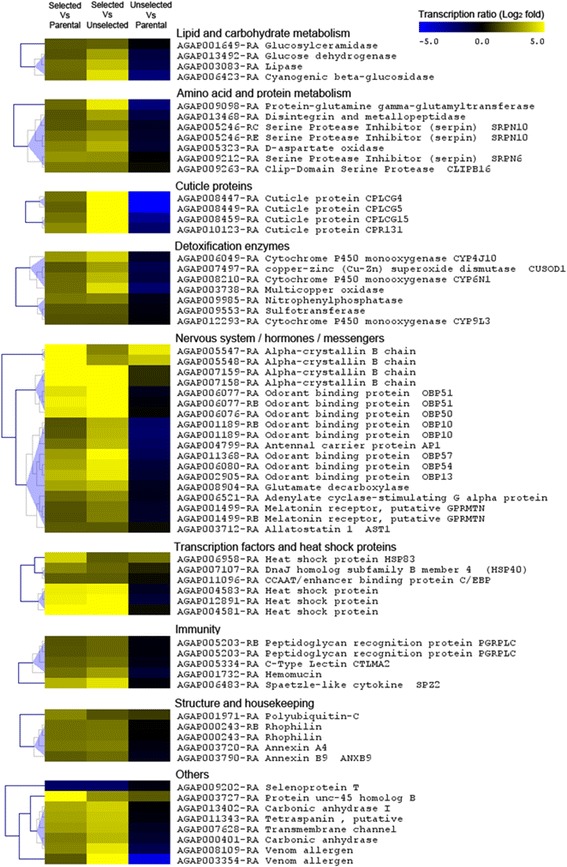
A gradual increase of adult resistance to all insecticides was observed across the selection process. The frequency of the L1014S kdr mutation rose from 1.6% to 12.5% after 20 generations of selection. Microarray analysis identified 90 transcripts over-transcribed in the selected strain as compared to the parental and the non-selected strains. Genes encoding cuticle proteins, detoxification enzymes, proteins linked to neurotransmitter activity and transcription regulators were mainly affected. RT-qPCR transcription profiling of candidate genes across multiple generations supported their link with insecticide resistance.
This study confirms the potency of agriculture in selecting for insecticide resistance in malaria vectors. We demonstrated that the recurrent exposure of larvae to agricultural pollutants can select for resistance mechanisms to vector control insecticides at the adult stage. Our data suggest that in addition to selected target-site resistance mutations, agricultural pollutants may also favor cuticle, metabolic and synaptic transmission-based resistance mechanisms. These results emphasize the need for integrated resistance management strategies taking into account agriculture activities.
蚊子对杀虫剂产生抗性主要归因于它们对病媒控制干预措施的适应。尽管农业中使用的杀虫剂经常被提及是推动抗性选择的另一股力量,但仅有少数研究致力于验证这一假设并阐明其潜在机制。在非洲,杀虫剂抗性正在急剧上升,因此弄清楚农业如何影响抗性对于改进抗性管理策略至关重要。在此背景下,研究了农业污染物对冈比亚按蚊杀虫剂抗性选择的多代效应。
选用坦桑尼亚一个城市地区抗性水平较低的冈比亚按蚊种群作为亲代品系进行20代的选择实验。在每一代,用非洲农业中常用的杀虫剂和除草剂混合物对幼虫进行选择。在选择过程中,比较了选定品系和未选定品系成虫对溴氰菊酯、滴滴涕和残杀威的抗性水平以及kdr突变的频率。采用微阵列方法确定农业杀虫剂混合物在成虫阶段所选择的转录水平变化。
在整个选择过程中,观察到成虫对所有杀虫剂的抗性逐渐增加。经过20代选择后,L1014S kdr突变的频率从1.6%上升到12.5%。微阵列分析确定,与亲代品系和未选定品系相比,选定品系中有90个转录本过度转录。主要受影响的基因包括编码表皮蛋白、解毒酶、与神经递质活性相关的蛋白以及转录调节因子的基因。对候选基因多代的RT-qPCR转录谱分析证实了它们与杀虫剂抗性的关联。
本研究证实了农业在选择疟疾病媒杀虫剂抗性方面的影响力。我们证明,幼虫反复接触农业污染物可在成虫阶段选择出对病媒控制杀虫剂的抗性机制。我们的数据表明,除了选定的靶位点抗性突变外,农业污染物还可能有利于基于表皮、代谢和突触传递的抗性机制。这些结果强调了需要制定综合抗性管理策略,将农业活动考虑在内。