Center for Cancer and Inflammation Research, School of Chinese Medicine, Hong Kong Baptist University, 7 Baptist University Road, Kowloon Tong, Hong Kong, China.
BMC Complement Altern Med. 2014 Oct 15;14:401. doi: 10.1186/1472-6882-14-401.
Glucose-regulated proteins (GRP) are induced in the cancer microenvironment to promote tumor survival, metastasis and drug resistance. AST was obtained from the medicinal plant Astragalus membranaceus, which possesses anti-tumor and pro-apoptotic properties in colon cancer cells and tumor xenograft. The present study aimed to investigate the involvement of GRP in endoplasmic reticulum (ER) stress-mediated apoptosis during colon cancer development, with focus on the correlation between AST-evoked regulation of GRP and calpain activation.
The effects of AST on GRP and apoptotic activity were assessed in HCT 116 human colon adenocarcinoma cells. Calpain activity was examined by using a fluorescence assay kit. Immunofluorescence staining and immunoprecipitation were employed to determine the localization and association between calpains and GRP. GRP78 gene silencing was performed to confirm the importance of GRP in anticancer drug activities. The modulation of GRP and calpains was also studied in nude mice xenograft.
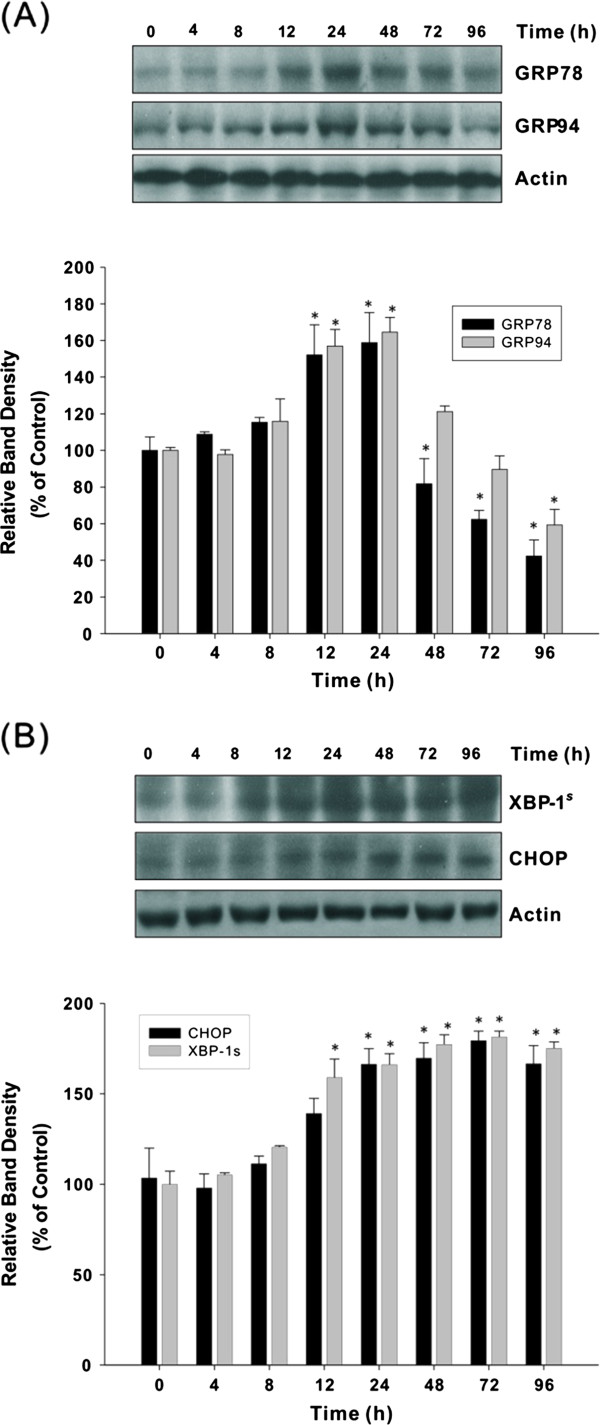
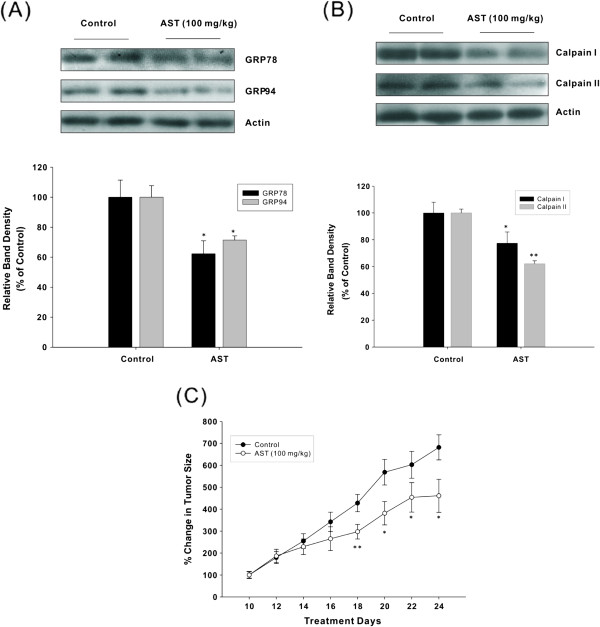
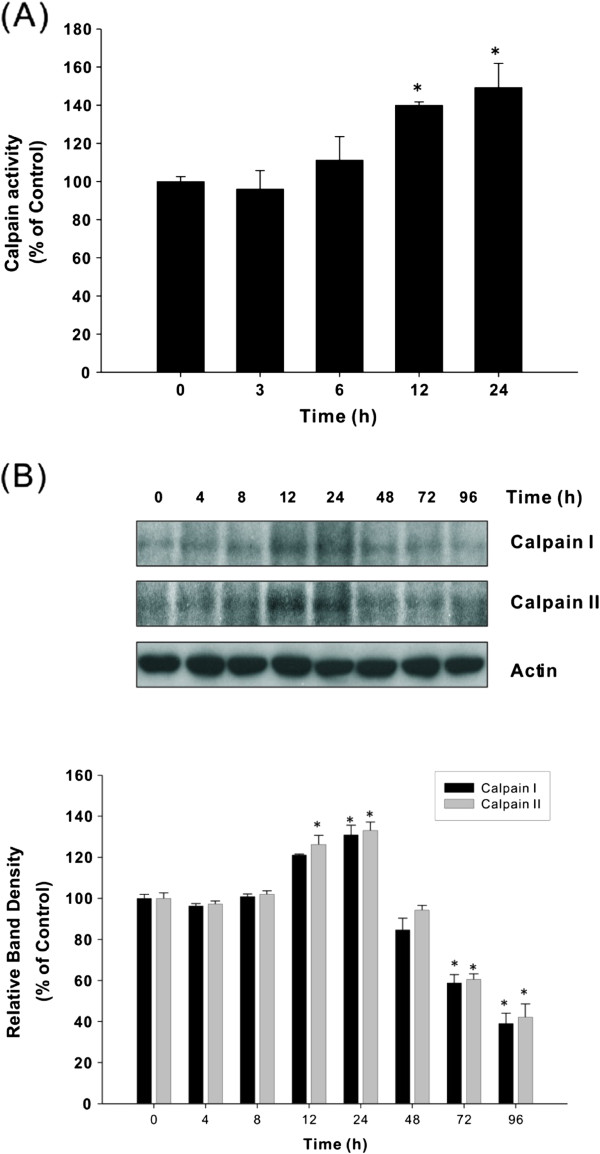
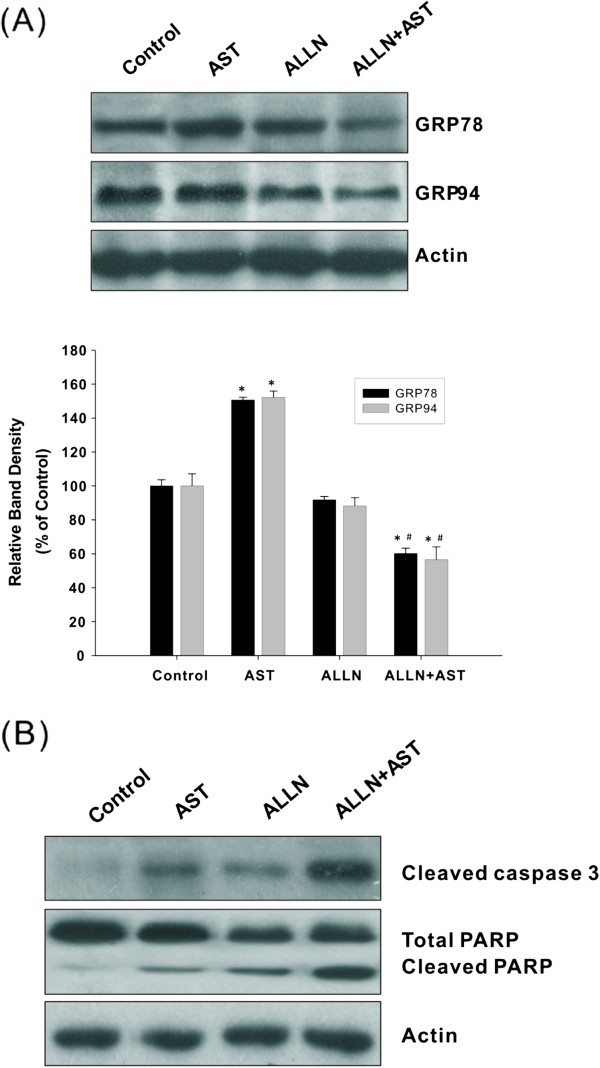
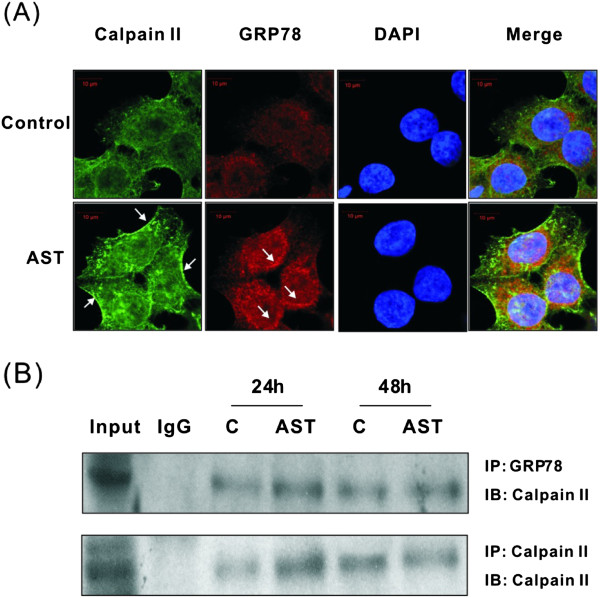
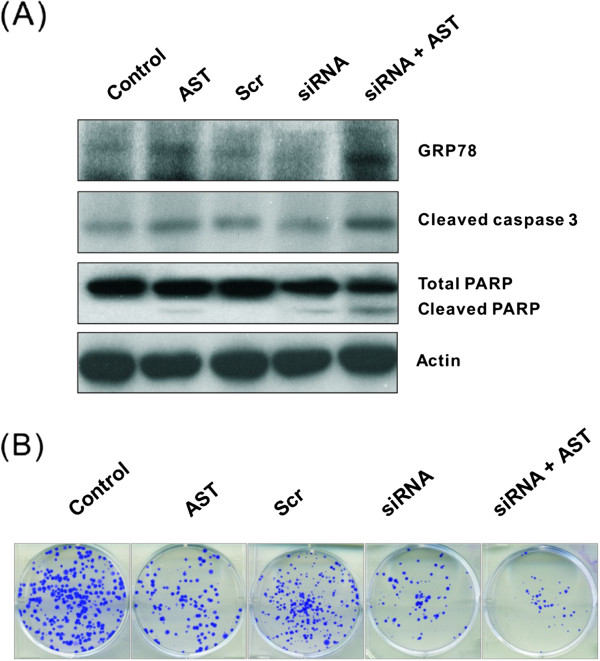
ER stress-mediated apoptosis was induced by AST, as shown by elevation in both spliced XBP-1 and CHOP levels, with parallel up-regulation of GRP. The expression of XBP-1 and CHOP continued to increase after the peak level of GRP was attained at 24 h. Nevertheless, the initial increase in calpain activity as well as calpain I and II protein level was gradually declined at later stage of drug treatment. Besides, the induction of GRP was partly reversed by calpain inhibitors, with concurrent promotion of AST-mediated apoptosis. The knockdown of GRP78 by gene silencing resulted in higher sensitivity of colon cancer cells to AST-induced apoptosis and reduction of colony formation. The association between calpains and GRP78 had been confirmed by immunofluorescence staining and immunoprecipitation. Modulation of GRP and calpains by AST was similarly demonstrated in nude mice xenograft, leading to significant inhibition of tumor growth.
Our findings exemplify that calpains, in particular calpain II, play a permissive role in the modulation of GRP78 and consequent regulation of ER stress-induced apoptosis. Combination of calpain inhibitors and AST could exhibit a more pronounced pro-apoptotic effect. These results help to envisage a new therapeutic approach in colon cancer by targeting calpain and GRP.
葡萄糖调节蛋白(GRP)在肿瘤微环境中被诱导,以促进肿瘤的存活、转移和耐药性。AST 是从药用植物黄芪中获得的,它在结肠癌细胞和肿瘤异种移植中具有抗肿瘤和促凋亡的特性。本研究旨在探讨 GRP 在结肠癌发生过程中内质网(ER)应激介导的细胞凋亡中的作用,重点研究 AST 诱导的 GRP 调节与钙蛋白酶激活之间的相关性。
在 HCT 116 人结肠腺癌细胞中评估 AST 对 GRP 和凋亡活性的影响。通过荧光测定试剂盒检测钙蛋白酶活性。免疫荧光染色和免疫沉淀用于确定钙蛋白酶与 GRP 的定位和关联。通过 GRP78 基因沉默来确认 GRP 在抗癌药物活性中的重要性。还在裸鼠异种移植中研究了 GRP 和钙蛋白酶的调节。
AST 诱导了 ER 应激介导的细胞凋亡,表现为 spliced XBP-1 和 CHOP 水平的升高,同时 GRP 上调。在 24 小时时达到 GRP 的峰值水平后,XBP-1 和 CHOP 的表达继续增加。然而,在药物治疗的后期,钙蛋白酶活性以及钙蛋白酶 I 和 II 蛋白水平的初始增加逐渐下降。此外,钙蛋白酶抑制剂的诱导部分逆转了 GRP 的诱导,同时促进了 AST 介导的细胞凋亡。通过基因沉默使 GRP78 失活导致结肠癌细胞对 AST 诱导的细胞凋亡更敏感,并减少集落形成。通过免疫荧光染色和免疫沉淀证实了钙蛋白酶与 GRP78 的关联。AST 对 GRP 和钙蛋白酶的调节在裸鼠异种移植中也得到了类似的证明,导致肿瘤生长显著抑制。
我们的研究结果表明,钙蛋白酶,特别是钙蛋白酶 II,在 GRP78 的调节和随后的 ER 应激诱导的细胞凋亡调节中发挥许可作用。钙蛋白酶抑制剂与 AST 的联合应用可能表现出更明显的促凋亡作用。这些结果有助于通过靶向钙蛋白酶和 GRP 来设想结肠癌的新治疗方法。