Molecular Pharmacology, Department of Biofunctional Evaluation, Gifu Pharmaceutical University, Gifu, Japan.
PLoS One. 2013;8(3):e60517. doi: 10.1371/journal.pone.0060517. Epub 2013 Mar 27.
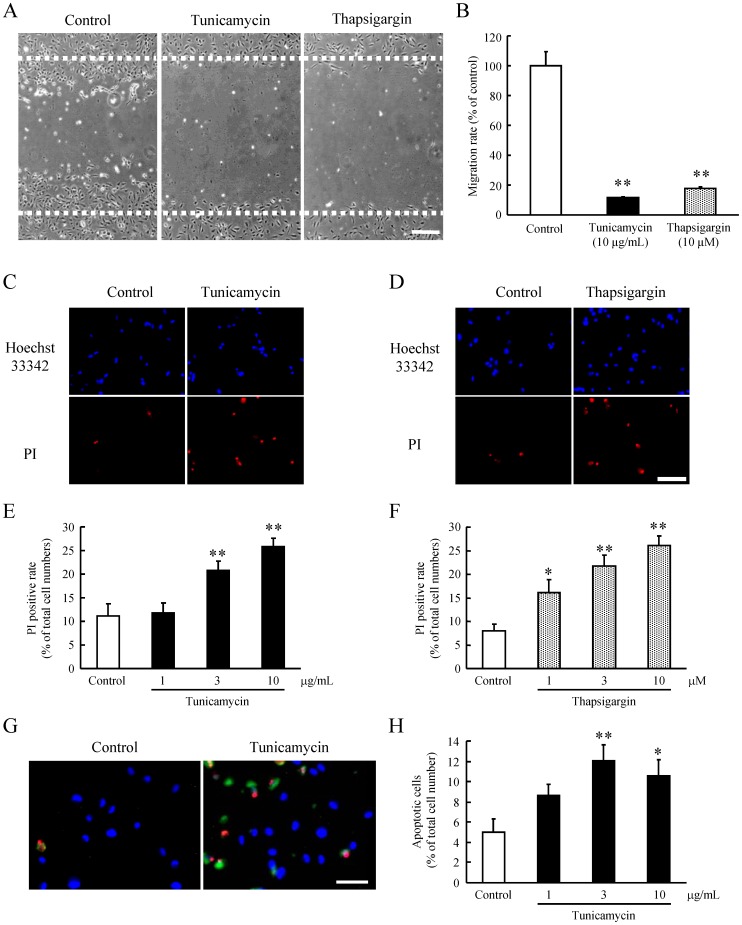
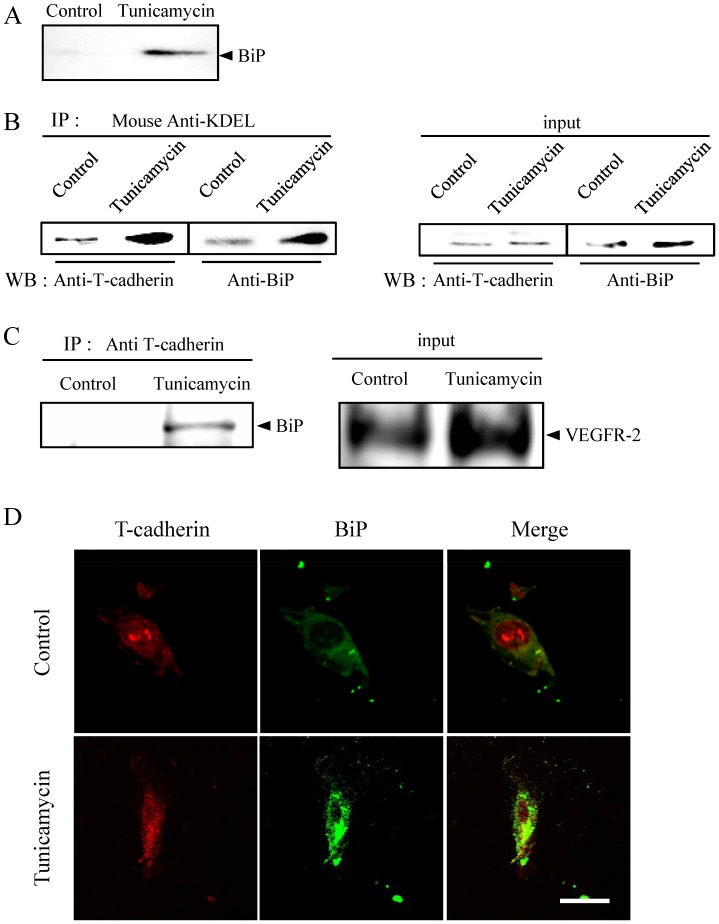
Endoplasmic reticulum (ER) stress occurs as a result of accumulation of unfolded or misfolded proteins in the ER and is involved in the mechanisms of various diseases, such as cancer and neurodegeneration. The goal of the present study was to clarify the relationship between ER stress and pathological neovascularization in the retina. Proliferation and migration of human retinal microvascular endothelial cells (HRMEC) were assessed in the presence of ER stress inducers, such as tunicamycin and thapsigargin. The expression of ER chaperone immunoglobulin heavy-chain binding protein (BiP), known as Grp78, was evaluated by real time RT-PCR, immunostaining, and Western blotting. Tunicamycin or thapsigargin was injected into the intravitreal body of oxygen-induced retinopathy (OIR) model mice at postnatal day 14 (P14) and retinal neovascularization was quantified at P17. The expression and localization of BiP in the retina was also evaluated in the OIR model. Exposure to tunicamycin and thapsigargin increased the proliferation and migration of HRMEC. Tunicamycin enhanced the expression of BiP in HRMEC at both the mRNA level and at the protein level on the cell surface, and increased the formation of a BiP/T-cadherin immunocomplex. In OIR model mice, retinal neovascularization was accelerated by treatments with ER stress inducers. BiP was particularly observed in the pathological vasculature and retinal microvascular endothelial cells, and the increase of BiP expression was correlated with retinal neovascularization. In conclusion, ER stress may contribute to the formation of abnormal vasculature in the retina via BiP complexation with T-cadherin, which then promotes endothelial cell proliferation and migration.
内质网(ER)应激是由于 ER 中未折叠或错误折叠的蛋白质积累而发生的,涉及各种疾病的机制,如癌症和神经退行性疾病。本研究的目的是阐明 ER 应激与视网膜病理性新生血管形成之间的关系。在存在 ER 应激诱导剂,如衣霉素和 thapsigargin 的情况下,评估人视网膜微血管内皮细胞(HRMEC)的增殖和迁移。通过实时 RT-PCR、免疫染色和 Western blot 评估 ER 伴侣免疫球蛋白重链结合蛋白(BiP)的表达,也称为 Grp78。在出生后第 14 天(P14)向氧诱导的视网膜病变(OIR)模型小鼠的玻璃体腔内注射衣霉素或 thapsigargin,并在 P17 时量化视网膜新生血管形成。还在 OIR 模型中评估了 BiP 在视网膜中的表达和定位。衣霉素和 thapsigargin 的暴露增加了 HRMEC 的增殖和迁移。衣霉素在 HRMEC 中增强了 BiP 的表达,无论是在 mRNA 水平还是在细胞表面的蛋白水平,并增加了 BiP/T-钙粘蛋白免疫复合物的形成。在 OIR 模型小鼠中,用 ER 应激诱导剂处理加速了视网膜新生血管形成。BiP 特别在病理性血管和视网膜微血管内皮细胞中观察到,BiP 表达的增加与视网膜新生血管形成相关。总之,通过 BiP 与 T-钙粘蛋白的复合物形成,内质网应激可能有助于视网膜异常血管的形成,从而促进内皮细胞的增殖和迁移。