Zhang Wei Peng, Wang Yong, Tian Ren Mao, Bougouffa Salim, Yang Bo, Cao Hui Luo, Zhang Gen, Wong Yue Him, Xu Wei, Batang Zenon, Al-Suwailem Abdulaziz, Zhang Xi Xiang, Qian Pei-Yuan
KAUST Global Partnership Program, Division of Life Science, Hong Kong University of Science and Technology, Clear Water Bay, Hong Kong.
1] KAUST Global Partnership Program, Division of Life Science, Hong Kong University of Science and Technology, Clear Water Bay, Hong Kong [2] Sanya Institute of Deep Sea Science and Engineering, Chinese Academy of Sciences, San Ya, Hai Nan, China.
Sci Rep. 2014 Oct 17;4:6647. doi: 10.1038/srep06647.
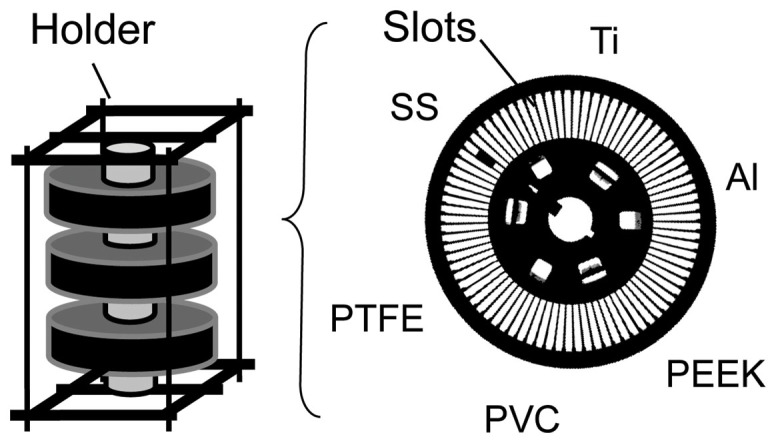
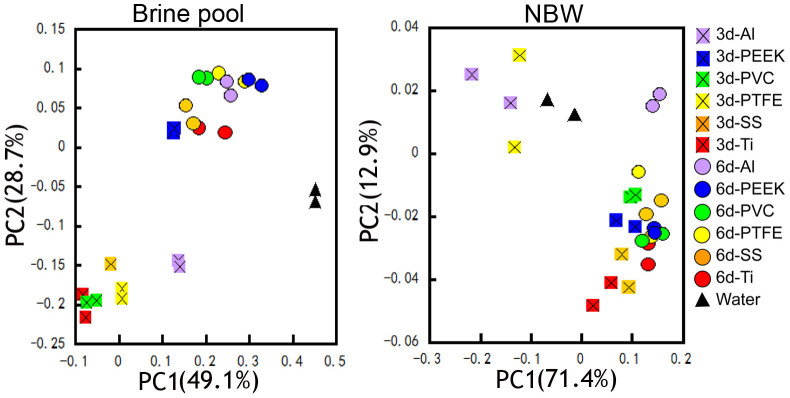
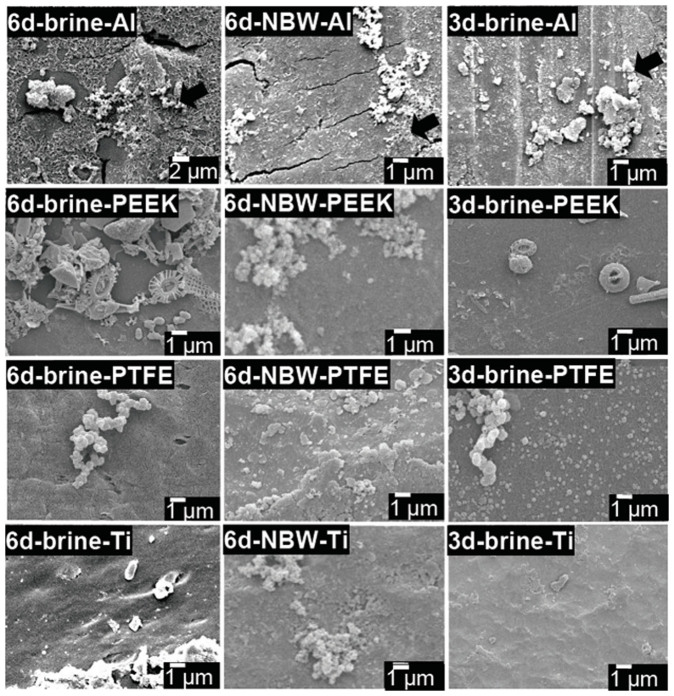
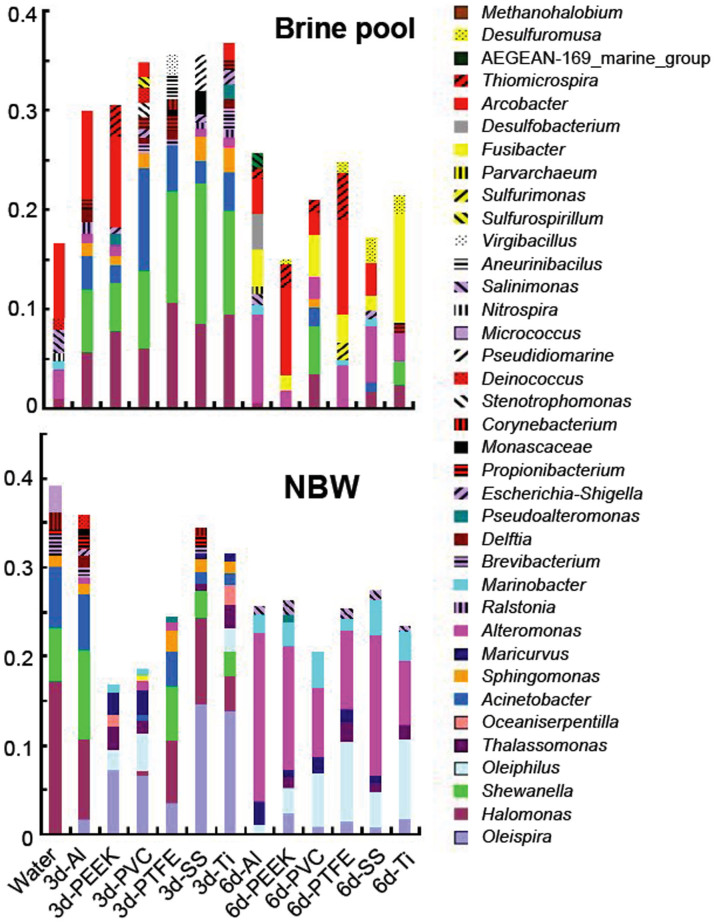
Studies focusing on biofilm assembly in deep-sea environments are rarely conducted. To examine the effects of substrate type on microbial community assembly, biofilms were developed on different substrates for different durations at two locations in the Red Sea: in a brine pool and in nearby bottom water (NBW) adjacent to the Thuwal cold seep II. The composition of the microbial communities in 51 biofilms and water samples were revealed by classification of pyrosequenced 16S rRNA gene amplicons. Together with the microscopic characteristics of the biofilms, the results indicate a stronger selection effect by the substrates on the microbial assembly in the brine pool compared with the NBW. Moreover, the selection effect by substrate type was stronger in the early stages compared with the later stages of the biofilm development. These results are consistent with the hypotheses proposed in the framework of species sorting theory, which states that the power of species sorting during microbial community assembly is dictated by habitat conditions, duration and the structure of the source community. Therefore, the results of this study shed light on the control strategy underlying biofilm-associated marine fouling and provide supporting evidence for ecological theories important for understanding the formation of deep-sea biofilms.
针对深海环境中生物膜组装的研究很少进行。为了研究底物类型对微生物群落组装的影响,在红海的两个地点,即盐水池和图瓦尔冷泉II附近的近底水(NBW)中,在不同底物上培养生物膜不同时长。通过对焦磷酸测序的16S rRNA基因扩增子进行分类,揭示了51个生物膜和水样中微生物群落的组成。结合生物膜的微观特征,结果表明,与近底水相比,底物对盐水池中微生物组装的选择作用更强。此外,在生物膜发育的早期阶段,底物类型的选择作用比后期更强。这些结果与物种分选理论框架中提出的假设一致,该理论认为,微生物群落组装过程中物种分选的力量由栖息地条件、持续时间和源群落结构决定。因此,本研究结果揭示了与生物膜相关的海洋污损的控制策略,并为理解深海生物膜形成的重要生态理论提供了支持证据。