Morita Miwa, Chen Jiajie, Fujino Masayuki, Kitazawa Yusuke, Sugioka Atsushi, Zhong Liang, Li Xiao-Kang
1] Division of Transplantation Immunology, National Research Institute for Child Health and Development, Tokyo [2] Department of Surgery, Fujita Health University School of Medicine, Aichi, Japan.
1] Division of Transplantation Immunology, National Research Institute for Child Health and Development, Tokyo [2] Department of Gastroenterology, Huashan Hospital, Fudan University, Shanghai, China.
Sci Rep. 2014 Oct 17;4:6649. doi: 10.1038/srep06649.
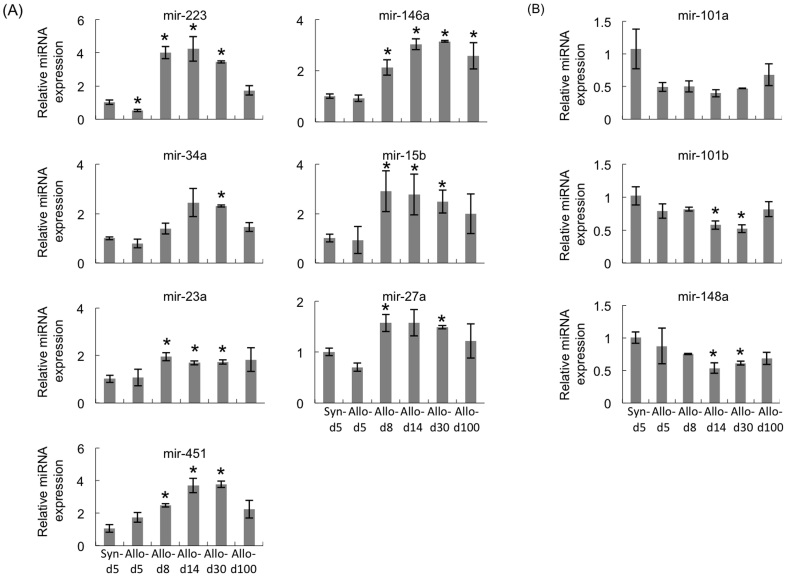
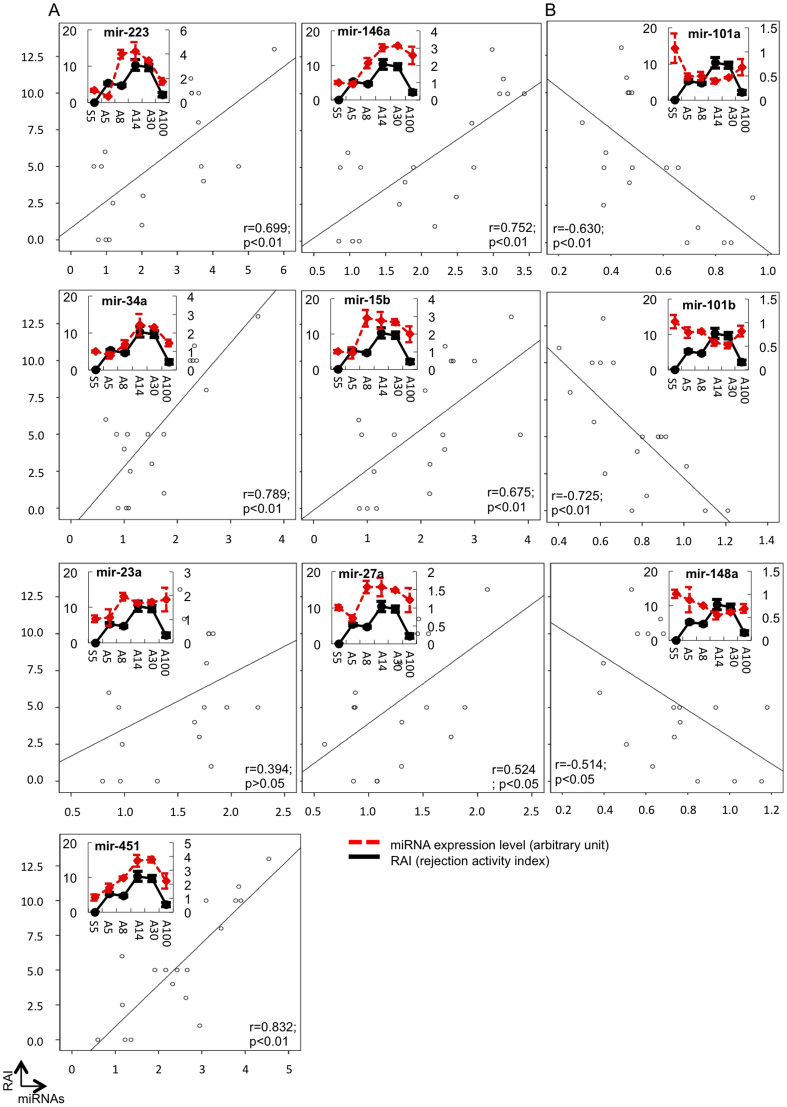
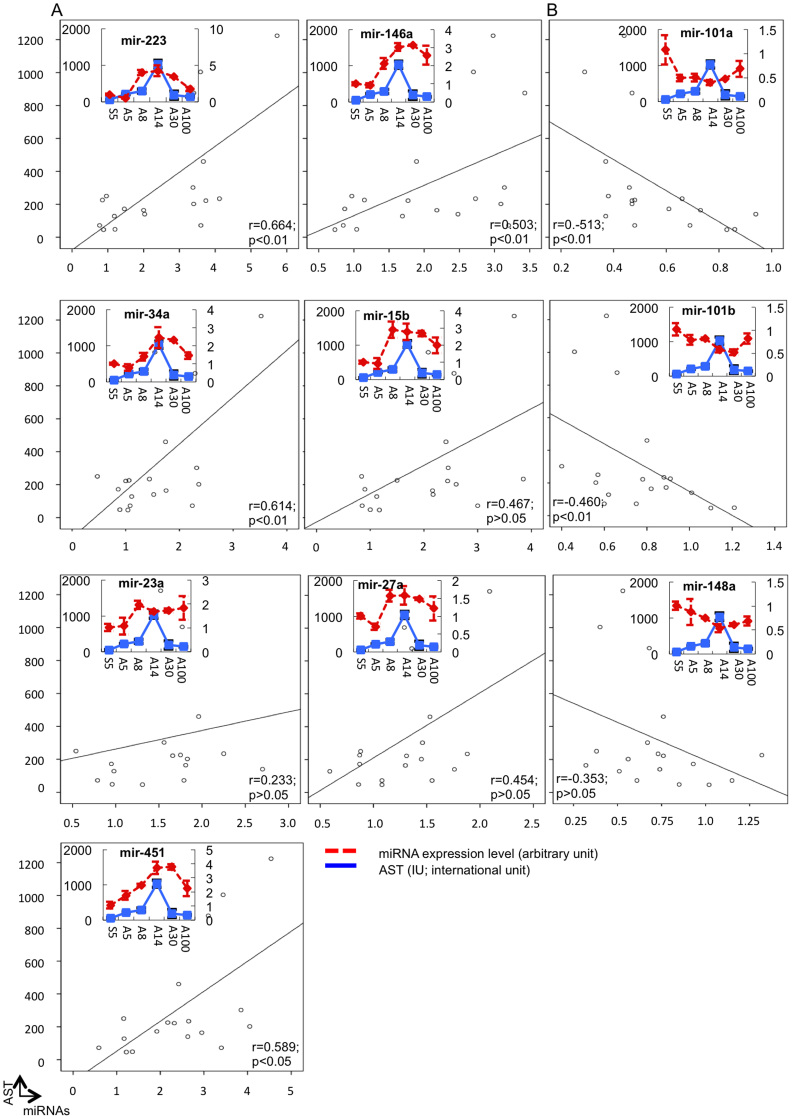
Graft acceptance without the need for immunosuppressive drugs is the ultimate goal of transplantation therapy. In murine liver transplantation, allografts are accepted across major histocompatibility antigen complex barriers without the use of immunosuppressive drugs and constitute a suitable model for research on immunological rejection and tolerance. MicroRNA (miRNA) has been known to be involved in the immunological responses. In order to identify mRNAs in spontaneous liver allograft tolerance, miRNA expression in hepatic allografts was examined using this transplantation model. According to the graft pathological score and function, miR-146a, 15b, 223, 23a, 27a, 34a and 451 were upregulated compared with the expression observed in the syngeneic grafts. In contrast, miR-101a, 101b and 148a were downregulated. Our results demonstrated the alteration of miRNAs in the allografts and may indicate the role of miRNAs in the induction of tolerance after transplantation. Furthermore, our data suggest that monitoring the graft expression of novel miRNAs may allow clinicians to differentiate between rejection and tolerance. A better understanding of the tolerance inducing mechanism observed in murine hepatic allografts may provide a therapeutic strategy for attenuating allograft rejection.
无需免疫抑制药物即可实现移植物接受是移植治疗的最终目标。在小鼠肝移植中,同种异体移植物可跨越主要组织相容性抗原复合体屏障被接受,且无需使用免疫抑制药物,构成了研究免疫排斥和耐受的合适模型。已知微小RNA(miRNA)参与免疫反应。为了鉴定自发肝同种异体移植耐受中的mRNA,利用该移植模型检测了肝同种异体移植物中的miRNA表达。根据移植物病理评分和功能,与同基因移植物中观察到的表达相比,miR-146a、15b、223、23a、27a、34a和451表达上调。相反,miR-101a、101b和148a表达下调。我们的结果证明了同种异体移植物中miRNA的改变,可能表明miRNA在移植后耐受诱导中的作用。此外,我们的数据表明,监测新型miRNA的移植物表达可能使临床医生能够区分排斥和耐受。更好地理解在小鼠肝同种异体移植中观察到的耐受诱导机制可能为减轻同种异体移植排斥提供一种治疗策略。