Zarifpour Mona, Nomiya Masanori, Sawada Norifumi, Andersson Karl-Erik
Wake Forest Institute for Regenerative Medicine, Wake Forest University School of Medicine, Winston-Salem, North Carolina.
Prostate. 2015 Feb 15;75(3):233-41. doi: 10.1002/pros.22909. Epub 2014 Oct 18.
The etiology of Benign Prostatic Hyperplasia (BPH), a common among aged men, is not fully understood, however, in addition to androgens and aging, chronic ischemia has been proposed to contribute. Using an established rat model, we investigated whether chronic ischemia alters the structural and functional properties of the ventral rat prostate, and whether phosphodiesterase type 5 (PDE5) inhibitor (tadalafil) may have a protective action.
Adult male Sprague-Dawley rats were divided into control, arterial endothelial injury (AI), and AI with tadalafil treatment (AI-tadalafil) groups. AI and AI-tadalafil groups underwent endothelial injury of the iliac arteries and received a 2% cholesterol diet following AI. AI-tadalafil rats were treated with tadalafil (2 mg/kg/day) orally for 8 weeks after AI. The control group received a regular diet. After 8 weeks, animals were sacrificed, and pharmacological and morphological studies on prostate tissues were performed.
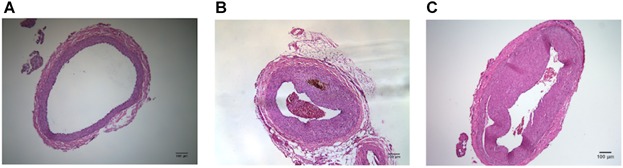
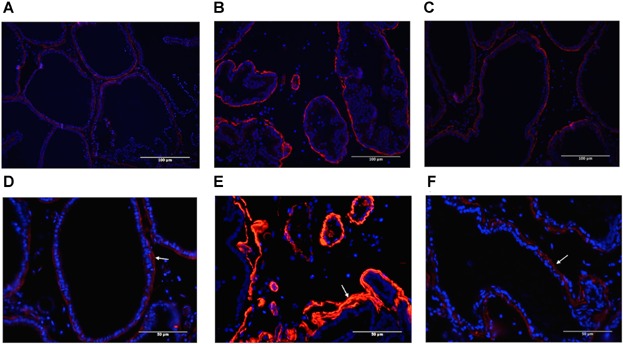
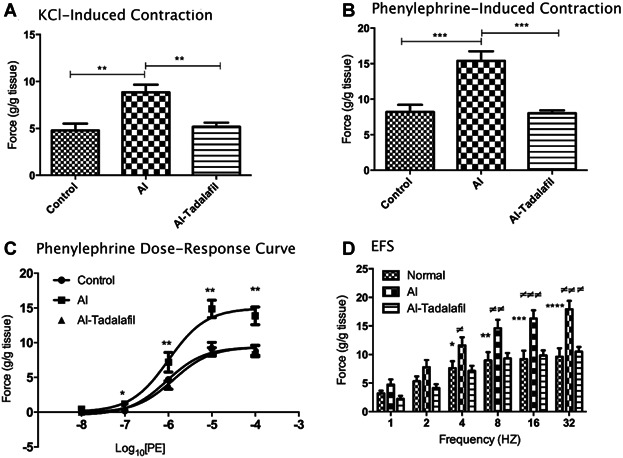
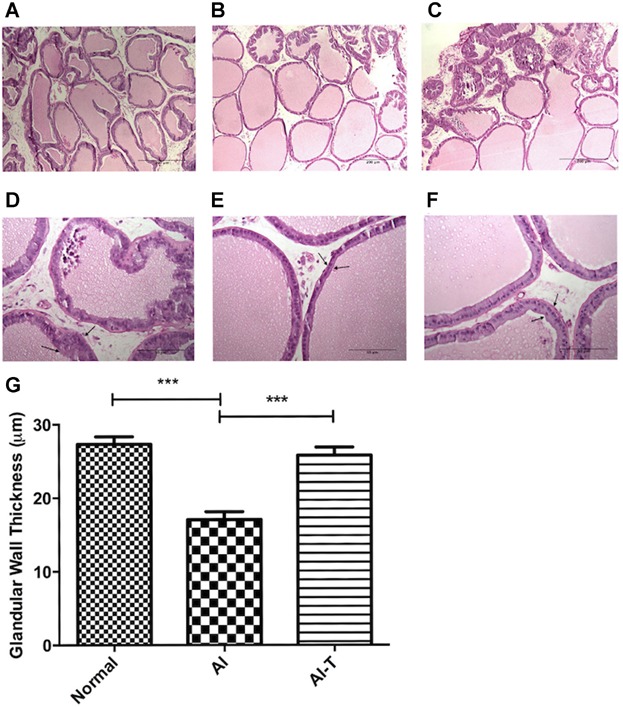
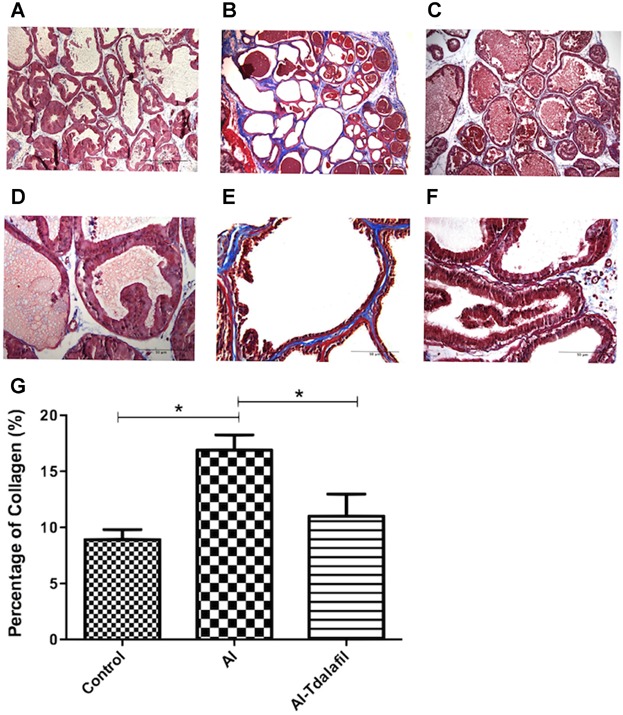
Iliac arteries from AI rats displayed neo-intimal formation and luminal occlusion, an effect that was not prevented by tadalafil treatment. In the AI group, there was an obvious epithelial atrophy and a statistically significant increase in collagen fibers compared with the controls. Immunohistochemically, there was an up-regulation of smooth muscle α-actin (SMA). Contractile responses of prostate strips to KCl, electrical field stimulation (EFS), and phenylephrine (PE) were significantly higher after AI than in controls. Chronic treatment with tadalafil prevented the increase in contractile responses in ischemic tissue, and decreased the collagen deposition compared with the AI group.
In this rat model, chronic pelvic ischemia caused distinct functional and morphological changes in the prostate. Prostatic tissue from ischemic animals showed an increased contractile response to electrical and pharmacological stimulation, an increase in SMA, and an increased deposition of collagen. All these changes could be prevented by treatment with the PDE5 inhibitor, tadalafil, suggesting an involvement of cyclic guanosine monophosphate (cGMP).
良性前列腺增生(BPH)在老年男性中很常见,其病因尚未完全明确,不过,除了雄激素和衰老外,慢性缺血也被认为与之有关。我们使用已建立的大鼠模型,研究慢性缺血是否会改变大鼠腹侧前列腺的结构和功能特性,以及5型磷酸二酯酶(PDE5)抑制剂(他达拉非)是否具有保护作用。
成年雄性Sprague-Dawley大鼠分为对照组、动脉内皮损伤(AI)组和AI加他达拉非治疗组(AI-他达拉非组)。AI组和AI-他达拉非组大鼠接受髂动脉内皮损伤,并在损伤后给予2%胆固醇饮食。AI-他达拉非组大鼠在损伤后口服他达拉非(2毫克/千克/天),持续8周。对照组给予常规饮食。8周后,处死动物,对前列腺组织进行药理学和形态学研究。
AI组大鼠的髂动脉出现新生内膜形成和管腔闭塞,他达拉非治疗未能阻止这一效应。与对照组相比,AI组出现明显的上皮萎缩,胶原纤维有统计学意义的增加。免疫组化显示,平滑肌α-肌动蛋白(SMA)上调。AI组前列腺条对氯化钾、电场刺激(EFS)和去氧肾上腺素(PE)的收缩反应明显高于对照组。与AI组相比,他达拉非的长期治疗可防止缺血组织收缩反应的增加,并减少胶原沉积。
在该大鼠模型中,慢性盆腔缺血导致前列腺出现明显的功能和形态变化。缺血动物的前列腺组织对电刺激和药物刺激的收缩反应增加,SMA增加,胶原沉积增加。PDE5抑制剂他达拉非治疗可预防所有这些变化,提示环磷酸鸟苷(cGMP)参与其中。