Ataturk Chest Disease and Chest Surgery Training and Research Hospital, Department of Medical Oncology, Ankara, Turkey.
Hacettepe University Cancer Institute, Department of Medical Oncology, Ankara, Turkey.
J Gastric Cancer. 2014 Sep;14(3):164-72. doi: 10.5230/jgc.2014.14.3.164. Epub 2014 Sep 30.
To evaluate the incidence, clinicopathological characteristics, treatment outcomes, prognostic factors, and survival of gastric cancer patients with bone metastases.
Of 4,617 gastric cancer patients who were treated between 2001 and 2013, 176 patients with bone metastases were analyzed.
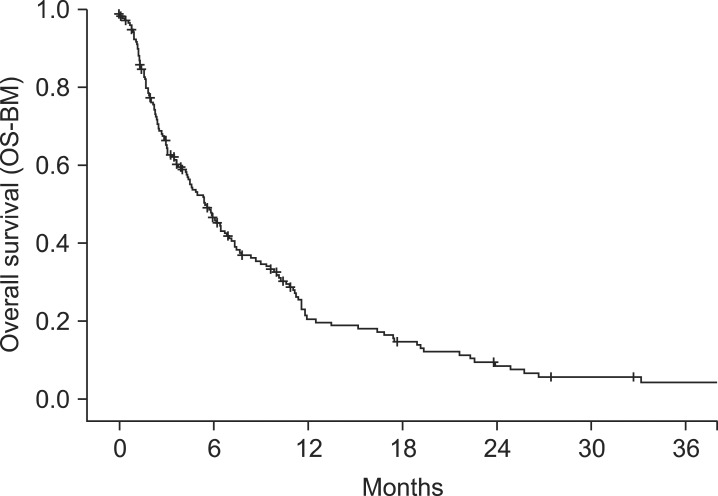
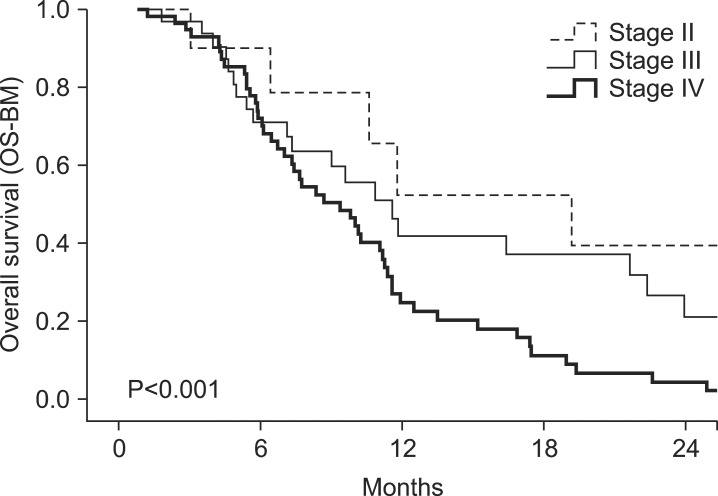
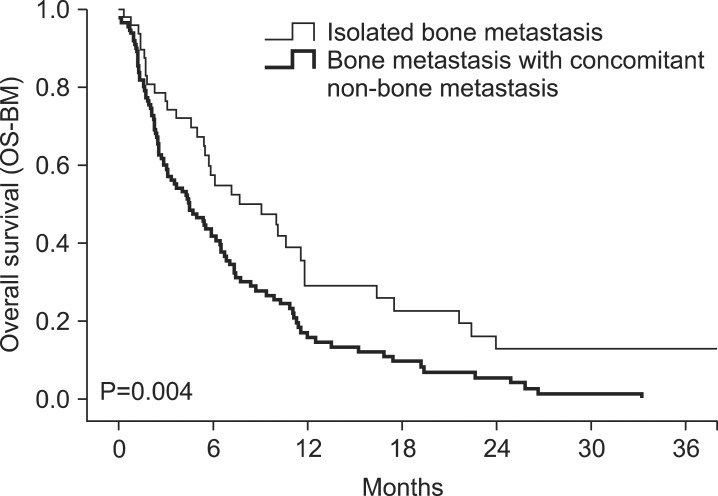
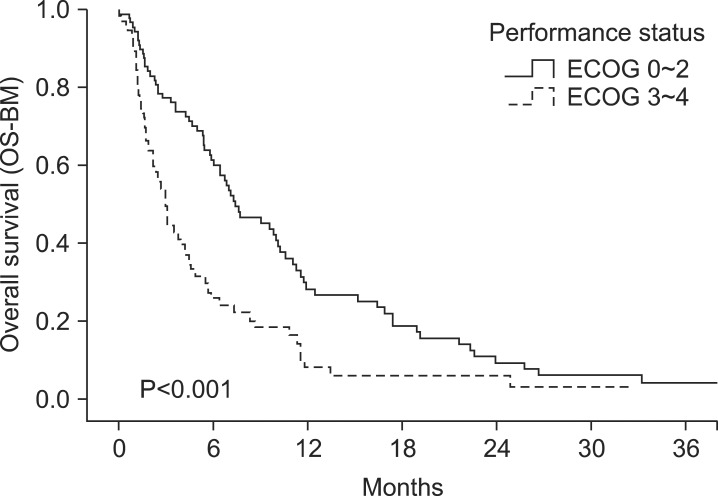
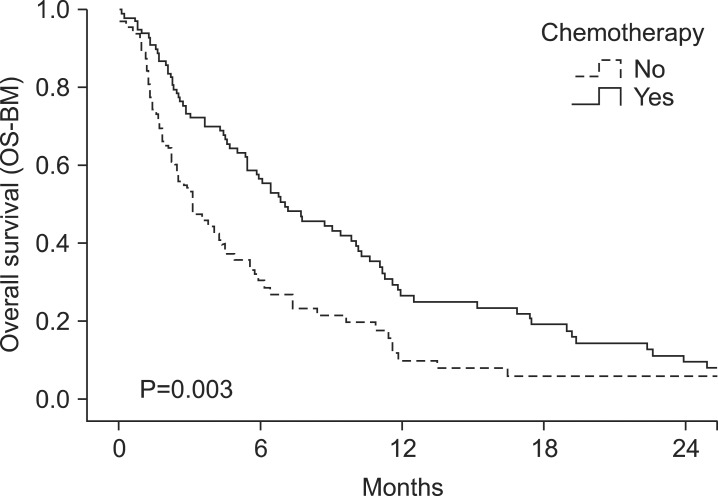
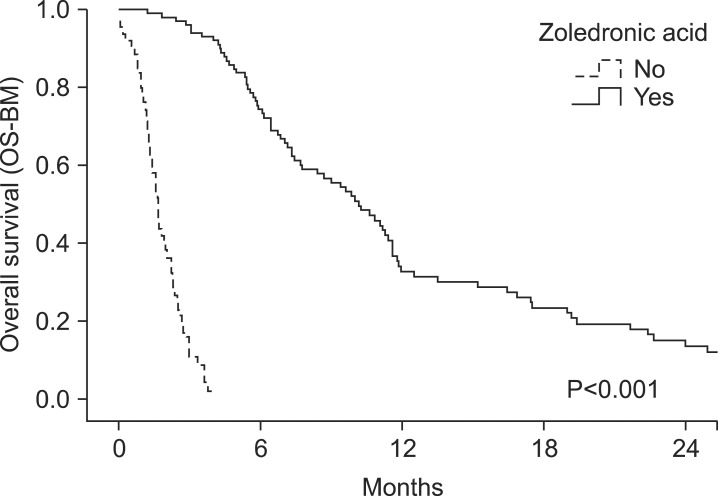
The incidence of bone metastasis was 3.8%. The most common histopathological subtype was adenocarcinoma (79%) with poor differentiation (60.8%). The median interval from the diagnosis to bone metastasis was 11 months. The median survival time after bone metastasis was 5.4 months. Factors that were associated with longer median survival times included the following: isolated bone metastasis (P=0.004), well-differentiated tumors (P=0.002), palliative chemotherapy (P=0.003), zoledronic acid treatment (P<0.001), no smoking history (P=0.007), and no metastatic gastric cancer at the time of diagnosis (P=0.01). On the other hand, high levels of lactate dehydrogenase (LDH) (hazard ratio [HR]: 1.86; P=0.015), carcinoembryonic antigen (CEA) (HR: 2.04; P=0.002), and carbohydrate antigen (CA) 19-9 (HR: 2.94; P<0.001) were associated with shorter survival times. In multivariate analysis, receiving zoledronic acid (P<0.001) and performance status (P=0.013) were independent prognostic factors.
Smoking history, poor performance status, poorly differentiated adenocarcinoma, and high levels of LDH, CEA, and CA 19-9 were shown to be poor prognostic factors, while receiving chemotherapy and zoledronic acid were associated with prolonged survival in gastric cancer patients with bone metastases.
评估胃癌患者发生骨转移的发生率、临床病理特征、治疗效果、预后因素和生存情况。
对 2001 年至 2013 年间接受治疗的 4617 例胃癌患者进行分析,其中 176 例患者发生骨转移。
骨转移的发生率为 3.8%。最常见的组织病理学亚型为腺癌(79%),且分化程度较差(60.8%)。从诊断到发生骨转移的中位时间为 11 个月。发生骨转移后患者的中位生存时间为 5.4 个月。与较长的中位生存时间相关的因素包括:孤立性骨转移(P=0.004)、分化程度较好的肿瘤(P=0.002)、姑息性化疗(P=0.003)、唑来膦酸治疗(P<0.001)、无吸烟史(P=0.007)以及初诊时无转移性胃癌(P=0.01)。另一方面,乳酸脱氢酶(LDH)(危险比[HR]:1.86;P=0.015)、癌胚抗原(CEA)(HR:2.04;P=0.002)和糖链抗原 19-9(CA 19-9)(HR:2.94;P<0.001)水平较高与生存时间较短相关。多变量分析显示,使用唑来膦酸(P<0.001)和体力状况(P=0.013)是独立的预后因素。
吸烟史、较差的体力状况、分化程度较差的腺癌以及较高的 LDH、CEA 和 CA 19-9 水平均提示预后较差,而接受化疗和唑来膦酸治疗与胃癌骨转移患者的生存时间延长相关。