Betti Matt I, Wahl Lindi M, Zamir Mair
Department of Applied Mathematics, Western University, London, Ontario, Canada.
Department of Applied Mathematics, Western University, London, Ontario, Canada; Department of Medical Biophysics, Western University, London, Ontario, Canada.
PLoS One. 2014 Oct 16;9(10):e110237. doi: 10.1371/journal.pone.0110237. eCollection 2014.
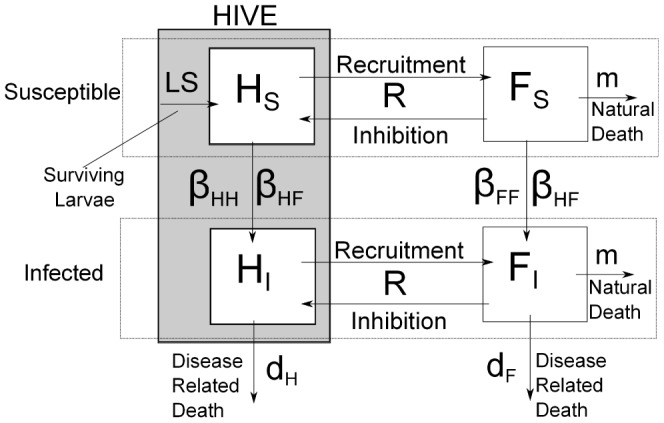
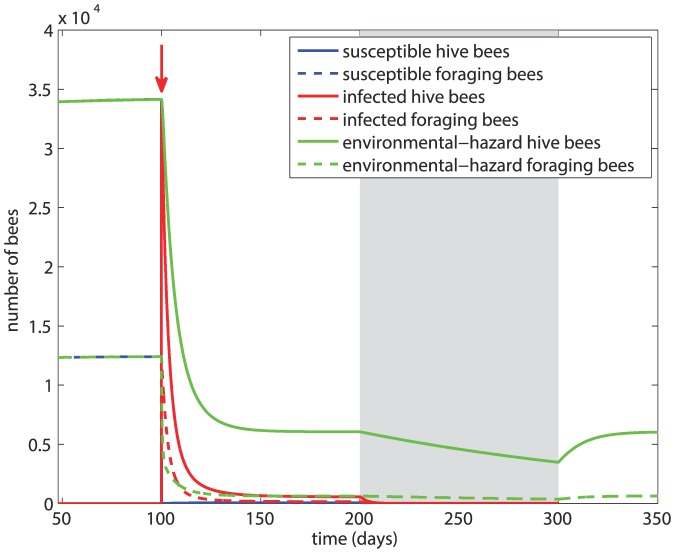
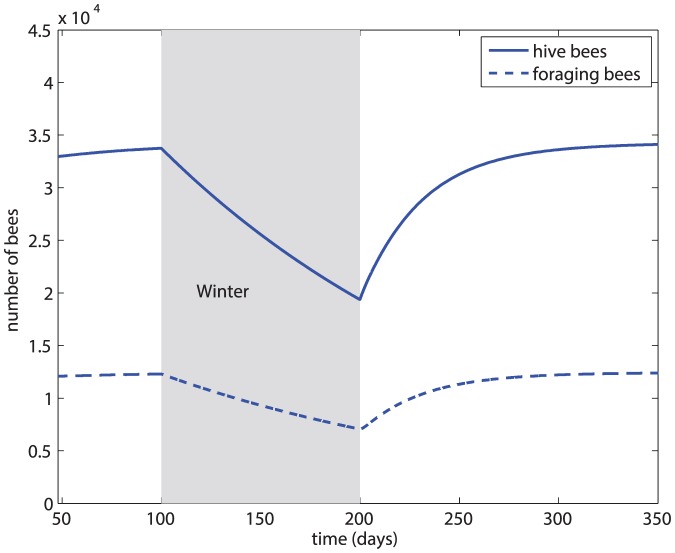
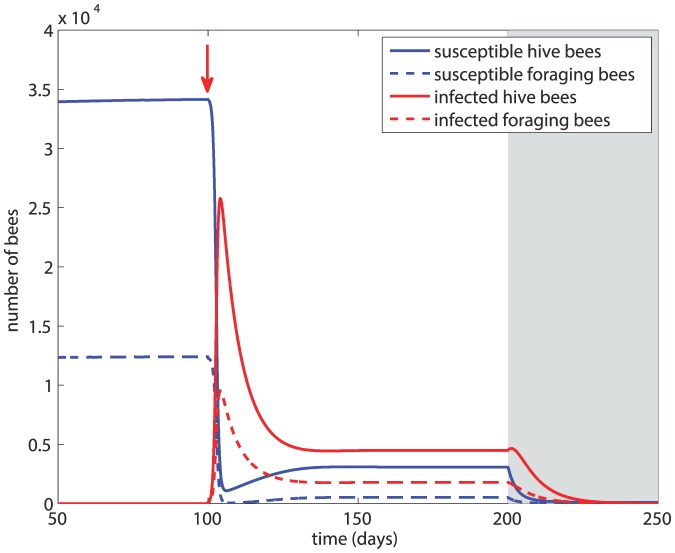
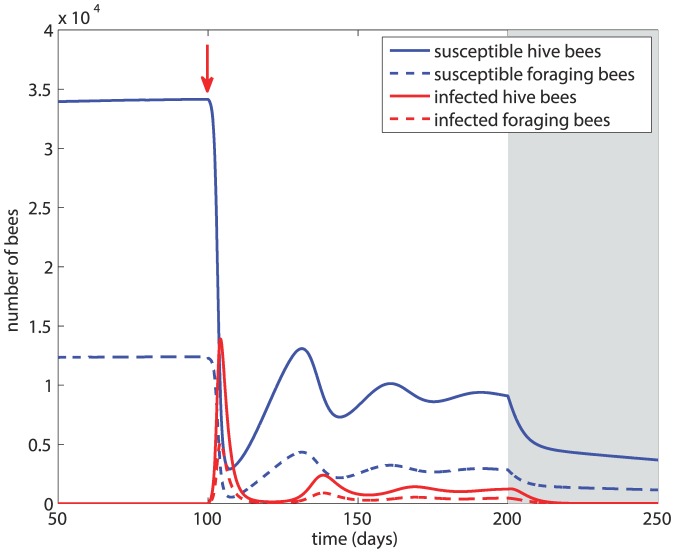
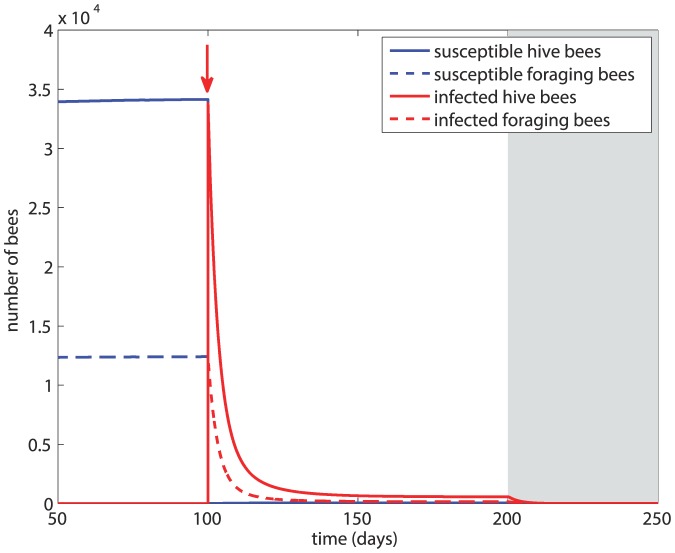
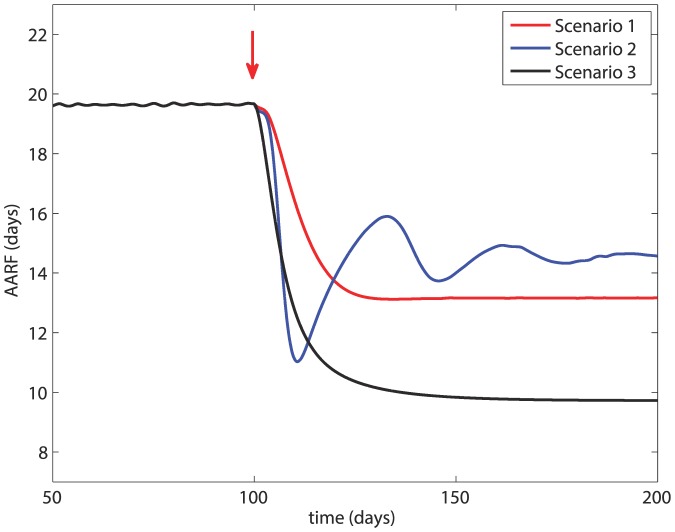
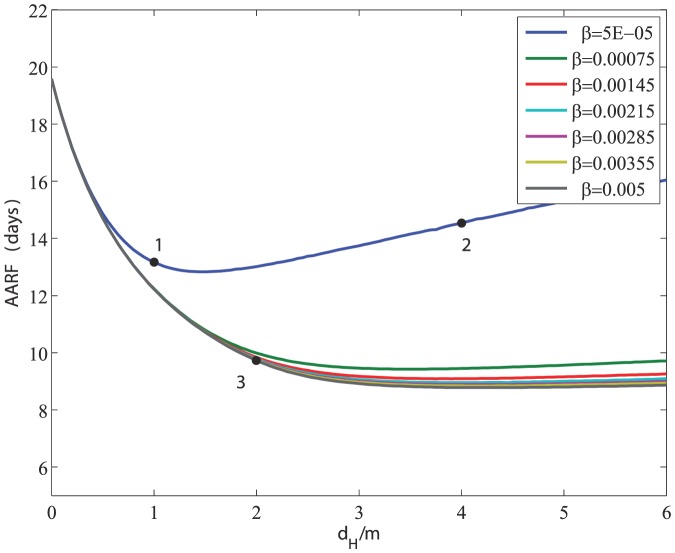
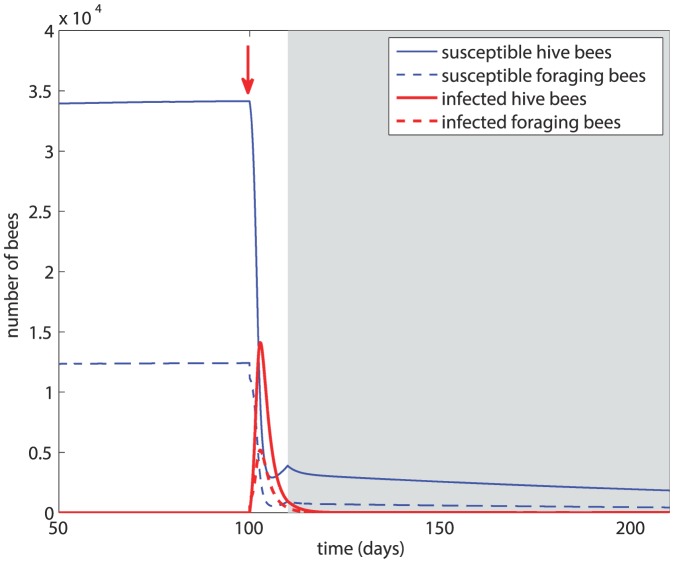
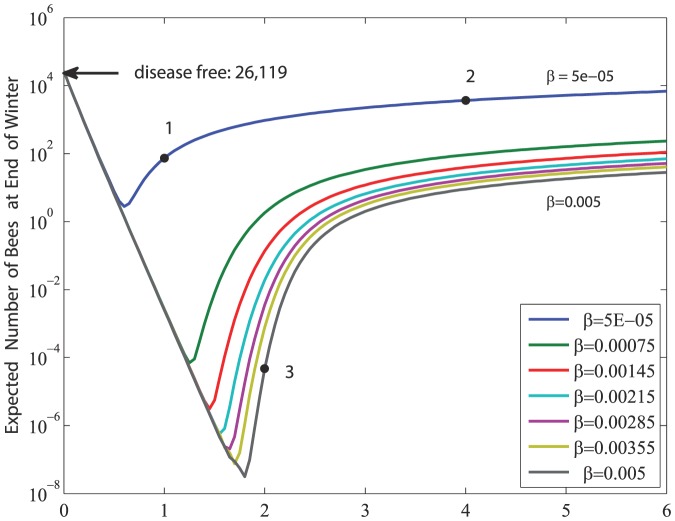
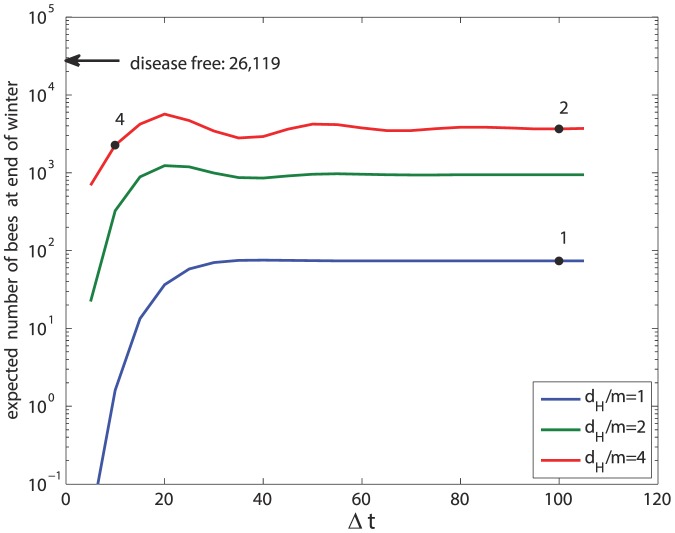
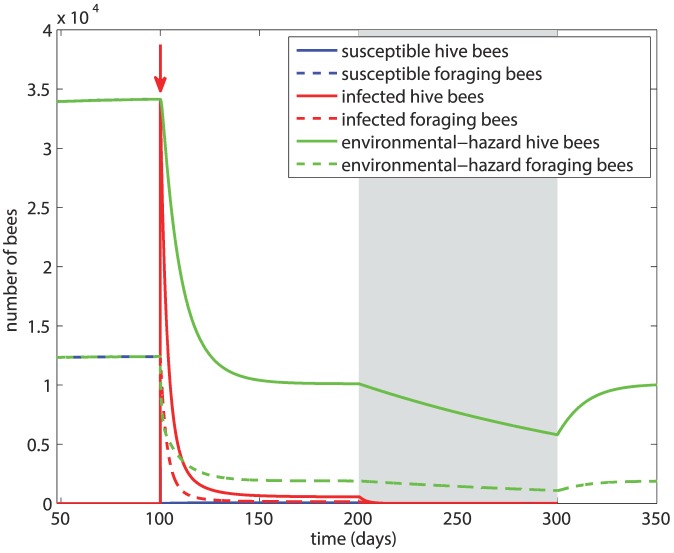
We propose a model that combines the dynamics of the spread of disease within a bee colony with the underlying demographic dynamics of the colony to determine the ultimate fate of the colony under different scenarios. The model suggests that key factors in the survival or collapse of a honey bee colony in the face of an infection are the rate of transmission of the infection and the disease-induced death rate. An increase in the disease-induced death rate, which can be thought of as an increase in the severity of the disease, may actually help the colony overcome the disease and survive through winter. By contrast, an increase in the transmission rate, which means that bees are being infected at an earlier age, has a drastic deleterious effect. Another important finding relates to the timing of infection in relation to the onset of winter, indicating that in a time interval of approximately 20 days before the onset of winter the colony is most affected by the onset of infection. The results suggest further that the age of recruitment of hive bees to foraging duties is a good early marker for the survival or collapse of a honey bee colony in the face of infection, which is consistent with experimental evidence but the model provides insight into the underlying mechanisms. The most important result of the study is a clear distinction between an exposure of the honey bee colony to an environmental hazard such as pesticides or insecticides, or an exposure to an infectious disease. The results indicate unequivocally that in the scenarios that we have examined, and perhaps more generally, an infectious disease is far more hazardous to the survival of a bee colony than an environmental hazard that causes an equal death rate in foraging bees.
我们提出了一个模型,该模型将蜂群内疾病传播的动态与蜂群潜在的种群动态相结合,以确定在不同情况下蜂群的最终命运。该模型表明,面对感染时,蜜蜂蜂群生存或崩溃的关键因素是感染的传播速率和疾病导致的死亡率。疾病导致的死亡率增加,可被视为疾病严重程度的增加,实际上可能有助于蜂群克服疾病并度过冬天。相比之下,传播速率的增加,意味着蜜蜂在更早的年龄被感染,会产生严重的有害影响。另一个重要发现与感染时间相对于冬季开始的时间有关,表明在冬季开始前大约20天的时间间隔内,蜂群受感染开始的影响最大。结果还表明,蜂巢蜜蜂开始承担觅食任务的年龄是蜜蜂蜂群面对感染时生存或崩溃的一个良好早期指标,这与实验证据一致,但该模型深入探讨了潜在机制。该研究最重要的结果是明确区分了蜜蜂蜂群暴露于农药或杀虫剂等环境危害,或暴露于传染病。结果明确表明,在我们所研究的情况下,也许更普遍地说,传染病对蜂群生存的危害远大于在觅食蜜蜂中导致相同死亡率的环境危害。